A smile makeover is not one procedure. It is a planned sequence: an exam and conversation about what you want, a diagnosis of your teeth, gums and bite, a preview of the result, then treatment in a specific order, with health problems fixed before cosmetic work begins. How long it takes depends on what your plan includes. Whitening alone can be quick, while a plan with implants can run for months. Below, we walk through each stage so you know what to expect and what to ask.
TL;DR
- A smile makeover is a custom plan that combines treatments such as whitening, veneers, crowns, clear aligners or implants. No two plans are the same.
- The process follows a sequence: assessment, diagnosis, design and preview, treatment, then maintenance.
- Decay, gum disease and missing teeth are handled first. Cosmetic work comes last.
- Timelines range from a couple of visits for veneers to 3 to 9 months for dental implants.
- Ask for a preview, a written order of treatment and a plan for protecting the result, such as a nightguard.
Table of Contents
- What a smile makeover actually includes
- Step 1: The consultation
- Step 2: Assessment and diagnosis
- Step 3: Designing the result and previewing it
- Step 4: Treatment, in the right order
- How long does a smile makeover take?
- Our perspective: plan the whole mouth, then choose the gentlest route
- Questions to ask before you say yes
- Plan your smile makeover with Towne Dental
- FAQ
- Sources
What a smile makeover actually includes
The phrase covers any combination of treatments that change how your teeth and gums look and work together. Common building blocks include:
- Teeth whitening for surface or deeper staining.
- Veneers, thin custom coverings for the front of the tooth.
- Crowns, which cover the whole tooth.
- Bridges, implants and dentures to replace missing teeth.
- Clear aligners or braces to move teeth into better positions.
- Fillings and bonding to repair chips, gaps and decay.
- Gum care and contouring where gum health or shape affects the smile.
Your plan uses only what your mouth needs. Someone with slightly dark, uneven teeth may need two or three of these. Someone with missing teeth, worn enamel and crowding may need many more, and the order matters a great deal.
One distinction is worth knowing. Restorative dentistry research draws a line between purely cosmetic work, which can be an interim fix that does not always function optimally, and esthetic dentistry that also builds in long-term survival and function. A good smile makeover aims for the second: teeth that look natural and also chew, last and stay healthy.
Step 1: The consultation
The first visit is mostly a conversation. Expect to be asked what bothers you about your smile, what you like about it, and what you want to change. Bring photos of smiles you admire, and photos of your own smile from years ago if you have them. They help the dentist see what “natural” means for you.
Good questions to raise at this visit:
- Is there anything you avoid because of your teeth, such as smiling in photos or eating certain foods?
- Do you have any pain, sensitivity, or a history of grinding or clenching?
- What is your timeline? A wedding, a reunion or a work event changes how a plan is paced.
- What is your budget, and do you have insurance that covers any part of the plan?
This is also where you should say if dental visits make you anxious. Tell the team early so the plan can include comfort measures from the start, including sedation if it suits you.
Step 2: Assessment and diagnosis
Before anything cosmetic is discussed in detail, the dentist needs a full picture of your mouth. A comprehensive protocol published through the American Dental Association describes a sequence of five steps: assess, diagnose, analyze, communicate and implement. The assessment looks at the biological, structural, functional and esthetic health of your mouth.
In practice, this usually means:
- A full exam of teeth, gums and soft tissue, checking for decay, cracks, old restorations and signs of wear.
- X-rays or 3D images to see roots, bone and anything not visible on the surface.
- Gum evaluation, including pocket depths, because gum disease changes what is safe to do.
- Bite and jaw assessment, including grinding and how your teeth meet.
- Photographs and records of your smile, face and teeth.
The result is a diagnosis and a treatment plan that you can read, ask about and adjust. If a plan arrives as a single number with no explanation, ask for the reasoning behind each step.
Why health comes before looks
This is the part many people do not expect. Active decay and gum disease must be resolved before cosmetic work, because covering a problem does not stop it. The ADA’s journal notes that veneers, for example, typically involve removing a thin layer of natural tooth enamel, which means the decision is not reversible. Placing them on unhealthy teeth or inflamed gums sets up the work to fail.
If your assessment shows gum problems, treatment comes first. Our guide to gum pocket treatment explains what that involves. If a tooth is cracked, cracked tooth treatment covers the options and timing. Old fillings that are failing may need attention too, and our article on when to repair or replace old fillings can help you judge.
Step 3: Designing the result and previewing it
Once your mouth is healthy enough to plan on, the design stage begins. The dentist considers tooth length, width, shape, color, how much gum shows when you smile, and how it all fits your face and lips.
A preview is the most useful part of this stage. Clinicians describe tools such as composite resin mock-ups and digital templates that let patients see the intended look before treatment begins, which helps align expectations. Depending on the practice, a preview might be:
- Digital images of your smile with proposed changes.
- A wax-up or model of the planned shapes.
- A temporary mock-up placed on your teeth so you can see and feel the shape.
Use this moment. If the teeth look too long, too white or too uniform, say so now, not after the final restorations are made. Natural smiles have slight variation, and many people prefer a shade that matches the whites of their eyes and skin tone rather than the brightest option on the chart.
Looking at the whole face
Smile design is part of a bigger picture. Skin tone, hair color and lip fullness all affect which tooth shade looks natural. Some patients also tidy up their general appearance routine around the time of a makeover, for example by following a skincare routine aimed at dull skin, so the new smile sits in a face that feels as fresh as the teeth do. That part is personal, and your dentist will focus on tooth shade, shape and proportion.
Step 4: Treatment, in the right order
The sequence is where a makeover differs from a shopping list. A common order looks like this:
- Disease control. Treat decay, infection and gum problems. This can include root canal treatment, extractions or deep gum cleaning.
- Structural and restorative work. Replace missing teeth, build up damaged teeth, and place crowns where a tooth needs full coverage. Bone grafting may be needed before implants.
- Tooth movement. Clear aligners or braces, if the plan calls for them, usually come before final restorations so teeth are in the right position.
- Gum shaping, where needed, so edges and proportions are right.
- Cosmetic finishing. Whitening, veneers and bonding. Whitening is typically done before veneers or bonding, because the shade of those materials is matched to your teeth.
- Protection. A custom nightguard, a retainer, and a maintenance schedule.
The whitening point deserves attention. Bleaching works on natural teeth but will not lighten existing crowns or veneers, so it comes before any restorations that need to match. The ADA’s consumer site also covers what veneers can address, including chipped, stained, crooked or misshapen teeth.
Which treatment fits which concern
| Your concern | Common option | What to know |
|---|---|---|
| Stained or dull teeth | Professional whitening | Only changes natural tooth color, not crowns or veneers |
| Chips, small gaps, uneven shape | Veneers or bonding | Veneers usually involve removing some enamel |
| Badly worn, weak or broken tooth | Crown | Covers the whole tooth to restore strength |
| Crooked or crowded teeth | Clear aligners or braces | Often done before cosmetic finishing |
| Missing tooth or teeth | Implant, bridge or denture | Implants take months but replace the root too |
| Gum disease or uneven gum line | Periodontal care, gum contouring | Health first, shape second |
When veneers are not the right call
Veneers are popular, but they are not for everyone. The ADA’s journal states that people who grind or clench their teeth are poor candidates, because that force can chip or loosen them. If you grind, your plan may favor crowns, bonding or aligners instead, or pair veneers with a nightguard. Be honest about grinding at the consultation: it changes the material choice.
If missing teeth are part of the plan
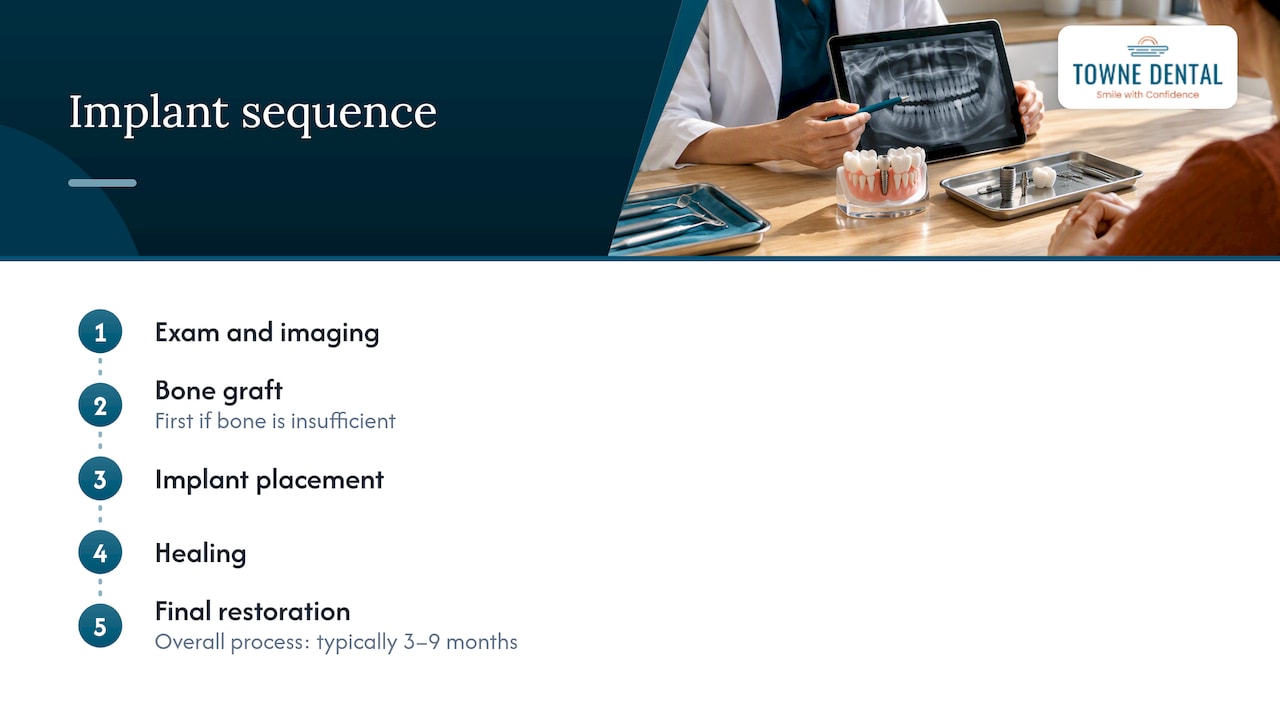
Implants are the longest piece of many makeovers. The American Academy of Implant Dentistry describes a process that begins with an exam and imaging, then implant placement, healing and the final restoration, and notes the full process typically takes 3 to 9 months. Healthy bone is the foundation: if there is not enough, a bone graft comes first and adds time. After treatment, our guide to dental implant maintenance explains daily and yearly care. If an implant is not right for you, partial denture types are another option to compare.
How long does a smile makeover take?
There is no standard answer, and anyone who gives you one before examining your mouth is guessing. These ranges show how much it varies:
- Whitening only: a short plan of one or a few visits, depending on the method.
- Veneers: can be completed in as few as two visits in straightforward cases, per the research we reviewed, with a design visit and a placement visit.
- Crowns: some restorations can be milled with CAD/CAM technology, which reviewers note offers a single consultation and less treatment time than conventional lab production. Survival still varies by material and restoration type, so the right choice is clinical, not just about speed.
- Aligners or braces: typically the longest part when included, since teeth move gradually.
- Implants: months, because the bone must integrate with the implant before the final tooth is attached.
Plans that combine all of these are usually staged over many months. Ask for the expected order, the number of visits per stage and what happens between them, such as temporary teeth.
Our perspective: plan the whole mouth, then choose the gentlest route
At Towne Dental, we treat a smile makeover as a care plan first and a cosmetic project second. Our practice covers general, cosmetic, emergency, pediatric and specialized dentistry in one place, which means the steps that come before cosmetic work, such as gum care, root canal treatment, extractions and implants, can be coordinated under one plan rather than split across offices.
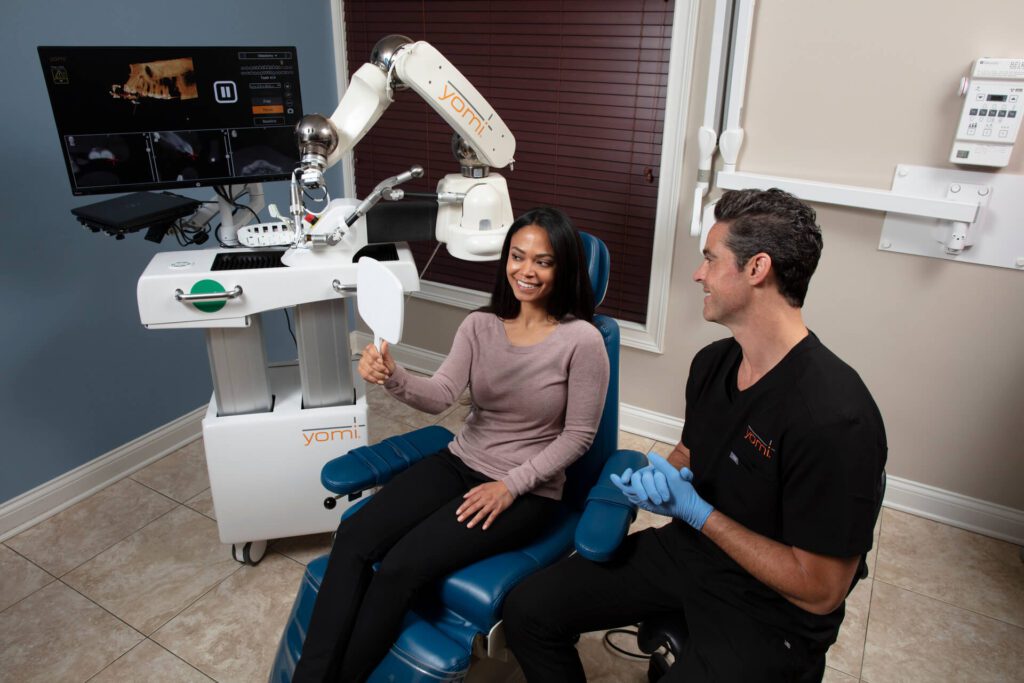
We also know many people put off a smile they would like because they dread the chair. That is why we build comfort into the plan. Sedation dentistry is available for patients who are anxious, and for implants we use the Yomi® robot, which assists with precision during placement and supports less invasive procedures.
Three habits shape how we approach these cases:
- We start with what you want to change, then check whether your teeth and gums can support it.
- We explain the order of treatment and the reason for it, so nothing feels like a surprise.
- We protect the result. A nightguard, regular cleanings and good home care are part of the plan, not an add-on.
— Towne Dental
Questions to ask before you say yes
Whoever you choose, these questions help you compare plans fairly:
- What is the diagnosis behind each recommended treatment?
- Will I see a preview of the result before anything permanent is done?
- What is the order of treatment, and why?
- Which steps are reversible and which are not?
- What happens if I grind my teeth?
- How long will each restoration typically last, and what upkeep does it need?
- What will each stage cost, and what does my insurance cover?
Costs depend on your dentist, location and oral health, and on which procedures are in the plan. Ask for the fee for each phase in writing. Because some steps can be done over time, a phased plan can also help you spread out the investment.
Plan your smile makeover with Towne Dental
If you live in Fort Myers, Cape Coral, Naples, Bonita Springs, Estero, Marco Island or Ave Maria, you can start with an exam and a conversation about your goals. We offer cosmetic dentistry, including teeth whitening and veneers, alongside general dentistry such as crowns, bridges and fillings, oral surgery and dental implants, and clear aligners. You can see the full list on our services page, or contact the clinic to book a visit.
FAQ
What is the process of a smile makeover?
It starts with a consultation and a full exam, followed by a diagnosis and a written treatment plan. You then preview the planned look, and treatment proceeds in order: health problems first, then tooth movement or restorations, then cosmetic finishing such as whitening and veneers. Maintenance, such as a nightguard and regular cleanings, protects the result.
How many visits does a smile makeover take?
It depends on the plan. Veneers alone can take as few as two visits, while a plan with implants or aligners spans months. Your dentist should give you an expected visit count for each phase after the exam.
Is a smile makeover permanent?
Not entirely. Some steps, like removing enamel for veneers, cannot be undone, but the restorations themselves can wear, chip or need replacement over time. Good home care, regular checkups and a nightguard if you grind all help them last.
Do I need to fix gum disease or cavities first?
Yes. Decay and active gum disease should be resolved before cosmetic work, because covering them does not stop them and can lead to failure of the restoration. That treatment is part of your plan, not a detour from it.
Can I see the result before treatment starts?
Often you can. Dentists use digital images, models or temporary mock-ups so you can preview the look and give feedback. Ask for this at your consultation.
Sources
- A Comprehensive Treatment Evaluation Protocol Utilizing a Customized PowerPoint Template for Esthetic Planning
- What to Expect: AAID dental implants
- Improving your smile with dental veneers, JADA
- Veneers, MouthHealthy (ADA)
- Teeth Whitening, MouthHealthy (ADA)
- Reframing Perceptions in Restorative Dentistry
- Clinical Outcomes of CAD/CAM Full Crowns and Fixed Partial Dentures: Systematic Review