Gum pockets are treated in steps. The first step is almost always a deep cleaning below the gumline, called scaling and root planing. If pockets stay deep and inflamed afterward, your dentist or periodontist may add medication or surgery. Pockets can often be made shallower and healthier, but bone that has already been lost does not grow back on its own, so the sooner you start, the more of your support you keep.
This guide explains what a gum pocket is, how deep is too deep, what each treatment involves, and what you can do at home. We wrote it for adults in Southwest Florida who were told they have “pockets” at a checkup and left with more questions than answers.
TL;DR
- A healthy gum pocket is about 1 to 3 mm deep. Deeper than that usually signals gum disease and calls for treatment.
- Scaling and root planing (a deep cleaning) is the standard first treatment for nearly all cases. Surgery is for pockets that persist afterward.
- Periodontitis can be managed and stabilized, not reversed. Lost bone does not return without specific procedures.
- Home care, quitting smoking and controlling diabetes decide how well treatment holds.
- Swelling, a pimple-like bump on the gum, or fever with a gum problem needs prompt attention, not a wait-and-see approach.
Table of Contents
- What a gum pocket actually is
- How deep is too deep?
- Treatment step by step
- Can gum pockets heal on their own?
- What you can do at home to reduce periodontal pockets
- Warning signs that should not wait
- Our perspective: gum treatment should not feel like a punishment
- Getting gum care at Towne Dental
- FAQ
- Sources
What a gum pocket actually is
Your gum should fit snugly around each tooth like a collar. A periodontal pocket is the space that opens between the gum and the tooth when gum disease breaks down that attachment. In a healthy mouth, these spaces measure about 1 to 3 millimeters. Once they go past 3 mm, they are often treated with scaling and root planing.
The problem is that a pocket is a protected hiding place. Plaque and hardened tartar settle in it, your toothbrush and floss cannot reach the bottom, and the bacteria keep the gum inflamed. Over time the infection moves down the root and the bone around the tooth begins to dissolve.
That is why pockets rarely hurt in the early years. You may notice bleeding when you brush, persistent bad breath, or gums that look puffy or darker red. Many people notice nothing at all, and the hygienist’s probe is the first clue.
How your dentist measures them
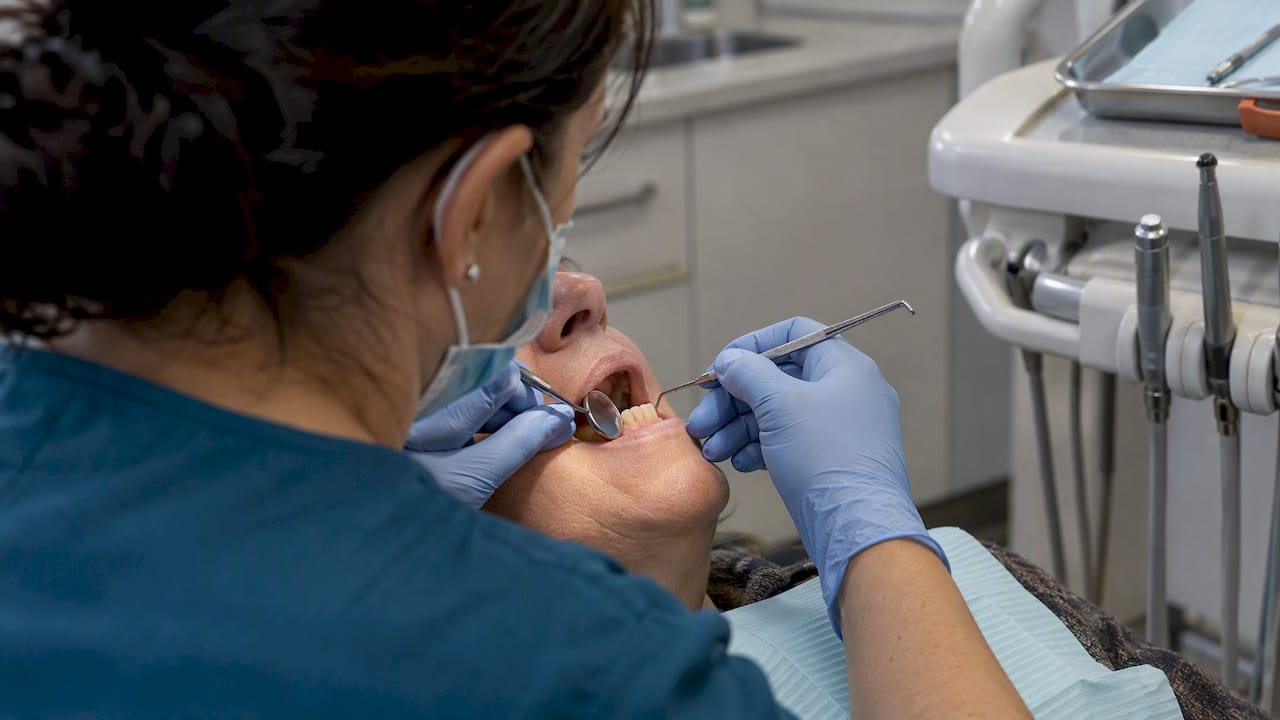
During a periodontal exam, the dentist or hygienist gently slides a thin, marked probe between the gum and tooth at several points around each tooth and reads the depth in millimeters. They also note bleeding on probing, which is one of the key signs of active disease. X-rays show how much bone surrounds the roots.
Those numbers feed a staging system. Periodontitis is classified in stages I through IV based on severity, and once a stage is assigned it does not usually drop to a lower one, even after successful treatment. Success is described as “periodontal stability” instead: pockets stop deepening, inflammation settles, and bone loss halts.
Gum pockets versus gum recession
They are not the same thing. Recession is the gum pulling back and exposing more of the tooth. Pockets form when the gum stays high but detaches from the tooth. Recession can have causes other than disease, such as aggressive brushing, and clinicians look for signs like bleeding on probing before deciding that recession means active periodontitis. You can have one without the other, or both together.
How deep is too deep?
Depth alone does not tell the whole story, but it gives you a rough map. This table summarizes how pocket depth is generally approached. Your own plan depends on bleeding, bone levels, and your overall health.
| Pocket depth | What it usually means | Typical approach |
|---|---|---|
| 1 to 3 mm, no bleeding | Healthy | Regular cleanings and daily home care |
| 4 to 5 mm | Early to moderate gum disease | Professional cleaning below the gumline, improved home care, recheck |
| 6 mm or more | Advanced disease, often with bone loss | Scaling and root planing first, then reevaluation, possibly surgery or a periodontist referral |
One ranking source points out that even pockets of 4 or 5 mm may be treated with professional cleanings that remove the causes of inflammation, paired with at-home care. Depth is a starting point for a conversation, not a verdict.
Treatment step by step
Guidelines describe periodontal care as a stepwise approach, where each step builds on the last and the stage of disease determines how far you go. Here is how that usually plays out.
Step 1: Control the cause at home and in the chair
Before any procedure, the first job is to remove the daily plaque that feeds the infection. That means a brushing and interdental cleaning routine you can actually keep up, and addressing risk factors. Smoking and uncontrolled diabetes both work against healing. Early on, this alone can reverse gingivitis, the stage before bone loss. Gingivitis is largely preventable and treatable with routine oral hygiene and professional cleanings.
Step 2: Scaling and root planing
This is the workhorse treatment for pockets. Scaling and root planing is a deep cleaning below the gumline used to treat gum disease. Scaling removes plaque and tartar from the tooth and root surfaces under the gum. Root planing smooths the root so bacteria have a harder time clinging and the gum can reattach.
What to expect:
- Your mouth is numbed locally, often one or two sections at a time, so you stay comfortable.
- The dentist or hygienist cleans the roots with hand instruments, ultrasonic tools, or both.
- The work is often split over two or more visits.
- You go home with instructions for the first few days.
A clinical practice guideline published in JADA found a moderate benefit from scaling and root planing for chronic periodontitis, with the benefits judged to outweigh potential adverse effects, and the authors supported it as the initial nonsurgical treatment.
Afterward: gums can be tender, and teeth may feel sensitive to cold. This usually settles quickly. The guideline research indicates sensitivity or pain generally resolves within about a week. Use a soft brush, rinse as directed, and call the office if pain is severe or getting worse after the first few days.
Step 3: Reevaluation
About a month or so after deep cleaning, your care team rechecks pocket depths and bleeding. This is the decision point. If the gums have tightened and the bleeding is gone, you move into maintenance. If some sites stay deep and inflamed, you discuss further options. Expect shallower pockets rather than a perfect reset: the aim is stability.
Step 4: Adjuncts, such as medication
Sometimes a dentist places a topical antibiotic in the pocket or prescribes a medication alongside cleaning to knock back stubborn bacteria. These are add-ons, not replacements for mechanical cleaning, and they are used selectively. Ask why a medication is recommended for your case and what it adds beyond the cleaning itself.
Step 5: Surgery for pockets that will not shrink
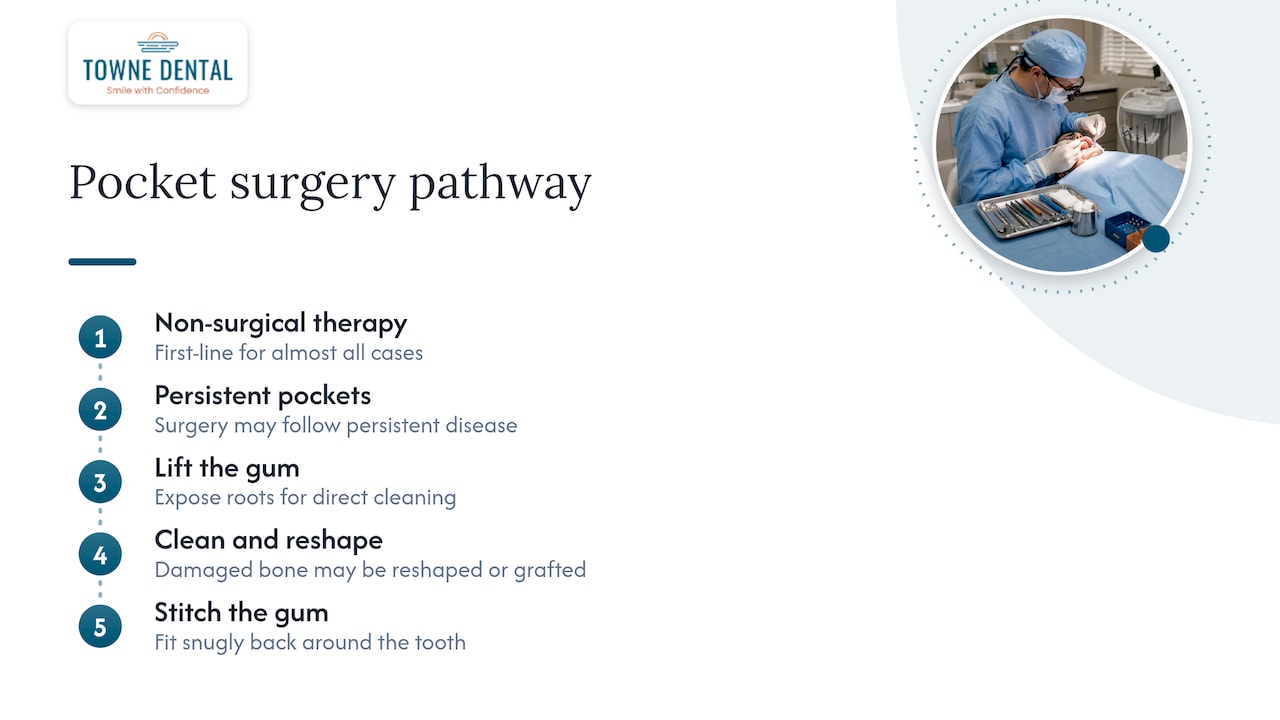
A common misconception is that surgery is the main way to treat deep pockets. In reality, non-surgical therapy is first-line for almost all cases. Surgery is typically reserved for pockets and inflammation that persist after that phase, or for bone loss that cleaning alone cannot correct.
Pocket reduction (flap) surgery generally means the gum is gently lifted back, the roots are cleaned directly while visible, damaged bone may be reshaped or rebuilt with grafting, and the gum is stitched snugly back around the tooth. The idea is to remove the hiding place for bacteria and make the area cleanable at home.
If you are advised to have surgery and feel unsure, getting a second opinion from a periodontist is a normal, accepted step. Good clinicians welcome it.
Step 6: Maintenance for life
Stable gum disease is a condition you keep in check, not one you finish. Most patients return for periodontal maintenance visits at intervals set by their dentist. If probing depths increase or bone loss returns, the condition is classified as recurrent periodontitis, which may need a more complex plan. Experts describe care as a journey in which success depends heavily on daily hygiene and managing risk factors such as smoking or diabetes.
Can gum pockets heal on their own?
It depends on what is causing them. If the pocket is shallow and the cause is inflamed, swollen gum (gingivitis), good brushing, flossing and a professional cleaning can bring the gum back to a healthy, snug fit.
Once periodontitis has destroyed bone, the picture changes. According to the CDC, periodontitis is irreversible, and severe periodontitis affects about 8% of U.S. adults aged 30 and older. It can be effectively managed and slowed, but not undone. Left untreated, it is a leading cause of tooth loss and can worsen conditions like diabetes. Pockets can get shallower after treatment as inflamed tissue shrinks, but treated does not mean cured. The lost bone stays lost unless a regenerative procedure rebuilds some of it.
What you can do at home to reduce periodontal pockets
Professional care opens the door. Home care keeps it open. Patients who fail to stabilize are often those who do not keep up a rigorous routine, which the research treats as just as important as the professional cleaning.
- Brush twice a day for two minutes with a soft brush, angling bristles toward the gumline.
- Clean between teeth daily with floss, interdental brushes or a water flosser. Ask your hygienist which size fits your spaces, because the right tool matters more than the brand.
- Do not stop on bleeding days. Bleeding gums usually mean inflammation, and consistent cleaning is what calms them.
- Quit tobacco. Smoking is one of the biggest risk factors for poor healing.
- Keep diabetes under control and tell your dentist about it. Gum disease and blood sugar affect each other.
- Keep every maintenance appointment. Pockets can be re-colonized within months if cleanings lapse.
If you are planning a brighter smile once your gums settle, give them time first. This guide to what to check before whitening after a professional cleaning covers sensitivity and timing, though it is written for a Canadian audience. Your own dentist should confirm when your gums are ready.
Warning signs that should not wait
Most gum pockets develop slowly. One complication does not. A periodontal abscess forms when a blocked pocket traps debris, calculus or a foreign object such as a piece of floss or toothpick. It can develop quickly, destroy supporting bone and tissue, and sometimes points to an underlying condition such as undiagnosed diabetes.
Call a dentist the same day if you notice:
- A painful, swollen bump on the gum that may release pus
- Swelling of the face or jaw
- A tooth that suddenly feels loose or sore to bite on
- Fever, or trouble swallowing, along with any of the above
Fever, difficulty swallowing or facial swelling means the infection may be spreading. Go to an emergency room if you cannot reach a dentist.
A note for parents
Gum pockets are uncommon in children, but gum swelling and abscesses are not. Examining young gums takes care: probing is technically harder in developing baby and mixed teeth, so adult screening tools had to be adapted. For a child’s dental abscess, antibiotics alone do not remove the source. Pulp therapy or extraction is what removes the infection, and antibiotics are reserved for cases where they are clearly necessary. If your child has a swollen gum, fever or facial swelling, have them seen promptly.
Our perspective: gum treatment should not feel like a punishment
Most patients who walk in with gum pockets are not careless. They are anxious, and often embarrassed. Many have avoided the dentist for years because they expected to be lectured, or because they remember a painful visit.
We approach gum care the opposite way. We start by showing you what is happening in your mouth, explain what the numbers mean, and build a plan around your health and comfort. Deep cleaning is the right first step for most people, and we would rather help you succeed with that than rush you toward surgery. Where more is truly needed, we explain why and talk through your options, including a second opinion if you want one.
Comfort is part of treatment. For patients whose nerves keep them away from the chair, we offer sedation dentistry, so a needed cleaning does not turn into another year of putting it off. And because gum health affects everything else we do, from crowns and bridges to implants, treating the foundation first protects the work built on top of it.
— Towne Dental
Getting gum care at Towne Dental
Our periodontics and gum care service covers evaluation and treatment of gum disease, alongside general dentistry for cleanings and checkups, and sedation options for patients who are nervous. If you have bleeding gums, been told you have deep pockets, or have gone years without a visit, book a visit through our main site and we will take it one step at a time. For urgent problems like swelling or severe pain, see our emergency dentistry and other services. We see patients across Naples, Fort Myers, Cape Coral, Bonita Springs, Estero, Marco Island and Ave Maria.
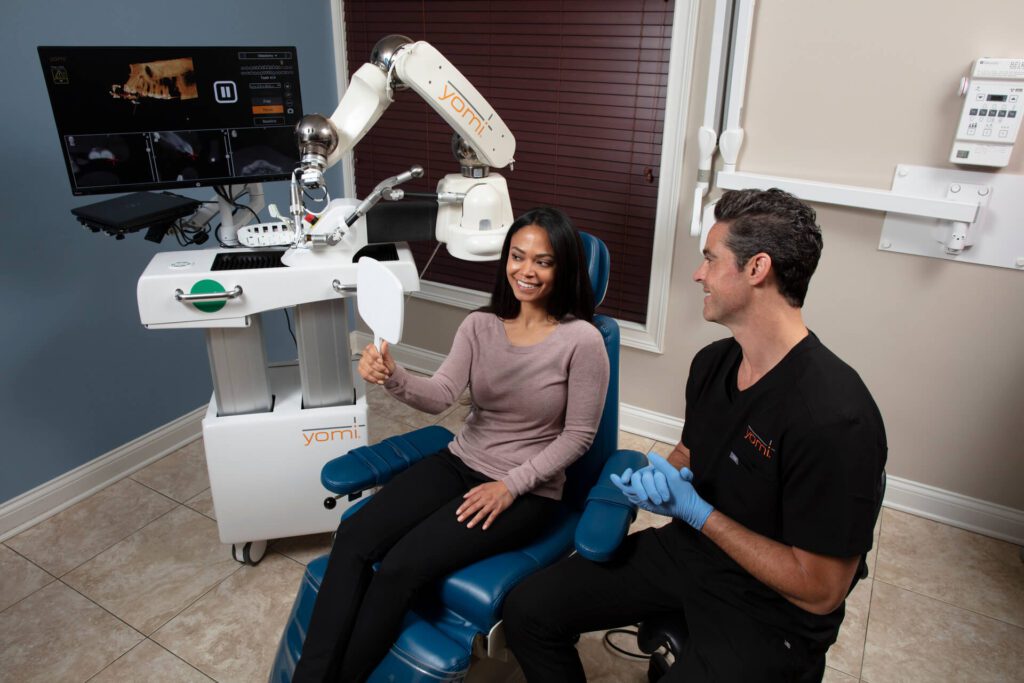
If gum disease has already cost you a tooth, we also offer dental implants with Yomi robotic assistance for precise placement, but healthy gums and stable bone come first.
FAQ
Can you heal a periodontal pocket?
Sometimes. Shallow pockets caused by gingivitis can return to normal with professional cleaning and good home care. When periodontitis has caused bone loss, the condition cannot be reversed, but treatment can shrink pockets, stop progression and bring the disease to a stable state.
Does deep cleaning hurt?
Your mouth is numbed, so the procedure itself should be comfortable. Afterward, tenderness and sensitivity are common, and research on the procedure indicates these typically resolve within about a week. Tell us ahead of time if you are anxious, because sedation can be an option.
Is surgery always needed for deep gum pockets?
No. Non-surgical deep cleaning is first-line for almost all cases. Surgery is generally considered when deep pockets and inflammation persist after that phase or when significant bone loss needs correcting. A second opinion from a periodontist is reasonable if surgery is recommended.
What happens if I don’t treat gum pockets?
Bacteria keep multiplying in the pockets, inflammation continues, and bone supporting the teeth can break down. Untreated periodontitis is a leading cause of tooth loss and can worsen chronic conditions such as diabetes.
Are gum pockets the same as gum recession?
No. Recession is the gum moving away from the tooth, while a pocket is a gap between gum and tooth. Both can be linked to gum disease, but recession can also come from factors like brushing too hard, so a dentist needs to examine you to tell which is which.
Sources
- NIDCR: Periodontal gum disease (pocket depth)
- AAP: FAQs on the 2018 classification of periodontal diseases
- ISP good clinical practice recommendations for gum care
- EFP S3 guideline on treatment of stage I to III periodontitis
- CDC: About periodontal (gum) disease
- CDC: Fast facts on gum disease
- ADA MouthHealthy: Scaling and root planing
- JADA: Clinical practice guideline on nonsurgical treatment of chronic periodontitis
- Simplified BPE in children and adolescents
- AAPD: Antibiotic therapy guideline