The main partial denture types are cast metal, acrylic (flipper), flexible thermoplastic, and implant-retained partials. Cast metal partials are usually chosen for durability, acrylic flippers for low cost and short-term use, flexible partials for comfort and fewer visible clasps, and implant-retained partials when chewing stability matters most. The section below breaks down the tradeoffs of each.
TL;DR:
- Choose an acrylic flipper for a quick, lower cost temporary replacement; select metal for durability, flexible resin for visible teeth, or implants for chewing stability.
- Ask whether the framework will rest on healthy teeth or gum tissue, since poor fit can rotate under chewing pressure and strain supporting teeth.
- Acrylic flippers may arrive in days, while metal and implant options take weeks; extractions, crowns, or healing add time and cost.
- Remove the partial nightly for cleaning unless your dentist advises otherwise, and seek an evaluation for persistent soreness or frequent adhesive use.
Table of Contents
- Comparing Cast Metal, Acrylic, Flexible, and Implant-Retained Partials
- Why Framework Design Matters More Than the Material Label
- Finding the Right Fit: Candidacy and Consult Questions
- What Partial Dentures Typically Cost and How Long Treatment Takes
- Keeping a Partial Denture Clean and Comfortable Long-Term
- How We Approach Partial Denture Care
- A Clinician’s Note on What Actually Matters
- Ready to Talk Through Your Options?
- FAQ
- Sources
Comparing Cast Metal, Acrylic, Flexible, and Implant-Retained Partials
Each type of partial denture solves the same basic problem, replacing missing teeth without a fixed bridge or full denture, but the materials and design behind each one change how it feels, how long it lasts, and how it treats the teeth still in your mouth.
Cast metal partials use a cobalt-chromium framework that fits precisely against the roof of the mouth or gum tissue. They tend to be thinner than acrylic alternatives, which patients often notice right away, and they hold up well over years of daily wear. The tradeoff is visibility: metal clasps can show when you smile or laugh, depending on which teeth need support. Most dentists treat this as a definitive, long-term option rather than a stopgap.
Acrylic partials, sometimes called flippers, are built faster and cost less upfront. They work well as an interim appliance while a permanent restoration is planned, or after an extraction when a tooth needs to be replaced right away. Acrylic is bulkier and more prone to fracture under heavy biting force, and because the base covers more tissue, it can place more stress on the abutment teeth that support it.
Flexible (thermoplastic) partials use a nylon-based resin that flexes slightly and wraps around teeth without metal clasps, which is why they are often chosen for front-tooth replacement where esthetics matter most. Clinical studies on oral health-related quality of life found flexible partials associated with greater improvements in some comfort and appearance measures compared with acrylic designs, though outcomes depend on careful case selection. Repairs and relines can be more limited than with rigid materials.
Implant-retained partials, or overdentures, attach to one or more implants using a bar or locator attachment. They offer the strongest retention and chewing stability of the group, since the appliance locks onto a fixed point rather than relying solely on remaining teeth or tissue. The cost is higher and surgery is required, but for patients who need dependable stability, including for adjacent snap-in denture cases, it often becomes the preferred route.
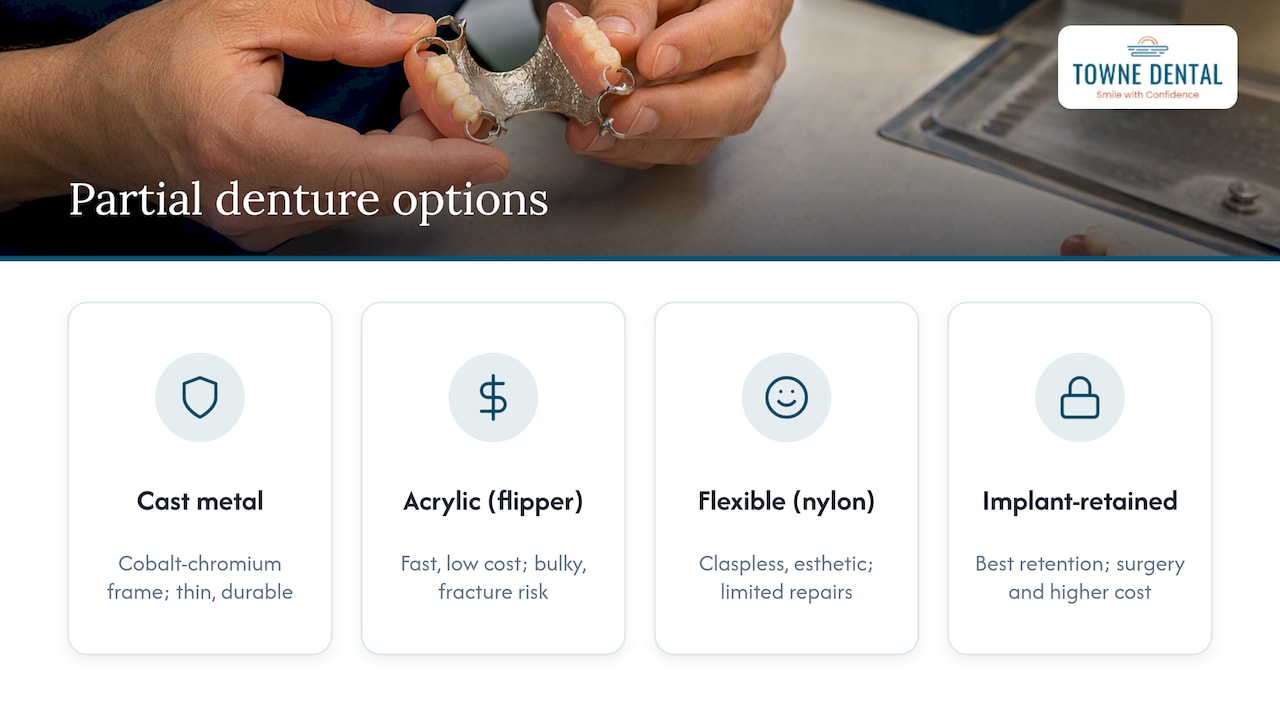
Maintenance expectations differ too: metal frameworks rarely need adjustment, acrylic flippers may need early relines, flexible partials need gentle cleaning to avoid clouding, and implant-retained options need periodic attachment checks.
Pro Tip: Ask your dentist to let you hold and compare a sample framework for each type before deciding, since fit and weight are easier to judge in hand than in a photo.
Why Framework Design Matters More Than the Material Label
Dentists often talk about whether a partial is tooth-supported or tissue-supported, and that distinction affects comfort more than the brand of material used. A tooth-supported framework rests on healthy abutment teeth and transfers chewing force through them, while a tissue-supported design spreads force across the gum ridge. Poor adaptation in either case can cause rotation under load, which gradually loosens the fit and puts uneven strain on the teeth holding it in place.
Common materials include:
- Cobalt-chromium frameworks, prized for rigidity and thin profiles that minimize bulk.
- PMMA acrylic, used for interim partials and denture bases because it is easy to adjust and reline.
- Nylon or thermoplastic resins, chosen for flexibility and a more natural appearance near visible teeth.
- Prosthetic tooth materials, typically acrylic or composite resin set into the framework to match surrounding enamel.
Attachment choice changes the mechanics as much as the material does. Traditional clasps grip the tooth externally and are the most visible option. Precision attachments sit inside a crown and stay hidden but require more preparation. Implant attachments, described in ACP guidance on implant-retained removable prostheses, redistribute force away from natural teeth entirely. Digital CAD/CAM scanning has also made framework fit more consistent by reducing the manual lab adjustments that once caused variability at delivery.
Finding the Right Fit: Candidacy and Consult Questions
Selection usually comes down to four factors: how many teeth are missing and where, the health of the remaining abutment teeth, available bone and gum support, and budget. Dentists often reference the Kennedy or PDI classification system, detailed in the ACP’s partially edentulous worksheet, to describe the gap pattern and predict how the partial will behave mechanically.
- Choose an acrylic flipper when you need a fast, affordable fix after an extraction or while planning a permanent solution.
- Lean toward a cast metal or flexible partial when the remaining teeth are healthy enough to support a long-term appliance and esthetics or durability are a priority.
- Consider implant-retained options when chewing stability is a daily concern or when preserving adjacent teeth long-term matters more than upfront cost.
Pro Tip: Bring a list of your top three priorities (comfort, appearance, or cost) to your consult so your dentist can match the design to what matters most to you.
Before committing, ask about expected lifespan, repair and reline options, whether crowns or attachments are needed first, and how the lab fabrication process works.
What Partial Dentures Typically Cost and How Long Treatment Takes
Costs vary by type and complexity rather than following a fixed price list. In general terms, acrylic flippers sit at the lower end since they require less lab work, cast metal partials fall in the middle due to the precision casting involved, and implant-retained partials cost more because they include surgical placement and attachment hardware.
- Consultation and records: exam, X-rays, and impressions to plan the design.
- Try-in: a fitting appointment to check bite and appearance before final fabrication.
- Delivery and adjustment: the finished partial is placed and refined over follow-up visits.
Interim acrylic partials can often be delivered in days, while a cast metal or implant-retained partial typically takes several weeks due to lab fabrication or healing time after implant placement. Adding procedures like extractions, crowns, or implants extends both cost and timeline. It’s worth checking your insurance benefits and requesting an itemized estimate before moving forward.
Keeping a Partial Denture Clean and Comfortable Long-Term
Daily care is straightforward: remove the partial to soak and brush it with a nonabrasive denture cleanser, and take it out at night unless your dentist advises otherwise. Skipping daily cleaning raises the risk of irritation and buildup around clasps or attachments.
- Routine checkups catch fit changes early, before they cause sore spots.
- Relines or rebasing adjust the fit as gum tissue and bone shift over time.
- Adhesives work as a short-term aid for a loose fit, not a substitute for professional adjustment.
A 2024 systematic review found that subjective chewing ability improved in about 83.3% of studies following RPD treatment, underscoring why proper fit and maintenance directly affect daily function, not just comfort. According to ACP/ADA denture care guidelines, frequent adhesive use or persistent soreness are signs it’s time for a professional evaluation rather than a home fix.
How We Approach Partial Denture Care
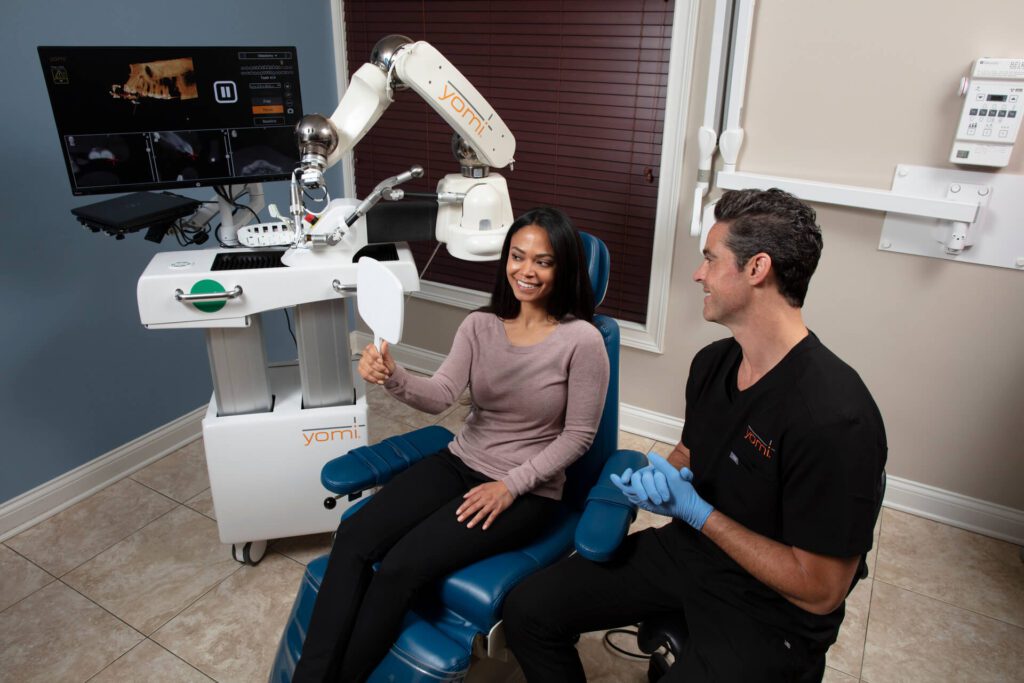
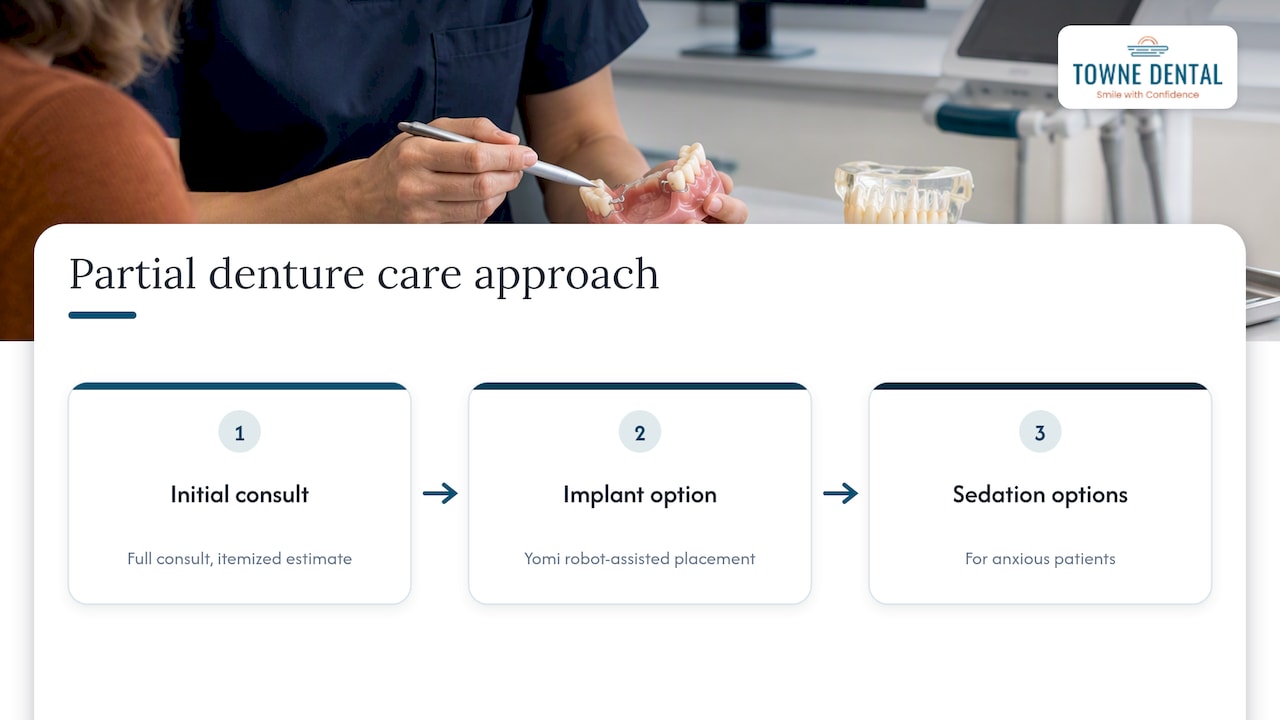
We start every partial denture case with a full consult and clear, itemized estimate so you know what to expect before treatment begins. For patients who may benefit from implant stability, we offer Yomi® Robot-Assisted Implants for precise, minimally invasive placement, along with sedation options for anyone who feels anxious about dental visits.
A Clinician’s Note on What Actually Matters
Marketing language about materials matters less than two things: a precise fit and protecting the teeth you still have. Before your consult, write down your top priorities, bring a list of current medications, and note any photos of your bite or smile you want to discuss.
— Towne Dental
Ready to Talk Through Your Options?
If you’re weighing partial denture types, we’re glad to walk through candidacy, fit, and cost in a single visit. Our general dentistry team provides detailed, itemized estimates and can discuss implant-retained options alongside traditional designs so you leave with a clear plan.
Schedule a consult through our practice homepage to get started.
FAQ
What are the benefits of partial dentures?
Partial dentures restore chewing ability, support facial structure, and prevent remaining teeth from shifting into open gaps. A 2024 systematic review found patient satisfaction with removable partial dentures ranges between 50% and 81%, with older adults generally reporting higher satisfaction.
Is a cast partial denture the same as an RPD?
Yes, “cast partial denture” refers specifically to a removable partial denture (RPD) built with a cast metal framework. RPD is the broader clinical term that also includes acrylic and flexible designs.
What are the different types of dentures available?
The main categories are complete dentures, which replace all teeth in an arch, and removable partial dentures, which replace some teeth while remaining teeth stay in place. Partial dentures are further divided into cast metal, acrylic, flexible, and implant-retained designs.
What is an acrylic partial denture?
An acrylic partial denture, often called a flipper, uses a PMMA acrylic base to hold replacement teeth and is typically chosen for low cost and fast fabrication. It’s commonly used as an interim solution while a longer-term restoration is planned.
How do I know if I need a reline or a new partial?
Signs include looseness, soreness, or relying on denture adhesive more often than before. Per ACP/ADA guidance, a professional evaluation can determine whether a reline will fix the fit or a replacement is needed.
Sources
- A systematic review of patient satisfaction with removable partial dentures (RPDs)
- Impact of removable partial dentures on masticatory performance: systematic review
- Oral health-related quality of life: acrylic versus flexible partial dentures
- Evidence-based guidelines for the care and maintenance of complete dentures