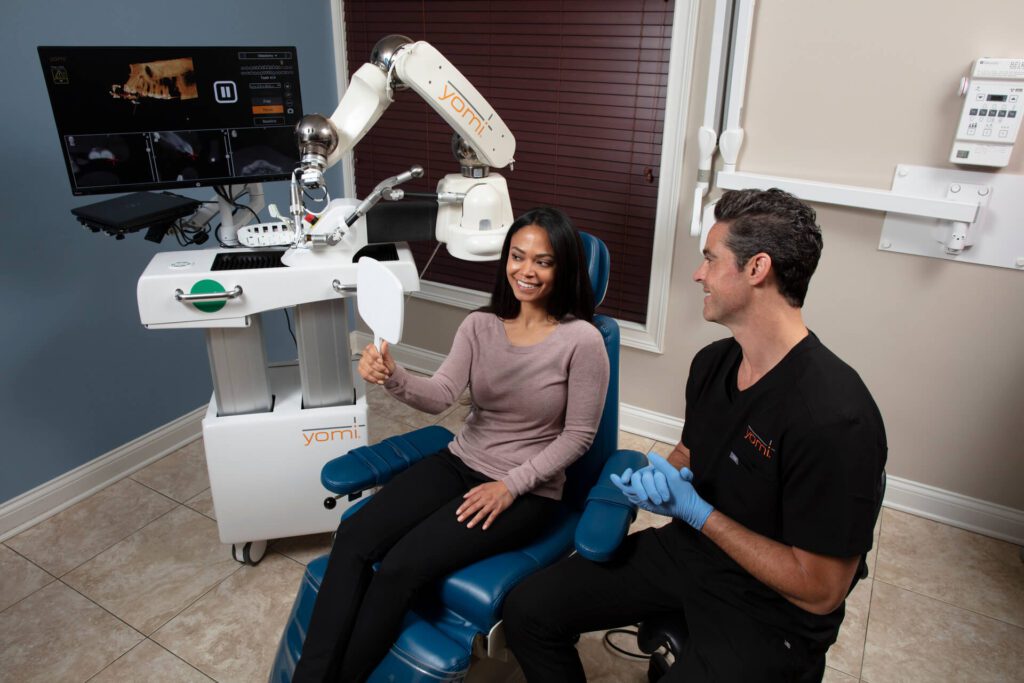
Yes, a dentist can help with TMJ pain. A dentist can take your history, examine your head, neck, face and jaw, and recommend treatment for what are properly called temporomandibular disorders, or TMD, according to the National Institute of Dental and Craniofacial Research. Most plans start with simple, reversible steps rather than anything drastic. This guide explains what a visit looks like, which symptoms matter, what else can feel like TMJ pain, and when jaw pain should not wait. If you live in Southwest Florida, we also explain how our team at Towne Dental fits in.
TL;DR
- A dentist can evaluate jaw pain, clicking and limited opening, and recommend treatment for TMD.
- Diagnosis rests mostly on your history and a hands-on exam, not on a single test.
- Treatment usually starts conservative: soft foods, heat or cold, gentle exercises, habit changes, and sometimes a nightguard.
- Tooth pain, ear pain and headaches can come from the jaw muscles, and some other conditions can imitate TMJ pain.
- Trouble eating or opening your mouth is a reason to contact your provider right away.
Table of Contents
- What a dentist can do for TMJ pain
- Symptoms that point to a TMJ disorder
- How a dentist evaluates jaw pain
- Can TMJ cause tooth pain?
- What can be mistaken for TMJ pain
- Treatment: what usually helps, in order
- Our perspective on TMJ pain
- When jaw pain shouldn’t wait
- Getting your jaw checked at Towne Dental
- What to bring to your appointment
- FAQ
- Sources
What a dentist can do for TMJ pain
The temporomandibular joints connect your lower jaw to your skull, one on each side, just in front of your ears. TMD is the umbrella term for problems with those joints and the chewing muscles around them. Pain in the muscles, the joint or both is the most common symptom.
Your dentist is a natural first stop because the same system includes your teeth, your bite and the way you clench or grind. In a first visit, a dentist can:
- Ask when the pain started, what makes it better or worse, and what else is going on with your health.
- Examine the jaw, face, head and neck for tenderness, clicking or popping, and difficulty with movement.
- Look at your teeth for wear patterns that suggest clenching or grinding.
- Recommend treatment, and if the picture is complicated, refer you to a specialist experienced in dental-related pain.
That last point matters. Good TMD care is not about doing the most. It is about identifying what is actually causing your pain and choosing the least invasive path that works.
Symptoms that point to a TMJ disorder
TMD does not look the same in everyone. The NIDCR lists these common signs:
- Pain or tenderness in the jaw or face
- Stiffness in the jaw
- Painful clicking or popping when you open or close your mouth
- Difficulty moving the jaw, including trouble opening wide
A click that doesn’t hurt is a different matter from a click that comes with pain or locking. The pain is what usually brings people in. Many people also notice that symptoms flare after a stressful week, a long meal of chewy food, or a night of heavy clenching.
Is TMJ disorder “staged”?
People often search for “stage 4 TMJ.” There is no standardized stage system for TMD in general clinical practice. The 2025 UK Royal College of Surgeons guideline notes that researchers use classifications instead, such as myogenous (muscle), arthrogenous (joint) or a combination of both. If someone has told you that you have “stage 4,” ask them exactly what they mean and what findings they are describing.
How a dentist evaluates jaw pain
There is no blood test or single scan that confirms TMD. The Merck Manual’s professional edition says diagnosis is primarily based on history and physical examination. Here is what that typically involves.
- Your story. Where does it hurt, when, and for how long? Do you clench, grind, chew gum or bite your nails? Have you had a recent injury, dental work or a cold?
- Muscle checks. The exam may include pressing on the chewing and neck muscles to look for tenderness.
- Movement. Your dentist watches how far and how smoothly your mouth opens and whether the jaw deviates to one side.
- Joint sounds. Clicking or popping may be listened for, sometimes with a stethoscope.
- Joint pressure. Pain that gets worse when a finger presses on the joint with your mouth open points toward a TMD.
The UK guideline adds a useful idea: during the exam, the clinician should try to reproduce what it calls “familiar pain,” meaning the pain you recognize as your usual symptom. Finding some other tender spot is not enough. Matching your actual complaint is what helps avoid a wrong diagnosis.
The assessment can also take your wider health into account. Guidelines from European specialists note that anxiety and depression become more important to consider when pain has lasted a long time. That is not a suggestion that the pain is imaginary. Stress and poor sleep can feed muscle tension, and treating them can be part of the plan.
Can TMJ cause tooth pain?
Yes. MedlinePlus explains that trigger points in the muscles of the jaw, head or neck can send pain to other areas, including the teeth, which can feel like a toothache. The ears can be affected the same way.
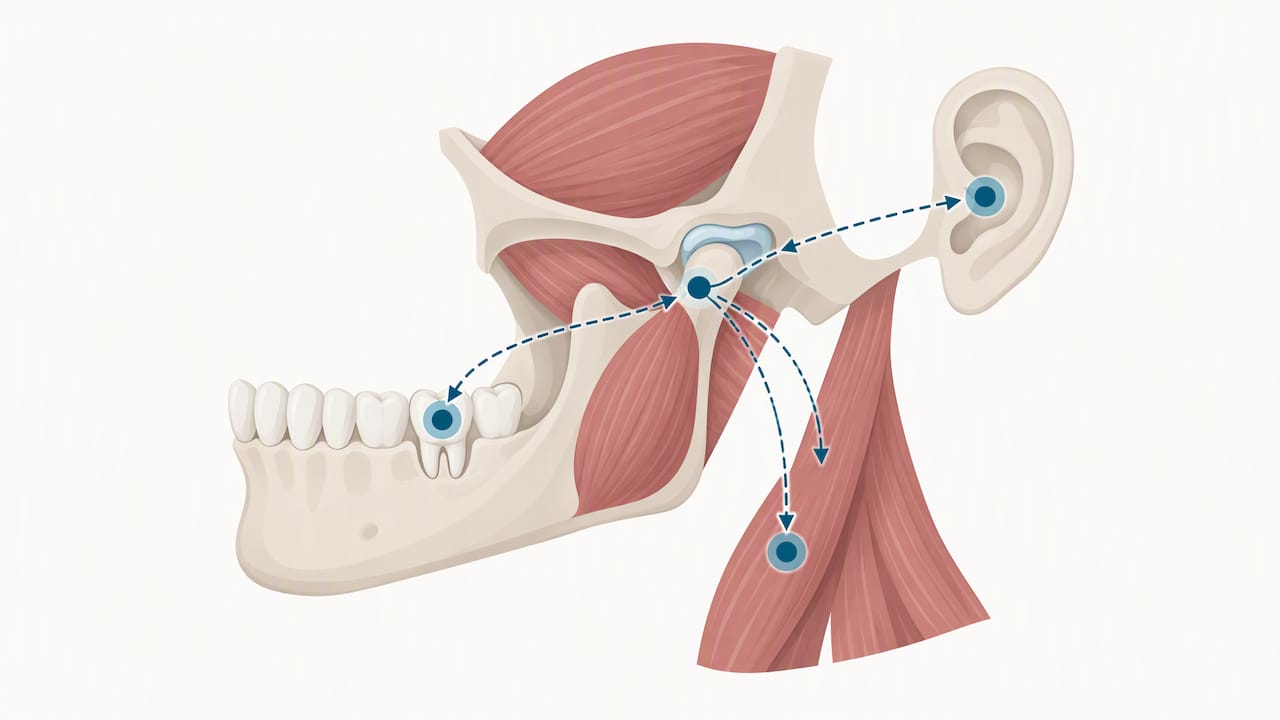
This is why a good dental visit for “jaw pain” often includes a tooth check. If a tooth looks and tests normal but the aching continues, muscle pain becomes more likely. If a tooth is cracked, infected or has a deep cavity, that needs its own treatment, and our general dentistry services cover fillings, crowns and other repairs.
What can be mistaken for TMJ pain
Not every sore jaw is TMD. MedlinePlus says infections, nerve-related problems and headaches can cause symptoms that resemble TMJ. The Merck Manual adds salivary gland disorders, cardiac pain, and neck or cervical spine problems that radiate to the jaw joint.
In practice, a dentist is looking for clues that something else is going on:
- Swelling, fever or a bad taste, which suggest infection
- Sharp, electric, shooting pain, which suggests a nerve problem
- Pain that follows a pattern of head or neck tension
- Jaw pain together with chest discomfort, shortness of breath or sweating, which is a medical emergency. Call 911 rather than booking a dental visit.
When the cause is outside the mouth, treatment belongs with your physician or another specialist. Many people with jaw and neck pain also look into muscle and joint pain treatment alongside their dental care, which is worth discussing with your dentist so the plans don’t conflict.
Treatment: what usually helps, in order
The reassuring news is that many cases settle down without aggressive treatment. The Ontario dental regulator’s standard of practice notes that clinical remission happens without treatment in many TMD cases. The same document says decisions to treat should come from a detailed history and careful exam, with preference for conservative, reversible therapies. The American Dental Association’s journal says the same: start with reversible care.
Step 1: self-care at home
The NIDCR suggests starting with:
- Soft foods while the jaw is sore. Our guide to soft foods after an extraction has easy ideas that work for a sore jaw too.
- Heat or cold on the area, combined with gentle jaw exercises
- Over-the-counter pain relievers such as NSAIDs, if they are safe for you
- Cutting back on habits like clenching, gum chewing and nail biting
JAMA-published dental guidance also mentions limiting wide jaw movements and using warm compresses. That means smaller bites, no huge burgers, and covering your mouth during big yawns.
If you want to understand the wider landscape of drug-free approaches, this overview of non-invasive pain treatments explains how conservative care is often tried before anything more involved. Check with your dentist or doctor before adding any new therapy.
Step 2: what a dentist adds
If pain continues, the options widen. Dental guidance lists jaw muscle exercises, muscle relaxants or anti-inflammatory medicines, and a nightguard to reduce clenching or grinding during sleep. The NIDCR also names physical therapy and intraoral appliances among the options.
A nightguard is a custom-fitted plastic appliance that sits between your teeth. It doesn’t cure TMD, but it can take pressure off the muscles and protect your teeth from wear. A store-bought boil-and-bite guard may feel bulky and not fit your bite well, which is one reason to have one made for you.
Step 3: when bite and alignment come into the conversation
People often wonder whether crooked teeth or a bad bite cause TMJ pain. The evidence-based guidance above prioritizes reversible treatment and does not present bite changes as a first-line fix. That said, if you have a crossbite or alignment issue that makes chewing uncomfortable for other reasons, it can be worth addressing on its own merits. Our article on crossbite treatment walks through options for kids, teens and adults. Irreversible work, such as grinding down teeth or major bite reconstruction, should never be your starting point for jaw pain.
Our perspective on TMJ pain
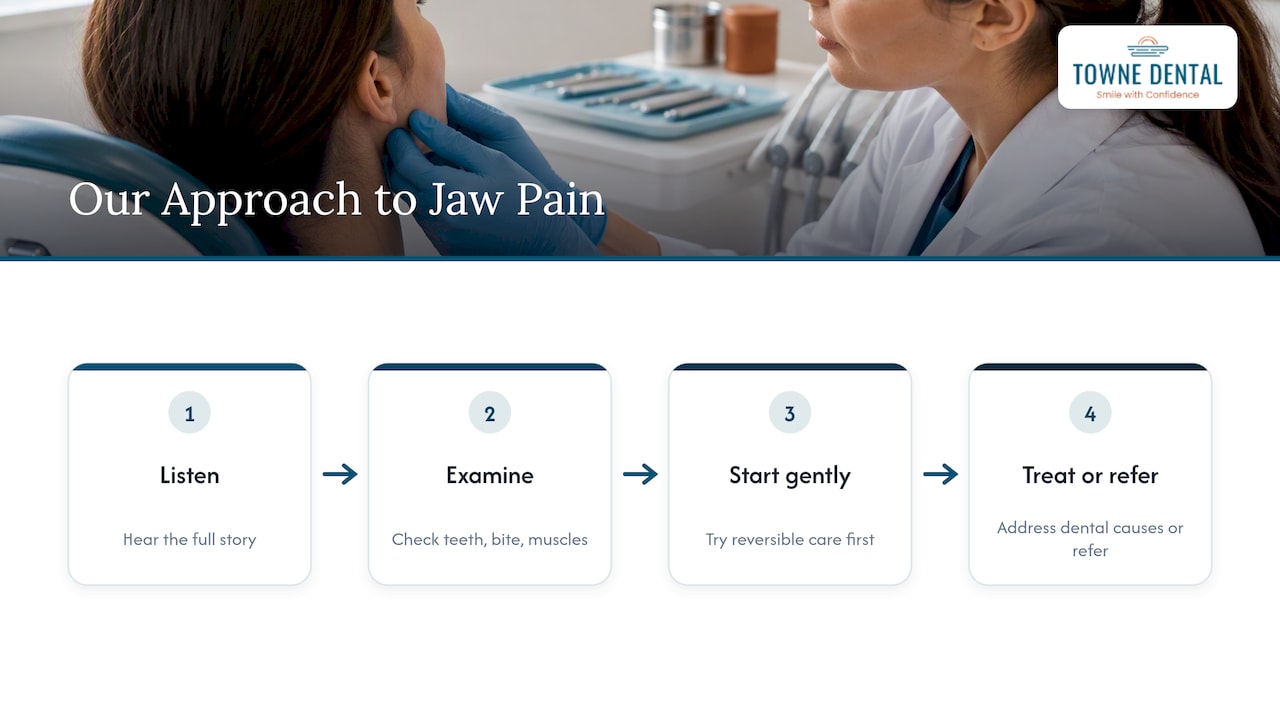
We see jaw pain as a conversation first and a procedure last. Patients come to us worn out from weeks of aching, worried that something serious is wrong, or anxious about what a dental visit will involve. Our approach is to slow down, listen to the full story, and examine the whole picture: teeth, gums, bite and the muscles that move the jaw.
We lean on the same principle the national guidance does. Start with what is reversible and gentle, and add more only if it is needed. For many of our patients that means a conversation about habits, a careful look at tooth wear, and a custom nightguard, which is part of the general dentistry care we provide. We also pay attention to comfort. Our practice is built around reducing anxiety, and we offer sedation dentistry for patients who find dental visits stressful. If your pain turns out to come from a tooth, a gum problem or a lost tooth that has shifted your bite, we can treat that directly. If it looks like it comes from somewhere outside the mouth, we will say so and point you toward the right professional rather than guess.
— Towne Dental
When jaw pain shouldn’t wait
MedlinePlus advises contacting your provider right away if you are having trouble eating or opening your mouth. Treat these as same-day situations too:
- Your jaw locks open or closed
- Swelling in the face or jaw, especially with fever
- A recent blow to the face or jaw
- Severe tooth pain with a bad taste or gum swelling
Southwest Florida patients can reach our emergency dentistry team for urgent tooth and jaw problems. And again, jaw pain with chest pain or trouble breathing needs 911, not a dentist.
Getting your jaw checked at Towne Dental
We serve patients across Naples, Bonita Springs, Estero, Marco Island, Fort Myers, Cape Coral and Ave Maria. If you have been putting up with jaw pain, clicking or headaches that seem tied to clenching, book an exam with our team. We will review your history, check your bite and teeth, and talk through conservative options, including a custom nightguard where it makes sense. See everything we offer on our services page, or call the office to schedule.

What to bring to your appointment
A little preparation makes the exam more useful.
- A symptom log. Note when the pain is worst (morning, after meals, evenings), which side hurts, and whether clicking or locking happens.
- Your habits. Be honest about gum chewing, nail biting, ice chewing and stress clenching. Nobody is judging.
- Your medications. This matters before anyone suggests an anti-inflammatory or muscle relaxant.
- Previous care. Mention earlier nightguards, physical therapy or imaging.
- Your questions. Ask what the likely cause is, which treatments are reversible, and what will happen if the pain doesn’t improve in a few weeks.
If you wear braces or aligners, or have had them, tell us. Elastics and retainers can change how your jaw feels, and our guides on retainers after braces and orthodontic elastics explain what is normal and what to mention.
FAQ
Can your dentist fix TMJ?
A dentist can diagnose TMD and treat it, usually with conservative steps such as habit changes, self-care, exercises and a nightguard. Many cases improve or settle without major treatment. If your case is complex, your dentist may refer you to a specialist in dental-related pain.
What can be mistaken for TMJ pain?
Infections, nerve problems, headaches, salivary gland disorders, neck problems and even heart-related pain can all show up in the jaw. A hands-on exam and a good history help separate them. Jaw pain with chest symptoms needs emergency care.
Can my tooth hurt from TMJ?
Yes. Trigger points in the jaw, head or neck muscles can refer pain to the teeth, so a tooth can ache even when it is healthy. Your dentist will check the tooth first to rule out decay, a crack or infection.
Is there a stage 4 TMJ disorder?
There is no standard staging system for TMD in everyday clinical practice. Clinicians more often describe it as muscle-related, joint-related or both. If you were given a stage, ask what findings it is based on.
When should I see a dentist about jaw pain?
Book a visit if pain lasts more than a short while, or if clicking, stiffness or limited movement keeps returning. Contact your provider right away if you have trouble eating or opening your mouth.
Sources
- TMD | National Institute of Dental and Craniofacial Research
- Why does my jaw hurt? | The Journal of the American Dental Association
- Overview of Temporomandibular Disorders | Merck Manual Professional
- TMJ disorders | MedlinePlus
- Management of painful temporomandibular disorder in adults | Royal College of Surgeons
- Standard of Practice: Diagnosis and Management of Temporomandibular Disorders | RCDSO
- Recommendations for Examination, Diagnosis and Management of TMD | EACD