For the first two to three days after a tooth extraction, eat soft, cool or lukewarm foods such as yogurt, scrambled eggs, mashed potatoes, applesauce and blended soups. Skip anything hard, crunchy, sticky, hot or spicy, and do not use a straw. Most people work back toward a normal diet over about one to two weeks, according to MedlinePlus. Below is a day-by-day plan, a clear list of foods to avoid, and notes for people who have had a dental implant placed.
TL;DR
- Days 1 to 3: soft, cool or lukewarm foods only. Think yogurt, eggs, pudding, smoothies (with a spoon, not a straw) and smooth soups.
- Avoid nuts, chips, popcorn, hot sauce, citrus juice, alcohol and anything piping hot until your dentist says otherwise.
- No straws. Suction can dislodge the blood clot and lead to dry socket.
- Soft does not mean low nutrition. Protein and calories help tissue heal.
- Your own dentist’s instructions come first. If pain gets worse after day three or you see signs of infection, call the office.
Table of Contents
- Why what you eat matters after an extraction
- A day-by-day eating timeline
- Soft foods that actually help you heal
- What not to eat after a tooth extraction
- Common questions about specific foods
- What to eat after wisdom tooth removal
- What to eat after a dental implant
- How to prepare before your appointment
- Signs that something is wrong
- Our perspective: comfort first, then healing
- Need an extraction or implant in Southwest Florida?
- FAQ
- Sources
Why what you eat matters after an extraction
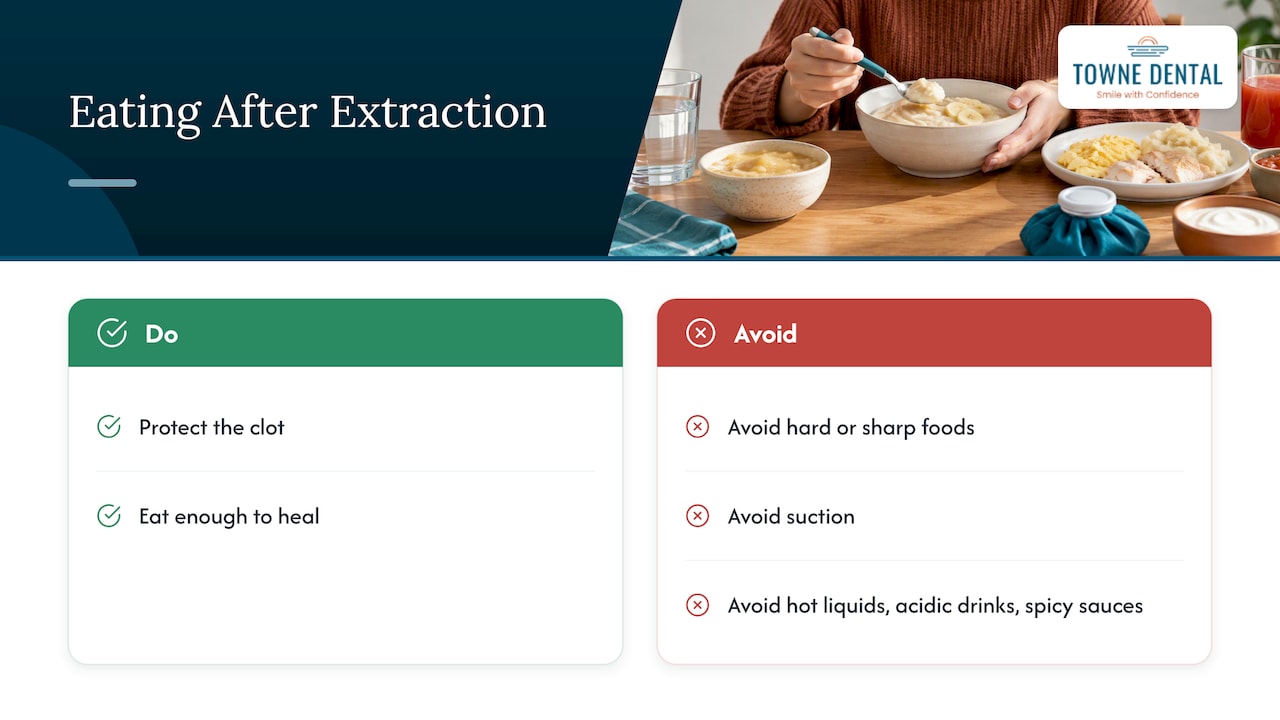
When a tooth comes out, a blood clot forms in the socket. That clot is the foundation of healing. Hard or sharp foods can break it down or push into the wound, and suction can pull it out. When that happens, bone and nerve endings are exposed, which is the painful condition known as dry socket.
Food choices also affect how comfortable the first week feels. Hot liquids, acidic drinks and spicy sauces irritate fresh tissue. According to the Cleveland Clinic, patients often forget that acidic and spicy foods, such as orange juice and hot sauce, can cause discomfort in the early recovery phase, not just crunchy textures.
The goal is simple: protect the clot, avoid irritation, and still eat enough to heal.
A day-by-day eating timeline
Every mouth and every procedure is different. A single simple extraction heals faster than several teeth removed surgically, and your dentist may give you a different timeline. Use this as a general guide, not a replacement for your written instructions.
The first 24 hours
After the procedure you will likely have gauze in place and some numbness. Wait until the numbness wears off before chewing, so you do not bite your cheek, lip or tongue. Dartmouth Health’s maxillofacial team notes that you can drink at any time, but only cold drinks are advised for the first 24 hours, with no hot drinks.
Good choices for day one:
- Yogurt (plain or lightly sweetened, no fruit chunks with seeds)
- Pudding, gelatin and custard
- Applesauce
- Cool, smooth soups or broth
- Milkshakes or smoothies eaten with a spoon
- Water, milk and other non-acidic drinks
Keep everything cool or lukewarm. Experts recommend lukewarm or cool food to protect the stability of the clot.
Days 2 and 3
You can usually add foods that need a little more than swallowing, as long as they are soft and do not require real chewing. The Boston University dental school advises soft, cool foods for the first two to three days, with examples such as yogurt, soup and eggs, and suggests chewing on the opposite side of your mouth when possible.
Add:
- Scrambled eggs
- Mashed potatoes or mashed sweet potatoes
- Oatmeal or cream of wheat that has cooled
- Cottage cheese
- Mashed avocado or hummus
- Blended soups without chunks
- Well-cooked, soft pasta, once you are comfortable
Days 4 to 7
If swelling and soreness are fading, start reintroducing foods that are soft but have some texture. Think flaked fish, tender shredded chicken, ground meat in soft dishes, soft bread without a crust, rice, and well-cooked vegetables. Keep chewing on the side away from the extraction site.
If a food makes the site ache or you feel something lodging in the socket, go back a step and try again the next day.
Week 2 and beyond
Most people return to a normal diet gradually over one to two weeks, though that varies with the procedure. Reintroduce crunchy and chewy foods one at a time, and cut them small. If your dentist placed stitches or did a bone graft, follow their timeline, which may be longer.
Soft foods that actually help you heal
It is easy to live on ice cream and broth for three days, but healing tissue needs fuel. Experts stress that soft does not mean lacking nutrition: high protein and enough calories support recovery.
The American Dental Association notes that nutrient-dense soft foods, including those fortified with protein or powdered milk, help supply vitamins A and C and zinc, which tissue repair depends on.
| Goal | Easy options |
|---|---|
| Protein | Greek yogurt, scrambled eggs, cottage cheese, tofu, hummus, protein shakes eaten with a spoon, soft flaked fish |
| Calories and energy | Mashed potatoes, avocado, oatmeal, smoothies, pudding |
| Vitamins and minerals | Blended vegetable soups, mashed sweet potato, banana, applesauce |
| Hydration | Water, milk, cool broth, diluted non-citrus juice |
A few practical tips:
- Stir a scoop of unflavored protein powder or powdered milk into oatmeal, soup or mashed potatoes.
- Let hot dishes cool to lukewarm before eating.
- Choose smooth over seedy. Strawberry and raspberry seeds, sesame, poppy seeds and grains such as quinoa can settle into the socket.
- Eat small portions more often if a full meal feels like too much.
The South Australian Dental Service also lists pureed fruit and other soft, not-too-chewy options as a way to reduce irritation and the risk of infection, which matches what US surgical teams advise.
What not to eat after a tooth extraction
The rule of thumb: if it is hard, crunchy, sticky, chewy, hot, spicy, acidic or tiny enough to get stuck, leave it for now. The BU dental school lists hot, spicy, crunchy, sticky and hard foods to avoid. MedlinePlus notes that nuts, popcorn, chips and caramel can damage the site or lodge in the socket, and should be avoided for at least one to two weeks.
Avoid for at least the first week, or until your dentist clears you:
- Nuts, seeds, popcorn and chips
- Hard candy, caramel, taffy and gum
- Crusty bread, bagels, pizza crust and tough meats such as steak
- Burgers and other foods that need a wide, forceful bite
- Hot soup, coffee and tea in the first 24 hours
- Hot sauce, curry, salsa and other spicy dishes
- Orange, grapefruit and lemon juice, and other acidic drinks
- Alcohol
- Straws, including for smoothies and milkshakes
Straws
This is the most common mistake. Sucking creates negative pressure in the mouth that can pull the clot out. Guidance on how long to avoid straws ranges from 24 hours to up to a week depending on the complexity of the procedure. Smoking and other tobacco use also interfere with healing, and MedlinePlus lists them among the things to avoid to prevent dry socket.
Alcohol
Avoid alcohol for at least the first 48 hours, and for as long as you are taking prescription pain medicine or antibiotics. It can interfere with healing and interact with medications, as Boston University’s dental school instructs patients. If you are unsure whether your medication mixes with alcohol, ask your dentist or pharmacist before you have a drink.
Common questions about specific foods
Pizza, burgers and bread
Standard pizza, hamburgers and crusty bread are listed as hard or tough-to-chew foods by the ADA’s MouthHealthy resource, so they are best avoided in their normal form for at least the first week. Softer versions, such as a thin slice with the crust removed, may be possible around day three or later if your dentist agrees. Hot, cheesy and spicy toppings add extra irritation, so wait for the socket to calm down.
Coffee and tea
No hot drinks on day one. After that, let coffee cool to lukewarm and sip it from a cup. Skip the straw for iced coffee.
Rice and grains
Soft, well-cooked rice is fine for most people once you are eating soft foods, but grains can get into the socket. Rinse gently as your dentist directs. Check your post-op sheet before rinsing, since timing differs between offices.
Smoothies
Smoothies are a good way to get protein, fruit and calories, but eat them with a spoon. Avoid blends with raspberry or strawberry seeds, and skip acidic citrus bases early on.
What to eat after wisdom tooth removal
Wisdom tooth removal is often more involved than a simple extraction, especially when teeth are impacted. Swelling and jaw stiffness can last longer, so the soft-food stage may stretch beyond three days. Many patients find it easier to stay on smooth foods such as yogurt, blended soups, mashed potatoes and smoothies for several days, then add soft pasta, eggs and flaked fish.

If you had a lower tooth removed and your lip or tongue feels numb, be careful when eating hot or hard foods since you may not feel them. The University of Washington’s oral surgery guide notes that numbness usually resolves within 7 to 10 days, and that you should contact your dental professional if it does not.
What to eat after a dental implant
An implant involves placing a titanium post in the jaw, often after an extraction or alongside a bone graft. The first days of eating look much like an extraction recovery, with extra attention on protecting the surgical site while the implant integrates with the bone.
- First day or two: cool liquids and very soft foods. Yogurt, smoothies by spoon, pudding, broth and applesauce work well.
- First week or two: soft foods that need little chewing. Eggs, mashed potatoes, cottage cheese, soft fish, oatmeal and well-cooked pasta.
- After that: add firmer foods slowly, chewing on the opposite side from the implant site until your surgeon gives the go-ahead.
The same avoid list applies: no straws, no alcohol early on, and nothing hard, crunchy, sticky or very hot. Because implant plans vary, for example when a bone graft or sedation is involved, your own written instructions matter more than any general chart. For details on how long to stay on soft foods, ask your surgeon at the pre-op visit, so you can stock the kitchen ahead of time.
How to prepare before your appointment
A little planning makes the first few days much easier:
- Shop and cook ahead. Stock yogurt, applesauce, eggs, oatmeal, soft soups and protein shakes. Freeze single portions of soup or mashed potatoes.
- Pick a spoon-friendly routine. Plan three small meals and two or three snacks.
- Check your medications. Ask what to take with food, and what to avoid with alcohol.
- Prepare a cold pack. MedlinePlus suggests a cold compress on your cheek for 10 to 20 minutes at a time, wrapped in a towel rather than directly on skin.
- Eat well in the days before. Good nutrition before the procedure supports healing, as the ADA points out in its nutrition guidance.
If you are anxious about the appointment, tell your dentist ahead of time. Sedation options can make the procedure more comfortable, and your dental team can explain what that means for eating beforehand and afterward.
Signs that something is wrong
Some soreness, mild swelling and a small amount of blood mixed with saliva are normal in the first day. Contact your dentist if you notice:
- Pain that gets worse several days after the extraction instead of better
- A bad taste or odor, or visible bare bone in the socket, which can point to dry socket
- Bleeding that keeps soaking through gauze
- Fever, spreading swelling or pus
- Numbness in your lip or tongue that does not fade within 7 to 10 days after lower jaw surgery
If you cannot reach your regular dentist and the pain or bleeding is severe, or you have trouble breathing or swallowing, seek emergency care.
Our perspective: comfort first, then healing
Most post-extraction problems we hear about are not complicated. A patient felt good on day two, had a crunchy snack or a smoothie through a straw, and set their recovery back. The food rules feel small, but they protect the clot, and the clot protects everything else.
We also see people undereat because “soft” sounds boring. Protein, calories and vitamins matter, and you can get them with eggs, yogurt, blended soups and fortified oatmeal. Building a simple menu before your visit takes the stress out of the first few days.
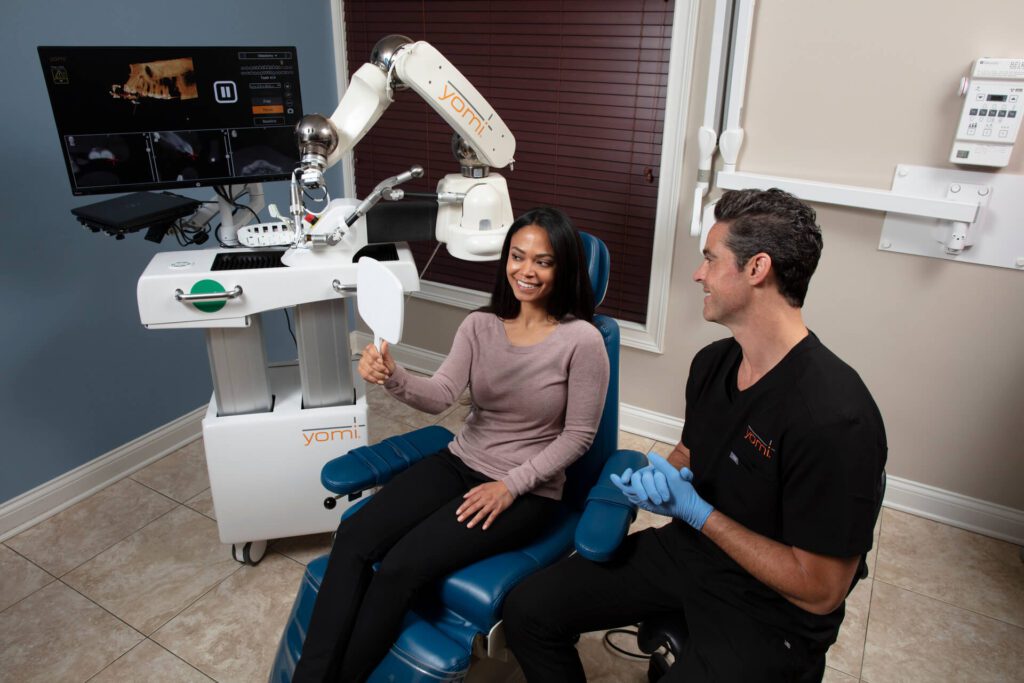
At Towne Dental, we aim to make dental care gentler and less stressful, whether that is a simple extraction or a procedure with sedation or Yomi® robot-assisted implant planning. Technology is only part of that. The rest is clear instructions: what to eat, what to skip and when to call us. If something does not feel right, call us. We would rather hear from you early.
— Towne Dental
Need an extraction or implant in Southwest Florida?
If you are facing a tooth removal, or you want to replace a missing tooth, our team in the Fort Myers and Naples area can walk you through what to expect, including aftercare and food. Learn more about tooth extractions and dental implants, see our full list of services, or visit townedentalfl.com to get in touch. If you have a painful tooth that cannot wait, ask us about emergency dentistry.
FAQ
What can I eat right after a tooth extraction?
Stick to cool or lukewarm soft foods such as yogurt, pudding, applesauce, smooth soups and mashed potatoes. Wait until numbness fades before eating so you do not bite your lip or cheek. Avoid hot drinks for the first 24 hours and do not use a straw.
When can I eat normal food again after an extraction?
Soft foods are usually needed for two to three days, and most people return to a regular diet over roughly one to two weeks. Hard, crunchy and sticky foods such as nuts, chips and popcorn should wait the longest. Your dentist may adjust this if you had surgery, stitches or a bone graft.
When can I eat pizza after wisdom teeth removal?
Regular pizza with a crust is tough to chew and best avoided for at least the first week. A soft, thin piece with the crust removed may be possible around day three or later if your surgeon agrees. Skip very hot, spicy or acidic toppings early on.
Can I drink alcohol 48 hours after a tooth extraction?
It is best to wait longer. Dental schools advise avoiding alcohol for at least 48 hours, and for as long as you take prescription pain medicine or antibiotics. Ask your dentist or pharmacist about your specific medications.
What should I eat after a dental implant?
Start with cool liquids and very soft foods such as yogurt, smoothies by spoon and eggs, then move to softer foods that need little chewing. Avoid straws, alcohol and hard or crunchy foods early on. Your surgeon will tell you when to add firmer foods, which depends on your procedure.
Sources
- Tooth extraction, MedlinePlus Medical Encyclopedia
- Dry socket, MedlinePlus Medical Encyclopedia
- Eating Concerns, MouthHealthy (American Dental Association)
- Best Foods After Oral Surgery and Wisdom Teeth Removal, Cleveland Clinic
- Oral and Maxillofacial Surgery post-operative instructions, Boston University Dental School
- Post-Operative Instructions after Oral Surgery Procedure, Boston University Dental School
- Tooth Extraction Post-Operative Instructions, Dartmouth Health Maxillofacial Surgery
- After your Oral Surgery, University of Washington School of Dentistry
- Soft food suggestions after tooth extraction or dental surgery, SA Dental