If your dental implant feels loose, hurts more than it did last week, or the gum around it is swollen, red, or oozing, treat it as a warning sign, not something to wait out. Persistent bad taste, bleeding when you brush, and trouble chewing on that side round out the list of red flags. Call your dentist for a clinical exam and X-rays as soon as any of these show up. Waiting rarely helps.
TL;DR:
- Most early implant failures occur within the first year, making months two to three the most critical window for symptom vigilance.
- Signs such as mobility, increasing pain, swelling with redness, or bleeding on brushing require prompt professional assessment to prevent further bone loss.
- Persistent bad taste, pus, or visible gum recession that exposes metal threads indicate peri-implantitis, often related to bacterial infection or bone deterioration.
- Mechanical issues like a loose crown, overload from bruxism, or incorrect placement can cause symptoms without infection, especially in the long term.
- Modifiable risk factors include smoking, uncontrolled diabetes, and teeth grinding, which should be managed proactively to improve implant survival chances.
Table of Contents
- Signs Of Implant Failure: The Full Symptom Checklist
- Why These Signs Happen: Causes And Risk Factors
- How Dentists Diagnose A Failing Implant
- What To Do If You Suspect Implant Failure
- Preventing Implant Failure: Daily Habits That Actually Matter
- Towne Dental’s Approach To Suspected Implant Failure
- Does Implant Location Change What Symptoms Look Like?
- What Happens If You Ignore These Warning Signs
- When To Get A Second Opinion
- Our Take: Treat Symptoms As Data, Not Anxiety
- Sources
- FAQ
Signs Of Implant Failure: The Full Symptom Checklist
Implants don’t usually fail overnight. Most trouble builds gradually, which is exactly why a symptom-by-symptom checklist matters more than a single “does it feel okay” gut check. Knowing what’s normal healing versus what’s a genuine dental implant failure symptom can save you months of unnecessary bone loss.
Mobility or looseness. A healthy, properly integrated implant should feel as solid as a natural tooth root. If you notice any wiggle, shifting, or a sensation that the crown or the implant itself moves when you bite down, that’s one of the clearest signs of implant issues. Early on, mobility usually points to failed osseointegration; later on, it often signals advanced bone loss from infection.
Persistent or worsening pain. Some soreness after surgery is expected for a week or two. Pain that increases instead of fades, or that returns months or years after placement, is different. Dull, throbbing, or pressure-like pain that intensifies when you bite is a classic dental implant failing symptom worth flagging immediately.
Swelling and redness. Mild puffiness right after surgery is normal. Swelling that appears weeks or years later, especially paired with redness of the gum tissue around the implant collar, usually points to an active infection.
Bleeding. Gums that bleed when you brush or floss around the implant, without any obvious trauma, are a sign the tissue is inflamed. Isolated bleeding at one implant site while the rest of your mouth is fine deserves attention.
Pus, discharge, or a persistent bad taste. A foul or metallic taste that won’t go away, or visible discharge from the gum line, points to bacterial infection. This is one of the more reliable early warning signs of failure because it shows up before major bone loss does.
Gum recession or visible threads. If the gum around the implant appears to be pulling back, exposing metal threads that were previously hidden, the surrounding bone has likely already receded. This tends to show up later in the failure process rather than early.
Difficulty chewing or a changed bite. A sudden sense that your bite feels “off,” or pain specifically when chewing on that side, often points to mechanical problems like occlusal overload or a loose abutment screw rather than infection alone.
Numbness or spreading swelling. Numbness in the lip, chin, or tongue, or swelling that spreads beyond the implant site into the cheek or jaw, is a more urgent version of the signs above and can indicate nerve involvement or spreading infection.
- Early signs (weeks to months after placement): mobility, unresolved pain, and swelling that don’t follow the normal healing curve.
- Late signs (months to years later): gum recession, visible threads, bleeding on brushing, and bad taste tied to peri-implantitis.
- Urgent signs at any stage: numbness, spreading swelling, or fever, which need same-day evaluation.
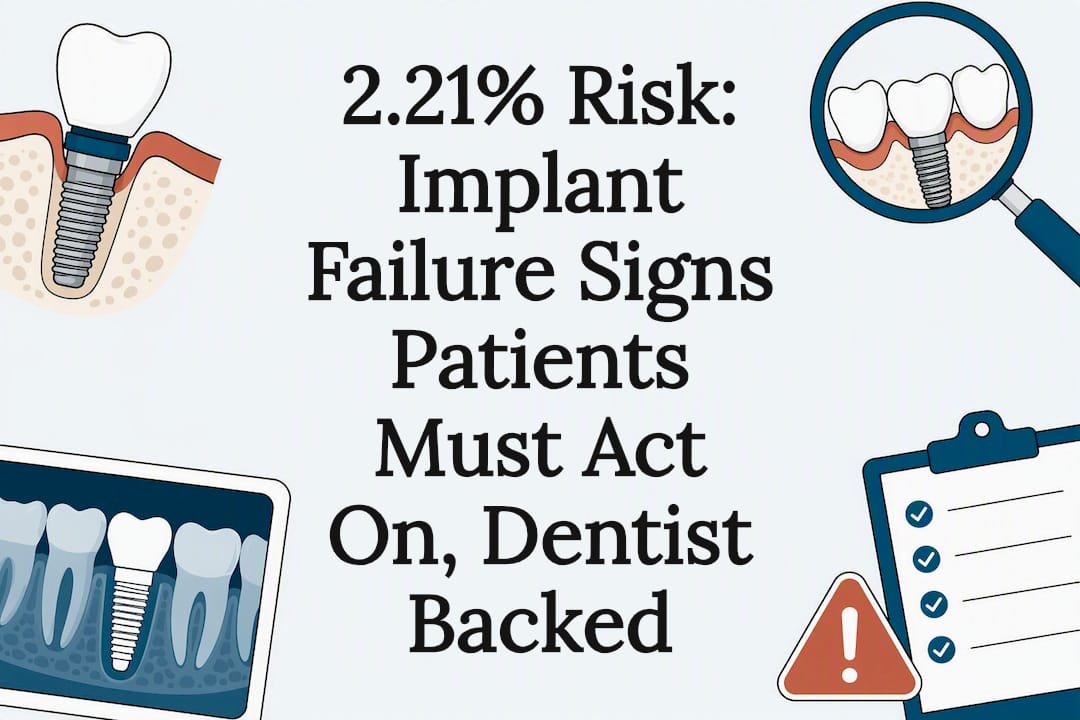
A large cohort analysis of nearly 159,000 implants found an overall failure rate around 2.21%, with most failures concentrated in the first year after placement. That statistic is worth remembering: your window of highest risk is early, so symptoms in month two or three deserve faster action than the same symptom five years in.
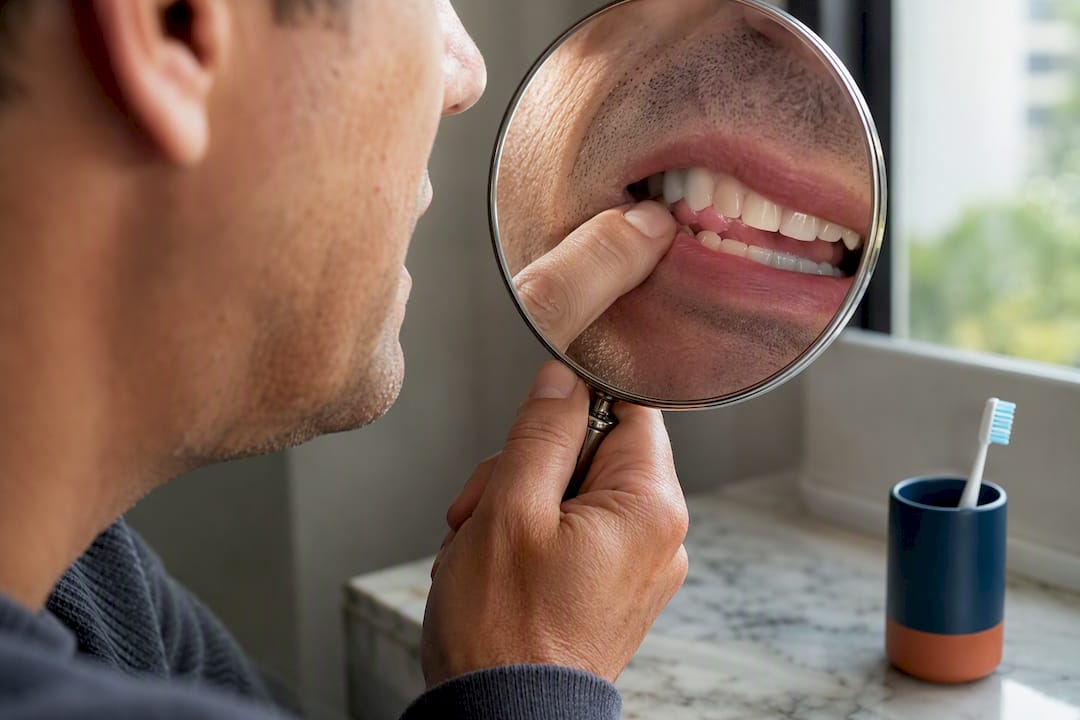
For at-home tracking, take a dated photo of any swelling, discoloration, or recession you notice, and jot down when pain occurs (chewing, cold, spontaneous). Don’t probe the site with a fingernail, toothpick, or floss threaded trying to check “how loose” it is. That can push bacteria deeper or damage healing tissue, and it won’t give you information a dentist’s exam can’t get more safely.
Why These Signs Happen: Causes And Risk Factors
Most dental implant complications trace back to one of four mechanisms, and knowing which one applies to you changes both the urgency and the likely treatment.
Peri-implant infection. Bacterial biofilm builds up around the implant collar the same way plaque builds up on natural teeth. Left alone, this starts as peri-implant mucositis, a reversible inflammation of the soft tissue. Untreated, it can progress into peri-implantitis, which involves bone loss around the implant and is one of the most frequently reported biological causes of implant failure, marked by bleeding on probing, suppuration, and radiographic bone loss.
Failed osseointegration. This is an early failure mechanism. The implant simply never fused properly with the jawbone, often because of surgical contamination, overheating the bone during drilling, poor initial bone contact, or placing load on the implant too soon.
Mechanical and prosthetic problems. Bruxism (nighttime grinding) puts repetitive force on an implant that natural teeth’s ligaments would normally cushion. Excess cement left under a crown, a poorly fitted prosthetic, or a loose abutment screw can all create the same painful, loosening effect without any infection at all.
Bone quality and grafting complexity. Implants placed in bone that needed grafting or a sinus lift first can carry a higher failure risk in some cohorts than implants placed in native bone, since the graft site itself has an extra healing step that can go wrong.
Risk factors stack on top of these mechanisms:
- Smoking measurably reduces implant survival, with a dose-dependent relationship to peri-implantitis and complications; it’s also tied to reduced bone density generally, which compounds the risk at the implant site.
- Uncontrolled diabetes slows healing and raises infection risk.
- Low bone density or a history of periodontitis makes both osseointegration and long-term stability harder.
- Bruxism adds mechanical stress regardless of your gum health.
- Certain medications, including some that affect bone metabolism, can interfere with healing.
Smoking, bruxism, and blood sugar control are modifiable. Bone quality and periodontitis history are not, though they can be managed with grafting and closer monitoring. A scoping review of implant failure causes found early failure rates ranging from 0.5% to 5.2%, and late failures from 0.5% to 7.8%, confirming that peri-implantitis remains the dominant driver of trouble once you’re past the first year.
How Dentists Diagnose A Failing Implant
Diagnosing implant problems relies on layering a hands-on exam with imaging, not guessing from symptoms alone.
The clinical exam comes first. Your dentist will visually inspect the gum tissue for redness or recession, probe gently around the implant to check for bleeding on probing, look for suppuration (pus) when pressure is applied, tap the implant to check for percussion sensitivity, and test for mobility by applying light lateral pressure.
- Visual inspection of gum color, swelling, and recession
- Periodontal probing for bleeding and pocket depth
- Checking for suppuration under light pressure
- Percussion testing for pain response
- Mobility testing, which is a strong indicator of failed osseointegration when positive
Radiographs come next. A standard periapical X-ray shows crestal bone loss around the implant neck, which is the hallmark of peri-implantitis, and periapical radiolucency at the implant tip, which can indicate a periapical lesion. For complex cases, especially when the 2D image is ambiguous or surgery is being considered, a CBCT scan gives a three-dimensional view of bone volume and any hidden defects.
Stability measurements add another data point. Devices that calculate an ISQ (Implant Stability Quotient) score, or older tools like the Periotest, measure how firmly the implant is anchored in bone. A declining ISQ over successive visits is one of the more objective early warnings available, often showing up before a patient feels any looseness at all.
Pro Tip: Some periapical lesions around implants are entirely asymptomatic and show up only as a shadow on an X-ray, with no pain or swelling yet. That’s exactly why routine follow-up imaging matters even when your implant feels completely normal, since an inactive lesion can turn symptomatic without much warning.
What To Do If You Suspect Implant Failure
Speed matters more here than with almost any other dental complaint, because bone loss around a failing implant tends to be progressive rather than something that pauses on its own.
Start with these immediate steps:
- Stop poking, probing, or wiggling the implant to “test” it yourself.
- Switch to a soft diet on that side until you’re seen.
- Take photos of any visible swelling, redness, or recession, dated if possible.
- Call your dentist and describe symptoms specifically (looseness, pain when chewing, taste, swelling).
- Bring prior implant records or radiographs if you have them, especially if you’re seeing a different provider than the one who placed it.
What happens next depends on how far things have progressed:
- Early-stage infection (mucositis or mild peri-implantitis): professional debridement, local antiseptics, and sometimes a course of antibiotics can resolve the issue without surgery.
- Advanced peri-implantitis: flap surgery to access and clean the bone defect directly, sometimes combined with guided bone regeneration to rebuild lost bone.
- Failed osseointegration or significant mobility: explantation is usually necessary. Techniques range from trephine burs, which remove the implant along with some surrounding bone, to reverse-torque or piezoelectric methods that preserve more bone for a future reimplantation.
- Bone loss requiring rebuilding: a graft is placed either at the same time as explantation or as a staged approach, letting the site heal for months before a new implant goes in. Recovery follows a fairly predictable bone graft healing timeline.
Urgent explantation is warranted when there’s visible mobility you can see or feel, spreading swelling, or signs of infection moving beyond the implant site. Delay in these cases doesn’t just risk losing the implant. It risks losing more of the bone around it, which makes future replacement harder and more expensive. Reviewing a typical implant timeline can help you understand where in that process a failing implant knocks you back to.
Preventing Implant Failure: Daily Habits That Actually Matter
Prevention here is less about a special product and more about consistency. Clean around the implant collar daily using an interdental brush or a water flosser angled at the gum line, not just a regular toothbrush pass. Standard floss can shred against the abutment, so a floss threader or implant-specific floss works better.
- Clean under and around the crown daily with an interdental brush or water flosser
- Keep every professional cleaning appointment, typically every 3 to 6 months for implant patients
- Ask for periodic radiographs even when nothing hurts, since bone loss is often silent
- Stop smoking, or at minimum reduce it, given its documented effect on implant survival
- Manage blood sugar tightly if you have diabetes
- Wear a nightguard if you grind your teeth
Before placement, ask your dentist directly about your bone quality, whether grafting will be needed, and what your personal maintenance schedule should look like afterward. Those answers should shape your risk expectations from day one.
Pro Tip: If you already grind your teeth, mention it before implant surgery, not after you notice pain. A nightguard fitted proactively costs far less than treating overload-related failure later.
Towne Dental’s Approach To Suspected Implant Failure
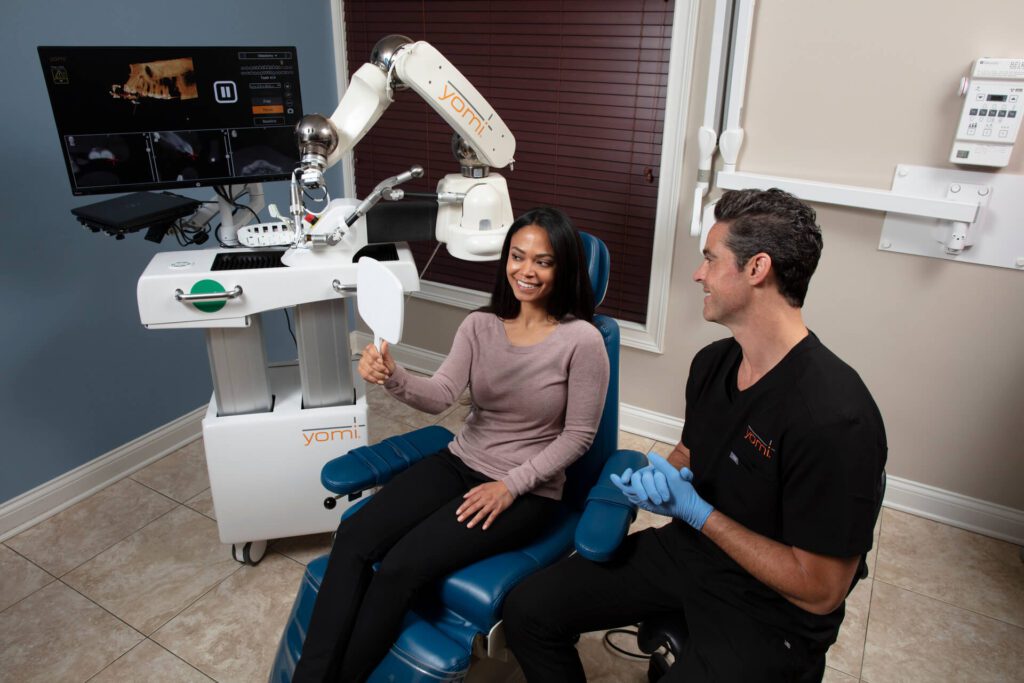
At Towne Dental, evaluating a possibly failing implant starts with a full clinical exam paired with imaging, not a quick look. Our team uses Yomi® robot-assisted technology for new implant placement, which improves precision during surgery and reduces some of the surgical variability that contributes to early failure in the first place.
- Clinical exam plus radiographs to assess bone levels and infection
- Stability and mobility checks as part of the standard workup
- Non-surgical treatment (debridement, targeted antibiotics) for early-stage problems
- Surgical options, including grafting and staged reimplantation, for advanced cases
| What You’re Dealing With | Likely Next Step |
|---|---|
| Early infection, mild bleeding | Debridement and antiseptic treatment |
| Advanced peri-implantitis with bone loss | Surgical cleaning, possible bone grafting |
| Mobility or failed integration | Explantation, staged reimplantation |
| Uncertainty about your implant’s warranty coverage | Review of your implant warranty terms |
Does Implant Location Change What Symptoms Look Like?
Front teeth and molars fail differently, mostly because of what’s visible and what’s under load. An implant in the smile zone tends to show gum recession and visible metal threads earlier, simply because you and everyone else can see that area daily. Cosmetic concerns often surface before serious bone loss does, which works in your favor: you catch it sooner.
Molar implants hide the same problem for longer. Recession at the back of the mouth is harder to spot in a mirror, so molar failure tends to announce itself through function instead of appearance, things like pain when chewing, a bite that feels uneven, or food packing into a widening gap at the gum line. Molars also carry more bite force than front teeth, which makes them more susceptible to mechanical failure from bruxism or a poorly adjusted crown, on top of the usual infection risk.
There’s a practical takeaway here: if you have a front implant, do a monthly visual check in good lighting. If you have a molar implant, pay closer attention to how chewing feels than how the gum looks, since that’s often your earliest clue.
What Happens If You Ignore These Warning Signs
Bone loss around an implant is not something the body reverses on its own. Left untreated, peri-implant mucositis typically progresses into peri-implantitis, and that progression accelerates the longer it goes unaddressed, not the reverse.
Ignoring early signs risks losing enough bone that the implant becomes loose enough to fail outright, at which point explantation is close to guaranteed. It also risks the infection spreading to adjacent teeth and their supporting bone, turning a single-implant problem into a multi-tooth one. In more serious cases, untreated infection can spread into surrounding soft tissue, causing facial swelling that requires more urgent medical attention.
There’s also a financial and time cost to waiting. Catching peri-implant mucositis early might mean a round of professional cleaning and better home care. Catching it after significant bone loss means grafting, months of healing, and a second implant placement. The signs covered earlier in this guide exist precisely to give you the earlier, cheaper, faster option.
When To Get A Second Opinion
If your dentist’s explanation for your symptoms doesn’t match what you’re actually experiencing, or if a proposed treatment feels rushed without imaging to back it up, get a second opinion before agreeing to major surgery. This matters most when explantation is on the table, since removing an implant is not reversible and the bone consequences are permanent.
A second opinion is also worth seeking when your case involves grafted or augmented bone, since some cohort data suggest higher failure risk in implants placed after sinus lifts or guided bone regeneration, and treatment planning for those cases benefits from a specialist’s experience with complex sites. A periodontist or oral surgeon with specific implant retrieval experience can offer perspective a general exam might miss, particularly around whether bone can be preserved for future reimplantation.
Ask any second-opinion provider to review your existing radiographs rather than starting from scratch. Comparing images over time is often more informative than a single snapshot, since it shows whether bone loss is stable, slow, or accelerating.
Our Take: Treat Symptoms As Data, Not Anxiety
The conventional advice on implant failure tends to swing between two extremes: “any twinge means disaster” or “implants basically never fail, don’t worry.” Neither is useful. The 2.21% failure rate from large cohort data tells you failure is uncommon but real, and concentrated early, which means your job isn’t constant worry. It’s accurate reporting.
What gets underestimated is how much a precise description of symptoms speeds up diagnosis. “It hurts when I chew on that side” and “it throbs at night” point to different problems, and a dentist working from vague discomfort loses time your bone can’t spare. Photograph changes, note when pain occurs, and skip the urge to test mobility yourself.
Where we’d push back on generic advice: don’t wait for pain as your trigger. Bleeding on brushing or a persistent bad taste often shows up before pain does, and that’s your real early window.
— Towne Dental
This article is general information, not a substitute for advice from a qualified doctor. Consult a qualified healthcare professional about your own circumstances before acting on anything here.
Sources
- Large-cohort analysis of implant survival and risk factors (Maccabi Dent data)
- Implant periapical lesion: Diagnosis and treatment
Ready to get symptoms checked instead of guessed at? Towne Dental’s general dentistry and periodontics teams can evaluate a suspected failing implant with a full exam, imaging, and a clear treatment plan, whether that means non-surgical care or a referral to oral surgery for grafting or explantation. If you’re dealing with pain, swelling, or a loose implant right now, our complete services page outlines how to get seen quickly.
FAQ
Can A Dental Implant Fail Years After Placement?
Yes. While most failures happen in the first year, peri-implantitis can develop years later from bacterial buildup, bone loss, or mechanical stress, making late failure a genuine possibility even after long-term success.
What Are The Earliest Signs My Implant Might Be Failing?
The earliest signs are usually mobility, pain that increases instead of resolving, swelling, and a persistent bad taste, often before you’d notice visible gum changes. Any of these warrants a dental exam with radiographs.
Can The Body Reject A Dental Implant Years Later?
Implants aren’t rejected in the immune sense the way organ transplants are, since titanium doesn’t trigger that kind of response. What looks like “rejection” is almost always peri-implantitis or bone loss from infection, mechanical overload, or, in rare cases, a titanium sensitivity.
Can Gums Reject An Implant?
Gum tissue can develop chronic inflammation and recession around an implant, which some patients describe as their gums “rejecting” it, but this is peri-implant disease rather than true rejection, and it’s treatable with debridement and, in advanced cases, surgical care.
How Do I Know If My Implant Pain Is Normal Healing Or A Problem?
Normal post-surgical pain fades steadily over one to two weeks. Pain that increases, returns after resolving, or shows up with swelling, bleeding, or a bad taste is not typical healing and needs evaluation.