Adult gum tissue does not grow back on its own once it recedes. Treatment can stop the process and, in most single-tooth cases, cover the exposed root with surgery, but no toothpaste, mouth rinse, or brushing change reverses tissue you’ve already lost. The most predictable surgical option, backed by consensus reporting and repeated systematic review, is a subepithelial connective tissue graft (SCTG) combined with a coronally advanced flap (CAF). It remains the benchmark against which every newer technique gets measured.
That doesn’t mean it’s the only reasonable path. Depending on the defect, a clinician might recommend a de-epithelialized free gingival graft (DFGG), an acellular dermal matrix or xenogeneic collagen matrix instead of a second surgical site, or enamel matrix derivative (EMD) to support tissue healing. Nonsurgical care has a real, if narrower, job:
- Stopping further recession through better brushing technique and plaque control
- Reducing root sensitivity with desensitizing agents
- Buying time before surgery, or serving as the only intervention needed for mild, non-progressing cases
Surgery enters the picture when sensitivity persists, recession keeps advancing, or a root surface becomes visible enough to bother you esthetically.
Key Takeaways
Gum recession treatment works best when nonsurgical care addresses the cause early and SCTG with CAF handles root coverage once tissue loss is already established.
| Point | Details |
|---|---|
| Adult recession doesn’t regrow | Treatment stops progression and can cover roots surgically, but spontaneous regrowth doesn’t happen in adults. |
| SCTG plus CAF is the benchmark | AAP consensus and repeated reviews identify this combination as the most predictable root coverage method for single-tooth defects. |
| Alternatives are legitimate, not inferior by default | ADM, XCM, DFGG, and EMD can match SCTG in some trials, depending on defect size and patient anatomy. |
| Fix the cause or the graft won’t hold | Brushing trauma, occlusal forces, and untreated periodontitis all undermine long-term graft stability. |
| Towne Dental evaluates before recommending | The periodontics team assesses phenotype, classification, and contributing habits to individualize graft selection. |
This article is general information, not a substitute for advice from a qualified doctor. Consult a qualified healthcare professional about your own circumstances before acting on anything here.
Table of Contents
- Gum Recession Treatment: Understanding the Diagnosis First
- What Actually Causes Gum Recession
- How Dentists Diagnose and Grade Gum Recession
- Non-Surgical Treatment for Receding Gums
- Surgical Options for Gum Recession Treatment
- Treating Recession Combined With Cervical Lesions
- Recovery Timeline After Gum Graft Surgery
- Preventing Gum Recession From Getting Worse
- The Towne Dental Approach to Gum Recession Care
- Getting Gum Recession Evaluated and Treated
- Sources
- FAQ
Gum Recession Treatment: Understanding the Diagnosis First
Gum recession means the gum margin has migrated apically, exposing the cementoenamel junction (CEJ), the visible seam where enamel meets root surface. That’s different from having a naturally short or scalloped gumline. A dentist confirms recession by locating the CEJ and measuring how far the tissue has pulled back from it, not by eyeballing “low” gums.
Children and teenagers are a special case. Gingival margins in kids can still be settling into their final position, and periodontal literature notes that tissue position may not stabilize until around age 12. A dentist watching a child’s gumline is often just waiting for normal development to finish. In adults, that grace period is over. What you see is generally what you get unless you intervene.
Clinicians classify recession using two main systems:
- Miller classification: an older, widely taught system dividing recession into Class I through IV based on the amount of attached gingiva and whether bone or tissue loss extends between teeth.
- Cairo classification: a newer system (RT1, RT2, RT3) tied more directly to interproximal attachment loss, which better predicts how much root coverage is realistically achievable.
Gingival phenotype matters as much as the classification number. Thin, delicate tissue (thin phenotype) recedes faster under mechanical stress and heals with less predictability than thick, fibrous tissue. Two patients with identical brushing habits can have wildly different outcomes because of the tissue they started with.
What Actually Causes Gum Recession
Most recession traces back to a combination of mechanical trauma and inflammation, not one single cause. Untangling which factor dominates in your case is what determines whether coaching, cleaning, or surgery comes first.
Mechanical and behavioral factors:
- Aggressive brushing, especially horizontal scrubbing with a medium or hard-bristled brush
- Abrasive whitening toothpastes used daily over years
- Using the wrong tool entirely, like a stiff electric brush head pressed too hard against thin tissue
Biological and anatomic factors:
- Plaque-induced periodontitis, which breaks down the bone and soft tissue supporting the tooth
- Thin gingival phenotype, which offers less structural resistance to trauma
- Prominent tooth roots or teeth positioned outside the normal arch, which leave less bone covering the root
- Frenal pull, where a tight muscle attachment tugs on the gum margin every time you move your lip or tongue
Habits and forces:
- Tobacco use, which impairs blood flow to gum tissue and slows healing
- Orthodontic tooth movement, particularly when teeth are pushed outside the bony envelope
- Occlusal trauma from a misaligned bite or untreated grinding, which loads specific teeth unevenly
Addressing occlusal trauma and brushing technique before any graft procedure is one of the more overlooked determinants of whether that graft holds long term. A perfectly executed SCTG placed over a tooth still absorbing bite force in the wrong direction is fighting an uphill battle.
Pro Tip: If you use an electric toothbrush, check whether it has pressure-sensing feedback. A surprising number of recession cases trace back to years of pressing too hard with a powered brush, not a manual one.
How Dentists Diagnose and Grade Gum Recession
A recession exam is more thorough than a quick look with a mirror. Expect your dentist to run through several measurements:
- Recession depth, measured in millimeters from the CEJ to the current gum margin.
- Probing depths around the affected tooth, to rule out an active periodontal pocket contributing to the problem.
- Keratinized tissue width, the band of tougher, attached gum tissue that protects the tooth. Less than 2mm often signals higher risk for continued recession.
- Gingival thickness, assessed visually or with a probe, since thin tissue behaves differently under a graft than thick tissue.
- Radiographs, to check bone levels and rule out other causes like a non-carious cervical lesion (NCCL) or an endodontic lesion masquerading as gum loss.
Not every case needs a periodontist. But certain findings should prompt a referral rather than a wait-and-watch approach: recession affecting multiple teeth simultaneously, a Miller Class III or IV defect (or Cairo RT2/RT3) where full root coverage isn’t achievable, recession that keeps advancing despite good hygiene, or a case where the esthetic concern is significant enough that the patient wants it addressed directly rather than monitored.
Non-Surgical Treatment for Receding Gums
Nonsurgical care is where most people start, and for a meaningful share of cases, it’s also where treatment ends. The honest framing matters here: nonsurgical management is very good at stopping recession from getting worse and treating the sensitivity that comes with it. It is not good at growing tissue back over an exposed root in an adult. If root coverage is the goal, surgery is usually the only route that gets you there.

Technique changes come first. A soft-bristled brush, held at roughly a 45 degree angle to the gumline using the modified Bass technique (short, gentle strokes rather than horizontal scrubbing), removes plaque without grinding down tissue. Abrasive whitening pastes should come off the shopping list if recession is already a concern. This single change, done consistently, does more to prevent further recession than most people expect from something so simple.
Professional interventions target the biological side. Scaling and root planing removes plaque and calculus below the gumline and smooths the root surface, reducing the bacterial load that drives inflammation and further attachment loss. This is standard first-line therapy whenever periodontitis is contributing to recession, and it’s often done before any conversation about surgery even starts.
Desensitizing agents, whether a fluoride varnish applied in-office or a potassium nitrate toothpaste used at home, address the sharp, cold-triggered pain that often bothers patients more than the recession itself. These don’t cover the root. They calm the exposed dentin’s nerve response, which for many patients is the actual complaint driving the dental visit.
Occlusal therapy and orthodontic correction belong in this conversation too, though they’re often skipped. If a tooth is being pushed outward by a crowded arch or is taking abnormal bite force from a high spot, correcting that mechanical problem can stop recession from progressing even without a graft. Ignoring it and jumping straight to surgery risks recurrence regardless of how well the graft itself is executed.
- Switch to a soft-bristled brush and modified Bass technique
- Drop abrasive whitening toothpastes if recession is present
- Complete scaling and root planing if periodontitis is contributing
- Use a desensitizing agent for sensitivity relief
- Evaluate bite force and orthodontic positioning as contributing causes
Pro Tip: Ask your dentist to demonstrate the modified Bass technique on your own teeth during a cleaning visit. Reading about brushing angle is not the same as watching someone show you exactly where your habit goes wrong.
Surgical Options for Gum Recession Treatment
When root coverage is the goal, surgery is the answer, and the American Academy of Periodontology’s consensus reporting is fairly direct about the hierarchy of options. SCTG combined with CAF produces the most predictable root coverage outcomes for Miller Class I and II single-tooth defects, according to the AAP’s consensus report on root coverage procedures. It has the longest track record and the deepest evidence base of any technique in this category.
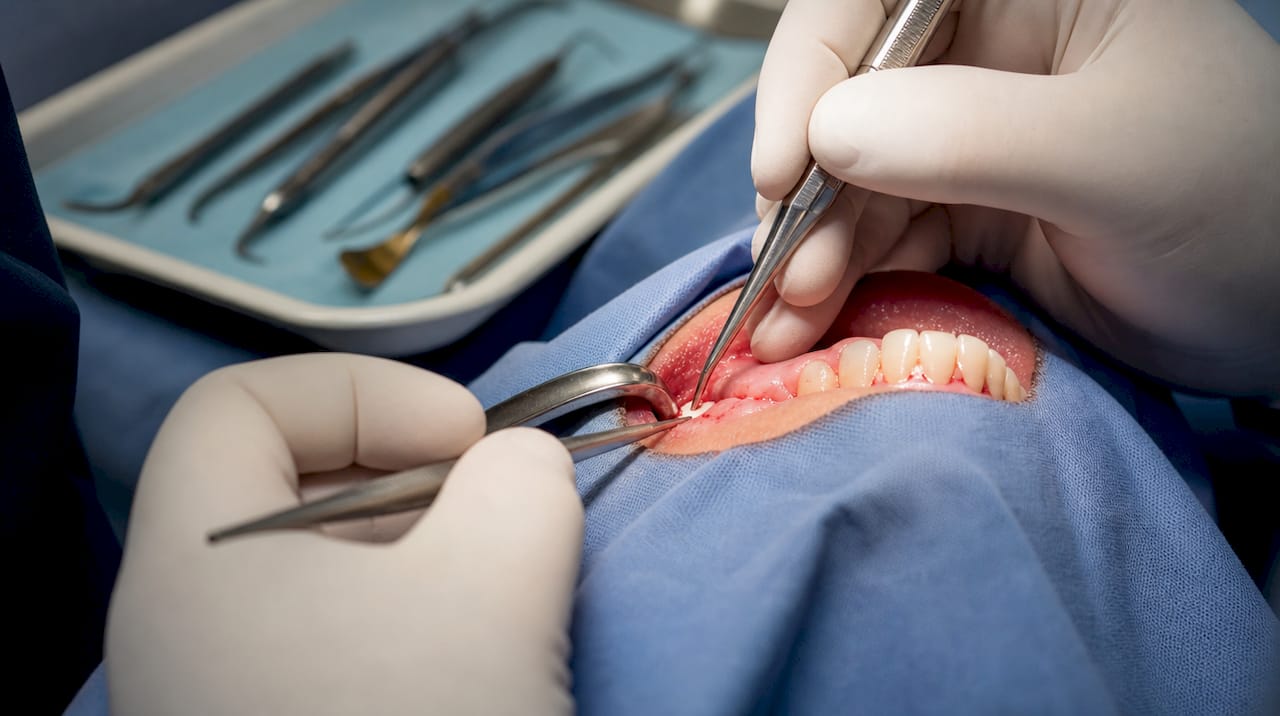
Here’s how the major approaches differ in practice:
Coronally advanced flap (CAF) repositions the existing gum tissue upward to cover the exposed root, usually paired with a graft underneath for added thickness and blood supply. Tunnel techniques create a pouch under the existing tissue without vertical incisions, sliding graft material into that pouch, which tends to preserve blood supply and produce a more natural-looking result across multiple adjacent teeth. Both approaches show favorable outcomes when paired with an appropriate graft material, and the choice between them often comes down to how many teeth are involved and the surgeon’s assessment of the tissue.
Graft material is the other half of the decision. Autogenous grafts come from the patient’s own tissue. SCTG harvests connective tissue from beneath the surface of the palate, leaving the palatal surface intact and generally healing with less discomfort. DFGG removes a layer of tissue from the palate’s surface, which can work well when palatal thickness is limited, but it heals by secondary intention and can carry more noticeable donor-site discomfort than SCTG.
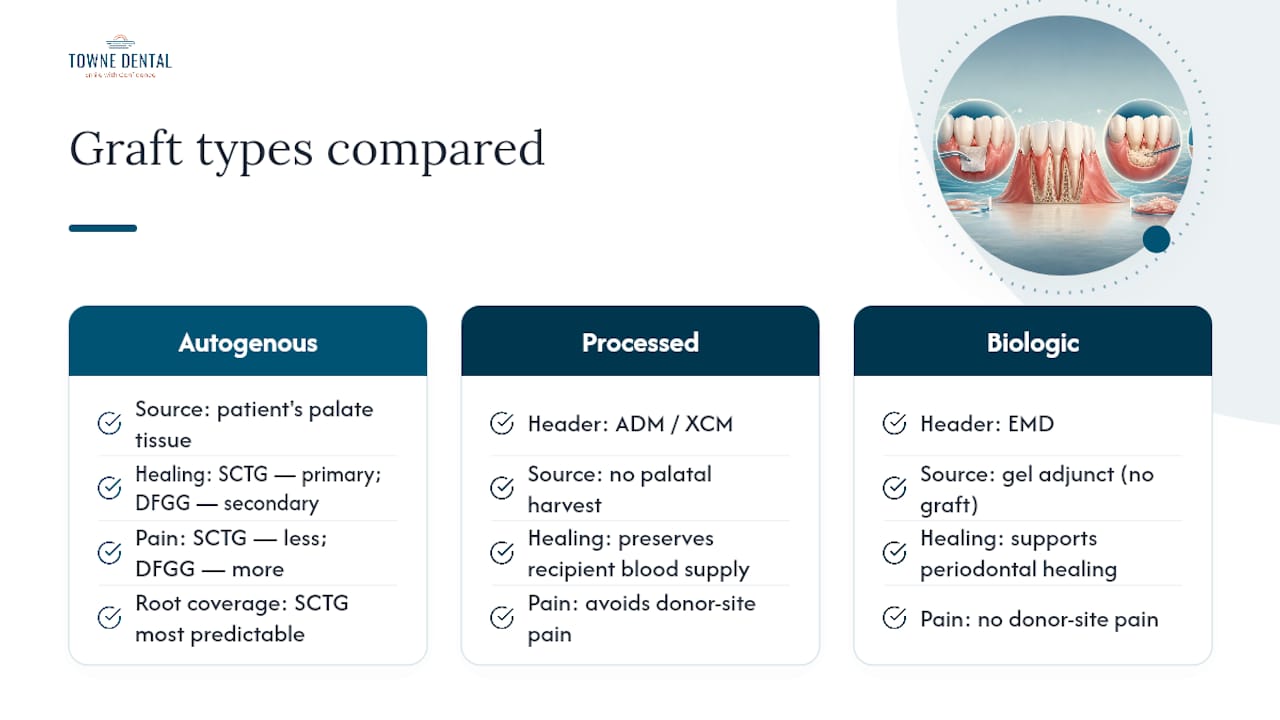
Not every patient wants a second surgical site in their mouth, and that’s where acellular dermal matrix (ADM) and xenogeneic collagen matrix (XCM) come in. These processed tissue substitutes eliminate the palatal harvest entirely. Enamel matrix derivative (EMD), a gel-based biologic, is sometimes used alongside a flap procedure to support periodontal tissue healing rather than as a standalone graft replacement.
The evidence on how close these alternatives come to SCTG is more nuanced than marketing materials from any single product tend to suggest. Systematic reviews and randomized trials comparing DFGG to SCTG report no consistent statistically significant difference in several outcomes at 6 to 12 months, meaning the alternatives can perform comparably in some clinical contexts, particularly for smaller or less complex defects.
A Cochrane review of root coverage procedures broadly confirms that multiple techniques reduce recession depth significantly, but it also flags something worth taking seriously: many of the underlying trials carry unclear or high risk of bias. That’s not a reason to distrust the field, but it is a reason to be skeptical of any claim that one alternative technique definitively “matches” SCTG across the board. The honest read is that SCTG remains the reference standard, and alternatives are reasonable, evidence-supported options for the right defect rather than automatic substitutes.
Practical tradeoffs shape the final choice as much as the raw data does. Thicker grafts generally improve long-term root coverage and resist shrinkage better, at the cost of somewhat more donor-site discomfort during healing, while thinner tissue may heal with less pain but shrink more over time. Multi-tooth cases lean toward tunnel techniques with a matrix graft to limit the number of incisions; single-tooth defects with adequate palatal donor tissue often lean toward SCTG for its predictability.
Treating Recession Combined With Cervical Lesions
Recession doesn’t always show up alone. A meaningful subset of advanced cases present with a non-carious cervical lesion (NCCL), the wedge-shaped or rounded notch that forms at the gumline from abrasion, abfraction, or erosion, sitting right alongside the exposed root. When both problems exist on the same tooth, treating the gum tissue without addressing the lesion (or vice versa) tends to produce a compromised result.
Recent evidence-based recommendations lay out a workable decision path:
- Assess the lesion shape and depth first. Shallow, saucer-shaped NCCLs with minimal loss of tooth structure are often manageable with root coverage surgery alone, since the graft can adequately cover the shallow defect.
- Deep or V-shaped lesions usually need restoration. A combined restorative and surgical approach tends to hold up better long term than grafting over a deep notch and hoping the tissue adapts to the irregular contour.
- Sequence matters for stability. Staged treatment, partial restoration of the lesion followed by grafting once the tooth surface is smoother, often produces better long-term esthetic and structural results than grafting first and restoring later.
Graft selection can shift too when a restoration is already in place or planned. A thicker autogenous graft may be favored to create a stable soft tissue margin against a restored surface, since matrix grafts sometimes adapt less predictably around restorative material.
Recovery Timeline After Gum Graft Surgery
Most of the discomfort after a gum graft procedure concentrates in the donor site, not the area being treated. If your palate was the harvest site, expect the most noticeable soreness there during the first week, generally manageable with over-the-counter pain relief and a soft diet. Clinical summaries and patient-reported outcome data consistently show this early discomfort is transient and does not predict how well the graft ultimately takes.
Sensitivity at the treated site typically starts improving within the first few weeks as the tissue heals and covers the exposed dentin. Esthetic and structural results take longer to fully judge. Clinicians generally evaluate root coverage success at 6 to 12 months, checking how much of the previously exposed root is now covered and how stable the tissue margin looks.
Long-term stability depends on more than surgical skill:
- Ongoing mechanical trauma from aggressive brushing can undo a successful graft over time
- Poor plaque control reintroduces the inflammatory drivers that caused recession in the first place
- Thin gingival phenotype carries a higher long-term relapse risk even after a technically successful procedure
Maintenance visits and consistent home care aren’t optional extras after grafting. They’re the mechanism that keeps the result you paid for. A structured post-op routine in the first two weeks, paired with the same healing patterns seen after bone grafting procedures, gives the tissue its best shot at stable, lasting coverage.
Preventing Gum Recession From Getting Worse
Stopping recession before it needs surgical correction is far cheaper and less invasive than fixing it after the fact. A few concrete changes make the biggest difference:
- Switch to a soft-bristled brush and stop scrubbing horizontally across the gumline
- Skip abrasive whitening toothpastes if you already have thin tissue or visible recession
- Quit tobacco and nicotine products; both restrict blood flow to gum tissue and slow healing, and this extends to smokeless alternatives, since nicotine pouches carry documented risks for gum health as well
- Keep up with routine cleanings so plaque-driven inflammation never gets the chance to compound mechanical damage
- Bring up orthodontic or restorative correction with your dentist if a crowded bite or high spot is pushing a specific tooth outward
A professional maintenance schedule every three to six months, adjusted based on your periodontal risk, gives your dentist a chance to catch early recession before it advances into territory that requires grafting.
Pro Tip: Take a photo of your gumline every six months at your cleaning appointment. Recession moves slowly enough that you often won’t notice it day to day, but a side-by-side comparison makes subtle changes obvious.
The Towne Dental Approach to Gum Recession Care
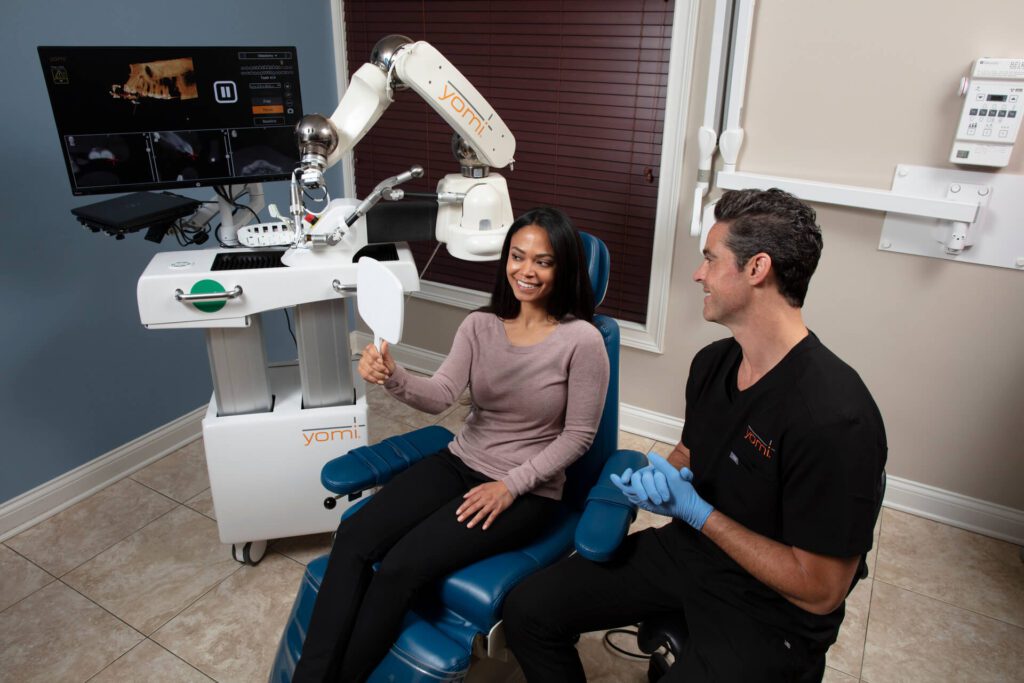
Every recession case we see at Towne Dental starts with the same question: what’s actually driving this tissue loss, and will it keep happening if we only treat what’s visible today? That means looking past the exposed root to check brushing habits, bite alignment, and periodontal health before recommending a graft technique. Advanced technology like the Yomi robotic system supports the surgical side of our practice with a level of precision that helps minimize invasiveness during procedures that call for it.
Patient comfort shapes how we plan treatment, not just how we deliver it. Someone anxious about a second surgical site gets a real conversation about matrix graft options; someone with thin palatal tissue gets a frank assessment of whether SCTG or DFGG makes more sense for their anatomy. Graft selection should reflect the person in the chair, not a one-size answer applied to every recession case that walks through the door.
— Towne Dental
Getting Gum Recession Evaluated and Treated
If you’re noticing longer-looking teeth, root sensitivity, or a visible notch at the gumline, the earlier that gets evaluated, the more options stay on the table. Waiting tends to narrow choices toward more involved surgery rather than opening them up. Towne Dental’s periodontics team evaluates recession cases with the full picture in mind: classification, phenotype, contributing habits, and whether a combined restorative approach is needed, before recommending a path forward.
For patients whose recession sits alongside worn edges, uneven margins, or a smile they’d like refined once the gum tissue is stable, our cosmetic dentistry services pick up right where periodontal treatment leaves off. And when a case turns out to involve more complex grafting or bone-level correction, our oral surgery team coordinates directly with periodontics so you’re not bounced between providers piecing together your own treatment plan. If you’re seeing root exposure or gum sensitivity that hasn’t gone away, schedule an evaluation and get a specific answer about what your case actually needs.
Sources
- Periodontal soft tissue root coverage procedures: A consensus report (AAP)
- Root coverage procedures for the treatment of localized and multiple recession-type defects (Cochrane)
- An updated evidence-based recommendation for the treatment of gingival recession associated with non-carious cervical lesions
FAQ
Can You Repair Receding Gums?
Yes, through surgery. SCTG combined with CAF is the most predictable method for covering exposed roots in Miller Class I and II cases, though nonsurgical care can stop mild recession from progressing without a graft.
What’s the Worst Thing for Receding Gums?
Aggressive horizontal brushing with a hard-bristled brush is one of the most damaging habits, alongside untreated periodontitis and tobacco use, since all three actively wear down or inflame tissue that’s already compromised.
When Is It Too Late to Fix Receding Gums?
It’s rarely “too late” for treatment, but severe cases (Miller Class III or IV, or Cairo RT2/RT3) may only achieve partial root coverage rather than full coverage, which is why earlier evaluation preserves more options.
Can Gums Grow Back After a Slight Recession?
Adult gum tissue does not regenerate on its own even after minor recession, though catching it early through better brushing technique and professional cleanings can prevent it from advancing further and keep surgery off the table.
Is Gum Graft Surgery Painful?
Most discomfort is localized to the donor site and resolves within the first week; patients often expect more pain than they actually experience with modern harvesting techniques and proper aftercare.