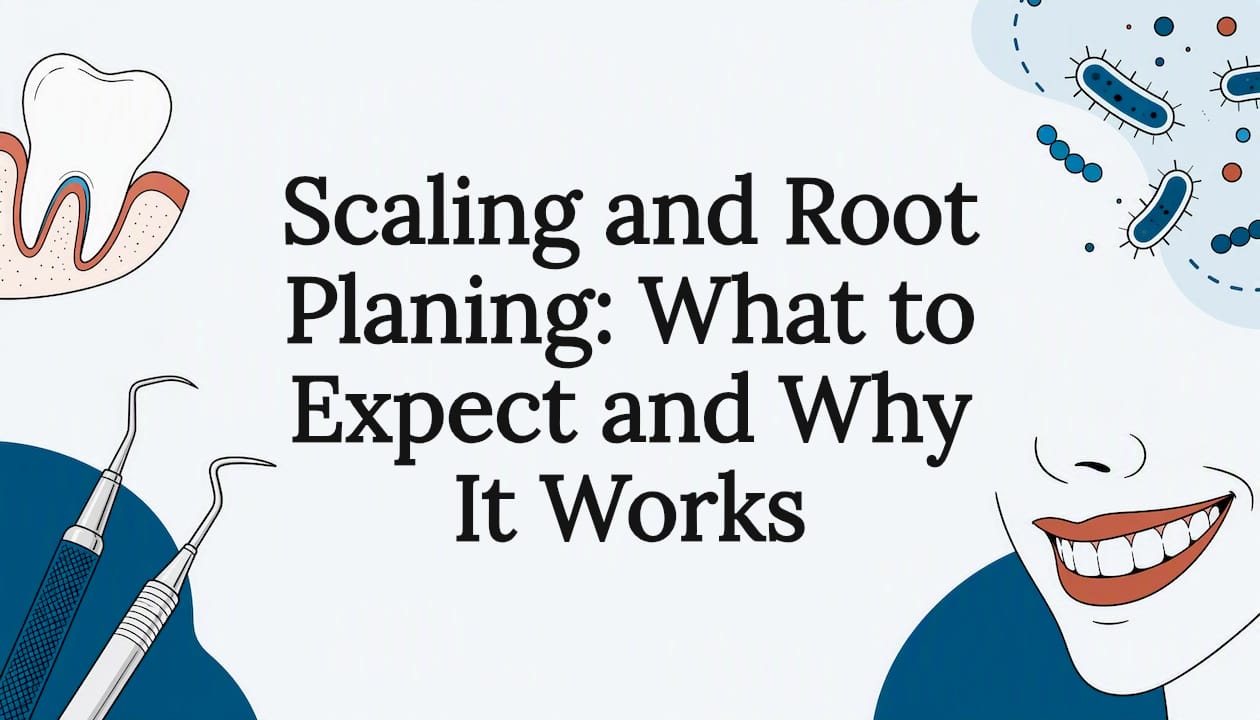
Scaling and root planing (SRP) is a non-surgical deep cleaning procedure and the standard first-line treatment for periodontitis, the advanced form of gum disease. According to MouthHealthy (ADA), it targets bacteria and tartar buildup below the gumline that a routine cleaning simply cannot reach.
- Who needs it: Patients with pocket depths typically 4 mm or greater, bleeding gums, attachment loss, or radiographic bone loss indicating periodontitis
- Main goal: Remove hardened deposits from root surfaces and smooth those surfaces so gum tissue can reattach and heal
- Typical result: Reduced pocket depth, less inflammation, and a lower risk of tooth loss — though most patients will need ongoing periodontal maintenance to hold those gains
The CDC identifies periodontal disease as a leading cause of tooth loss in adults, and the NCBI systematic review classifies SRP as the gold-standard initial nonsurgical therapy for periodontitis. If your dentist has recommended it, the evidence is firmly on their side.
Key Takeaways
Scaling and root planing is the evidence-backed, non-surgical first-line treatment for periodontitis, and most patients who complete it and maintain follow-up care avoid more invasive procedures.
| Point | Details |
|---|---|
| SRP is first-line therapy | ADA and NCBI guidelines recommend SRP before any surgical option for chronic periodontitis. |
| Cost runs per quadrant | U.S. average is roughly $242 per quadrant; PPO plans typically cover — when disease is documented. |
| Maintenance is required | Most patients need periodontal maintenance every 3–4 months to prevent recurrence after SRP. |
| Pain is manageable | Local anesthesia keeps discomfort minimal during the procedure; post-op soreness resolves within days. |
| Towne Dental provides full SRP care | Towne Dental offers comprehensive periodontal exams, SRP, adjunct therapy, and maintenance planning in Naples, FL. |
Table of Contents
- What happens during a scaling and root planing appointment
- Who actually needs SRP, and how dentists decide
- How SRP is numbed, and what you’ll actually feel
- What benefits you can realistically expect from SRP
- Risks and complications to know about
- Recovery and aftercare after SRP
- What SRP costs and how insurance typically covers it
- Adjunct treatments: what the evidence actually supports
- Follow-up and long-term maintenance after SRP
- Warning signs that mean you should call your provider now
- How to prepare for your SRP appointment
- Towne Dental’s perspective on SRP and personalized periodontal care
- Towne Dental offers SRP and full periodontal care in Naples, FL
- Sources
- FAQ
What happens during a scaling and root planing appointment
The procedure follows a clear sequence. Your clinician starts with a periodontal exam and X-rays to confirm pocket depths and bone levels, then administers local anesthesia before touching any instruments. From there:
- Scaling — ultrasonic and manual scalers remove calculus (tartar) and bacterial deposits from above and below the gumline
- Root planing — the root surfaces are smoothed to reduce bacterial adhesion and encourage gum reattachment
- Adjunct placement (when indicated) — a local antibiotic chip or gel may be placed in deeper pockets
- Post-op instructions — you receive specific guidance on rinsing, eating, and oral hygiene before you leave
Most clinicians divide the mouth into quadrants and treat one or two per visit. Colgate notes that a typical appointment runs 1–2 hours depending on severity. Full-mouth SRP in a single visit is sometimes offered, though splitting it lets the anesthesia wear off on only one side at a time, which most patients find more comfortable.
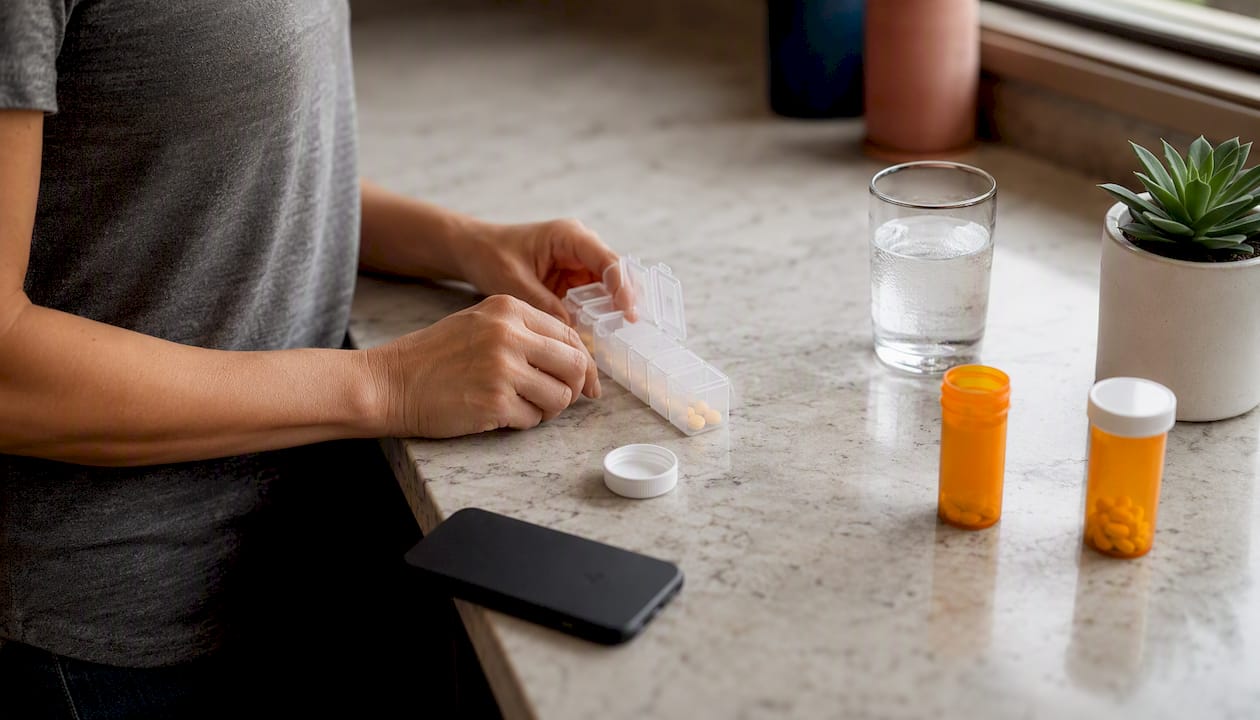
Pro Tip: Arrange a ride home if your clinician uses sedation or if you expect heavy numbing. Bring a list of your current medications, since some (blood thinners, bisphosphonates) affect treatment planning.
Who actually needs SRP, and how dentists decide
The short answer: patients with periodontitis, not just gingivitis. Gingivitis is reversible with a standard prophylaxis cleaning; periodontitis involves actual bone and attachment loss, and that requires SRP.
Clinicians use four measurements to make the call:
- Pocket probing depth: Pockets of 4 mm with bleeding may warrant SRP; pockets of 5–6 mm or deeper almost always do
- Clinical attachment level (CAL): Loss of attachment confirms disease has progressed beyond the gumline
- Bleeding on probing: A consistent indicator of active inflammation
- Radiographic bone loss: X-rays showing crestal bone loss confirm periodontitis severity
Certain patients need extra consideration before SRP. Smokers respond less predictably to treatment; uncontrolled diabetics may heal more slowly; immunocompromised patients may need antibiotic coverage. The CDC’s periodontal disease overview lists these systemic risk factors explicitly, and a thorough medical history review before treatment is standard practice.
Key stat: The distinction between a deep cleaning and a regular cleaning isn’t just semantic. A routine prophylaxis (prophy) cleans above the gumline and in shallow sulci; SRP goes below it. Understanding preventive vs. restorative care helps clarify why your dentist recommends one over the other.
How SRP is numbed, and what you’ll actually feel
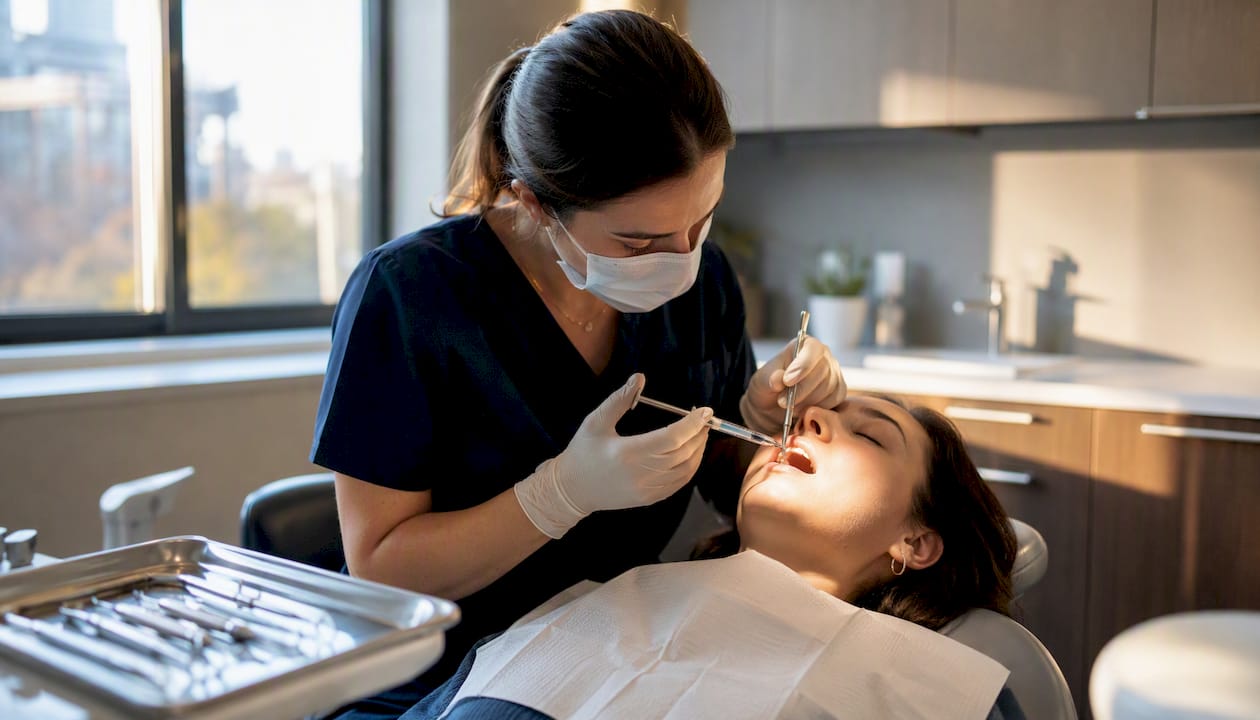
Fear of pain keeps many patients from scheduling SRP. The reality is considerably less dramatic than the anticipation. Clinical commentary published in the Journal of Clinical Periodontology notes that appropriate local anesthesia typically results in minimal discomfort during the procedure, and that post-procedural soreness is usually short-lived and manageable with over-the-counter analgesics.
Anesthesia options your clinician may use:
- Topical anesthetic applied to the gums before injection to reduce needle discomfort
- Local nerve block or infiltration — the standard for SRP; numbs the treatment area thoroughly
- Oral sedation or nitrous oxide — available at many practices for patients with significant dental anxiety
During the procedure, you may feel pressure and vibration from the ultrasonic scaler, but sharp pain should not be present. Afterward, expect 24–72 hours of tenderness, mild swelling, and sensitivity to temperature. Ibuprofen or acetaminophen handles most of it. Avoid aspirin if your clinician has flagged any bleeding risk.
Pro Tip: Tell your clinician before the appointment if you have dental anxiety. Many practices, including those offering sedation dentistry, can tailor the anesthesia plan. You can also ask for additional topical anesthetic or a short break mid-procedure.
What benefits you can realistically expect from SRP
SRP works. The NCBI systematic review classifies it as the gold-standard initial nonsurgical therapy for periodontitis, and the ADA clinical practice guideline recommends it as the first treatment step for chronic periodontitis before any surgical option is considered.
Realistic expectations, by timeline:
- Weeks 1–4: Gum inflammation decreases, bleeding on brushing reduces, tissue begins to tighten
- Weeks 4–8: Pocket depths measurably decrease at the re-evaluation appointment
- Months 3–6: Continued improvement with proper home care; clinician assesses whether maintenance is sufficient or further treatment is needed
Factors that blunt outcomes include smoking, poorly controlled blood sugar, inconsistent home hygiene, and skipping maintenance visits. The evidence base is clear that SRP reduces pocket depth and bacterial load, but it is not a one-time cure. Periodontitis is a chronic condition, and the gains from SRP require maintenance to last.
Risks and complications to know about
SRP is low-risk, but not risk-free. Most complications are temporary and minor.
Common (expected, short-term):
- Bleeding during and immediately after the procedure
- Tooth sensitivity to cold and heat for days to weeks
- Gum soreness and mild swelling
Less common:
- Gum recession as inflamed tissue shrinks back to a healthier position (this is often a sign of healing, not damage)
- Transient bacteremia — bacteria briefly enter the bloodstream; usually inconsequential in healthy patients but relevant for those with certain heart conditions
Rare:
- Persistent deep pockets that do not respond to SRP alone
- Localized infection requiring antibiotic treatment
When to call your dentist: Contact the clinic promptly if you experience heavy bleeding that does not slow within 20 minutes, fever above 101°F, facial swelling that is spreading or worsening, or severe pain that over-the-counter medication does not control. If swelling affects your ability to swallow or breathe, go to the emergency room immediately.
Antibiotics are not routinely prescribed after SRP for healthy patients. They may be recommended for patients with systemic conditions, signs of acute infection, or certain cardiac histories — your clinician will make that call based on your medical profile.
Recovery and aftercare after SRP
Most patients feel back to normal within a few days. The first 24 hours matter most for setting up a smooth recovery.
First 24 hours:
- Eat soft foods only — yogurt, eggs, mashed potatoes, soup
- Avoid vigorous rinsing or spitting, which can dislodge the clot in treated areas
- Do not use tobacco in any form
- Take pain medication as directed before the anesthesia fully wears off
Days 2–7:
- Brush gently with a soft-bristle toothbrush; avoid scrubbing the treated gum margin
- Rinse with warm salt water (half a teaspoon of salt in 8 oz of water) two to three times daily
- Continue avoiding tobacco, which significantly slows healing
- Resume flossing gently after 48 hours unless your clinician advises otherwise
Ongoing:
- Switch to a desensitizing toothpaste if sensitivity persists beyond the first week
- Avoid very hot, cold, or acidic foods until sensitivity resolves
Do:
- Keep your follow-up appointment (typically 4–8 weeks out)
- Maintain twice-daily brushing and daily flossing
Avoid:
- Hard, crunchy, or spicy foods for the first few days
- Alcohol-based mouthwashes, which can irritate healing tissue
- Skipping the follow-up exam
Pro Tip: Fluoride rinses used nightly can reduce post-SRP sensitivity noticeably within a week. Sensodyne or a prescription fluoride gel are both reasonable options — ask your clinician which concentration fits your situation. For broader recovery guidance, post-procedure care tips apply to many of the same principles.
What SRP costs and how insurance typically covers it
SRP is billed per quadrant, not as a single flat fee. Pearl’s national cost data reports a U.S. average of roughly $242 per quadrant, with a range of approximately $185–$444 depending on geography, provider type, and severity. A full-mouth treatment (four quadrants) therefore runs roughly $740–$1,776 before insurance.
That documentation requirement is why your dentist takes X-rays and records pocket depths before submitting a claim.
Insurance checklist before your appointment:
- Confirm SRP is classified as a periodontal benefit, not a preventive one (the coverage tier differs)
- Ask whether preauthorization is required and submit it before scheduling
- Verify in-network vs. out-of-network status for your provider
- Check frequency limitations — many plans limit SRP to once every 24 months per quadrant
- Note the billing codes: D4341 (four or more teeth per quadrant) vs. D4342 (one to three teeth per quadrant)
- Confirm your FSA or HSA funds can be applied to the remaining balance
Ask your clinic’s billing coordinator for a pre-treatment estimate. Most practices will supply the documentation your insurer needs for a preauthorization request.
Adjunct treatments: what the evidence actually supports
SRP alone is the standard pathway. The ADA clinical practice guideline found that the ADA-assembled evidence panel identified modest additional benefit for sub-antimicrobial dose doxycycline and mixed or weak evidence for many other adjuncts. SRP alone remains the standard for most chronic periodontitis patients.
| Adjunct | Guideline Stance | Expected Benefit |
|---|---|---|
| Sub-antimicrobial doxycycline (SDD) | Conditional recommendation | Small to moderate additional pocket reduction |
| Locally delivered antimicrobials (e.g., minocycline microspheres) | Conditional recommendation | Small additional benefit in deep pockets |
| Systemic antibiotics (e.g., metronidazole + amoxicillin) | Selective use; not routine | Moderate benefit in aggressive periodontitis |
| Photodynamic therapy / lasers | Insufficient evidence | Uncertain; not standard of care |
Adjuncts are most often considered for patients with severe periodontitis, smokers, or those with systemic conditions like uncontrolled diabetes that impair healing. The ScienceDirect summary of ADA-assembled evidence reaches the same conclusion: SRP is the foundation, and adjuncts are additions for specific clinical scenarios, not upgrades for everyone.
Follow-up and long-term maintenance after SRP
The re-evaluation appointment, typically scheduled 4–8 weeks after SRP, is where your clinician measures whether the treatment worked. They re-probe every pocket, check bleeding scores, and assess bone levels. This visit determines your next step.
Signs that SRP succeeded:
- Pocket depths reduced (ideally to 3 mm or less in treated areas)
- Bleeding on probing decreased or resolved
- Gum tissue appears firmer and less red
If pockets remain at 5 mm or deeper with bleeding, surgical options or additional SRP may be discussed. Most patients who respond well move to periodontal maintenance (also called perio maintenance or periodontal recall) every 3–4 months. This is different from a standard prophylaxis cleaning: it includes sub-gingival debridement, pocket re-measurement, and a full periodontal assessment at each visit.
The NCBI review notes that evidence gaps remain around optimal SRP frequency, which is part of why maintenance intervals vary by patient. What is consistent across guidelines: skipping maintenance visits significantly increases the risk of disease recurrence. Periodontitis does not stay stable on its own.
Warning signs that mean you should call your provider now
Most post-SRP discomfort is normal and resolves on its own. These signs are not normal and require prompt contact with your dental team:
- Heavy or prolonged bleeding that does not slow after 20 minutes of firm pressure
- Fever above 101°F within 48 hours of the procedure
- Facial swelling that is spreading or getting worse, not better
- Severe pain that over-the-counter medication does not reduce
- Pus or discharge from the treated area
- Difficulty swallowing or breathing — go to the emergency room immediately
When you call, report: the specific symptom, when it started, how severe it is on a 1–10 scale, and any medications you have taken. That information helps the team triage your call accurately. If you cannot reach your regular clinic, emergency dental services are available for urgent situations.
How to prepare for your SRP appointment
Preparation is straightforward, but a few steps make the appointment go more smoothly.
Before the appointment:
- Eat a light meal beforehand — you will be numb for several hours and unable to eat comfortably right after
- Brush and floss as normal; arriving with clean teeth is not required, but it is courteous and reduces procedure time
- Bring a complete list of medications, including supplements and blood thinners
- Confirm your insurance coverage and preauthorization status with the front desk
- Arrange transportation if sedation is planned or if you expect significant numbing
What to avoid:
- Alcohol for 24 hours before the appointment if sedation is involved
- Skipping prescribed pre-medications (some patients with certain heart conditions or implants require antibiotic prophylaxis — confirm with your physician)
- Wearing contact lenses if sedation is used
For a broader overview of what to expect before a dental procedure, pre-surgery preparation guidance covers logistics that apply to SRP appointments as well.
Towne Dental’s perspective on SRP and personalized periodontal care
SRP is one of the most evidence-backed procedures in dentistry, and at Towne Dental, it is the starting point for every periodontitis case before any surgical option is considered. The ADA guideline and the NCBI systematic review both support this sequencing, and clinical experience consistently shows that patients who complete SRP and follow through on maintenance avoid the surgical interventions that become necessary when disease is left to progress.
What makes a difference in outcomes is not the procedure itself — the technique is well-established — but the diagnostic precision and the follow-up plan. Towne Dental uses comprehensive periodontal charting and digital X-rays to map disease severity accurately before treatment begins. Adjunct selection (whether to add local antimicrobials, sub-antimicrobial doxycycline, or other agents) is based on individual pocket depths, systemic health, and response to initial therapy, not a one-size-fits-all protocol. Maintenance intervals are set based on re-evaluation findings, not a fixed calendar.
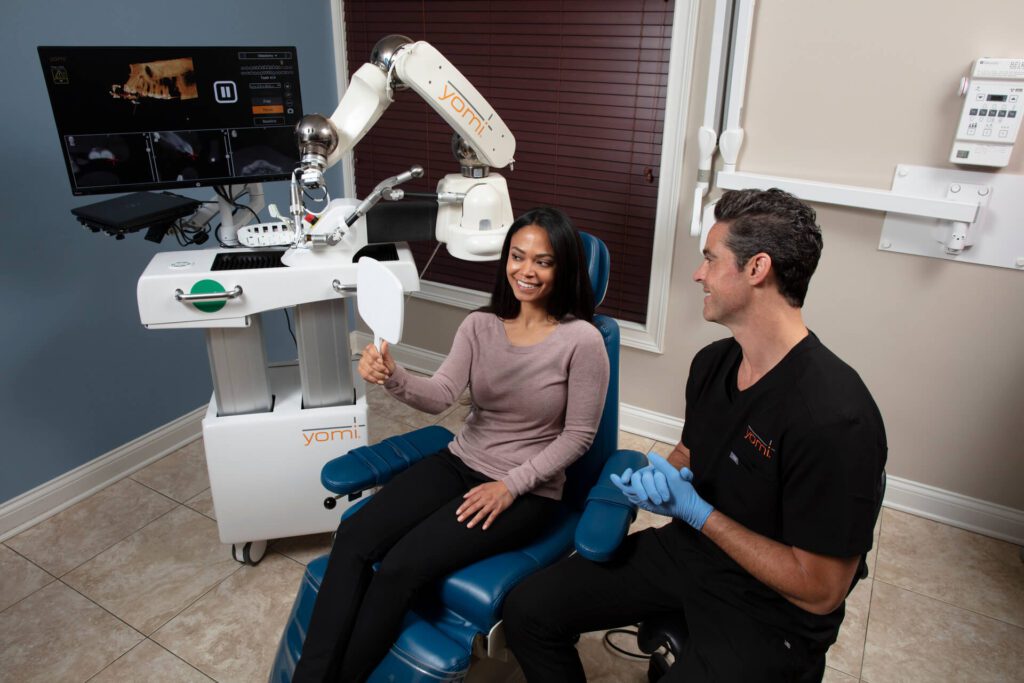
The clinic’s broader technology investment, including the Yomi® robotic system for implant placement, reflects a commitment to precision across all procedures. For patients whose periodontitis has progressed to the point where implants become relevant, that same precision carries through. Patients who treat gum disease early with SRP often avoid reaching that stage entirely, which is the better outcome for everyone. Implant longevity research consistently shows that periodontal health is one of the strongest predictors of long-term implant success — another reason to address gum disease before it advances.
[Editor’s note: Individual practitioner credentials and experience, patient testimonials, and case studies demonstrating treatment outcomes should be added here by the editorial team before publication.]
Towne Dental offers SRP and full periodontal care in Naples, FL
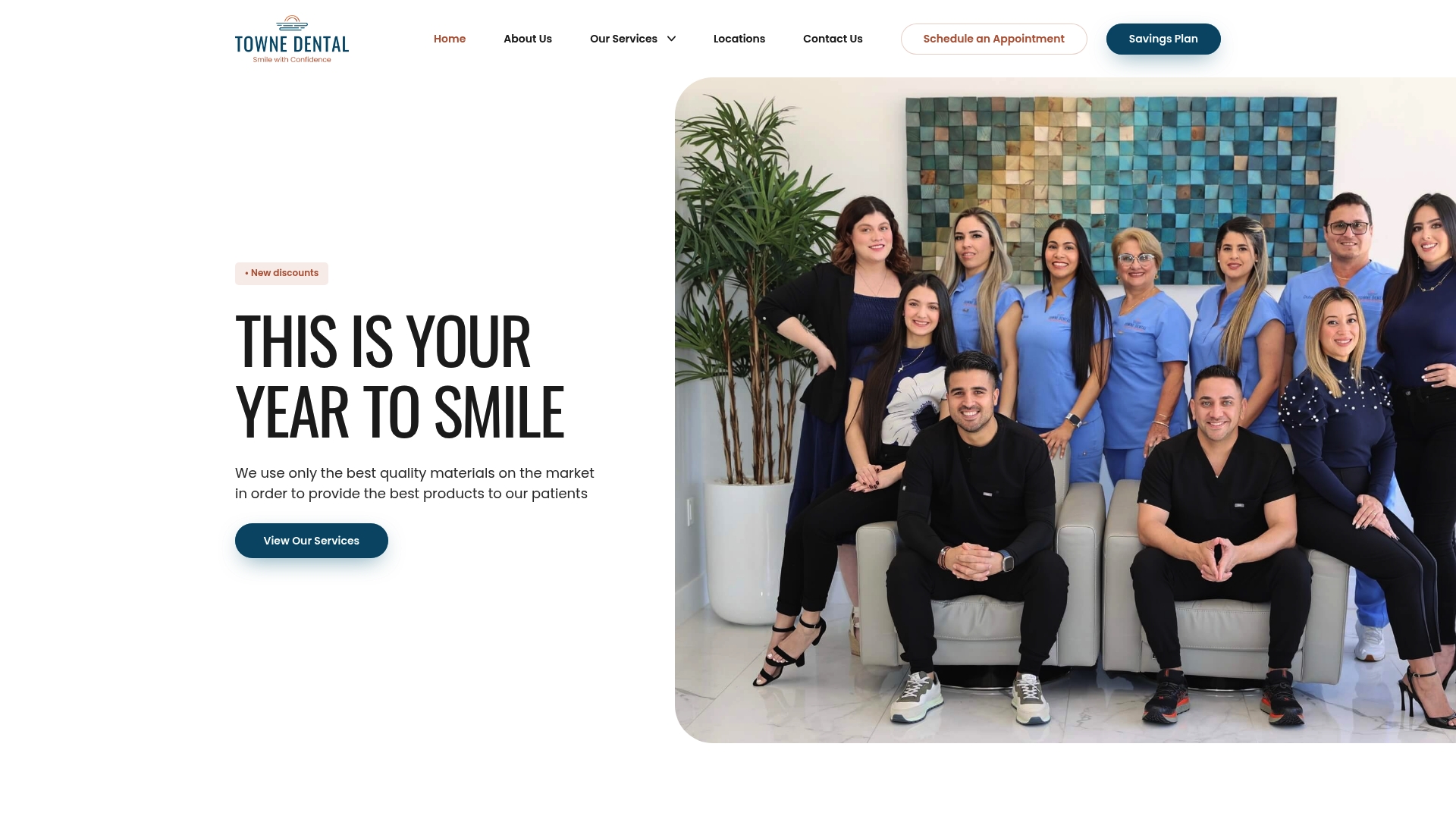
Gum disease responds best to treatment that starts early and follows through. Towne Dental’s periodontics team in Naples provides the full SRP workflow — comprehensive periodontal exam, digital X-rays, local anesthesia, and a personalized maintenance schedule — under one roof.
The clinic handles insurance preauthorization paperwork and offers patient financing options for out-of-pocket balances. What you get at a Towne Dental SRP visit:
- Full periodontal charting and diagnostic X-rays
- Local anesthesia and sedation options for anxious patients
- Ultrasonic and manual scaling with root planing
- Adjunct placement when clinically indicated
- A written periodontal maintenance plan with scheduled follow-up
- Insurance verification and preauthorization assistance
- Flexible financing for remaining balances
Ready to address gum disease before it requires surgical intervention? Schedule a periodontal consultation at Towne Dental’s periodontics page and get a treatment plan built around your specific pocket depths and health history.
Sources
- Dental Scaling and Root Planing for Periodontal Health: A Review of the Clinical Effectiveness, Cost-effectiveness, and Guidelines – NCBI Bookshelf
- Nonsurgical Treatment of Chronic Periodontitis by Scaling and Root Planing with or without Adjuncts: Clinical Practice Guideline — ADA
- Periodontal Disease | CDC
- What Dental Hygienists Do When Scaling and Root Planing Teeth — Colgate
This article is general information, not a substitute for advice from a qualified doctor. Consult a qualified healthcare professional about your own circumstances before acting on anything here.
FAQ
Does scaling and root planing actually work?
Yes. The NCBI systematic review classifies SRP as the gold-standard initial nonsurgical treatment for periodontitis, with consistent evidence showing reduced pocket depths and inflammation when patients follow through on maintenance.
How painful is scaling and root planing?
Most patients experience minimal pain during the procedure because local anesthesia is used throughout. Post-op soreness typically resolves within 2–3 days and responds well to ibuprofen or acetaminophen.
How much does periodontal scaling and root planing cost?
The U.S.
Do gums grow back after scaling and root planing?
Gum tissue does not regenerate to its original position, but it does tighten and reattach to the smoothed root surfaces after SRP. Some apparent recession is actually inflamed tissue returning to a healthier, firmer state rather than true tissue loss.
What is the difference between periodontal maintenance and a regular cleaning?
A standard prophylaxis (regular cleaning) addresses the area at and above the gumline in patients without active periodontal disease. Periodontal maintenance includes sub-gingival debridement, pocket re-measurement, and a full periodontal assessment at every visit — it is a therapeutic procedure, not a preventive one.