Bruxism treatment usually has two goals: protect your teeth from damage and ease the strain on your jaw muscles. A custom night guard or splint is the most common way to protect teeth. Stress management, daytime habit changes and care for related problems such as sleep apnea or anxiety address the behavior itself. A dentist can tell you which of these fits you after an exam. Here is how each option works, what it can and cannot do, and what to do if your child is the one grinding.
TL;DR
- Bruxism means clenching or grinding your teeth, either while awake or during sleep. Many mild cases need no treatment, according to the National Institute of Dental and Craniofacial Research.
- Custom mouth guards and splints protect teeth, but they generally do not stop the grinding itself.
- Daytime reminders, stress relief, and cutting back on caffeine, alcohol and smoking are first-line habits for adults.
- Most children outgrow grinding. See a dentist if a child has pain, disrupted rest or chipped, cracked or worn teeth.
- Worn or cracked teeth can be rebuilt with reshaping or crowns, and a regular exam is where signs of bruxism get spotted.
Table of Contents
- What bruxism is, and how clenching differs from grinding
- Signs that you may be grinding or clenching
- Bruxism treatment options at a glance
- Night guards and splints
- Repairing teeth that grinding has already worn down
- Habits and self-care that help
- Medication and Botox: when they come up
- Teeth grinding in children
- Our perspective on treating bruxism
- Getting care in Southwest Florida
- FAQ
- Sources
What bruxism is, and how clenching differs from grinding
Bruxism is the repeated clenching of your jaw or grinding of your teeth. It comes in two forms. Awake bruxism happens while you are conscious, often without you noticing, during stress or deep concentration. Sleep bruxism is a sleep-related movement that happens during transitions between sleep stages, as Mayo Clinic describes it.
Clenching and grinding are not the same thing, and the difference matters for what you feel. The American Academy of Oral Medicine notes that some clinicians group the two, while others separate them because they lead to different problems. Grinding tends to wear down tooth surfaces. Clenching tends to cause muscle and joint pain.
A practical way to think about it:
| Clenching | Grinding | |
|---|---|---|
| What happens | Teeth pressed together hard, with little movement | Teeth slide back and forth against each other |
| Typical effect | Sore jaw muscles and joint discomfort | Flattened, worn or chipped tooth surfaces |
| Often noticed | As morning jaw tightness or daytime tension | As tooth wear, or by a partner hearing noise at night |
Many people do both, so you do not need to work out which one you have before seeing a dentist.
Is bruxism always a problem?
Not necessarily. A 2018 international consensus report argues that in otherwise healthy people, bruxism should be seen as a behavior rather than a disorder. The behavior can be a risk factor for some clinical conditions and, in some cases, a protective one. A review in the British Dental Journal even suggests sleep bruxism may play a protective role during sleep, such as helping keep the airway open or stimulating saliva flow.
The takeaway is that the goal is not to eliminate every episode of clenching. It is to prevent damage and pain, and to find out whether something else is driving it.
Signs that you may be grinding or clenching
Because most of it happens without your attention, bruxism often shows up first as its effects. Common ones include:
- Teeth that look flat, chipped, cracked or shorter than they used to
- A tired, tight or sore jaw, especially on waking
- Face, ear or jaw pain
- Headaches, particularly around the temples
- Teeth that feel sensitive without an obvious cavity
- A bed partner or family member hearing grinding at night
None of these proves you have bruxism. Jaw pain and headaches have many causes, and a toothache at night can point to an infection rather than grinding. Our guide to why a toothache gets worse at night explains how to tell the difference and when to call for urgent care.
The NIDCR recommends regular dental care because exams give dentists a chance to spot signs of bruxism you may not notice yourself. Wear patterns on the biting surfaces are one of the things we look at during a routine checkup.
Bruxism treatment options at a glance
No single treatment fits everyone. Which one makes sense depends on whether you clench, grind or both, how much damage there is, and what may be triggering it.
| Option | What it does | What it does not do |
|---|---|---|
| Custom night guard or splint | Cushions and protects teeth, especially during sleep | Generally does not stop the underlying clenching or grinding |
| Reshaping or crowns | Repairs teeth already worn down | Does not prevent future wear on its own |
| Stress and habit changes | Targets triggers like tension, caffeine and alcohol | Is not a quick fix for existing tooth damage |
| Treating related conditions | Addresses things like sleep apnea or anxiety | Depends on a correct diagnosis |
| Muscle relaxants or anxiety medicine | Used briefly in some cases | Generally not very effective |
| Botox | May relax jaw muscles in severe cases | Reserved for cases that have not improved with other treatments |
The summary comes from Mayo Clinic’s diagnosis and treatment guidance. The sections below go through each one.
Night guards and splints
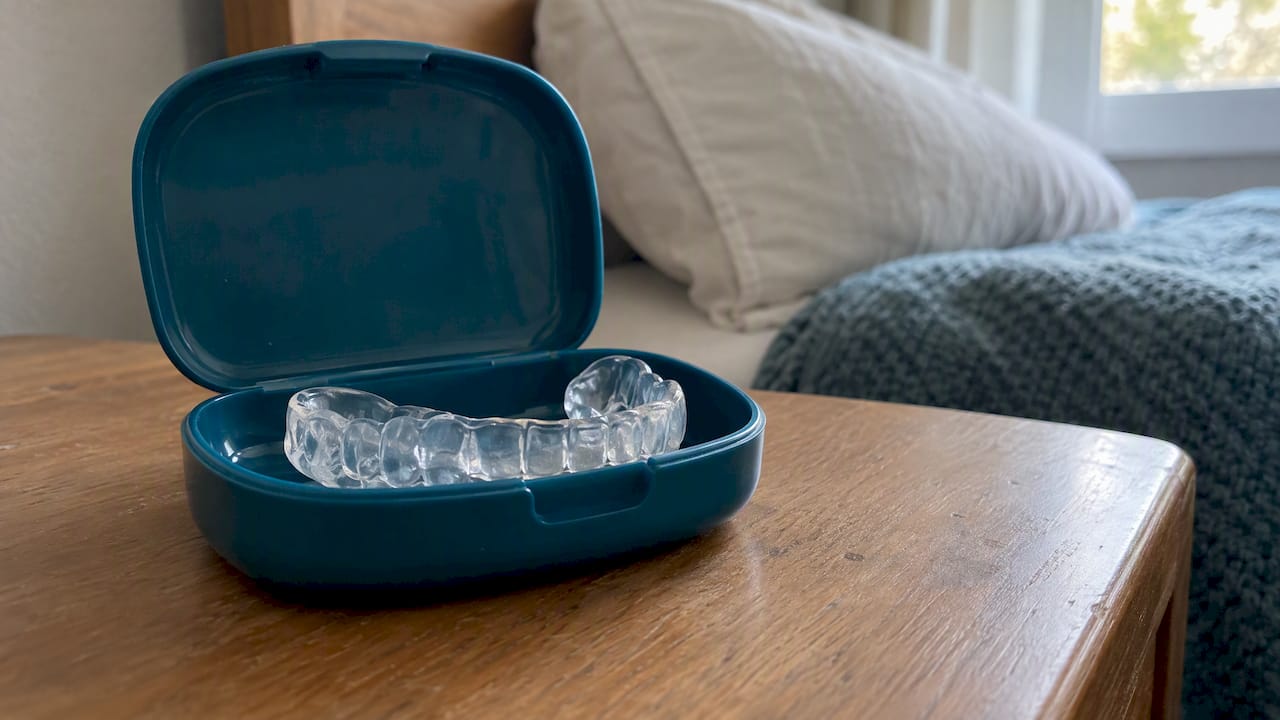
For most adults who grind, the first thing a dentist suggests is a custom-fitted mouth guard or splint. It sits between your upper and lower teeth so that the force lands on the appliance instead of on your enamel. Mayo Clinic notes that these appliances protect teeth from damage during sleep but generally do not stop the bruxism activity itself.
That is worth understanding before you start. A guard is protection, much like a helmet is protection. If you wake up with a sore jaw and your guard shows fresh marks, it is doing its job, and it is also telling you the habit is still there.
Why custom instead of store-bought? A guard made from impressions or scans of your own teeth fits your bite, and a dentist can check the fit and adjust it over time. We cover the practical details, including what to expect when you get one, in our night guard guide for adults.
If you have had braces, the same logic applies to your retainer. It is not a replacement for a night guard, but our page on retainers after braces explains how a retainer schedule works so you can tell your dentist exactly what you already wear at night.
Repairing teeth that grinding has already worn down
Protection does not undo damage. When grinding has worn teeth significantly, Mayo Clinic says dentists may perform corrections, such as reshaping tooth surfaces or placing crowns, in severe cases of tooth wear.
What that can look like in practice:
- Small chips and wear: a filling or bonding to rebuild the edge
- Cracked or heavily worn teeth: a crown to cover and strengthen what remains
- Sensitivity from lost enamel: an exam to find out whether wear, a cavity or something else is the cause
Many of these are everyday restorative procedures. You can see what we offer on our general dentistry page, which covers fillings, crowns, bridges and dentures. If your teeth show notched or worn areas near the gumline rather than on the biting surface, our article on dental abrasion treatment explains how those are restored and protected.
If a tooth has cracked badly or you are in pain, do not wait for a routine slot. A cracked tooth that hurts or a tooth that feels loose needs prompt attention, and our guide to a loose tooth in adults explains when same-day care is the right call.
Habits and self-care that help
Because stress and daytime tension are common companions of clenching, the NIDCR lists several self-care steps adults can try:
- Relaxing activities. Yoga, meditation or anything that reliably lowers your tension, practiced regularly.
- Reminders to keep your teeth apart. Teeth should not touch much during the day. Sticky notes on your monitor or a phone reminder can interrupt the habit of clenching while you work or drive.
- Less caffeine and alcohol. Both are on the NIDCR’s list of things to avoid.
- No smoking.
A useful self-check: several times a day, notice where your tongue and jaw are. Lips together, teeth slightly apart, jaw relaxed is the resting position. If your teeth are touching, that is your cue.
These steps are free and low risk, and they work alongside a night guard rather than instead of one. If you recognize heavy stress, sleepless nights or anxiety behind your clenching, mention it to your dentist and your doctor. The Mayo Clinic lists behavioral therapy and treating underlying conditions such as sleep apnea or anxiety among the approaches for severe bruxism.
Jaw pain, neck tension and what else to look at
Clenching rarely stays in the teeth. People often report tightness through the jaw, temples and neck as well. If you are working through TMJ symptoms, some people explore upper cervical care for TMJ symptoms alongside their dental care. Either way, start with a dental exam so that any tooth wear or bite concerns are documented and protected.
Medication and Botox: when they come up
Medicine is not where most bruxism care starts. Per Mayo Clinic, muscle relaxants or anxiety medicines may be used for a short time, though medicines are generally not very effective for bruxism.
Botox is a further step. It may relax the jaw muscles and help some people with severe bruxism that has not improved with other treatments. Because it involves a prescriber and an injection, it is a conversation to have with your physician or a provider who administers it, after you have tried a guard and the habit changes above. Do not start or stop any medicine for grinding without that conversation.
Teeth grinding in children
Parents often notice grinding before the dentist does, usually as a scratchy sound from the bedroom. It is common and usually not alarming.
The American Academy of Pediatrics’ HealthyChildren.org says the causes are unknown. Possible contributors include stress, misaligned teeth, allergies that affect breathing, sleep disorders and certain medicines. The NIDCR adds that many cases of bruxism are mild and may not need treatment. Research on sleep bruxism in children also points to the central nervous system as the main regulator, rather than anything a child is doing on purpose (academic review, 2021).
What parents can do
HealthyChildren.org says most children outgrow bruxism. In the meantime you can:
- Build a calming bedtime routine
- Mention the grinding to your child’s health care team
- Ask a dentist about a night guard for an older child who has tooth damage
When to book a visit
Talk to your child’s dentist and doctor if:
- A toddler or preschooler grinds loudly and has ongoing face, ear or jaw pain
- Loud grinding is disrupting their rest
- An older child has chipped, cracked or worn teeth
Because misaligned teeth are one possible contributor, a bite issue is worth having checked. Our article on crossbite treatment for kids, teens and adults explains one common bite problem, and our advice on thumb sucking and bite changes is useful if your child has that habit too.
Our perspective on treating bruxism
We see bruxism as a problem best caught early and handled in layers. The first layer is protection: a night guard made for your own bite keeps enamel from taking the force while you sleep. The second is finding the trigger, whether that is stress, a bite that does not meet evenly, or a sleep or breathing issue worth raising with your doctor.
Our approach to dentistry is built around a gentler, lower-stress visit, which matters here because many people who clench are already tense. We design treatment plans around the individual, so a patient with early wear gets a different plan from a patient with cracked teeth.
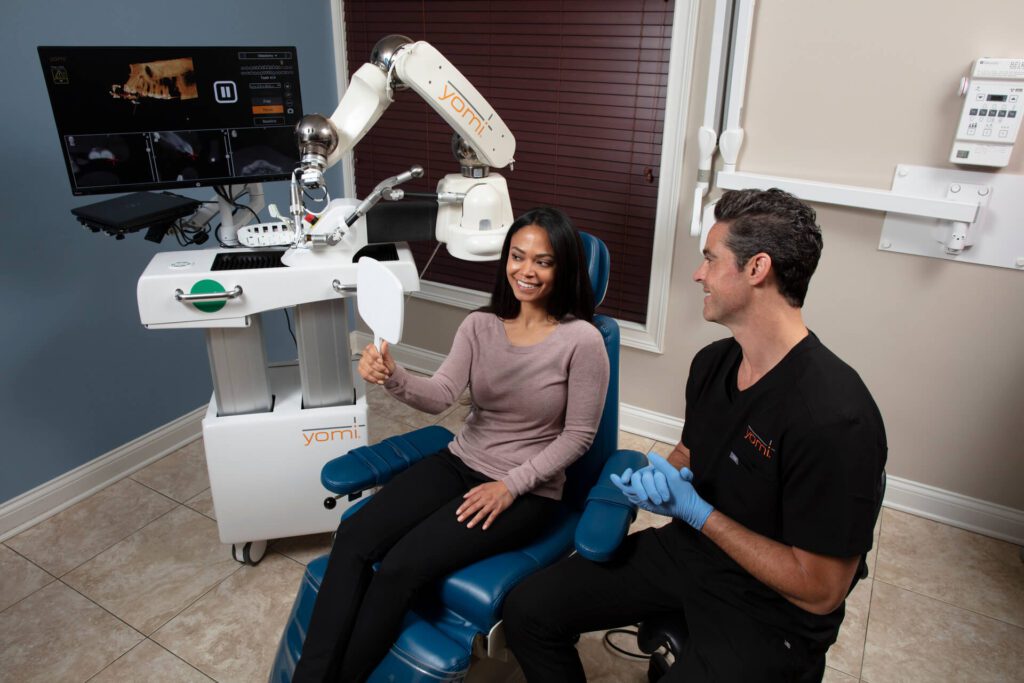
When teeth are already damaged, we offer restorative care such as fillings and crowns, and, if a tooth cannot be saved, options such as dental implants placed with Yomi® robotic assistance. Our aim is to protect what you have first, and to rebuild with precision when you need it.
Towne Dental
Getting care in Southwest Florida
If you live in Naples, Fort Myers, Cape Coral, Bonita Springs, Estero, Marco Island or Ave Maria, we can examine your teeth for signs of grinding, talk through whether a custom night guard makes sense, and repair any wear. We treat adults and children, so the whole family can be seen in one place. Start with our general dentistry services or see everything we offer.

If a tooth is cracked, painful or loose, our emergency dentistry team can help you get seen quickly. For anxious patients, we also offer sedation dentistry to make treatment more comfortable.
FAQ
Can jaw clenching cause headaches?
It can be one of several causes. Clenching strains the jaw and face muscles, and people with bruxism often report jaw pain and tension around the temples. Headaches have many causes, though, so tell your dentist and your doctor, especially if they are frequent or severe.
What is daytime bruxism?
Daytime, or awake, bruxism is clenching or grinding while you are conscious, often without realizing it during stress or concentration. Reminders to keep your teeth apart and relaxing activities are the usual starting points, according to the NIDCR. A dentist can check for related wear or muscle soreness.
My child grinds their teeth at night. Should I worry?
Usually not. Most children outgrow it, and many mild cases need no treatment. Make an appointment if your child has face, ear or jaw pain, loud grinding that disrupts rest, or chipped, cracked or worn teeth.
Does a night guard stop teeth grinding?
A night guard protects your teeth and cushions the force, but it generally does not stop the clenching or grinding itself. That is why dentists often pair it with stress management and, where relevant, care for conditions such as sleep apnea or anxiety. A custom guard also fits better than a generic one.
Sources
- Teeth grinding (bruxism): symptoms and causes, Mayo Clinic
- Teeth grinding (bruxism): diagnosis and treatment, Mayo Clinic
- Bruxism, National Institute of Dental and Craniofacial Research
- Teeth Grinding in Children, HealthyChildren.org
- Tooth Clenching or Grinding, American Academy of Oral Medicine
- International consensus on the assessment of bruxism (2018)
- Sleep bruxism: an overview for clinicians, British Dental Journal
- Sleep Bruxism in Children: Etiology, Diagnosis, and Treatment (2021)
- TMJ Pain Relief: How Upper Cervical Alignment Affects Your Jaw