The first 24 hours decide most of how your extraction heals. Protect the blood clot in the socket: no straws, no smoking, no vigorous rinsing and no spitting. Keep your head cool with ice, eat soft food, brush gently away from the site and call your dentist if bleeding, swelling or pain heads in the wrong direction. Below is the full plan, from the minute you leave the chair to the end of the first week, with the warning signs that mean you should pick up the phone.
TL;DR
- Leave the clot alone for the first 24 hours: skip straws, smoking and hard rinsing, and don’t spit.
- Use ice, 10 minutes on and 10 minutes off, during the first day. If swelling lingers past 24 hours, switch to warm, moist compresses.
- Eat soft foods, drink plenty of fluids and brush gently, steering clear of the extraction site.
- Call the office if bleeding goes on for more than two hours, a fever develops, swelling appears after 48 hours or deep throbbing jaw pain sets in.
- Children need extra watching while numb, and some pain medicines are off the table for them.
Table of Contents
- Why the first day matters so much
- The first few hours
- Managing pain and swelling
- Eating and drinking
- Brushing, flossing and rinsing
- A realistic timeline
- Smoking, vaping and healing
- Tooth extraction aftercare for children
- When something is not normal
- Perspective
- Planning what comes after the extraction
- Need an extraction or a second opinion?
- FAQ
- Sources
Why the first day matters so much
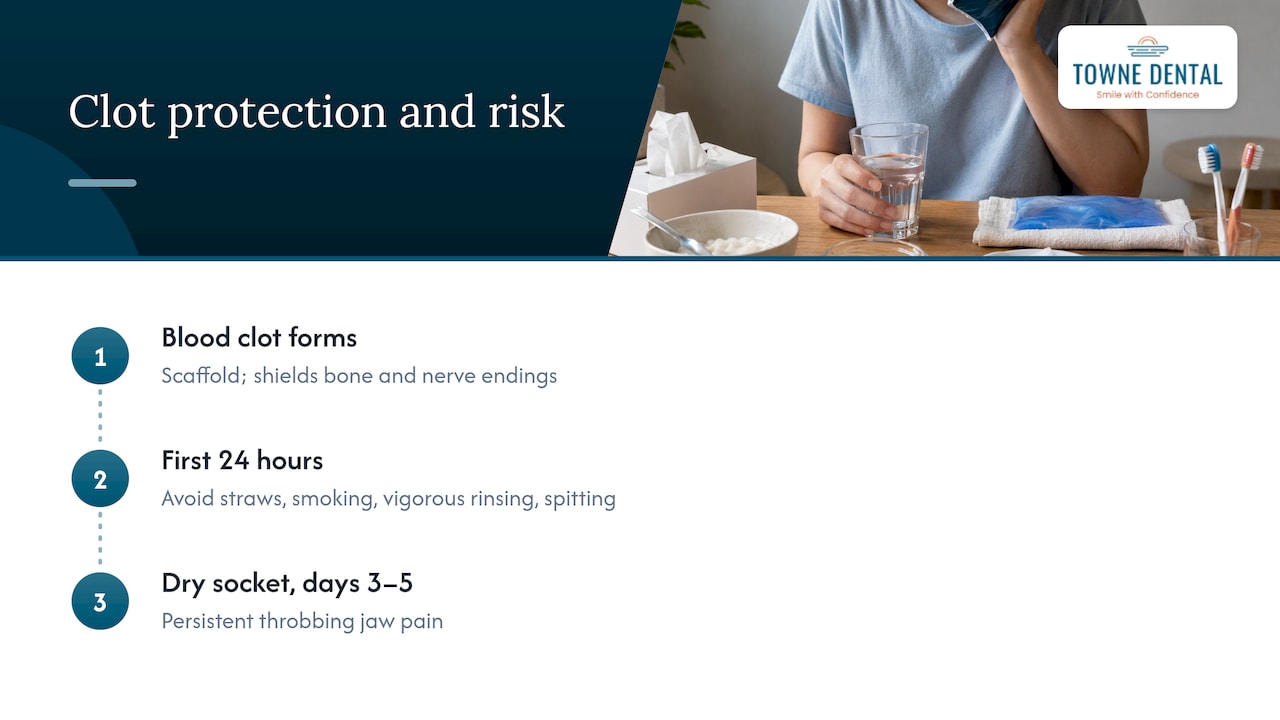
When a tooth comes out, your body fills the empty socket with a blood clot. That clot is the scaffold for new tissue and it shields the bone and nerve endings underneath. Nearly every aftercare rule exists to keep it in place.
The VA’s patient guidance is direct: for the first 24 hours, avoid straws, smoking and vigorous rinsing, and avoid spitting because it may loosen or dislodge the clot. Suction and pressure changes in the mouth are what you are trying to prevent. If you need to get rid of saliva or a little blood-tinged fluid, let it run out gently into the sink.
When the clot is lost early, the result is dry socket. The American Academy of Pediatric Dentistry (AAPD) notes that dry socket may appear on the third to fifth day and causes persistent throbbing jaw pain. If you want a closer look at what it feels like, see our guide to dry socket symptoms.
The first few hours
Here is what to do from the moment you leave the office.
- Go home and rest. Plan a quiet afternoon. Limit exercise and heavy lifting for the first 24 hours, because strenuous activity can interfere with clot formation and cause bleeding.
- Keep the gauze in place as directed. Your dentist will tell you how long to leave the first pad. Follow that timing rather than checking the site repeatedly.
- Start ice early. Put an ice pack on the cheek near the extraction site to reduce swelling.
- Take pain relief before the numbness fades. Waiting until the anesthetic wears off makes it harder to stay ahead of discomfort.
- Keep your tongue and fingers away. Poking at the socket is one of the easiest ways to disturb the clot.
Bleeding: what is expected
Some oozing or pink-tinged saliva is common on day one. What is not common is bleeding that keeps going. The AAPD advises contacting the office if bleeding continues for more than two hours. Alberta Health’s care instructions likewise list new or increased bleeding as a reason to call your dentist or seek immediate medical care.
Managing pain and swelling
Ice, then warmth
For the first 24 hours, the AAPD recommends ice packs 10 minutes on and 10 minutes off. If swelling persists after 24 hours, warm moist compresses may help. Wrap the pack in a thin towel so it never sits directly on your skin.
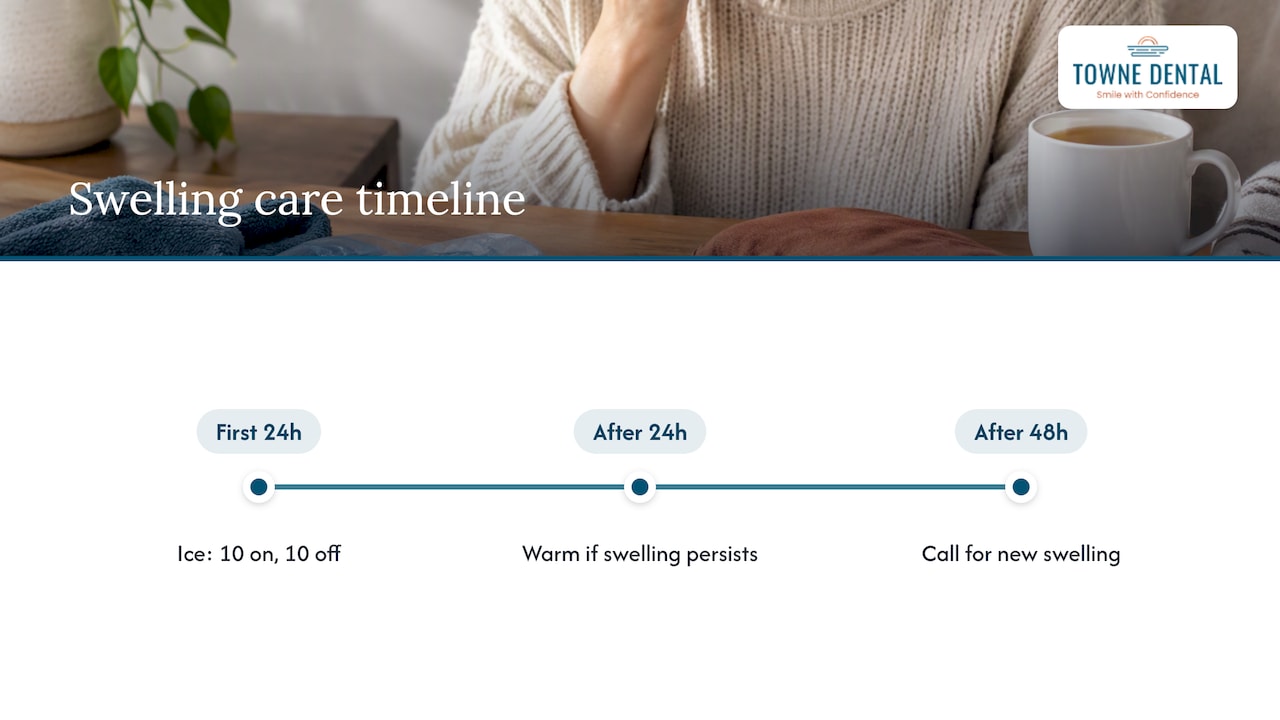
Slight swelling is expected for about the first two days. Swelling that shows up after 48 hours is a signal to call.
Medication
The American Dental Association (ADA) recommends nonopioid medications as first-line therapy for acute dental pain after an extraction. Which one suits you depends on your health history, other medications and what your dentist prescribed, so follow the instructions you were given and ask us if anything is unclear. If you take blood thinners, have kidney or stomach problems or are pregnant, check with your dentist or physician before choosing an over-the-counter option.
If you were prescribed an antibiotic, finish it as directed.
Pain that is not improving
Pain should trend down, not up. Alberta Health lists pain that does not improve with medicine as a reason to call. A dull ache on day one is ordinary. A deep, throbbing ache that begins around day three and spreads along the jaw is the classic pattern of dry socket and deserves a call.
Eating and drinking
The VA guidance is simple: eat soft, healthy foods and drink plenty of liquids. In practice, that means:
- Yogurt, applesauce, scrambled eggs, mashed potatoes, smooth soups (lukewarm, not hot) and oatmeal
- Pasta and rice cooked soft
- Smoothies eaten with a spoon, not a straw
Avoid very hot drinks while you are numb, since you can burn yourself without feeling it. Skip crunchy, sharp or seedy foods (chips, nuts, popcorn) that can lodge in the socket. Chew on the opposite side of your mouth.
For a day-by-day menu, our tooth extraction foods guide walks through what to eat and what to hold off on as you heal.
Brushing, flossing and rinsing
Keeping your mouth clean lowers the chance of trouble, but the technique changes for a few days.
- Day of surgery: The AAPD says to brush and floss gently, avoiding the surgical site. Use a soft brush.
- From the next day: Rinse gently with warm salt water after meals. The VA notes that after 12 hours you may be able to rinse gently with warm salt water, while the AAPD’s guidance starts the following day. Your surgeon’s own instructions take priority if they differ, and some offices ask patients to wait longer after complex surgery.
- Rinsing technique: Tip your head side to side and let the water move around, then let it fall out of your mouth. Do not swish hard.
If your dentist prescribed a medicated rinse, use it exactly as written.
A realistic timeline
| When | What is normal | What to do |
|---|---|---|
| First 24 hours | Mild oozing, numbness wearing off, soreness, slight swelling | Rest, ice, soft foods, no straws, smoking or hard rinsing |
| Day 2 | Slight swelling, tenderness | Start gentle warm salt water rinses after meals, continue soft foods |
| Days 3 to 5 | Soreness easing; this is the window when dry socket can appear | Watch for throbbing jaw pain that grows, call if it does |
| After day 5 | Gradual comfort, the socket looks smaller over time | Return to normal brushing around the area as your dentist advises |
The AAPD describes slight swelling for the next two days and the dry socket window of days three to five. Your own timeline may be longer if you had several teeth out, a wisdom tooth removed or a bone graft placed. After wisdom teeth, our 72-hour wisdom tooth recovery plan breaks the first three days into steps, and the two-week dry socket prevention timeline covers the rest.
Smoking, vaping and healing
Smoking is the habit most likely to undermine an extraction. Beyond the suction that can dislodge the clot, a study of patient-reported outcomes found that smokers reported higher postoperative pain, and swelling was more common among smokers on day two. The infection differences in that study were not statistically significant.
The practical rule: no smoking for at least the first 24 hours, and the longer you can stay away from it, the better your socket will heal. If a craving is the hard part, this guide on what your body goes through after quitting smoking can help you plan the first days. If you are planning an implant to replace the tooth, smoking matters even more, which we cover in smoking and implant failure risk.
Tooth extraction aftercare for children
A child’s recovery has a few special wrinkles, and parents do most of the work.
- Watch for biting while numb. Numbness can last 2 to 4 hours, and kids may chew their cheek, lip or tongue without noticing. Keep them from biting, scratching or rubbing the area until feeling returns.
- Give pain medicine on time. The AAPD says acetaminophen, ibuprofen or naproxen may be given before numbness wears off. Ask your dentist or pediatrician which one and what dose fits your child’s age and weight.
- Know which medicines to avoid. The ADA’s chairside guide states that codeine and tramadol are contraindicated for pain management in children younger than 12. If a prescription lists either, ask the prescriber about it.
- Use cold, then soft food. Ice packs in the first day, then soft, cool foods such as yogurt or pudding eaten with a spoon.
- Prepare them. The AAPD points out that pediatric oral surgery calls for behavior guidance and thorough parental education to keep distress and complications down. Explain in simple words what will happen and why they can’t use a straw.
When something is not normal
Most extractions heal without drama, but you should not wait out these signs. The AAPD says to contact the office if you notice bleeding for more than two hours, a higher or persistent fever, swelling after 48 hours or persistent throbbing jaw pain. Alberta Health adds pus and increased pain or swelling as signs of infection.
As a quick checklist, call your dentist the same day for:
- Bleeding that soaks gauze after more than two hours
- Fever that persists or climbs
- Swelling that appears or grows after 48 hours
- Pain that worsens after day three or does not respond to medicine
- Pus, or a bad taste that keeps returning
If you cannot reach your dentist and symptoms are severe, go to urgent care or an emergency room. Difficulty breathing or swallowing needs immediate emergency care.
If you have diabetes
Tell your dentist before the extraction. A 2024 study of insulin-dependent diabetic patients found no statistically significant difference in healing between those with random blood sugar of 150 mg/dL or lower and those at 151 to 240 mg/dL. That is reassuring, but it does not replace your care team’s advice on managing your glucose around surgery.
Perspective
Patients rarely call us because of the extraction itself. They call because they were unsure what counted as normal on day three. That is why we give written instructions before you leave and invite you to reach out early rather than late.
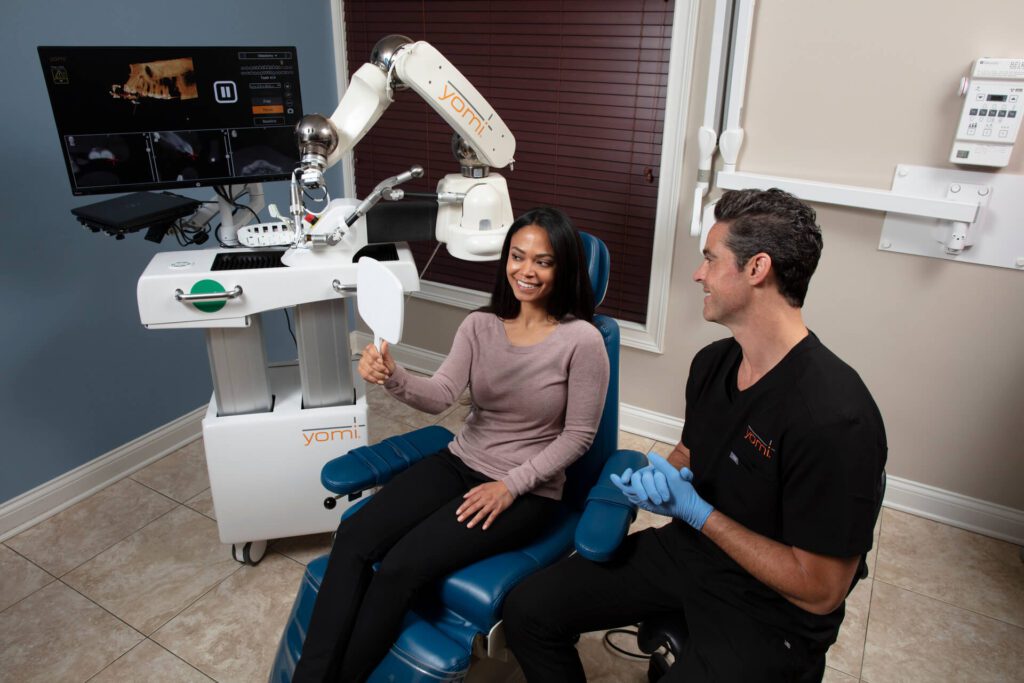
We also think the best aftercare begins with the procedure. Our approach is built around precision and a gentler experience, and for tooth replacement we use the Yomi® robot to assist with implant placement, which is designed to support minimally invasive treatment. For anxious patients, sedation dentistry can make the visit itself easier, and a calmer visit tends to mean a patient who follows the recovery plan with confidence.
If you are having a tooth removed, ask about what comes next at the same appointment: whether a graft to preserve the ridge makes sense, and what replacement options you have. Planning ahead keeps your jaw healthy and your choices open.
Towne Dental
Planning what comes after the extraction
Healing the socket is step one. Step two is deciding what fills the gap. Left alone, a missing tooth can leave you with a space that affects chewing and the look of your smile. Options include an implant, a bridge or a denture. If an implant is on the table, ask whether a ridge preservation graft is recommended right after the extraction, and read our overview of ridge preservation after extraction.
If you had other oral surgery, our list of things to do after oral surgery for faster recovery applies as well.
Need an extraction or a second opinion?
Towne Dental provides tooth extraction and dental implants through our oral surgery team, with emergency appointments for sudden pain and sedation options for patients who feel anxious. We serve patients across Naples, Fort Myers, Bonita Springs, Estero, Marco Island and the surrounding areas of Collier and Lee counties. Learn more about tooth extraction and implants at Towne Dental.

If you have a broken tooth, swelling or pain right now, see our emergency dentistry page to get seen quickly.
FAQ
How long should I avoid a straw after a tooth extraction?
At minimum, the first 24 hours, according to the VA’s patient guidance. Some dental offices ask for longer, especially after wisdom tooth surgery, so follow the number on your own instruction sheet. Drink from a cup and eat smoothies with a spoon.
What is not normal after a tooth extraction?
Bleeding beyond two hours, a persistent or rising fever, swelling that appears after 48 hours, pus, or throbbing jaw pain are all reasons to call, per the AAPD and Alberta Health. Mild soreness and slight swelling in the first two days are expected.
What helps a child’s tooth extraction pain?
Ice packs in the first 24 hours, soft cool foods and an age-appropriate pain reliever given before numbness wears off, as the AAPD describes. Do not use codeine or tramadol in children under 12. Ask your dentist or pediatrician for the right medicine and dose.
When can I brush and rinse normally?
Brush gently the same day, avoiding the extraction site, and begin warm salt water rinses after meals the next day or as your dentist directs. Skip vigorous rinsing and spitting for the first 24 hours.
Can I exercise after an extraction?
Hold off on heavy exercise and lifting for the first 24 hours, since it can disturb clot formation and cause bleeding. Ease back in when you feel comfortable and your dentist agrees, particularly after surgical extractions.
Sources
- After a Tooth Extraction: Caring for Your Mouth, Veterans Health Library
- Postoperative Instructions for Extractions/Oral, AAPD
- Management Considerations for Pediatric Oral Surgery, AAPD
- Chairside guide: tooth extraction in children, ADA
- Oral Analgesics for Acute Dental Pain, ADA
- Tooth Extraction: Care Instructions, Alberta Health
- Effect of smoking on patient-reported postoperative outcomes
- The Influence of Glycemic Control Over Post-extraction Healing