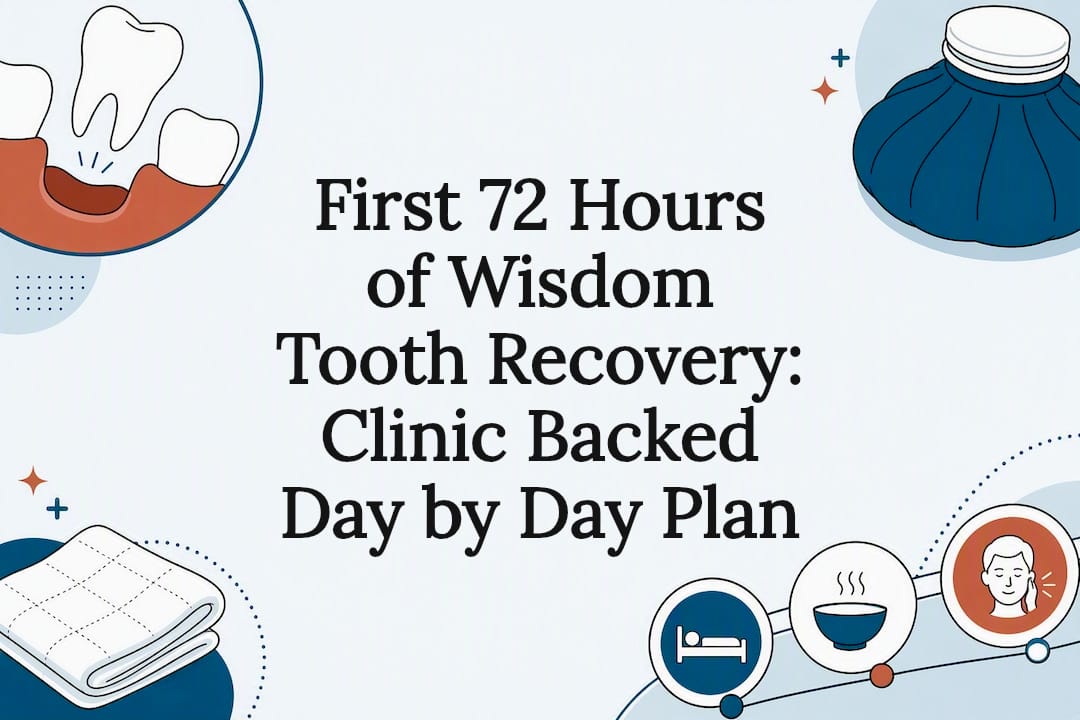
Most wisdom tooth recovery follows a predictable arc: major swelling and pain peak around day 2 or 3, then fade steadily, with most people back to normal routines within one to two weeks. The socket itself keeps healing underneath for weeks after that. Your first 72 hours matter most, so protect the blood clot (no straws, spitting, or smoking), control bleeding with steady gauze pressure, and ice your jaw. Call your dental team right away for a fever, pus, or trouble breathing or swallowing.
TL;DR:
- Protect your blood clot in the first 72 hours by avoiding straws, spitting, smoking, and vigorous rinsing to prevent dry socket.
- Swelling and pain peak around days 2 and 3, generally improving by day 4, but longer recovery may be needed for impacted or multiple extractions.
- Alternating ibuprofen and acetaminophen on a staggered schedule, starting before anesthesia wears off, provides effective pain control without opioids.
- Keep to a soft, lukewarm diet for the first week, avoiding hot beverages, spicy foods, and anything that can lodge or irritate the socket.
- Most complications, including dry socket or infection, require prompt dental evaluation, especially if symptoms worsen after days 3 to 5.
Table of Contents
- How Long Does Wisdom Tooth Recovery Take, Day by Day?
- What’s the Best Way to Manage Pain After Surgery?
- What Foods Should You Eat After Wisdom Teeth Removal?
- How Should You Control Swelling and Bleeding at Home?
- How Do You Keep Your Mouth Clean Without Disturbing the Clot?
- What Are the Warning Signs You Shouldn’t Ignore?
- What Should Be on Your Recovery Checklist?
- Why Trust This Wisdom Tooth Recovery Guide?
- How Do You Handle Numbness or Altered Sensation?
- How Can You Reduce Bruising and Jaw Stiffness?
- What Happens at Your Follow-Up Dental Visit?
- How Do You Avoid Disturbing the Blood Clot?
- How Long Should You Avoid Smoking After Wisdom Tooth Removal?
- What Medications Will You Need After Surgery?
- When Can You Return to Work, School, or Exercise?
- What Actually Matters Most in Wisdom Tooth Recovery
- Need Help With Your Wisdom Tooth Recovery?
- Sources
- FAQ
How Long Does Wisdom Tooth Recovery Take, Day by Day?
Recovery isn’t one long fog of discomfort. It moves through distinct phases, and knowing which phase you’re in helps you tell normal healing from a real problem.
Days 0 to 3: the roughest stretch
The first 24 hours are about damage control. Anesthesia wears off within a few hours, so start your pain medication before the numbness fully fades, not after the pain has already set in. Bite down on gauze for the first 30 minutes to control bleeding, and keep an ice pack on your jaw. This is also when most people ask the same question: what day is most painful after wisdom tooth extraction? For most patients, that’s day 2 or day 3. Swelling and pain typically peak around days 2 through 3 before starting to ease. If you were told to begin gentle rinses, wait until after the first 24 hours have passed.
Days 4 to 7: the turn toward normal
By day 4, most people notice a real difference. Swelling starts subsiding, jaw stiffness loosens slightly, and pain medication needs usually drop. This window is also when most people feel ready to ask what to do on day 4 after wisdom tooth extraction, and the honest answer is: keep doing exactly what worked days 1 through 3, just with more flexibility. You can likely widen your diet a bit, resume gentle rinsing after meals, and many people return to light work or school by day 5. But days 3 through 5 are also the highest risk window for dry socket, so don’t get careless with straws, smoking, or vigorous spitting just because the worst pain has passed.
Week 2 and beyond: tissue closes, activity resumes
By the second week, gum tissue over the extraction site is usually closing up, and most people report feeling close to normal. You can generally return to your regular diet and normal activity level as comfort allows. The bone underneath the gum, though, keeps remodeling and filling in for weeks after the visible symptoms resolve — full socket and bone healing is a longer process than how you feel on the surface.
Several factors stretch this timeline out:
- Impacted teeth. Teeth that were angled, buried in bone, or close to a nerve typically need more recovery time and more careful pain control.
- Multiple extractions. Removing all four wisdom teeth at once means more surgical sites healing simultaneously.
- Smoking. It slows tissue healing and dramatically raises dry socket risk.
- Underlying health conditions. Diabetes, immune conditions, or other systemic issues can lengthen healing time.
If your case involved deep impaction or several extractions, expect the lower end of “normal” timelines to not apply to you, and plan your work and rest schedule accordingly.
What’s the Best Way to Manage Pain After Surgery?
The strategy that works best for most routine extractions isn’t a stronger drug. It’s better timing. Alternating ibuprofen and acetaminophen on a staggered schedule often controls acute dental pain as effectively as opioids, with a lower risk profile. Because the two drugs work through different mechanisms, taking them on a rotation keeps a steadier level of pain relief in your system than either one alone.
A few practical rules make this work:
- Start your first dose before the local anesthetic fully wears off, if your surgeon recommends it, rather than waiting for pain to arrive.
- Confirm your specific dosing and timing schedule with your oral surgeon rather than guessing at intervals.
- Skip aspirin unless your dental team specifically tells you to take it. Aspirin thins blood and can worsen bleeding.
- If you’re prescribed an opioid, it’s typically meant for a short course covering the first day or two of more intense pain, and you should avoid alcohol entirely while taking it.
Medication is only half the equation. Ice packs, keeping your head elevated, resting instead of pushing through activity, and sticking to a soft diet all reduce the physical strain on the jaw that generates pain in the first place.
Pro Tip: Set a phone alarm for your first two days of medication. Grogginess from anesthesia or pain makes it easy to lose track of when your last dose was, and missing the alternating schedule is the most common reason people feel pain “breaking through” on day 2.
What Foods Should You Eat After Wisdom Teeth Removal?
Your mouth needs calories and protein to heal, but the wrong texture or temperature can undo good progress fast. A soft diet is recommended for the first 3 to 7 days, avoiding anything that can lodge in the socket or irritate the tissue.
- Hours 0 to 24: Stick to cool, smooth foods only, think yogurt, applesauce, and lukewarm broth. Skip straws entirely; the suction can dislodge your blood clot.
- Days 2 to 3: Add protein smoothies, blended soups, mashed potatoes, and scrambled eggs. Keep everything lukewarm rather than hot.
- Days 4 to 7: Progress to soft solids like pasta, soft-cooked vegetables, and flaky fish as your comfort allows.
- Foods and habits to avoid throughout: hot beverages, spicy or acidic foods, hard or crunchy items, sticky candy, and anything with small seeds or grains that can get trapped in the socket. Alcohol and smoking are off the table too.
Protein intake matters more than people expect here. A blended smoothie with Greek yogurt, protein powder, and soft fruit gets real nutrition in without a single bite of chewing required.
How Should You Control Swelling and Bleeding at Home?
Bleeding and swelling both respond well to simple, mechanical fixes, and most of the technique comes down to pressure and temperature.
For bleeding, bite firmly on gauze positioned directly over the extraction site for a full 30 minutes without checking or talking, since repeatedly lifting the gauze to peek resets the clotting process. Replace with fresh gauze and repeat if oozing continues.
For swelling, the timing matters as much as the ice itself: apply ice in 20 minutes on, 20 minutes off cycles for the first 48 hours, then switch to moist heat after that point to relax stiff jaw muscles. Using heat too early can actually increase swelling, and sticking with ice too long past 48 hours misses the window where heat starts helping muscle tension instead.
- Keep your head elevated on extra pillows, especially at night. Lying flat pools blood in the head and worsens both bleeding and swelling.
- Avoid bending over, heavy lifting, or vigorous exercise for at least the first few days. Anything that raises blood pressure can restart bleeding.
- Light pink-tinged saliva is normal for a day or two. Bright red blood that won’t slow after 30 to 45 minutes of steady gauze pressure needs a call to your dental team.
How Do You Keep Your Mouth Clean Without Disturbing the Clot?
Oral hygiene after extraction is a balancing act: skip it and you risk infection, do it too aggressively and you risk dislodging the clot that’s protecting your socket.
For the first 24 hours, avoid rinsing, spitting, or swishing of any kind, even water. Brush your other teeth gently as usual, simply working around the surgical site rather than avoiding brushing altogether.
After the first 24 hours, begin warm salt-water rinses, swishing gently rather than swirling aggressively. Most people do this several times a day and after meals to clear food debris without disrupting healing tissue.
- Mix roughly half a teaspoon of salt into warm water, and let it fall out of your mouth rather than spitting forcefully.
- If you have dissolvable stitches, they’ll disappear on their own over one to two weeks. Non-dissolving stitches get removed at a follow-up visit.
- Food that gets trapped near the site can usually be cleared with a gentle rinse rather than picking at it, which risks disturbing the clot.
- As tissue closes over the second week, gradually resume normal brushing and flossing closer to the site.
What Are the Warning Signs You Shouldn’t Ignore?
Most recovery is uneventful, but a handful of symptoms mean it’s time to call your dental team rather than wait it out.
Dry socket typically shows up between days 3 and 5, when pain that was improving suddenly worsens, often with a foul taste or visible bone in the socket. It’s one of the most preventable complications, and avoiding straws, spitting, and smoking is the single biggest thing you control.
Infection looks different: increasing swelling after the first few days, fever above 102°F, visible pus, or pain that intensifies rather than improves are all signs that need prompt dental evaluation.
- Persistent numbness or tingling in the lip, chin, or tongue beyond a day or two can indicate nerve irritation and warrants a follow-up call.
- Trouble breathing or swallowing, uncontrollable bleeding, or swelling that’s spreading rapidly toward your eye or throat are emergency-level signs, not “wait and see” ones.
Pro Tip: Keep your oral surgeon’s after-hours number saved in your phone before surgery day, not after. Most complications that need urgent attention show up at night or on a weekend, right when you’re least likely to remember where you wrote it down.
What Should Be on Your Recovery Checklist?
Having supplies ready before surgery day saves you from digging through cabinets while still groggy from sedation.
- Stock up beforehand: extra gauze, ice packs (or a bag of frozen peas), table salt, ibuprofen and acetaminophen, and soft-food staples like yogurt, broth, and applesauce.
- Set a medication rhythm: many people find alternating ibuprofen and acetaminophen every three to four hours, per their surgeon’s specific instructions, keeps pain steady rather than spiking.
- Plan your time off: most people need at least two days off work or school; physically demanding jobs often need three to four days, and complex or impacted extractions can require longer.
- Save key numbers: your oral surgeon’s office and after-hours line, ready to go if pain, swelling, or bleeding doesn’t follow the expected pattern.
Why Trust This Wisdom Tooth Recovery Guide?
This guide draws on the day-by-day framework used by Cleveland Clinic and Healthline, paired with the practical checklists Towne Dental gives patients before and after oral surgery. Patient education is supported with clinic resources on what to do after oral surgery and spotting dry socket early. Clinician credentials and patient outcomes specific to individual care teams may be available through dental practices.
How Do You Handle Numbness or Altered Sensation?
Lingering numbness in the lip, chin, cheek, or tongue happens when the extraction site sits close to a nerve, particularly with lower wisdom teeth. For most people, this fades within hours to a few days as local anesthetic wears off and post-surgical swelling subsides around the nerve.
A few practical points make this phase safer:
While an area is numb, you can’t feel heat, pressure, or accidental biting normally, so stick to lukewarm foods and chew carefully on the opposite side of your mouth. Avoid hot drinks or soup until sensation returns fully, since numb tissue won’t warn you before it burns. Skip smoking during this window too, since you won’t feel a cigarette against numb lip tissue the way you normally would.
If numbness or tingling persists beyond a couple of days, or if it feels like it’s spreading rather than fading, that’s worth a call to your dental team rather than assuming it will resolve on its own. Nerve irritation from a nearby extraction usually improves gradually, and your surgeon can tell you what a normal recovery curve looks like for your specific case versus something that needs closer follow-up.
How Can You Reduce Bruising and Jaw Stiffness?
Bruising along the jawline or neck after wisdom tooth removal is common, especially with lower extractions, and it results from blood settling under the skin rather than anything going wrong. It often shows up a day or two after surgery, sometimes later than the swelling itself, and can look alarming even when it’s harmless.
The same ice-then-heat pattern that controls swelling helps bruising too. Ice during the first 48 hours limits how much blood pools under the skin, while switching to moist heat afterward helps your body reabsorb it faster and eases the discoloration.
Jaw stiffness comes from a different cause: muscles that were stretched and held open during surgery, plus a few days of reduced movement while you favor a soft diet. Gentle, small jaw stretches once the worst pain has passed, opening and closing slowly rather than forcing a wide yawn, help loosen that stiffness without straining the surgical site. Moist heat compresses applied to the jaw muscles (not directly over the extraction site) after 48 hours also relax tension effectively. Most bruising fades within a week to ten days, following roughly the same color changes as bruising anywhere else on the body, while jaw stiffness typically eases alongside the general swelling timeline.
What Happens at Your Follow-Up Dental Visit?
Not every extraction requires a scheduled follow-up, but your oral surgeon will tell you before you leave the office whether one is planned, and when.
If you have non-dissolving stitches, your follow-up visit is when they get removed, typically seven to ten days after surgery. Even with dissolvable stitches, some surgeons schedule a quick check to confirm the socket is healing normally and that no bone fragments or lingering issues need attention.
During the visit, expect a brief visual exam of the extraction site, a few questions about your pain levels and diet progress, and reassurance if everything looks on track. If something unusual was noted during surgery, such as proximity to a nerve or a particularly difficult extraction, your surgeon may want to see you sooner than a routine case would require.
Skipping a recommended follow-up isn’t a good idea even if you feel fine. Some complications, like a slow-healing dry socket or a small retained bone fragment, aren’t always obvious to the patient but are easy for a surgeon to spot and treat early. If your recovery feels normal and no follow-up was scheduled, you’re not required to book one, but any concerns are worth raising before your next regular dental cleaning rather than waiting months.
How Do You Avoid Disturbing the Blood Clot?
The blood clot that forms in your socket right after extraction is doing the most important job in your entire recovery. It seals the bone and nerve endings underneath from air, food, and bacteria. Losing it early is what causes dry socket, so protecting it is worth more attention than almost anything else on this list.
Negative pressure in the mouth is the main threat, meaning any action that creates suction. That includes drinking through a straw, spitting forcefully, smoking (which involves a strong inhale), and vigorous rinsing or swishing. All of these can pull the clot loose before the tissue underneath has had a chance to start healing over it.
Avoid these behaviors for at least 72 hours, and stay cautious for longer if your surgeon recommends it. Also skip aggressive tongue poking at the extraction site, hard chewing near it, and vigorous toothbrushing directly over the area during the first few days. If you notice the clot has come loose, whether from sudden sharp pain or visible bone in the socket, contact your dental team the same day rather than waiting to see if it resolves.
How Long Should You Avoid Smoking After Wisdom Tooth Removal?
Smoking is one of the clearest, most controllable risk factors for a slow or complicated recovery, and the mechanism is straightforward: inhaling creates the same negative pressure that dislodges blood clots, and nicotine itself restricts blood flow to healing tissue.
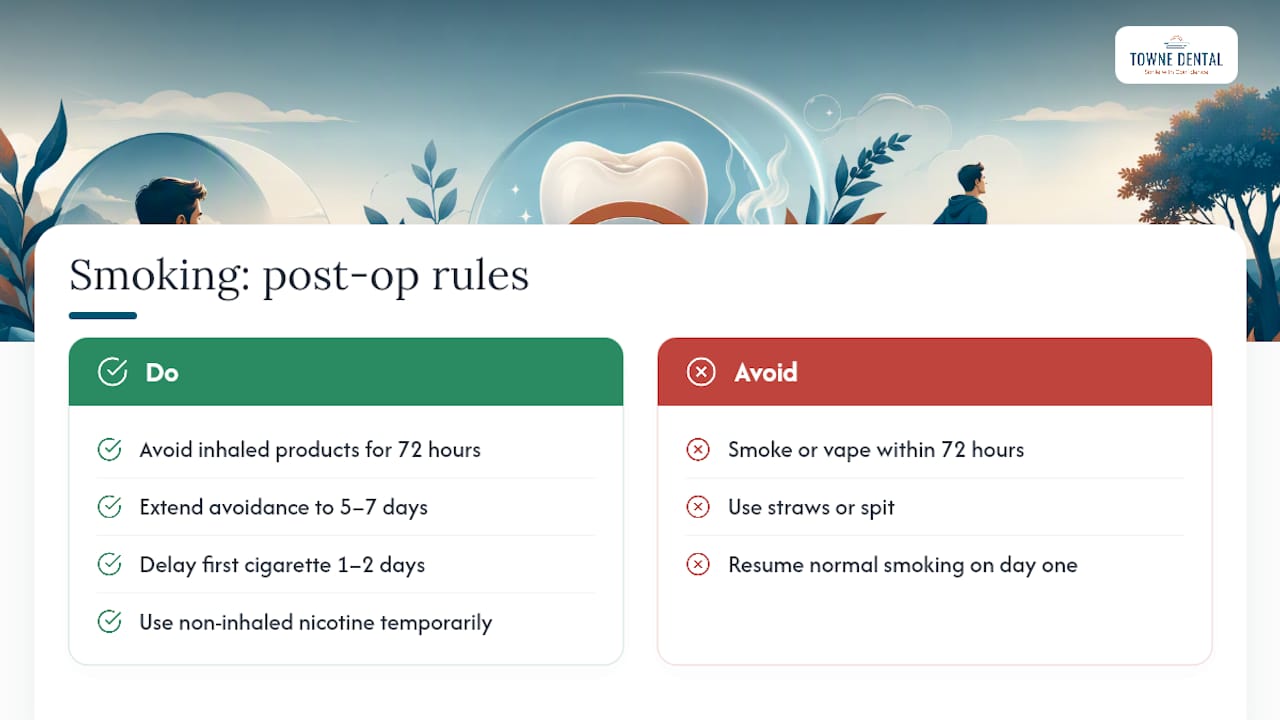
Most oral surgeons recommend avoiding cigarettes, vapes, and any other inhaled products for at least 72 hours, matching the same window given for straws and spitting. Ideally, extending that to a full 5 to 7 days lowers your dry socket risk even further, since that’s the period when the clot is most vulnerable and gum tissue hasn’t started sealing over the site yet.
If quitting entirely for a week feels unrealistic, even delaying your first cigarette by a day or two longer than planned, and switching to non-inhaled nicotine alternatives temporarily, reduces risk compared to resuming your normal habit on day one. Patients who smoke are statistically more likely to develop dry socket than those who don’t, and the discomfort and delay that comes with treating it usually outlasts whatever inconvenience a week without cigarettes causes. If you’re a heavy smoker, mention it to your surgeon before the procedure. They may adjust your aftercare instructions or medication plan knowing that risk going in.
What Medications Will You Need After Surgery?
Your surgeon will typically send you home with a specific plan, but most post-op medication regimens follow a similar shape.
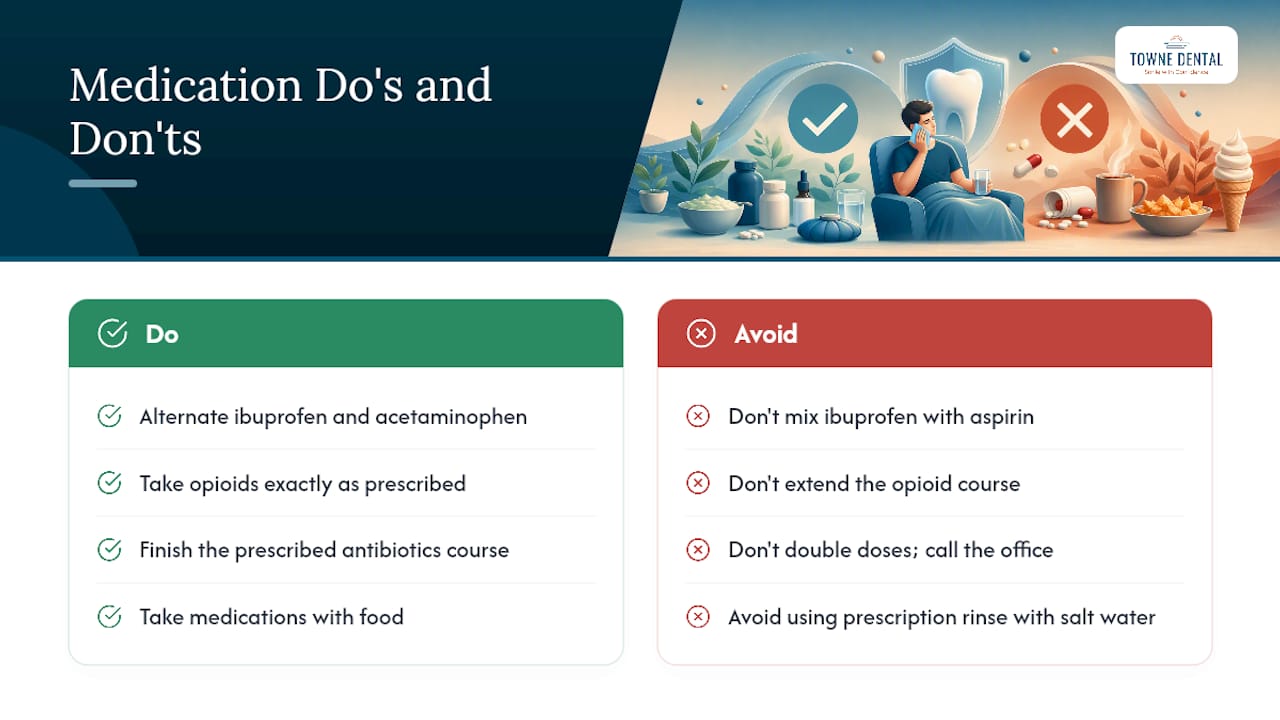
Pain control usually starts with alternating ibuprofen and acetaminophen, taken on a staggered schedule your surgeon provides, rather than either drug alone. If your case involved a particularly difficult impaction, you may receive a short course of prescription opioid medication meant only for the most intense first day or two, not for the full recovery period. Take opioids exactly as prescribed, avoid alcohol entirely while using them, and don’t extend the course past what was prescribed, even if some pain remains.
Antibiotics aren’t automatic for every extraction. Your surgeon prescribes them when there’s a higher infection risk, such as a pre-existing infection, a particularly invasive surgery, or a compromised immune system. If you’re prescribed antibiotics, finish the entire course even after you start feeling better. Stopping early lets remaining bacteria rebound and can contribute to antibiotic resistance.
A few practical notes apply across the board: take medications with food unless told otherwise to reduce stomach upset, never combine ibuprofen with aspirin without your surgeon’s approval, and call the office rather than doubling up if a dose doesn’t seem to be controlling pain. If you were prescribed a mouth rinse alongside salt water, follow the specific timing given, since some prescription rinses shouldn’t be used in the same window as salt water.
When Can You Return to Work, School, or Exercise?
Rest isn’t just about comfort. Physical activity raises blood pressure and heart rate, both of which can restart bleeding and increase swelling right when your clot is most vulnerable.
Most people need a minimum of two full days off from work or school, with many feeling ready for light desk work or light schoolwork by day 3 or 4. Physically demanding jobs, construction, warehouse work, anything requiring heavy lifting or bending, typically need three to four days minimum, sometimes longer if your extraction involved impacted teeth or multiple sites.
Exercise follows a more conservative timeline than work. Avoid anything strenuous, running, weightlifting, high-intensity workouts, for at least three to five days, since a raised heart rate and blood pressure can both trigger bleeding at the site. Light walking is fine almost immediately and actually helps circulation without risking the clot. Most people can gradually resume full workout intensity by the second week, once swelling has resolved and the socket feels stable, but if a workout causes throbbing or renewed bleeding, that’s your body telling you to wait a few more days.
What Actually Matters Most in Wisdom Tooth Recovery
The conventional advice on wisdom tooth recovery tends to bury the most important instruction under a dozen equally weighted tips. It shouldn’t be treated that way. Protecting the blood clot for the first 72 hours matters more than almost every other instruction combined, because dry socket is the complication that turns a manageable week into a painful, drawn out one, and it’s also the most preventable complication on this entire list.
Where most generic advice falls short is treating every extraction as identical. A single, straightforward extraction and a deeply impacted lower wisdom tooth pulled alongside three others are not the same recovery, and pretending otherwise sets unrealistic expectations. If your case was more involved, expect the longer end of every timeline, not the average.
If you take one thing from this guide, prioritize the medication timing over the medication itself. Alternating ibuprofen and acetaminophen on schedule, started before numbness fully wears off, prevents pain from ever spiking hard enough to need anything stronger. Reactive pain control is always harder than staying ahead of it.
— Towne Dental
Need Help With Your Wisdom Tooth Recovery?
Towne Dental handles wisdom tooth extractions and the post-op follow-up that comes after, so you’re not left guessing whether a symptom is normal or something that needs a same-day answer.

If pain, swelling, or bleeding isn’t following the pattern this guide describes, or you’re not sure whether what you’re feeling on day 3 or day 4 is expected, call the office rather than waiting it out at home. Towne Dental’s team can evaluate your socket in person, adjust your pain plan if needed, or catch early signs of dry socket or infection before they get worse. Visit the oral surgery page to see what a consultation or follow-up appointment involves, or explore the full range of dental services if you’re looking for ongoing care beyond your extraction. Booking a follow-up takes a few minutes and gives you a direct line to your care team instead of guessing your way through recovery.
This article is general information, not a substitute for advice from a qualified doctor. Consult a qualified healthcare professional about your own circumstances before acting on anything here.
Sources
- Wisdom teeth recovery — Cleveland Clinic Health Essentials
- Wisdom Teeth Removal: Procedure & Recovery — Cleveland Clinic
- Randomized trials and reviews supporting multimodal analgesia for dental pain — PubMed Central
FAQ
What day is most painful after wisdom tooth extraction?
Pain and swelling typically peak around day 2 or day 3, then improve steadily through the rest of the week.
How long should you rest after getting wisdom teeth out?
Most people need at least two full days of rest, with physically demanding jobs often requiring three to four days or longer for more complex extractions.
Can you swallow after wisdom teeth removal?
Yes, swallowing is normal and safe immediately after surgery; what you should avoid is using a straw or creating suction in your mouth, which can dislodge the healing blood clot.
What should I do on day 4 after wisdom tooth extraction?
Continue your medication schedule, widen your diet as comfort allows, and stay alert for worsening pain or a foul taste, since days 3 through 5 carry the highest dry socket risk.
How do you know if you have a dry socket versus normal healing pain?
Normal pain steadily improves each day, while dry socket causes pain that suddenly worsens three to five days after surgery, often with a foul taste or visible bone in the socket.