Most people feel back to normal within a few days of a root canal, though mild sensitivity to chewing or temperature can linger a bit longer. A permanent crown usually goes on within two to four weeks, while full healing of the bone around the tooth’s root can take several months. Call your dentist right away if pain worsens instead of easing, swelling spreads, or your temporary filling comes out.
TL;DR:
- Most recovery symptoms, such as soreness and sensitivity, gradually improve within five days, but bone healing around the root can take six to twelve months, especially after severe infections.
- Taking ibuprofen and acetaminophen together before pain peaks provides better relief, and icing the jaw helps reduce swelling during the first 48 hours.
- Soft foods should be eaten until numbness subsides, avoiding hard or sticky items to prevent damaging the temporary filling or crown.
- Signs of complication include worsening pain, swelling, fever, or a dislodged temporary crown, requiring immediate dental consultation.
- Final restoration with a permanent crown should be scheduled within two to four weeks to prevent cracks and ensure proper healing.
Table of Contents
- Root Canal Recovery Timeline: Hours to Months
- Normal Healing Symptoms vs. Warning Signs
- How to Manage Pain After a Root Canal
- What to Eat and How to Care for Your Tooth
- When to Call Your Dentist or Endodontist
- Long-Term Healing: Crown, Bone, and Follow-Up
- What Our Clinicians Want You to Know About the First 72 Hours
- A Straightforward Take on Recovery Expectations
- Get Root Canal Aftercare and Follow-Up Care at Towne Dental
- Sources
- FAQ
Root Canal Recovery Timeline: Hours to Months
Recovery unfolds in fairly predictable stages, and knowing what belongs in each one helps you tell healing from a problem.
- First 2 to 4 hours. Numbness from the local anesthetic lingers, so avoid eating or drinking hot liquids until feeling fully returns. Biting your cheek or tongue without realizing it is the main risk here.
- Days 1 to 3. Soreness typically peaks in the first 24 to 48 hours, then starts easing. Chewing on the treated side still feels off, and mild jaw stiffness from holding your mouth open during treatment is common.
- Days 4 to 7. Most patients report feeling close to normal by day 5, with mild soreness resolving within a few days for many and steadily improving after that. Sensitivity to biting pressure is usually the last thing to fade.
- Weeks 2 to 4. This is the window for your permanent crown, which protects the tooth from cracking under the temporary restoration’s weaker seal.
- Months 1 to 12. The visible symptoms are long gone, but the bone and tissue around the root tip keep healing quietly in the background.
Recovery runs longer when the tooth had a severe infection before treatment or unusually curved root canals that make cleaning more complex. In those cases, a slower timeline doesn’t mean something went wrong.
Normal Healing Symptoms vs. Warning Signs
Some discomfort is simply your body doing its job. Inflammation from the procedure itself, not infection, causes most of what you feel in the first few days.
- Dull, aching soreness around the tooth for 2 to 3 days is standard and usually fades daily rather than worsening.
- Jaw or facial soreness from holding your mouth open during treatment typically resolves within a couple of days, separate from any swelling tied to infection.
- Temperature sensitivity, especially to cold, can linger for one to two weeks in a tooth that had significant inflammation before treatment.
- A rough or slightly worn temporary filling is expected over time. A temporary that feels completely gone or lets you bite directly on exposed material is not.
If sharp or throbbing pain increases rather than settles, or the tooth feels tender when you tap it days after treatment, that’s outside the range of normal healing.
How to Manage Pain After a Root Canal
Modern anesthesia makes the procedure itself comfortable, and the soreness that follows usually responds well to over-the-counter medication. Ibuprofen (an NSAID) is generally the first choice because it addresses the inflammation causing most of the discomfort, alongside acetaminophen for additional relief.
Taking ibuprofen and acetaminophen together can control pain better than either alone, since they work through different mechanisms in the body. Alternating the two on a set schedule, rather than doubling up on one, is a common approach that avoids reaching for a prescription opioid too quickly. Stick to the dosing on the label and check with your provider before combining anything, especially if you take other medications regularly.
Pro Tip: Take your first dose of ibuprofen or acetaminophen before the numbness fully wears off. Starting ahead of the discomfort curve controls pain more effectively than waiting until it’s already sharp.
Beyond medication, ice packs on the outside of your jaw for 15 to 20 minutes at a time cut down on swelling, and sleeping with your head slightly elevated reduces overnight throbbing. Skip strenuous exercise for 48 to 72 hours. Pushing your heart rate up sends more blood flow to the area and can intensify soreness.

What to Eat and How to Care for Your Tooth
Wait until numbness completely wears off before eating anything, so you don’t accidentally chew your cheek or tongue. Once feeling returns, stick to soft foods for the first day or two while the area settles.
- Choose soup, yogurt, scrambled eggs, mashed potatoes, and pasta for the first 24 to 48 hours.
- Chew on the opposite side of your mouth until your permanent crown is placed.
- Skip hard, crunchy, or sticky foods like nuts, ice, and caramel, which can crack a temporary filling or pull it loose.
- Brush and floss normally but gently around the treated tooth, and avoid harsh rinsing with hydrogen peroxide or vigorous swishing in the first few days.
- Hold off on alcohol and smoking, both of which slow healing and can aggravate swelling.
A saltwater rinse, used gently, is generally a safer choice than stronger antiseptic rinses while the tissue is still settling down.
When to Call Your Dentist or Endodontist
Most recoveries stay on track without any need for a follow-up call. But a few signals mean you shouldn’t wait it out.
- Pain that gets worse instead of better, particularly if it’s severe or hasn’t improved after several days despite OTC medication.
- Visible swelling, fever, or a persistent bad taste or drainage, which can point to a lingering or new infection.
- A dislodged temporary filling or crown, a bite that suddenly feels uneven, or numbness that hasn’t faded after several hours.
The American Association of Endodontists is specific on this point: contact your dentist immediately if you notice any of these signs rather than waiting for your next scheduled visit. Catching a problem early is almost always simpler to fix than one left alone for a week.
Long-Term Healing: Crown, Bone, and Follow-Up
Getting your permanent crown placed within two to four weeks matters more than it might seem. A temporary filling isn’t built to withstand normal chewing forces indefinitely, and waiting too long raises the odds of the tooth cracking before it’s properly protected.
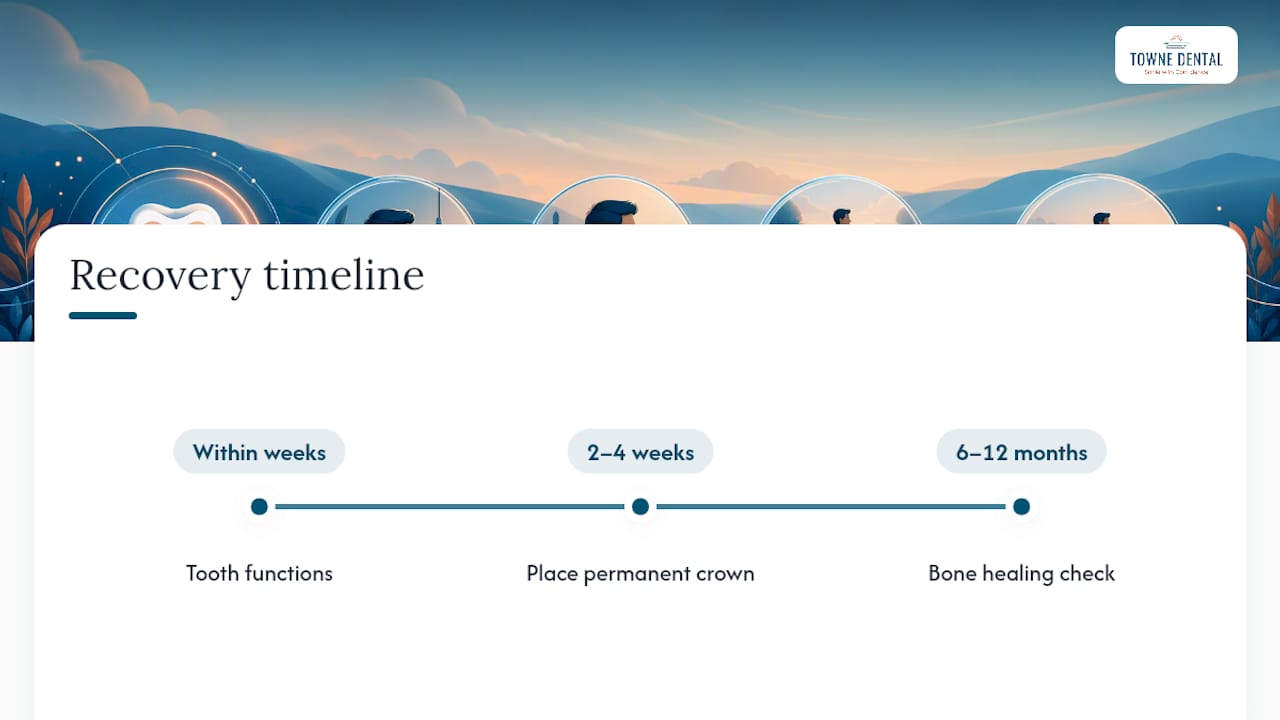
Underneath that visible timeline, a slower process is happening. When the tooth had a significant infection before treatment, full healing of the bone around the root tip can take six to twelve months, even though the tooth itself functions normally within weeks. Your dentist will likely schedule a follow-up X-ray around that six to twelve month mark to confirm the bone has filled back in as expected. Root canals succeed in the large majority of cases, and retreatment is only considered if imaging shows the infection persisting or new decay develops around the restoration.
What Our Clinicians Want You to Know About the First 72 Hours
The first three days set the tone for everything after, based on patterns clinicians see across recovery cases.
- Take your first OTC dose before numbness wears off, then keep it on a timed schedule rather than waiting for pain to build.
- Ice in 15 to 20 minute intervals during waking hours on day one and two, and sleep with an extra pillow to keep your head elevated.
- Plan soft meals in advance for the first 48 hours so you’re not deciding what to eat while your mouth is still numb.
- If a temporary crown feels loose, avoid chewing on that side and use a small amount of dental wax to smooth any sharp edge until you can get it reseated.
- Trust that the numbness and initial tenderness are expected parts of a routine procedure, not signs that something went wrong.
A Straightforward Take on Recovery Expectations
Most patients recover from a root canal faster than they expect, usually with nothing more than ibuprofen, an ice pack, and a few days of eating on the other side of their mouth. The bigger mistake we see isn’t underestimating the pain. It’s ignoring the follow-up steps, like delaying a permanent crown or skipping a scheduled X-ray, because the tooth already feels fine.
If your recovery doesn’t match the timeline here, don’t wait it out hoping it resolves on its own. A quick call to your dental team costs you nothing and often prevents a much bigger problem down the road.
— Towne Dental
Get Root Canal Aftercare and Follow-Up Care at Towne Dental
If your recovery isn’t tracking the way it should, or you need a permanent crown placed before a temporary filling wears out, waiting is the riskiest option. Towne Dental’s endodontics team handles everything from root canal treatment through final restoration, so you’re not bouncing between offices for follow-up care.

Towne Dental also offers emergency dentistry for patients dealing with escalating pain, swelling, or a temporary crown that came loose before a scheduled visit. If a loose temporary is the issue right now, our guide on what to do when a temporary crown falls out walks through safe steps until you’re seen. For patients who feel anxious about dental visits, sedation options can make treatment and follow-up appointments more comfortable.
When you book, bring your insurance information, any prior treatment records from the office that performed your root canal, and a list of current medications so your provider can plan pain management safely. Schedule a visit through Towne Dental’s site to get your recovery back on track.
This article is general information, not a substitute for advice from a qualified doctor. Consult a qualified healthcare professional about your own circumstances before acting on anything here.
Sources
- Pain management | American Association of Endodontists
- Need a root canal? Here’s what to expect | Harvard Health
- Root canal procedure | Mayo Clinic
FAQ
What Shouldn’t You Do After a Root Canal?
Avoid chewing on the treated side, eating hard or sticky foods, and skipping your permanent crown appointment. Smoking and alcohol can also slow healing and worsen swelling in the first few days.
How Quickly Do You Feel Better After a Root Canal?
Most people notice steady improvement within two to three days, with soreness largely resolved by day five. Lingering sensitivity to chewing or cold can take a bit longer to fully settle.
Is a Root Canal a Big Surgery?
No. It’s a routine outpatient procedure done under local anesthesia, and modern techniques make it far more comfortable than its reputation suggests. Most patients drive themselves home afterward and return to normal activities the next day.
How Serious Is Needing a Root Canal?
A root canal is treatment for an infected or badly inflamed tooth nerve, not an emergency in itself once you’re scheduled for care. Leaving an infected tooth untreated is the serious part. It can spread infection or lead to tooth loss if ignored.
When Should I Call Towne Dental About Recovery Problems?
Call promptly if pain is worsening instead of improving, you notice swelling or fever, or your temporary crown becomes fully dislodged. Towne Dental’s endodontics team can evaluate the tooth and address the issue before it becomes a bigger problem.