Brush gently twice a day, floss with a slide-out technique, skip sticky and hard foods, and call your dentist the moment the crown loosens or pain becomes severe. That’s the short version of temporary crown care. Everything below fills in the details.
Quick action checklist:
- Use a soft-bristled toothbrush and brush around the crown, not aggressively over it
- Floss daily but slide the floss out sideways — never snap it upward
- Avoid sticky candy, hard nuts, ice, and chewy bread until your permanent crown is placed
- Chew on the opposite side of your mouth as much as possible
- If the crown feels loose or falls off, save it and call your dentist the same day
When to call your dentist immediately: If the crown comes off, you have swelling, uncontrolled pain, or a fever alongside oral discomfort, contact your dental office right away. The American Dental Association recommends that dental offices provide written post-procedure instructions — if yours didn’t, call and ask for them.
Key Takeaways
Proper temporary crown care comes down to one principle: treat the temporary gently, protect it from force, and contact your dentist the moment something changes.
| Point | Details |
|---|---|
| Brush and floss gently | Use a soft-bristled brush and slide floss out sideways to avoid dislodging the crown. |
| Avoid sticky and hard foods | Caramel, ice, gum, and chewy bread can pull or crack the temporary crown off. |
| Use salt-water rinses | Mix 1 teaspoon salt per 1 cup warm water and rinse 3–4 times daily to ease gum soreness. |
| Act fast if it loosens | Save the crown, use OTC dental cement as a short-term hold, and call your dentist the same day. |
| Towne Dental for follow-up | Book a crown recheck or re-cementation through Towne Dental’s general dentistry services. |
Table of Contents
- What is a temporary crown and how long will you wear one?
- How do you clean a temporary crown without dislodging it?
- What foods and habits should you avoid with a temporary crown?
- What should you do if your temporary crown loosens or falls off?
- How do you manage sensitivity and mild pain with a temporary crown?
- When should you contact your dentist urgently?
- What should you bring to your follow-up or re-cementation visit?
- Towne Dental is ready to help with your crown follow-up
- Sources
- FAQ
What is a temporary crown and how long will you wear one?
A temporary crown does two jobs: it protects the tooth your dentist has shaped down (called a “prepared” tooth) and holds the surrounding teeth in position so your bite doesn’t shift while the permanent crown is being fabricated. Without it, the prepared tooth is exposed and vulnerable to temperature, pressure, and bacterial buildup.
Most temporaries are made from acrylic resin or composite material. They’re shaped and placed chairside in a single visit, which means they fit reasonably well but not with the precision of a lab-fabricated permanent crown. That slight imprecision is why you may notice mild sensitivity to hot, cold, or biting pressure — it’s common and expected, according to JADA guidance on wearing a crown.
How long you’ll wear the temporary depends on a few factors:
- Standard timeline: Most patients wear a temporary crown for one to three weeks while the permanent crown is made at a dental lab
- Extended timelines: Complex cases, lab delays, or additional procedures (like a root canal) can push that window longer
- Shorter timelines: Some practices use same-day milling technology, which can shorten or eliminate the temporary phase entirely
How do you clean a temporary crown without dislodging it?
Keeping the crown and the gum margin around it clean is non-negotiable. Plaque buildup at the crown’s edge can cause gum inflammation, and ADA consumer guidance links poor margin hygiene directly to gingivitis risk. Here’s how to do it safely.
Brushing steps:
- Choose a soft-bristled toothbrush — medium or hard bristles can stress the crown’s margins
- Apply a pea-sized amount of non-abrasive toothpaste (avoid whitening formulas with heavy abrasives)
- Brush at a 45-degree angle to the gumline, using gentle circular strokes
- Move over the crown itself with light pressure — you’re cleaning it, not scrubbing it
- Brush for a full two minutes, twice daily
Flossing with the slide-out technique:
The most common reason a temporary crown comes off during flossing is the upward “pop” motion people use to pull floss free. Colgate’s guidance on temporary crowns recommends a different approach: thread the floss down between the teeth normally, clean the sides gently, then release one end and pull the floss out horizontally rather than snapping it upward. That single change removes the force that dislodges the crown.
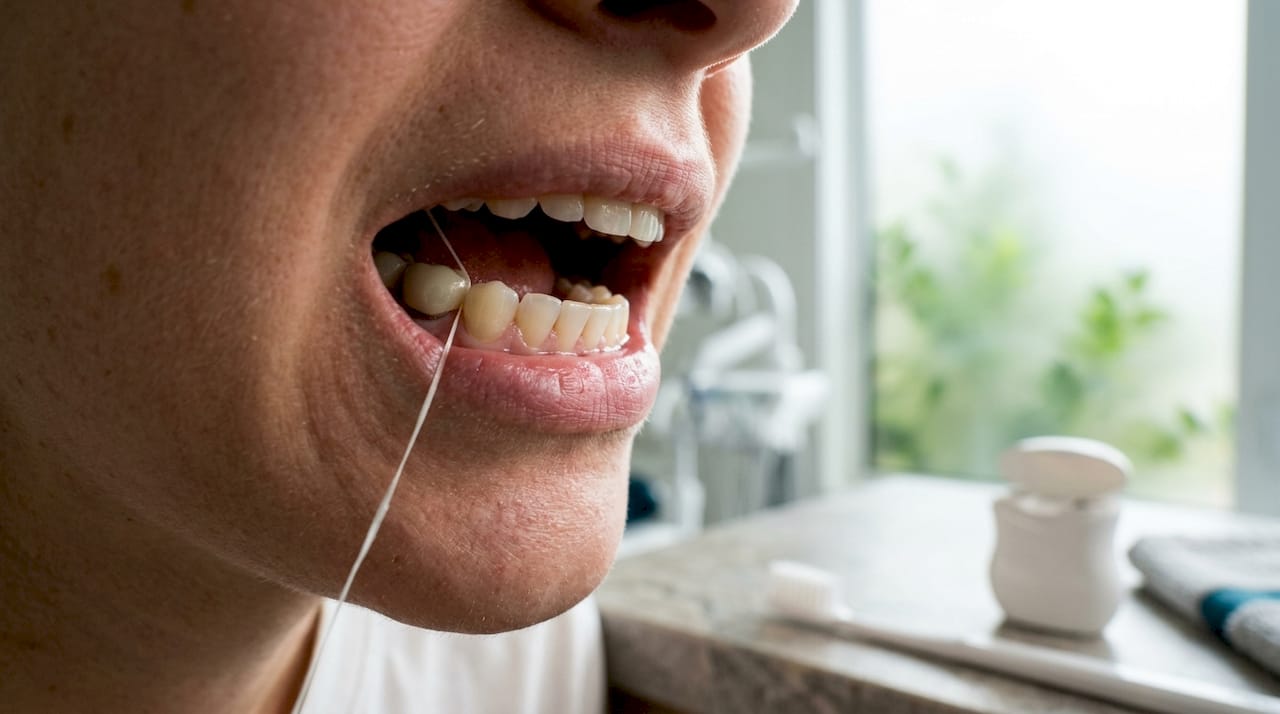
Pro Tip: Hold the floss loosely near the crown’s margin and use minimal side-to-side pressure. The goal is to clean the gumline, not to wedge the floss under the crown’s edge.
Rinsing: A warm salt-water rinse — 1 teaspoon of salt dissolved in 1 cup of warm water, swished gently 3–4 times daily — can ease gum soreness in the first few days. Alcohol-based mouthwashes are worth avoiding; they can dry out the tissue and may weaken the temporary cement over time.

What foods and habits should you avoid with a temporary crown?
The cement holding a temporary crown in place is intentionally weaker than permanent cement — that’s by design, so the dentist can remove it easily later. Certain foods and habits exploit that weakness.
Avoid these:
- Sticky foods: Caramel, taffy, gummy candy, and even some dried fruits can grip the crown and pull it off
- Hard foods: Ice, hard candies, raw carrots, and crusty bread put direct force on the crown
- Chewy foods: Bagels, tough meat, and chewy pizza crust require sustained biting force that stresses the cement
- Extreme temperatures: Very hot soup or ice-cold drinks can trigger sharp sensitivity through the temporary material
- Chewing gum: It wraps around the crown and creates a pulling force with every chew
Safer choices while you wait: Soft foods like yogurt, scrambled eggs, mashed potatoes, soft fish, cooked vegetables, and bananas are easy on the crown. Cut everything into small pieces and chew on the opposite side of your mouth.
Two habits worth dropping for now: biting your nails and using your teeth to open packaging. Both put unpredictable lateral force on the crown.
What should you do if your temporary crown loosens or falls off?
Stay calm. A loose or dislodged temporary crown is one of the most common issues patients experience, and it’s manageable.
- Save the crown. If it comes out, rinse it gently with water and store it in a small container or zip-lock bag. Bring it to your appointment.
- Don’t eat on that side. The prepared tooth underneath is sensitive and unprotected.
- Try a temporary fix if needed. Over-the-counter dental cement (available at most pharmacies) or denture adhesive can hold the crown in place temporarily. This is a short-term bridge, not a fix. Never use household glue, super glue, or any non-dental adhesive — these can damage the tooth and make professional re-cementation much harder.
- Call your dentist the same day. Most offices will fit you in quickly for a re-cementation. The procedure is straightforward: the dentist cleans the crown and tooth, checks the fit, and re-cements it.
What to bring to your appointment:
- The crown itself (if it came out)
- A note of when it was originally placed and when it loosened
- A list of any symptoms (sensitivity, pain, bleeding)
- Photos if there’s visible damage to the crown or surrounding tissue
- Your current medications and insurance information
How do you manage sensitivity and mild pain with a temporary crown?
Mild sensitivity to hot, cold, and biting pressure is common after a tooth is prepared for a crown. The tooth’s nerve is closer to the surface than usual, and the temporary material doesn’t insulate as well as a permanent ceramic or metal crown. Most sensitivity settles within a few days.
Home care that helps:
- Stick to lukewarm foods and drinks for the first few days
- Avoid biting directly on the crown when possible
- A warm salt-water rinse (1 teaspoon salt per 1 cup warm water, 3–4 times daily) reduces gum soreness around the crown margin
- Soft, room-temperature foods reduce the triggers that set off sensitivity
For mild pain, over-the-counter options like ibuprofen or acetaminophen can take the edge off. Follow the dosing instructions on the label and check with your pharmacist if you take other medications. Don’t exceed recommended doses.
When pain signals a problem: Sensitivity that gets worse instead of better after a few days, pain that wakes you up at night, or throbbing that doesn’t respond to OTC medication are signs the tooth may need additional treatment. Dental bridge sensitivity and crown sensitivity share some causes — if yours isn’t improving, it’s worth a call to your dentist.
When should you contact your dentist urgently?
Most temporary crown issues are routine. These are not:
- Severe or uncontrolled pain that OTC medication doesn’t reduce
- Swelling in the gum, jaw, or face that is spreading or getting worse
- Fever accompanied by oral pain (a potential sign of infection)
- A fractured crown leaving a sharp edge that cuts your tongue or cheek
- Significant bleeding from the gum around the crown that doesn’t stop with gentle pressure
- Signs of an allergic reaction: hives, swelling of the lips or throat, difficulty breathing
For the first four situations, call your dental office and describe the symptom clearly. For a suspected allergic reaction or spreading swelling with fever, go to an emergency room or urgent care.
What should you bring to your follow-up or re-cementation visit?
A little preparation makes the appointment faster and helps your dentist make the right call quickly.
Checklist:
- The temporary crown (if it came out), stored in a clean container
- Dates: when the crown was placed, when it loosened or came off
- A short list of symptoms and when they started
- Photos of the crown or the tooth if there’s visible damage
- Your current medications (some affect healing and cement adhesion)
- Insurance card and any referral paperwork
Suggested call script for scheduling: “My temporary crown came loose / fell off on [date]. I’d like to come in as soon as possible for re-cementation. I still have the crown.” If you’re in pain, say so — that moves you to a same-day or next-day slot at most offices.
During the visit, your dentist will check the fit of the temporary, inspect the prepared tooth for any changes, and re-cement or replace the temporary as needed. If the permanent crown is nearly ready, they may move up the final placement instead.
A note from the clinic
Temporary crowns come off more often than patients expect, and it’s almost never the patient’s fault. The cement is designed to release. What matters is acting quickly, keeping the area clean, and not waiting to call. The team at Towne Dental is here for exactly these moments — a quick call is always the right move.
Towne Dental is ready to help with your crown follow-up
Waiting for a permanent crown shouldn’t mean waiting alone with questions. Towne Dental’s general dentistry services cover everything from routine crown rechecks to same-visit re-cementation, so you’re not left managing a loose temporary on your own.

The team handles the full arc of crown care: the prep visit, the temporary phase, and the final placement. If something feels off between appointments — sensitivity that’s worsening, a crown that shifted, or just uncertainty about what’s normal — that’s exactly when to reach out. Browse all available services or call the office directly to book a follow-up or re-cementation appointment. Same-day slots are often available for urgent concerns.
Sources
- Post Treatment | American Dental Association
- Why Do I Need A Temporary Crown? | Colgate
- What to Know About a Temporary Dental Crown | WebMD
This article is general information, not a substitute for advice from a qualified doctor. Consult a qualified healthcare professional about your own circumstances before acting on anything here.
FAQ
What should you not do with a temporary crown?
Avoid sticky foods (caramel, gum), hard foods (ice, nuts), and the upward flossing motion that can pop the crown off. Never use household glue if the crown falls out.
Can you brush over a temporary crown?
Yes — brush gently with a soft-bristled toothbrush twice daily. Light circular strokes at the gumline keep the margin clean without stressing the temporary cement.
Can you do a salt-water rinse with a temporary crown?
A warm salt-water rinse is safe and recommended: dissolve 1 teaspoon of salt in 1 cup of warm water and rinse gently 3–4 times daily to reduce gum soreness around the crown.
How long does a temporary crown typically last?
Most temporary crowns stay in place for one to three weeks while the permanent crown is fabricated. Complex cases or lab delays can extend that window.
What should you do if a temporary crown falls off?
Save the crown, avoid eating on that side, and call your dentist the same day. OTC dental cement or denture adhesive can hold it temporarily — never use super glue or household adhesives.