Gum contouring is a dental procedure that reshapes the gum line, either to even out a smile or to expose more tooth structure for a crown or filling. Most appointments run 30 to 120 minutes, with initial healing wrapped up in one to two weeks, though full tissue maturity takes longer. People pursue it for two very different reasons:
- A gummy smile, uneven gum margins, or gum tissue that makes teeth look short
- Excess or overgrown tissue that’s trapping plaque or blocking a dentist from placing a proper restoration
One of those is elective. The other might be necessary for your dental health. That distinction shapes almost everything else in this guide, including whether insurance picks up any of the bill.
Key Takeaways
Gum contouring succeeds when providers correctly separate cosmetic goals from functional necessity and match the technique, laser or scalpel, soft tissue only or bone involved, to the actual diagnosis.
| Point | Details |
|---|---|
| Know your category first | Cosmetic reshaping and medically necessary crown lengthening have different costs, providers, and insurance outcomes. |
| Healing has two timelines | Initial recovery takes 1 to 2 weeks, but full tissue maturation can take up to three months. |
| Treat the root cause | Results last longer when the underlying issue, like inflammation or medication side effects, is managed too. |
| Match provider to complexity | Simple laser cosmetic work suits a general dentist; bone involvement calls for a periodontist. |
| Towne Dental models the standard | Its periodontics and oral surgery teams combine specialist care with Yomi® Robot precision for complex cases. |
Table of Contents
- What Gum Contouring Actually Means (And How It Differs From Crown Lengthening)
- Are You a Good Candidate for Gum Reshaping?
- What Happens Before, During, and After the Procedure
- Benefits and Risks You Should Weigh Honestly
- Recovery Timeline and Aftercare That Actually Helps
- What Gum Contouring Costs and When Insurance Helps
- How to Choose the Right Provider
- What Good Gum Contouring Care Looks Like in Practice
- Why the Cosmetic Versus Functional Line Deserves More Attention
- Ready to Talk to a Specialist About Your Smile?
- Sources
- FAQ
What Gum Contouring Actually Means (And How It Differs From Crown Lengthening)
Dentistry uses several overlapping terms here, and mixing them up leads to confusion at the consultation. Gingivoplasty reshapes gum tissue for appearance, smoothing scalloped edges or correcting an asymmetrical smile line. Gingivectomy removes excess or diseased gum tissue, often to treat inflammation or expose a cavity below the gumline. Crown lengthening goes a step further: it removes gum tissue and sometimes a small amount of underlying bone to expose more of the tooth for a restoration.
A few things worth knowing before you book anything:
- Soft tissue only contouring is quicker and heals faster than crown lengthening, which involves bone.
- Bone reshaping (osseous recontouring) becomes necessary when a tooth doesn’t have enough structure above the bone to hold a crown securely.
- Active gum disease has to be treated and stabilized before any reshaping. Cutting into inflamed tissue invites a poor outcome.
Confusing gum reshaping with crown lengthening is the most common mix up patients make walking into a consultation, and it’s worth clarifying before you get a treatment plan.
Are You a Good Candidate for Gum Reshaping?
Candidacy splits along the same cosmetic versus functional line. On the cosmetic side, good candidates typically have:
- A gummy smile where teeth appear short relative to gum coverage
- Uneven or asymmetrical gum margins that draw attention when smiling
- Healthy gum tissue with no active infection or bone loss
On the functional side, gum reshaping (often as crown lengthening) becomes appropriate when:
- Gum tissue is overgrown enough to trap plaque and resist normal brushing and flossing
- Not enough tooth structure is exposed to properly seat a crown or filling
- Overgrowth is medication-induced (some blood pressure and anti-seizure drugs cause this) and needs surgical correction
Thin gum tissue (what dentists call a thin periodontal phenotype) and active periodontitis are the two biggest reasons a provider might postpone treatment. Operating on inflamed or thin tissue raises the odds of recession or an outcome that doesn’t hold up, so a proper assessment of gum thickness and bone levels has to come before anyone picks up a scalpel or laser.
What Happens Before, During, and After the Procedure
Your dentist or periodontist starts with diagnostics: photographs of your smile, periodontal probing to measure gum and bone levels, and X-rays or a digital scan if restorative work is involved. This is also when they map your smile line to figure out exactly how much tissue needs to move and where.
On the day of treatment, here’s the general sequence:
- The provider marks the new gum margin based on the diagnostic plan
- Local anesthesia numbs the area (sedation is available for anxious patients or longer cases)
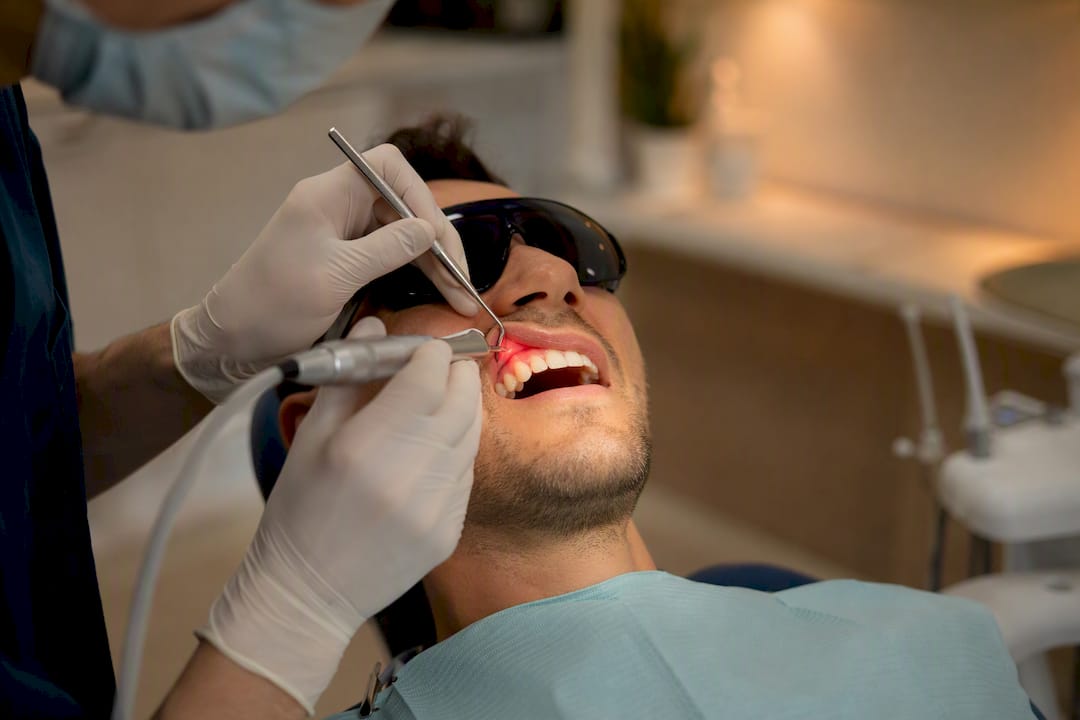
- Tissue is removed or reshaped using a laser or a scalpel
- If bone needs adjusting, that osseous work happens at this stage
- Sutures close the site, if needed
Lasers tend to cause less bleeding and swelling than scalpel techniques, which is a big reason they’re the default for cosmetic-only cases. But lasers can’t touch bone. Once osseous recontouring enters the picture, a scalpel and traditional surgical instruments come back into play.
Duration depends on scope: a single-tooth cosmetic touch-up might take 30 minutes, while multi-tooth crown lengthening with bone work can stretch past an hour. In the first 48 hours, expect lingering numbness as the anesthesia wears off, some bleeding or oozing, mild to moderate swelling, and a prescription or recommendation for pain management.
Pro Tip: Ask your provider upfront whether they expect to need bone work. It changes your anesthesia options, your appointment length, and your recovery timeline, so you want that answer before you’re in the chair, not after.
Benefits and Risks You Should Weigh Honestly
The upside is real: a more balanced smile, easier access for a dentist placing a crown, and in overgrowth cases, gum tissue that’s actually easier to keep clean. When done for functional reasons, contouring can meaningfully reduce plaque traps that regular brushing can’t reach.
The downside list is short but worth reading closely:
- Swelling, tenderness, and mild bleeding for several days is normal
- Temporary tooth sensitivity to hot and cold is common as tissue heals
- Infection, though uncommon, is possible with any surgical procedure
- Gum recession or tissue regrowth can occur, particularly if the underlying cause (like medication-induced overgrowth) isn’t addressed
Results tend to hold up long term when the root cause gets treated alongside the reshaping. If the cause is inflammation or a medication side effect and that issue isn’t managed, tissue can grow back over time, which is the single biggest reason cosmetic results sometimes disappoint patients a year or two later.
Recovery Timeline and Aftercare That Actually Helps
Initial healing runs about one to two weeks, but full tissue maturation, meaning the gum has settled into its final shape and color, can take up to three months. Don’t judge your final results at the two week mark. It isn’t done changing yet.
Here’s what recovery generally looks like in practice:
- Days 1 to 3: stick to soft, cool foods, avoid the surgical site when brushing, and manage discomfort with acetaminophen or ibuprofen rather than aspirin, since aspirin thins blood and can worsen bleeding
- Days 3 to 5: swelling starts to ease; avoid strenuous exercise for about five days since raised blood pressure can trigger bleeding at the site
- Week 2: most patients resume normal brushing near the area, following their provider’s specific rinse and hygiene instructions
- Weeks 3 to 12: tissue color and contour continue to refine as the gum fully matures
Call your dentist right away if you notice heavy bleeding that doesn’t slow down, fever, pus or foul discharge, or pain that gets worse instead of better after the first few days. Those are not normal healing signs.
Pro Tip: Keep a soft-food rotation ready before your appointment, not after. Scrambling to figure out what you can eat while your mouth is numb and sore is a self-inflicted headache you can avoid with ten minutes of grocery planning the day before.

What Gum Contouring Costs and When Insurance Helps
Price depends heavily on scope. Per-tooth cosmetic reshaping often runs in the low hundreds of dollars, while multi-tooth front smile work can run up toward a few thousand dollars, depending on the provider, your location, and whether bone work is involved.
A few cost drivers to keep in mind:
- Specialist care from a periodontist typically costs more than a general dentist’s laser-only reshaping
- Cases requiring osseous recontouring cost more than soft tissue only work, partly because they take longer and require more surgical precision
- Sedation, if you choose it, adds to the total
On insurance: this is where the cosmetic versus functional line matters most. Elective cosmetic gum reshaping is almost always an out-of-pocket expense, while crown lengthening performed to support a necessary restoration or address a health issue is sometimes partially covered. Ask your provider to document medical necessity clearly if that’s your situation. It’s the difference between a covered procedure and a self-pay one.
How to Choose the Right Provider
Not every case needs a specialist, but knowing which one you have changes who should be holding the instruments.
- If your case is purely cosmetic and limited to soft tissue, a general dentist trained in laser reshaping is often sufficient
- If bone recontouring, extensive tissue changes, or periodontal disease is involved, a periodontist is the safer choice given their surgical training in gum and bone tissue
- If you’re unsure which category you fall into, that uncertainty itself is a reason to get a specialist opinion before committing
At your consultation, ask direct questions: How many similar cases have you handled? Can I see before-and-after photos of comparable patients? Do you expect I’ll need bone work? What anesthesia or sedation options are available? What does follow-up look like, and what will this cost, including CDT procedure codes for insurance purposes?
Red flags worth walking away from:
- A provider who won’t show you any past case photos
- Vague answers about whether bone work is needed
- No clear explanation of the follow-up schedule
- Pressure to book same-day without a real diagnostic exam
What Good Gum Contouring Care Looks Like in Practice
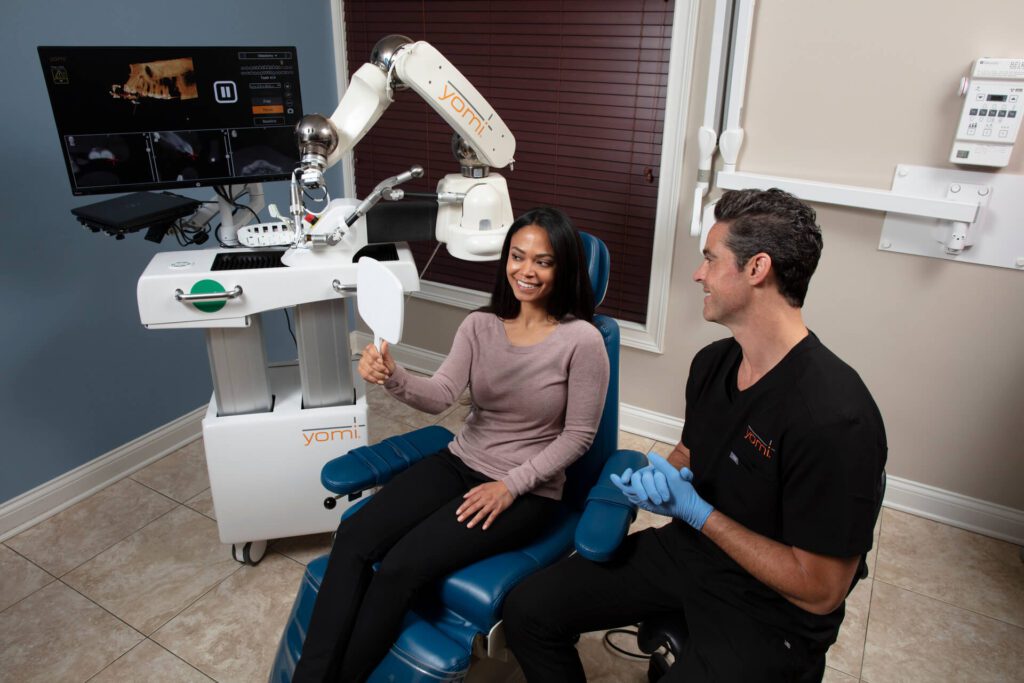
The best outcomes come from providers who treat diagnosis as seriously as the procedure itself. Towne Dental’s periodontics and oral surgery teams work from that same standard, using tools like the Yomi® Robot for precision-guided implant and bone work when a case calls for it. That level of technology matters most in complex cases, ones involving osseous recontouring or multiple specialties working together.
Some proof points worth knowing:
- Multi-specialty coordination between periodontics, oral surgery, and cosmetic dentistry under one practice
- Treatment planning tailored to whether a case is purely cosmetic or functionally necessary
- A patient-comfort approach designed around sedation options and reducing dental anxiety
That combination, accurate diagnostics plus the right specialist plus modern tools, is what separates a predictable result from a disappointing one.
Why the Cosmetic Versus Functional Line Deserves More Attention
Most patient guides on gum reshaping treat it as one procedure with one price tag and one recovery clock. That’s the piece of conventional advice this article pushes back on hardest. Cosmetic contouring and medically necessary crown lengthening share a name and some instruments, but they diverge on almost every practical question that matters: who should perform them, what they cost, whether insurance touches them, and how much of the jaw gets involved.
The bigger blind spot is permanence. Patients frequently walk away assuming a reshaped gumline is a one-time fix, when the research on outcomes says otherwise: tissue can regrow if the cause isn’t addressed. Treating the symptom without touching the cause, whether that’s a medication or unmanaged inflammation, sets patients up for a second procedure they didn’t budget for.
If there’s one priority worth taking from this guide, it’s this: get a real diagnostic workup, including gum thickness and bone level measurements, before agreeing to any treatment plan. That single step does more to prevent recession, relapse, and wasted money than any technique choice between laser and scalpel.
Ready to Talk to a Specialist About Your Smile?
If you’ve read this far, you already know gum contouring isn’t a one-size-fits-all procedure, and picking the right provider matters as much as picking the right technique. Towne Dental brings periodontics, oral surgery, and cosmetic dentistry together under one roof, so whether your case is a simple laser touch-up or crown lengthening that needs bone work, you’re not being referred out to a stranger halfway through your treatment plan.

That coordination matters most in cases where diagnostics reveal more than expected, say, thin tissue that needs a periodontist’s eye, or a restoration that requires precise bone recontouring guided by tools like the Yomi® Robot. Towne Dental’s cosmetic dentistry team can evaluate whether your case is purely aesthetic or has a functional component insurance might help cover. Schedule a consultation to get an honest assessment of your gum line and a treatment plan built around what your smile actually needs.
This article is general information, not a substitute for advice from a qualified doctor. Consult a qualified healthcare professional about your own circumstances before acting on anything here.
Sources
- Gum Contouring: Surgery, Recovery & What To Expect — Cleveland Clinic
- Gum Contouring Surgery: For Gums That Are Too High or Too Low — WebMD
- Gum Contouring: What Is It, Cost, Does It Hurt? — Healthline
- Gum Contouring and Reshaping — MySpecialtyDentist
FAQ
How long does gum contouring last?
Results are often long-lasting when the underlying cause is treated, but tissue can regrow if factors like inflammation or certain medications aren’t managed alongside the procedure.
Does gum contouring have risks?
Yes. Common risks include temporary sensitivity, swelling, and mild bleeding, while less common but more serious risks include infection and gum recession, especially in patients with thin gum tissue.

What does gum contouring do?
It reshapes the gum line either to improve smile appearance or to expose more tooth structure so a dentist can properly place a crown, filling, or other restoration.
How painful is gum contouring?
Local anesthesia keeps the procedure itself pain-free, and post-procedure discomfort is typically managed with over-the-counter pain relievers like acetaminophen or ibuprofen during the first few days of healing.
Is gum contouring the same as crown lengthening?
No. Gum contouring can be purely cosmetic and limited to soft tissue, while crown lengthening specifically involves removing gum tissue and sometimes bone to expose more tooth for a restoration.