Osseous surgery, also called pocket reduction surgery, reshapes bone around the teeth to eliminate deep periodontal pockets that scaling and root planing couldn’t fix. Dentists use it once probing depths stay at 5 mm or deeper after non-surgical treatment has run its course. The goal isn’t just to clean out infection. It’s rebuilding the bone into a shape you and your dentist can actually keep clean for the next 20 years.
TL;DR:
- Osseous surgery is reserved for deep pockets of five millimeters or more that do not respond to non-surgical treatments, especially in shallow, irregular bone defects.
- The procedure involves reshaping the bone through ostectomy and osteoplasty, aiming to create a contour that simplifies regular cleaning and long-term maintenance.
- Risks include recession and sensitivity, but long-term success is high, with over 91.7% of treated sites maintaining shallow depths after four years.
- Post-operative care emphasizes soft foods, proper follow-up visits, and avoiding smoking or straws to support healing and preserve results.
- Long-term tooth retention strongly depends on consistent supportive maintenance every three to four months after surgery.
Table of Contents
- What Is Osseous Surgery? The Rationale Behind Reshaping Bone
- Who Needs Osseous Surgery: Indications and Contraindications
- What Happens During the Procedure
- Risks, Trade-Offs, and What the Evidence Actually Shows
- Recovery, Aftercare, and Keeping Results Long-Term
- How Towne Dental Evaluates and Cares for Surgical Candidates
- Why the “Just Get It Cleaned” Mindset Falls Short
- Getting Started: What a Consultation With Towne Dental Looks Like
- Sources
- FAQ
What Is Osseous Surgery? The Rationale Behind Reshaping Bone
Periodontal disease doesn’t just destroy bone evenly. It carves craters, ledges, and irregular defects that trap plaque no toothbrush or floss can reach. Osseous surgery corrects that by combining two techniques: ostectomy, which removes bone that supports the tooth, and osteoplasty, which reshapes bone that doesn’t. Periodontists sometimes call the result an “architectural reset” rather than a cleaning procedure, because the actual objective is a bone contour shallow enough to maintain at home and in routine cleanings.
Several technique variants exist, chosen based on the defect and the esthetic stakes involved:
- Conventional osseous resective surgery (ORS): the standard approach for predictable pocket elimination, especially in posterior teeth where plaque control is naturally harder.
- Apically positioned flap: repositions gum tissue lower on the tooth after bone recontouring, reducing pocket depth without excessive tissue removal.
- Fiber Retention ORS (FibReORS): a newer modification that preserves the connective tissue fibers above the bone crest, which can mean less bone removal and less gum recession while still controlling pockets.
- Laser-assisted variants: marketed as less invasive, but the clinical evidence on outcomes remains mixed compared to conventional flap surgery.
FibReORS tends to get chosen in the esthetic zone or on thin gum tissue, where every millimeter of recession shows.
Who Needs Osseous Surgery: Indications and Contraindications
Not every deep pocket needs a scalpel. Osseous surgery is generally reserved for moderate to severe periodontitis when scaling and root planing haven’t closed pockets that stay 5 mm or deeper, particularly in shallow, sloping bone defects where reshaping the bone gets rid of the crater entirely. Deep, narrow, localized defects (generally greater than 3 mm) are a different story. Those often respond better to regenerative surgery, using bone grafts or membranes to rebuild lost support rather than remove it.
A few factors push the decision one way or the other:
- Uncontrolled diabetes or other systemic disease that impairs healing.
- Active smoking, which slows healing and raises failure risk substantially.
- Thin gum biotype in the smile zone, where recession would be cosmetically obvious.
- The defect’s shape and depth, and whether you can realistically commit to long-term maintenance visits.
Pro Tip: Ask your periodontist to show you your own pocket chart and bone levels on the X-ray. Seeing the actual defect makes the resective-versus-regenerative decision much easier to understand, and it’s your bone, so you should see it.
What Happens During the Procedure
A surgery day follows a fairly predictable rhythm, though the details shift based on how many teeth are involved and whether you’re sedated.
Before the appointment, expect:
- A full periodontal exam with updated X-rays or 3D imaging to map the defect.
- A medication review, including whether blood thinners or other drugs need adjusting.
- Possible antibiotics beforehand if you have a higher infection risk.
- Fasting instructions if IV or oral sedation is planned, plus arranging a ride home.
Local anesthesia is standard for most cases; sedation gets added for anxious patients or more extensive work. Once numb, the surgical sequence generally runs:
- The periodontist elevates a small flap of gum tissue to expose the bone.
- Diseased tissue and residual calculus are debrided from the root surfaces.
- Ostectomy and osteoplasty reshape the bone into a smooth, positive architecture. Clinicians often work the lingual side first to connect bone levels while minimizing recession on the more visible buccal surface.
- Bone grafts or membranes go in if any pockets of the defect actually favor regeneration instead of resection.
- The flap is repositioned and sutured, ideally lower and tighter than before.
A single quadrant typically takes 45 minutes to over an hour. Many periodontists stage full-mouth surgery across two to four visits rather than one long session, both for patient comfort and to reduce swelling in multiple areas at once.
Risks, Trade-Offs, and What the Evidence Actually Shows
Every pocket-reduction procedure trades one problem for another, and it’s worth understanding that trade before you consent to it. The most common risks are gingival recession, dentinal sensitivity, minor bleeding, and post-op infection; rare complications include prolonged swelling or delayed healing in smokers and diabetics.
The evidence on outcomes: A multi-year follow-up study found that about 91.7% of surgically treated sites reached probing depths of 3 mm or less at the four-year mark in selected cohorts, a strong long-term success rate for a surgical intervention.
The core trade-off is this: surgical pocket reduction works better on deep pockets (7 mm or more) than scaling alone, but it comes with more recession than non-surgical treatment produces. FibReORS narrows that gap. Trials comparing it to conventional resective technique found it can achieve similar pocket control with less bone removed and less visible recession. For deep, narrow intrabony defects, regeneration usually beats resection outright, since rebuilding lost bone preserves more of the tooth’s support than removing bone around it ever could.
Recovery, Aftercare, and Keeping Results Long-Term
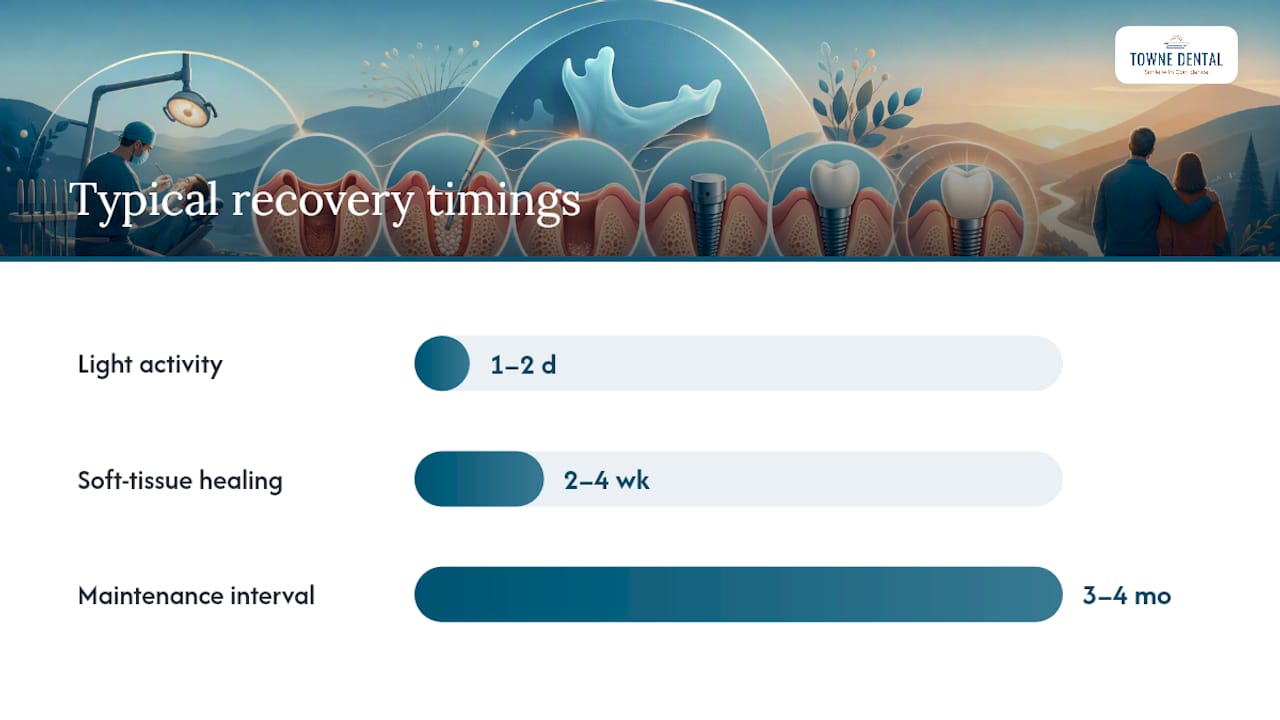
Most patients resume light activity within one to two days, with substantial soft-tissue healing by two to four weeks. Full bone remodeling underneath continues quietly for months after that.
The first week matters most for how comfortable, and how successful, your healing turns out. Standard aftercare includes:
- Prescribed pain medication and cold packs for the first 24 to 48 hours to control swelling.
- A soft-food diet, avoiding anything crunchy, spicy, or requiring heavy chewing near the surgical site.
- Gentle antiseptic rinses starting a day or two post-op, as directed.
- Avoiding straws and smoking entirely, since suction can dislodge the healing clot and delay closure.
- Keeping every follow-up appointment so your periodontist can check suture removal and healing progress.
Pro Tip: Set a reminder for periodontal maintenance visits every three to four months for at least the first two years after surgery. That interval isn’t arbitrary. Long-term data consistently shows that tooth retention depends less on the surgery itself and more on whether patients stick to strict supportive maintenance afterward. You can find more detail on general post-surgical care in this recovery checklist.
How Towne Dental Evaluates and Cares for Surgical Candidates
Determining whether you’re a candidate starts with a full periodontal exam: pocket charting at six points per tooth, imaging to map bone levels, and a conversation about what you actually want long-term, whether that’s saving specific teeth, avoiding dentures, or simply stopping the disease’s progress. That last conversation matters as much as the clinical numbers, since a treatment plan only works if you can maintain it.
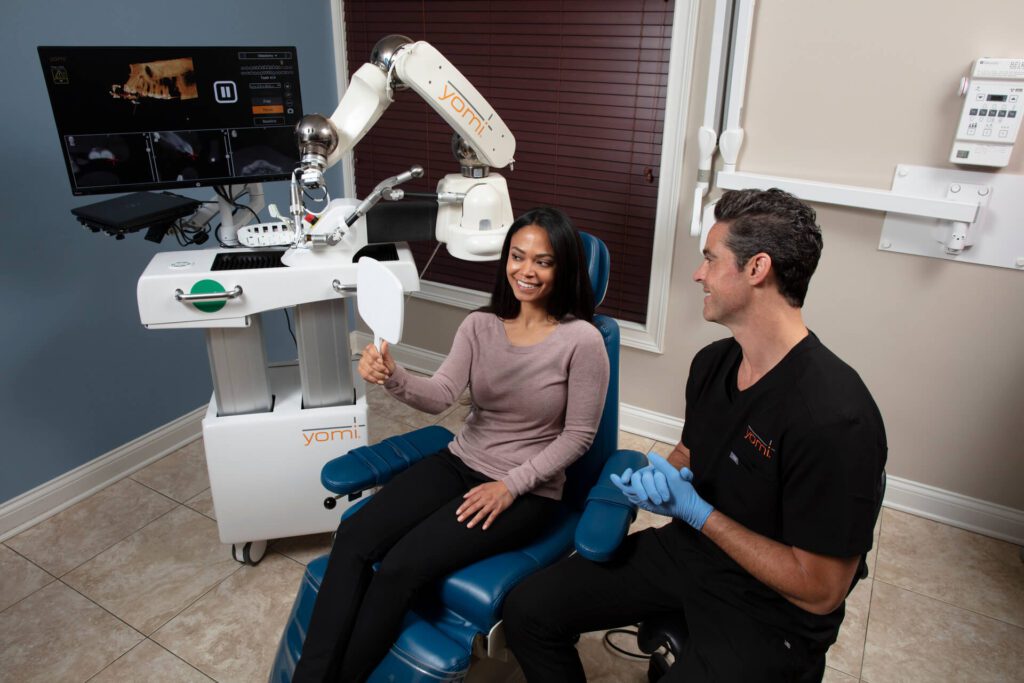
The Towne Dental team pairs a coordinated surgical group with sedation options for anxious patients, and for cases where implants eventually enter the picture, Yomi® robotic guidance supports more precise, less invasive placement. Every plan gets built around the individual defect, not a one-size template. Recovery support and scheduled maintenance visits follow every surgical case, because periodontal stability is a years-long project, not a single appointment. Full details on evaluation and ongoing gum disease care are outlined on the periodontics page.
Why the “Just Get It Cleaned” Mindset Falls Short
Patients often approach osseous surgery the way they’d approach a deep cleaning: get it done, move on, forget about it. That mindset undersells what’s actually happening. You’re not removing debris. You’re rebuilding the physical shape of the bone that supports your teeth, and that shape either works with your daily hygiene habits or fights against them for the rest of your life.
The conventional advice tends to stop at “surgery reduces pocket depth,” which is true but incomplete. The research on long-term outcomes points somewhere more specific: surgery succeeds when it’s followed by rigorous maintenance, and it drifts back toward failure when patients treat the procedure as a finish line. It reflects patients who showed up for maintenance every few months and kept their home care sharp.
If you take one thing from this, prioritize the conversation about maintenance commitment before you prioritize the choice between resective and regenerative technique. Both can work. Neither works without follow-through.
— Towne Dental
Getting Started: What a Consultation With Towne Dental Looks Like
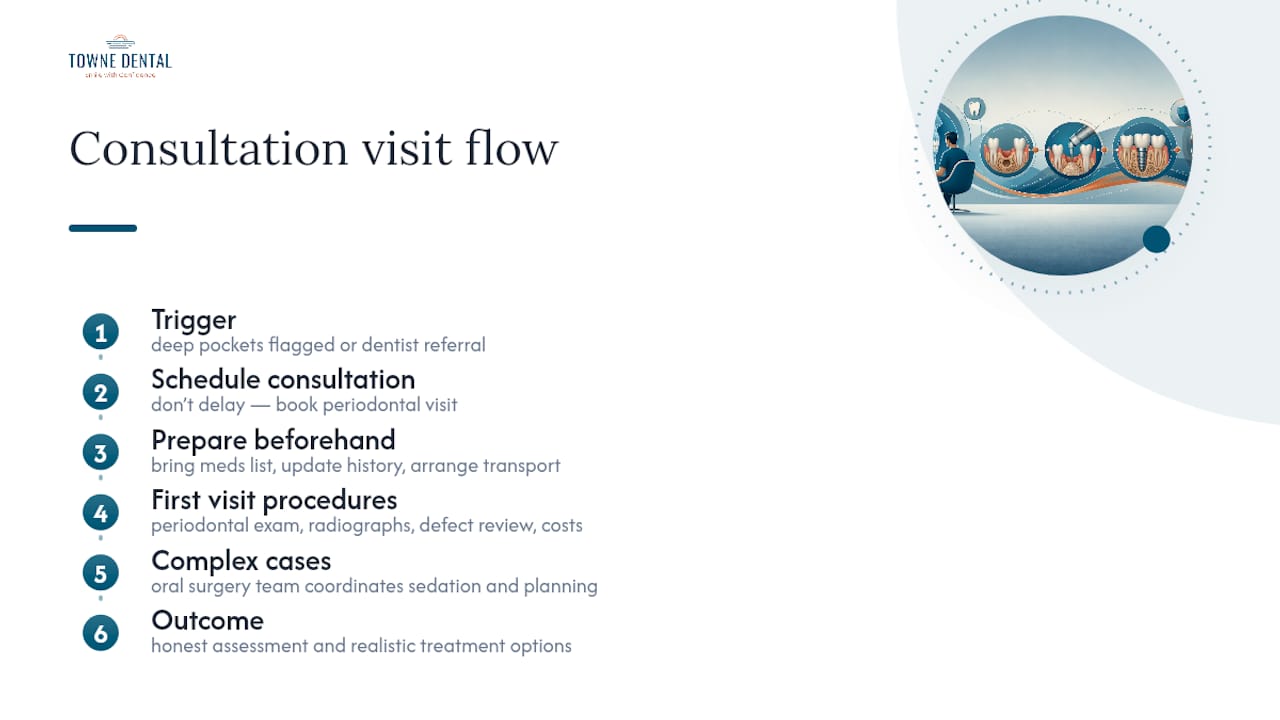
If deep pockets have been flagged during a cleaning, or a general dentist has already mentioned surgery, the next real step is a periodontal consultation, not more waiting. A first visit typically includes a full periodontal exam, updated radiographs, a review of your defect pattern, and a straightforward conversation about cost and insurance coverage before anything gets scheduled.
A little prep makes that visit go faster: bring a current medication list, note any changes in your medical history, and arrange transportation if sedation is likely to be part of the plan. You can review what to expect beforehand on the pre-surgery preparation guide, and if your case involves more complex surgical needs, the oral surgery team at Towne Dental coordinates sedation and advanced planning under one roof. Advanced periodontal disease doesn’t resolve on its own, and pockets that have already resisted non-surgical treatment tend to worsen the longer they’re left untreated. Schedule a periodontal consultation to get an honest read on where your gum health stands and what your realistic options actually are.
This article is general information, not a substitute for advice from a qualified doctor. Consult a qualified healthcare professional about your own circumstances before acting on anything here.
Sources
- Overview of Periodontal Surgical Procedures – StatPearls – NCBI Bookshelf
- Long-term outcomes of osseous resection procedures (PMC article)
- Osseous Resective Surgery: The Past, the Present and the Future (Journal of Periodontal Research DOI)
- Osseous Surgery: Purpose, Effects & Recovery – Cleveland Clinic
FAQ
How painful is osseous surgery?
Most patients report manageable discomfort controlled with prescribed pain medication and cold packs, similar to or slightly more intense than a surgical tooth extraction. Pain typically peaks in the first 24 to 48 hours, then tapers quickly.
Is osseous surgery worth it?
For pockets that stayed deep after scaling and root planing, osseous surgery offers a strong long-term track record, with about 91.7% of treated sites maintaining shallow probing depths at four years in selected cohorts. Its value depends heavily on committing to maintenance visits afterward, not just the surgery itself.
What is the recovery time for osseous surgery?
Most patients return to light activity within one to two days, with substantial soft-tissue healing by two to four weeks. Bone remodeling underneath continues for several months beyond that.
How long can you keep your teeth with periodontal disease?
Tooth retention depends far more on ongoing maintenance than on any single procedure. Patients who keep periodontal maintenance visits every three to four months after treatment tend to retain teeth for decades, while those who skip follow-up care see disease progress again.
Does osseous surgery cause gum recession?
Yes, some recession is a common and expected side effect, since the procedure reshapes the gum’s underlying bone support. Techniques like Fiber Retention ORS report achieving similar pocket control with less bone removed and less visible recession compared to conventional resective surgery.