An orthodontic implant, clinically known as a Temporary Anchorage Device (TAD), is a small titanium screw placed temporarily in the jawbone to serve as a fixed anchor during tooth movement. TADs are not designed for chewing or permanent use. They give orthodontists a stable, reliable point to push or pull teeth with precision that traditional methods simply cannot match. For adults in Cape Coral exploring orthodontic treatment methods, understanding how TADs work, what they cost, and how they differ from standard dental implants is the clearest path to making a confident treatment decision.
How do orthodontic implants work and what benefits do they offer?
An orthodontic implant works by providing skeletal anchorage that does not depend on other teeth or patient cooperation. Traditional methods like rubber bands and headgear require patients to wear them consistently. TADs eliminate that variable entirely. Forces are applied 24 hours a day, exactly as planned, which is why TADs improve treatment predictability and can reduce overall treatment duration.

The biomechanical principle is straightforward. Teeth move when sustained, controlled force is applied to them over time. A TAD anchors to the jawbone itself, so the force never shifts or weakens because a patient forgot to wear their elastics. This makes TADs especially powerful for complex tooth movements that braces alone cannot reliably achieve.
The clinical benefits of TADs are substantial:
- Molar intrusion: TADs can push back molars that have over-erupted, a movement nearly impossible with braces alone.
- Space closure: Consistent tooth movement without unwanted side effects on neighboring teeth.
- Reduced compliance burden: Patients do not need to manage elastics or headgear daily.
- Shorter treatment timelines: Fixed anchorage means fewer corrections and adjustments.
- Precision for adults: Adults with denser bone respond well to the controlled forces TADs deliver.
Pro Tip: If your orthodontist mentions anchorage concerns during your consultation, ask specifically whether a TAD would reduce your total treatment time. The answer is often yes.
What does the orthodontic implant placement procedure involve?
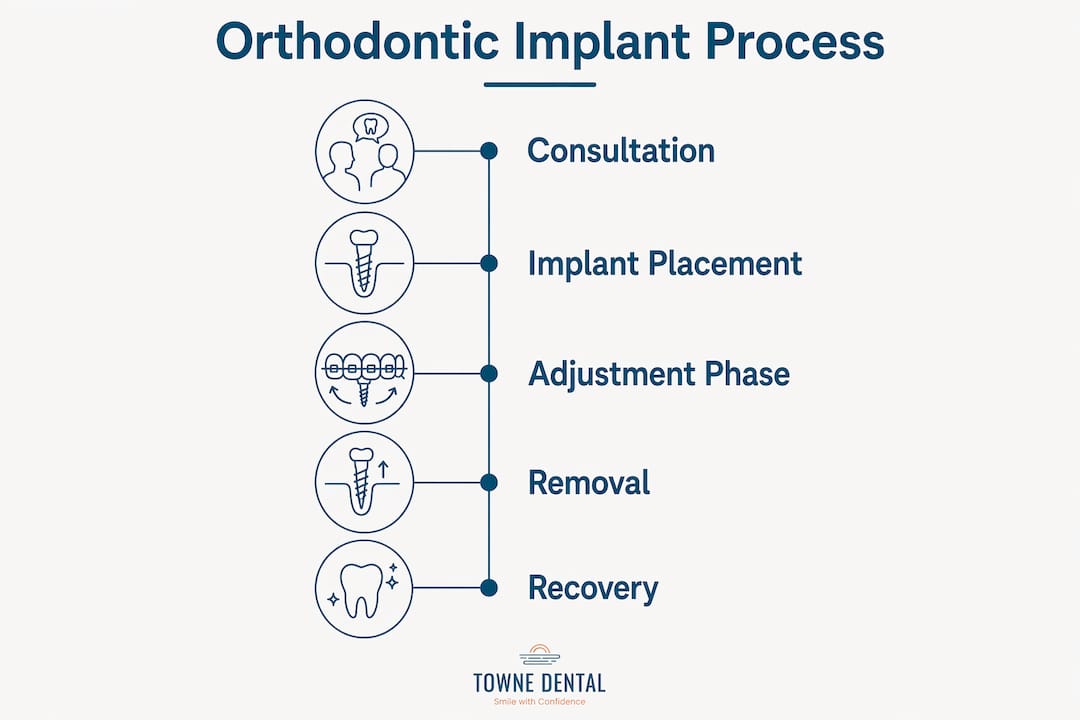
The placement process is brief and far less intimidating than most patients expect. Here is what happens from start to finish:
- Local anesthesia is applied. The gum and surrounding tissue are numbed. Most patients feel pressure but not pain during insertion.
- The TAD is placed. The placement takes 10–15 minutes and requires no incision or stitches. The mini-screw is threaded directly into the jawbone.
- Orthodontic forces are attached. Elastic chains or springs connect to the TAD immediately or at a follow-up visit, depending on the treatment plan.
- The implant stays in place for 3–12 months. Duration depends on the specific tooth movement required.
- Removal is simple. The TAD is typically removed without anesthesia. The site heals quickly, usually within a few days.
Mild soreness after placement is normal and resolves within 48–72 hours. Over-the-counter pain medication handles it effectively for most patients. Keeping the area clean is the most important aftercare step. TAD loosening occurs in about 10–15% of cases, most often due to gum inflammation from poor hygiene around the screw site. When loosening happens, the TAD can usually be replaced at the same appointment without delaying treatment.
Pro Tip: Use a soft-bristle toothbrush around the TAD site after every meal. Keeping that area free of plaque is the single most effective way to prevent loosening.
How do orthodontic implants differ from standard dental implants?
This is the question that causes the most confusion, and the distinction matters. A TAD and a standard dental implant are both titanium screws placed in the jaw, but they serve completely different purposes and behave differently in the body.
Standard dental implants are designed to fuse permanently with the jawbone through a process called osseointegration. That fusion takes months and is the foundation for a crown, bridge, or denture. The implant becomes a permanent tooth root replacement. Mini Dental Implants (MDIs), which are 1.8–3.0 mm in diameter, also require osseointegration and are built to bear the load of chewing forces long-term.
TADs, by contrast, rely on mechanical retention, not osseointegration. They grip the bone without fusing to it. That is exactly what makes them removable after treatment ends. They are not built to withstand chewing forces and are never used as tooth replacements.
| Feature | Orthodontic implant (TAD) | Standard dental implant |
|---|---|---|
| Purpose | Temporary anchorage for tooth movement | Permanent tooth root replacement |
| Bone integration | Mechanical retention only | Full osseointegration |
| Duration in place | 3–12 months | Permanent |
| Load bearing | Orthodontic forces only | Full chewing load |
| Removal | Simple, often without anesthesia | Surgical procedure |
Patients considering robot-assisted implant procedures for permanent tooth replacement are looking at a fundamentally different treatment than TAD-based orthodontics. Knowing which category applies to your situation prevents costly misunderstandings.
What does an orthodontic implant cost?
The cost of TADs is an addition to your overall orthodontic treatment fee, not a replacement for it. The added cost ranges from $300 to $600 per implant, with total TAD costs for a typical treatment running $300 to $1,200. Several factors push that number up or down:
- Number of TADs needed: Some cases require one; complex cases may need two or more.
- Provider experience: Orthodontists with extensive TAD experience may charge more, but their success rates tend to be higher.
- Geographic location: Costs in Southwest Florida vary by practice and the complexity of the local market.
- Case complexity: Severe crowding or significant bite correction requires more precise anchorage and may increase fees.
Insurance coverage for TADs is inconsistent. Policies vary widely and many plans treat TADs as ancillary procedures separate from the main orthodontic benefit. Some plans cover them partially; others do not cover them at all. The right move is to call your insurance provider before treatment begins and ask specifically how TADs are coded and whether they fall under your orthodontic maximum.
What are the alternatives to orthodontic implants?
TADs are not the only anchorage option in orthodontics, but they are the most reliable for cases requiring absolute anchorage. Understanding the alternatives helps you have a more informed conversation with your orthodontist.
Traditional anchorage methods include:
- Headgear: Effective but requires patients to wear an external device for 12–14 hours daily. Compliance is the biggest failure point. Patients who skip wearing it lose the anchorage benefit entirely.
- Palatal expanders: Used primarily in younger patients to widen the upper jaw. They work well for their specific purpose but do not provide the directional control TADs offer.
- Elastics (rubber bands): Connect upper and lower teeth to correct bite relationships. They require consistent daily use and are highly sensitive to patient behavior.
- Transpalatal arches: A wire connecting upper molars to prevent them from moving forward. Useful but limited in the types of movement they can control.
Skeletal anchorage is the only method that achieves absolute anchorage in orthodontics. Alternatives work well when compliance is reliable and the required tooth movement is moderate. For adults in Cape Coral who want predictable results without managing daily appliances, TADs remove the compliance variable from the equation entirely. Anchorage is often called the “silent determinant” of orthodontic success. Poor anchorage planning leads to poor outcomes that are only detected late in treatment, when corrections are expensive and time-consuming.
Key Takeaways
Orthodontic implants (TADs) are the most reliable anchorage method in modern orthodontics, delivering predictable tooth movement without depending on patient compliance.
| Point | Details |
|---|---|
| TADs are temporary by design | They use mechanical retention, not osseointegration, making removal simple after 3–12 months. |
| Placement is quick and low-pain | The procedure takes 10–15 minutes under local anesthesia with no incisions required. |
| Cost adds $300–$1,200 to treatment | Insurance coverage varies widely; verify TAD billing codes with your provider before starting. |
| Success rate is approximately 85–90% | Loosening affects 10–15% of cases but is usually corrected at the same appointment. |
| Alternatives require patient compliance | Headgear and elastics work only when worn consistently; TADs eliminate that dependency. |
Why I think most patients underestimate the role of anchorage
Most patients walk into an orthodontic consultation focused on the end result: straighter teeth, a better bite, a more confident smile. That is completely reasonable. What they rarely think about is how the orthodontist controls tooth movement without moving the wrong teeth. That is the anchorage problem, and it is where TADs changed everything.
I have seen cases where patients went through years of treatment with traditional methods, only to end up with results that fell short because anchorage was compromised mid-treatment. The teeth that were supposed to stay still drifted. The corrections required more time and, in some cases, additional procedures. TADs do not guarantee perfect outcomes, but they remove one of the biggest sources of unpredictability in orthodontic treatment.
The misconception I hear most often is that TADs are only for complex or unusual cases. That is not accurate. Many straightforward adult cases benefit from TADs simply because adults are less likely to wear elastics consistently. A TAD makes the treatment plan independent of daily habits. For anyone considering orthodontic treatment options in Cape Coral, asking your provider about anchorage strategy is one of the most useful questions you can ask. The answer tells you a lot about how carefully your treatment has been planned.
— Krunal
Towne Dental’s approach to orthodontic care in Cape Coral
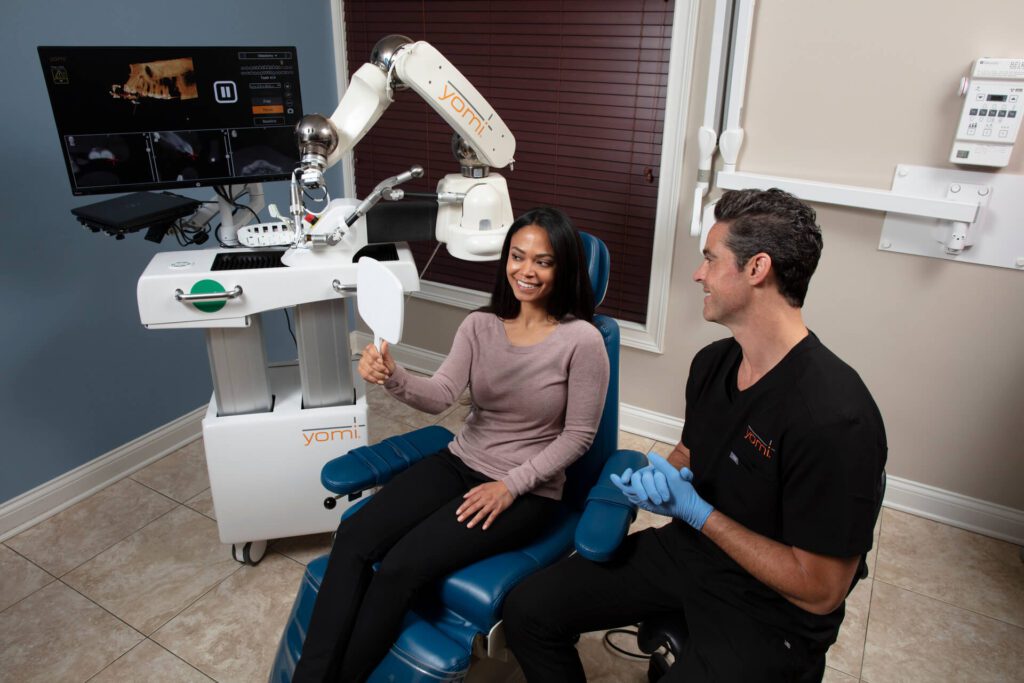
Towne Dental offers orthodontic services built around precision and patient comfort, including treatment planning that incorporates TADs when clinical needs call for them. The team uses advanced technology, including the Yomi® Robot for implant-assisted procedures, to deliver accurate, less invasive care.
Patients in Cape Coral and the surrounding Southwest Florida area can access comprehensive dental services that cover everything from initial orthodontic evaluation to specialized implant procedures. Towne Dental’s approach prioritizes clear communication about costs, timelines, and what to expect at every stage. If you are weighing your orthodontic options and want a team that explains the full picture before treatment begins, scheduling a consultation with Towne Dental is a practical first step.
FAQ
What is an orthodontic implant?
An orthodontic implant, or TAD, is a small titanium mini-screw placed temporarily in the jawbone to provide stable anchorage during orthodontic tooth movement. It is removed once the desired movement is complete.
How long does a TAD stay in place?
TADs typically remain in place for 3–12 months, depending on the complexity of the tooth movement required. Removal is straightforward and usually does not require anesthesia.
Are orthodontic implants painful to get?
Placement takes 10–15 minutes under local anesthesia, and most patients report mild pressure rather than pain. Soreness in the days following placement is common and responds well to over-the-counter pain medication.
How much do orthodontic implants cost?
TADs add approximately $300 to $600 per implant to the total treatment cost, with most patients paying $300 to $1,200 in total. Insurance coverage varies and should be confirmed with your provider before treatment begins.
Can TADs replace missing teeth?
No. TADs are temporary anchorage devices used only to guide tooth movement. They do not replace missing teeth. Standard dental implants, which fuse permanently to the jawbone through osseointegration, are the appropriate option for tooth replacement.