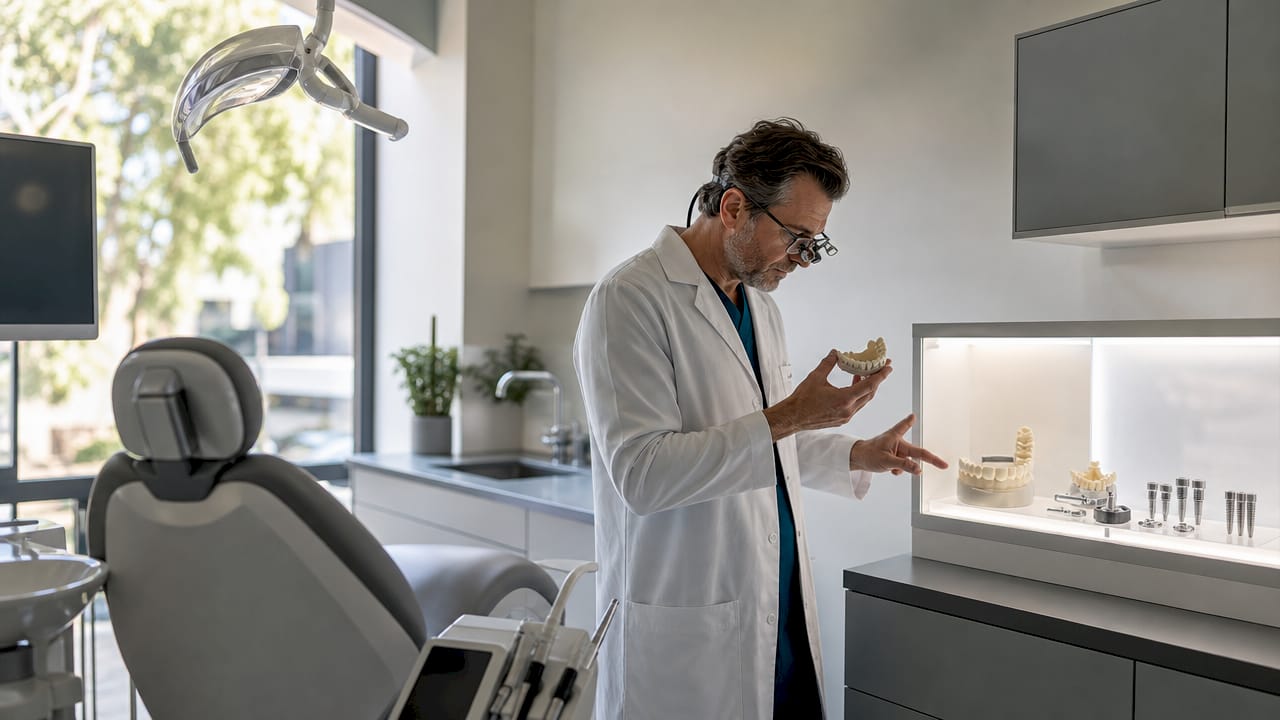
All-on-4 dental implants with zirconia is a full-arch restoration method that replaces an entire row of teeth using four titanium implants topped with a monolithic zirconia prosthesis. Prosthodontists recognize it as the most durable and natural-looking option in implant dentistry today. Patients in Naples considering this treatment get a fixed, non-removable arch that functions like natural teeth from day one. This guide covers the procedure step by step, explains why zirconia outperforms acrylic, breaks down real costs, and tells you exactly what recovery looks like.
What are all on 4 dental implants with zirconia and how do they work?
The All-on-4 procedure places four implants in strategic positions across the jaw to support a full arch of replacement teeth. Two implants go straight into the front of the jaw. The two rear implants are angled at up to 45 degrees to maximize contact with available bone. That angled placement is the key engineering insight: it eliminates the need for bone grafting in most patients.
The entire surgical procedure is completed in a single visit lasting 4–8 hours. On the same day, the surgeon attaches a temporary prosthesis made from PMMA (polymethyl methacrylate), so you leave the clinic with a full set of functional teeth. That temporary arch protects the implants while the bone heals.
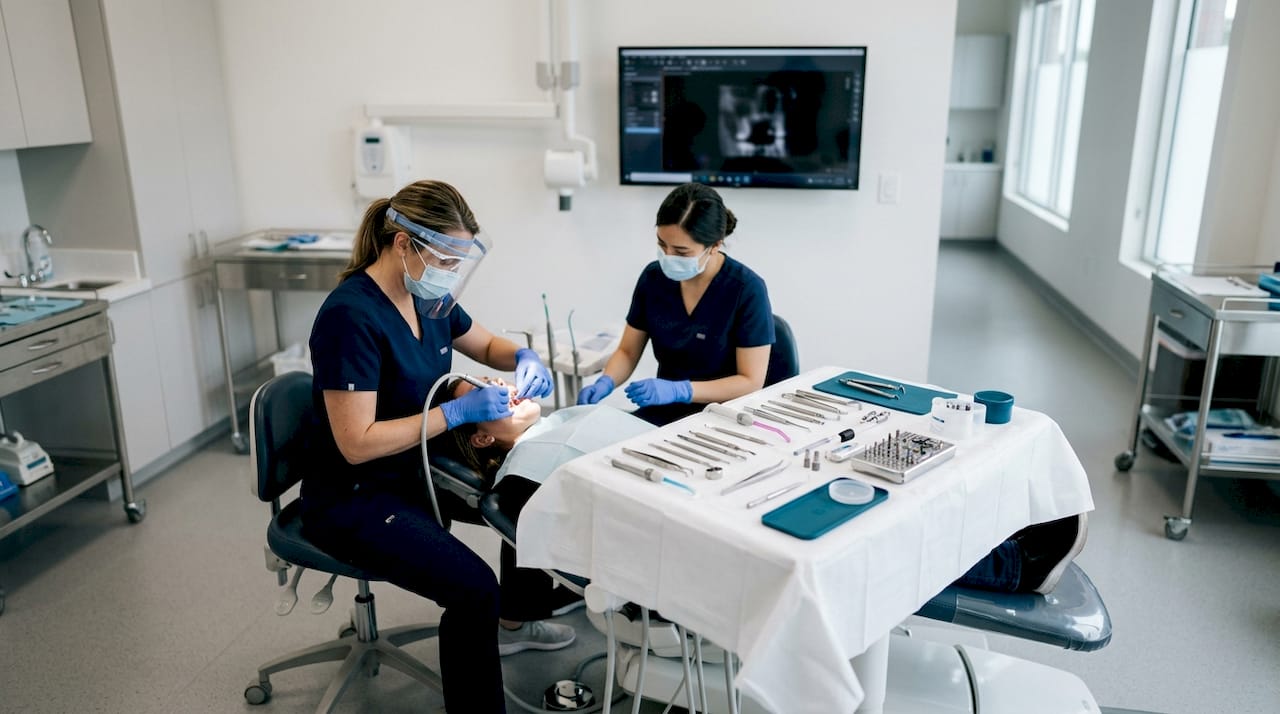
The permanent zirconia prosthesis comes later. Osseointegration takes 3–6 months, during which the implants fuse with the jawbone. Once that process is complete, the lab mills your final zirconia arch from a solid block and the dentist fits it permanently.
Here is the typical treatment sequence:
-
Consultation and imaging. CT scans and digital impressions map your bone density and jaw anatomy.
-
Extractions (if needed). Any remaining failing teeth are removed, often on the same day as implant surgery.
-
Implant placement. Four titanium posts are placed under sedation or general anesthesia.
-
Temporary PMMA prosthesis. You leave with a functional provisional arch the same day.
-
Healing period. Osseointegration takes 3–6 months. You attend adjustment visits during this time.
-
Final zirconia fitting. The permanent arch is secured and bite-adjusted.
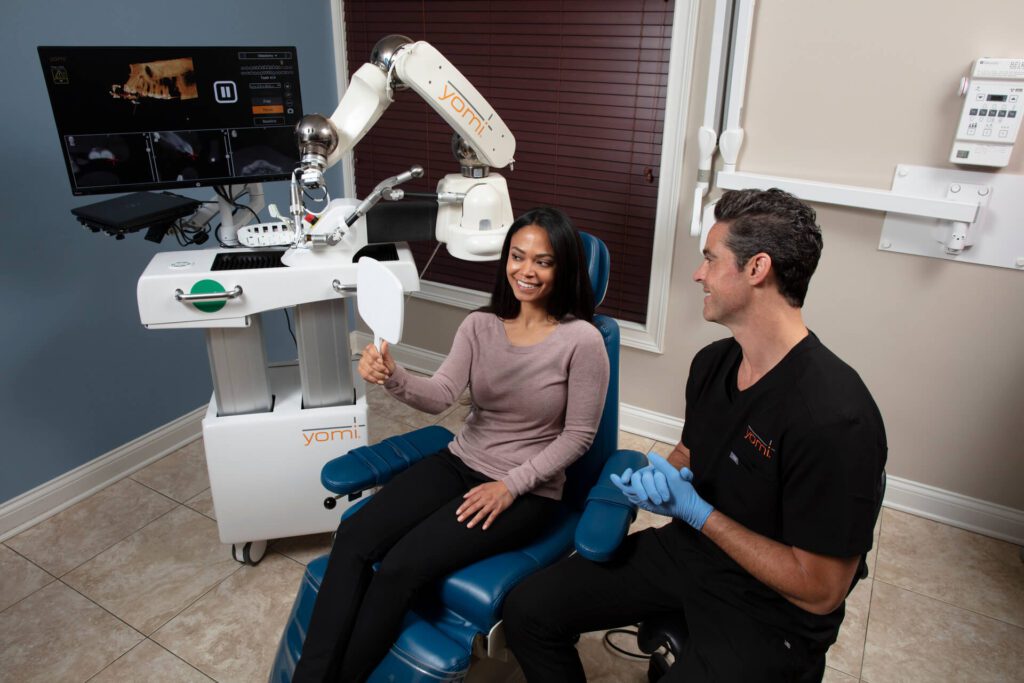
Pro Tip: Ask your surgeon whether the Yomi® Robot-assisted system is available for your placement. Robot-assisted implant placement improves positional accuracy and reduces surgical trauma compared to freehand techniques.
What are the advantages and drawbacks of zirconia in All-on-4 implants?
Zirconia is the material of choice for permanent All-on-4 prosthetics because of three core properties: strength, stain resistance, and aesthetics. Zirconia prostheses are milled from a single solid block, making them stronger and more resistant to staining than acrylic alternatives. That single-block construction also means fewer weak points where fractures can start.
Lifespan comparison
The lifespan difference between materials is significant. Zirconia lasts an estimated 20+ years, while acrylic arches typically require replacement every 5–10 years. Over a 20-year period, a patient with an acrylic arch could pay for two or three replacements. That makes zirconia the more cost-effective choice over time, even though it costs more upfront.
| Feature | Zirconia | Acrylic (PMMA) |
|---|---|---|
| Estimated lifespan | 20+ years | 5–10 years |
| Stain resistance | Excellent | Moderate |
| Appearance | Highly natural | Good, but less translucent |
| Repair if chipped | Complex, lab repair needed | Easier chairside repair |
| Upfront cost | Higher | Lower |
| Long-term cost | Lower (fewer replacements) | Higher (more replacements) |
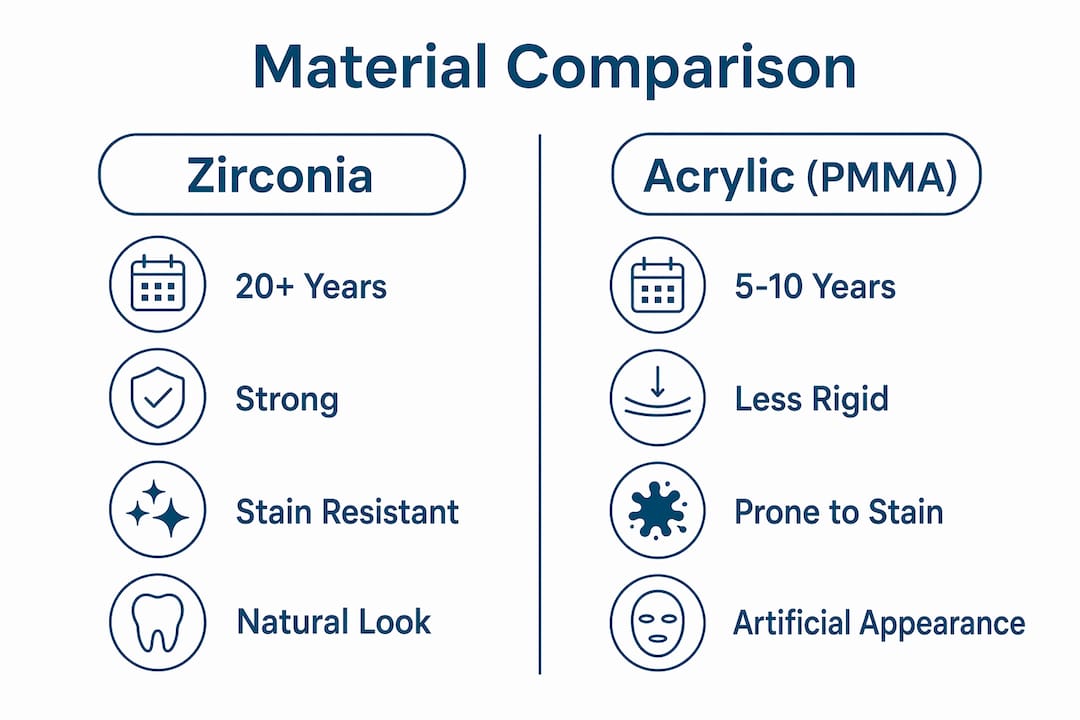
Zirconia does have one meaningful drawback. Its rigidity requires greater precision during placement, because the material cannot flex to compensate for minor fit errors the way acrylic can. If the prosthesis does chip or crack, repair requires a dental lab rather than a quick chairside fix. That is a real consideration, though it happens rarely with well-made zirconia arches.
Maintenance for zirconia is straightforward. Daily brushing with a soft-bristle brush, water flossing under the arch, and professional cleanings every six months keep the prosthesis in excellent condition. Avoid biting hard objects like ice or bottle caps, which can stress any fixed prosthesis.
Pro Tip: Use a water flosser designed for implants rather than traditional string floss. It cleans under the arch more effectively and reduces the risk of gum inflammation around the implant posts.
What does All-on-4 zirconia cost and what drives the price?
All-on-4 dental implants cost $14,000–$28,000 per arch in the United States in 2026. A full-mouth restoration covering both upper and lower arches runs $25,000–$50,000 or more. Those numbers reflect the complete treatment, not just the implants themselves.
The cost breaks down across several components:
-
Implant posts: $4,000–$8,000 per arch
-
Temporary PMMA bridge: $2,000–$4,000 per arch
-
Permanent zirconia prosthesis: $6,000–$14,000 per arch
-
Bone grafting (if needed): Variable, often $500–$3,000
-
Extractions: Variable based on teeth remaining
-
CT imaging and planning: Typically $300–$600
These cost components add up to the $14,000–$28,000 per-arch range, with the permanent zirconia prosthesis being the largest single variable. Choosing zirconia over acrylic for the final arch adds cost at the outset but reduces the likelihood of paying for a replacement arch within a decade.
Geographic location affects pricing. Practices in major metropolitan areas and coastal markets like Naples tend to price at the higher end of the range. Case complexity matters too. Patients who need multiple extractions, bone grafting, or sinus lifts before implant placement will pay more than patients with adequate bone volume.
Most patients who can afford the upgrade choose zirconia for the permanent arch because the long-term math favors it. Replacing an acrylic arch twice over 20 years costs more than a single zirconia arch that lasts the same period. Dental financing plans and phased payment options make the upfront cost more manageable for many patients.
What should patients expect during recovery and follow-up care?
Recovery from All-on-4 surgery follows a predictable pattern. Swelling and dietary restrictions begin immediately after surgery, and most patients spend the first two weeks on soft foods. Swelling peaks around day three and subsides significantly by the end of the first week.
The temporary PMMA arch requires attention during healing. Patients typically need 3–6 adjustment visits before the permanent prosthesis is fitted, because the temporary arch shifts slightly as swelling resolves and bone remodels. Each adjustment improves comfort and bite alignment. Skipping these visits leads to sore spots and uneven pressure on the implants.
Key recovery milestones and habits:
-
Week 1: Soft tissue check with your surgeon. Stick to liquids and very soft foods.
-
Weeks 2–4: Introduce soft solid foods. Avoid anything hard, crunchy, or chewy.
-
Months 1–3: Attend scheduled adjustment appointments for the temporary arch.
-
Months 3–6: Final imaging confirms osseointegration. Permanent zirconia arch is fabricated and fitted.
-
Ongoing: Professional cleaning every six months, annual imaging to check implant stability.
Follow-up visits are critical for long-term implant success. Poor follow-up is one of the leading factors in implant failure over time. Annual X-rays catch early signs of bone loss around implant posts before they become serious problems. Patients who commit to the maintenance schedule protect their investment for decades.
Reading what to expect before dental surgery helps patients prepare mentally and physically for the procedure. Good preparation reduces anxiety and speeds recovery.
Key Takeaways
Zirconia All-on-4 dental implants deliver the best long-term outcome for full-arch restoration, combining 20+ years of durability with natural aesthetics and lower lifetime replacement costs than acrylic alternatives.
| Point | Details |
|---|---|
| Procedure timeline | Surgery takes 4–8 hours; permanent zirconia arch fits 3–6 months after osseointegration. |
| Zirconia lifespan | Zirconia lasts 20+ years versus 5–10 years for acrylic, reducing long-term replacement costs. |
| Cost per arch | Expect $14,000–$28,000 per arch in 2026, with zirconia prosthetics as the largest cost variable. |
| Recovery commitment | Plan for 3–6 adjustment visits and a soft-food diet for the first several weeks post-surgery. |
| Maintenance matters | Six-month professional cleanings and annual imaging protect implant longevity over decades. |
Why I think zirconia is the only real choice for permanent All-on-4 arches
Patients ask me whether the zirconia upgrade is worth the extra cost. My answer is always yes, and here is why.
Acrylic arches look fine on day one. By year three, they stain, wear down, and start to look artificial. Patients who chose acrylic to save money often come back frustrated, asking about replacement options. The savings they made upfront disappear quickly once you factor in the cost of a new arch.
Zirconia behaves differently. It holds its color, resists wear, and still looks like natural enamel years later. Patients who receive a well-fitted zirconia arch rarely think about their teeth again. That psychological shift, from constant awareness of a prosthesis to forgetting it is there, is the real quality-of-life improvement.
The one thing I tell every patient before they commit: the consultation matters as much as the material. Not everyone is an ideal candidate on day one. Some patients need periodontal treatment or bone grafting first. Rushing into surgery without addressing those factors leads to complications that no material can fix. A thorough evaluation, including gum health assessment and CT imaging, is non-negotiable before any implant placement.
The patients who do best are the ones who go in with realistic expectations, commit to the follow-up schedule, and choose zirconia for the permanent arch. That combination produces results that last a lifetime.
Towne Dental: full-arch implant care in Naples
Towne Dental offers complete All-on-4 oral surgery services in Naples, from initial CT imaging through permanent zirconia prosthesis fitting. The clinic uses the Yomi® Robot-assisted implant system to improve placement accuracy and reduce surgical trauma, which matters especially for patients with limited bone volume.
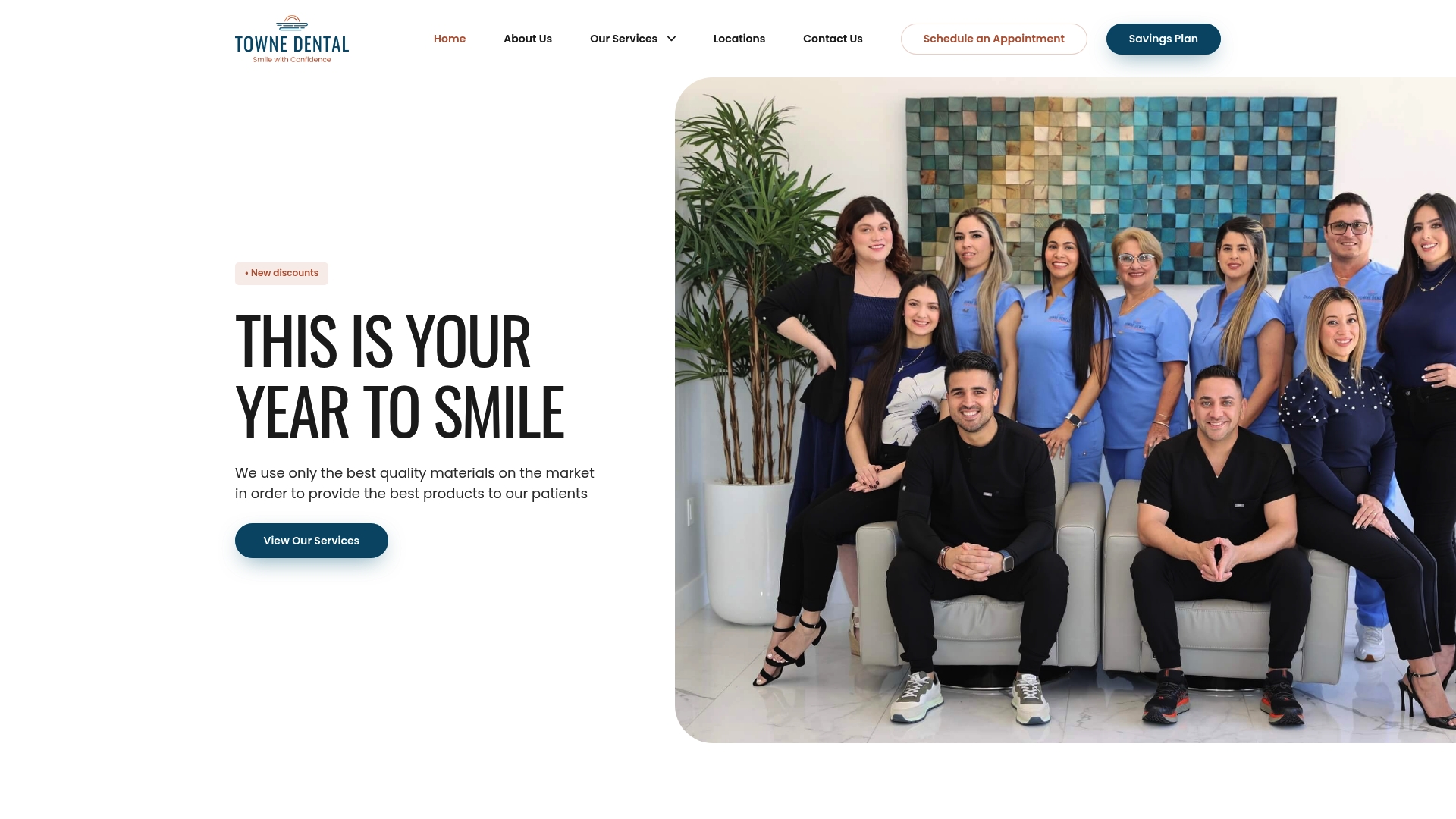
The team at Towne Dental builds individualized treatment plans that account for bone density, existing oral health, and aesthetic goals. Patients receive sedation options to keep the experience comfortable throughout a procedure that can span most of a day. If you are considering a full-arch restoration with zirconia cosmetic results that hold up for decades, scheduling a consultation at Towne Dental is the logical first step.
FAQ
How long do zirconia All-on-4 implants last?
Zirconia prostheses have an estimated lifespan of 20+ years, significantly longer than acrylic arches, which typically need replacement every 5–10 years. The underlying titanium implants can last a lifetime with proper maintenance.
What is the difference between zirconia and acrylic for All-on-4?
Zirconia is milled from a solid block, making it stronger, more stain-resistant, and more natural-looking than acrylic. Acrylic costs less upfront but wears faster and requires more frequent replacement.
How much do All-on-4 zirconia implants cost in Naples?
All-on-4 dental implants cost $14,000–$28,000 per arch in the United States in 2026, with the permanent zirconia prosthesis representing $6,000–$14,000 of that total. Full-mouth treatment for both arches runs $25,000–$50,000 or more.
How many dental visits does the All-on-4 process require?
The surgical day covers implant placement and temporary prosthesis fitting. Patients then attend 3–6 adjustment visits during healing, followed by the permanent zirconia fitting at the 3–6 month mark, plus ongoing six-month maintenance appointments.
Is the All-on-4 procedure painful?
The surgery is performed under sedation or general anesthesia, so patients feel no pain during the procedure. Post-surgical discomfort is managed with prescribed medication, and most patients report manageable swelling and soreness for the first 5–7 days.