A loose permanent tooth is never something to wait out. It usually points to gum disease, an old or new injury, or grinding that’s overloading the tooth, and it needs a dentist’s eyes on it soon rather than later. Skip the wiggling, stick to soft food, rinse with warm salt water, and call your dentist right away if you notice swelling, fever, or heavy bleeding. Getting checked early gives a dentist the best shot at saving the tooth instead of pulling it.
TL;DR:
- Most loose adult teeth result from gum disease, trauma, or bruxism, and early treatment can often save the tooth.
- A tooth completely knocked out requires urgent care within 30 minutes to an hour for the best chance of reimplantation.
- Treatment options vary from deep cleaning and splinting to surgical repair and, if necessary, extraction and replacement with implants or bridges.
- Non-urgent mobility should still prompt a prompt dental visit, especially if symptoms like swelling or bleeding are present.
- Preventive care, including good oral hygiene, regular cleanings, and addressing systemic health issues, is crucial to reduce risk.
Table of Contents
- What Causes a Loose Permanent Tooth in Adults?
- How Serious Is a Loose Tooth, and When Is It an Emergency?
- How Dentists Diagnose a Loose Tooth
- Treatment Options by Cause: What Actually Stabilizes a Loose Tooth
- What to Do Right Now, Before Your Dental Appointment
- Can You Prevent Loose Teeth? Prevention and Risk Reduction
- How a Loose Tooth Affects Daily Life and Confidence
- Towne Dental Perspective: Diagnosis and Treatment Done Right
- How Towne Dental Can Help With a Loose Tooth
- Sources
- FAQ
What Causes a Loose Permanent Tooth in Adults?
Gum disease sits at the top of the list. Periodontitis starts as plaque buildup, tips into infection, and slowly eats away the bone and ligament fibers that anchor a tooth in its socket. By the time you feel movement, meaningful bone loss has usually already happened, which is why dentists take mobility seriously even when it seems minor.
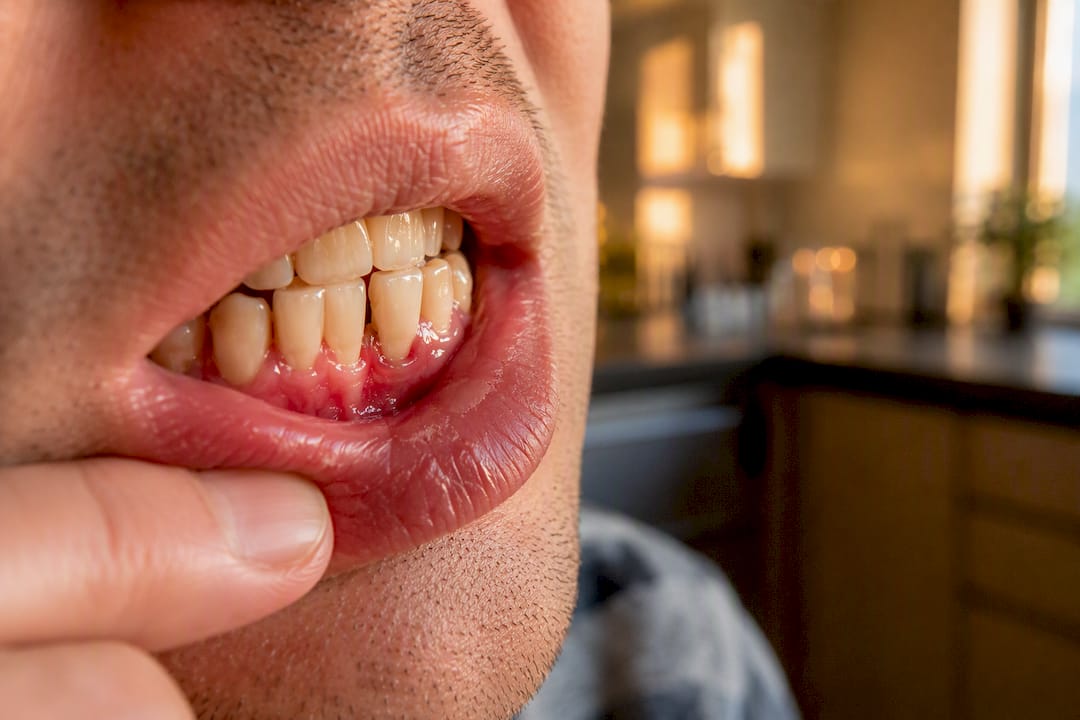
Trauma is the second big driver. A fall, a sports collision, or a car accident can loosen a tooth in its socket without knocking it out entirely, and the treatment window matters here just as much as it does for a fully avulsed tooth.
Grinding and clenching, known clinically as bruxism, put repeated force on teeth that were never designed to handle it. Over months or years, that overload can loosen a healthy tooth or a heavily restored one, especially around older crowns or bridges that no longer fit the bite correctly.
A few systemic and local factors round out the picture:
- Osteoporosis can reduce jawbone density, weakening the foundation teeth sit in.
- Diabetes, particularly when blood sugar runs high, speeds up gum infection and bone breakdown.
- Pregnancy hormones temporarily loosen the ligaments around teeth in some women, a condition sometimes called pregnancy gingivitis.
- Decay or abscess under a tooth or at the root tip can destabilize it from the inside out.
- Failing crowns or bridges shift load onto adjacent teeth and loosen the whole area over time.
How Serious Is a Loose Tooth, and When Is It an Emergency?
Not every loose tooth means a trip to the emergency room, but some situations can’t wait until Monday morning. Here’s how to sort urgent from non-urgent:
- Knocked-out tooth. A fully avulsed permanent tooth needs attention within 30 minutes to an hour for the best odds of successful reimplantation. Handle it by the crown only, rinse gently without scrubbing the root, and try to reinsert it or store it in milk on the way to care, following the same first-aid steps recommended for any dental avulsion.
- Severe pain, swelling, or fever. These often signal a spreading infection or abscess and call for same-day evaluation, since infection near the jaw can progress quickly.
- Uncontrolled bleeding or facial trauma. Heavy bleeding that won’t stop with steady pressure, or any injury involving the jaw structure itself, belongs in an emergency room or urgent dental clinic immediately.
- Mild mobility with no pain or swelling. This still deserves a prompt dental visit, just not necessarily a same-night one. Call your dentist’s office and describe the symptoms so they can triage appropriately.
How Dentists Diagnose a Loose Tooth
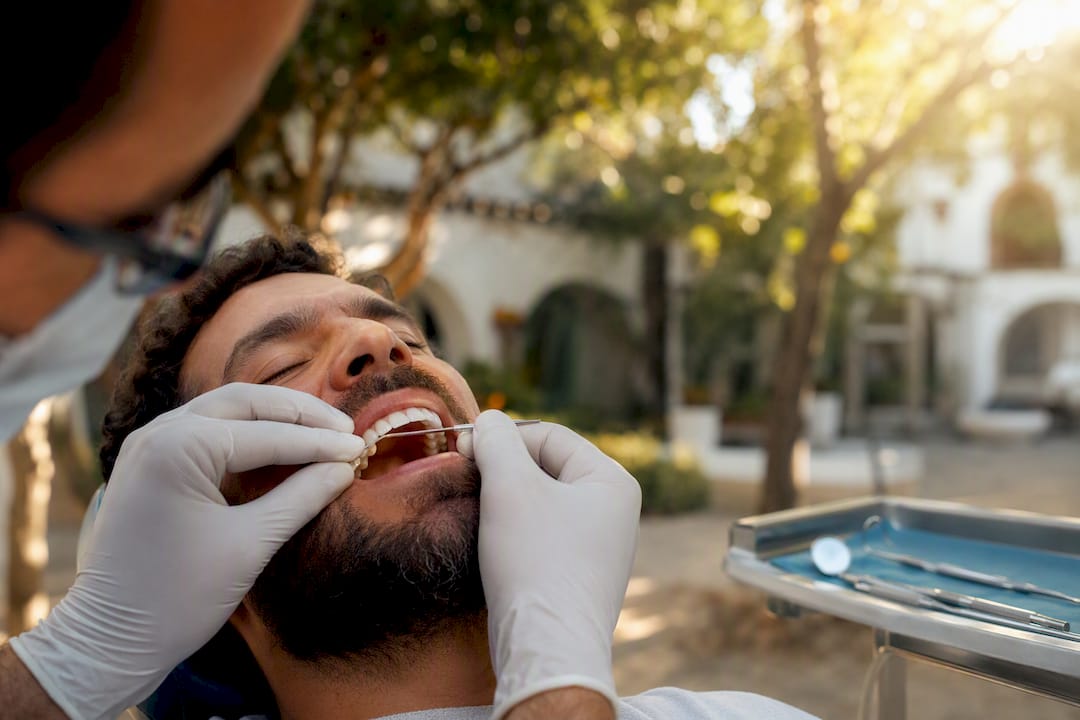
The exam starts with a simple physical test: your dentist grades mobility on a numeric scale, checking how much the tooth moves side to side and vertically. That single measurement tells them a lot about whether the problem is early-stage gum inflammation or advanced bone loss.
From there, expect:
- Periodontal probing, where a thin instrument measures pocket depths around each tooth to map how much attachment has been lost.
- Dental X-rays, which reveal bone height and any hidden decay, abscess, or fracture that isn’t visible by eye. Full 3D imaging (cone-beam CT) may come into play when surgery or implant planning is on the table.
- Vitality testing, checking whether the nerve inside the tooth is still alive, particularly after trauma.
- A full periodontal chart, documenting pocket depths across the whole mouth to catch disease elsewhere before it causes the same problem.
Your dentist will also ask about diabetes control, smoking history, osteoporosis medications, and pregnancy, since each of these changes how aggressively the gum tissue and bone respond to treatment.
Treatment Options by Cause: What Actually Stabilizes a Loose Tooth
Treatment always follows the diagnosis. A tooth loosened by early gum inflammation responds to very different care than one loosened by a cracked root or a blow to the face.
Non-surgical periodontal care comes first for gum-disease cases. Scaling and root planing clears tartar and bacterial buildup from below the gumline, letting inflamed tissue reattach to the tooth root. Antimicrobial rinses or localized antibiotics sometimes support this phase, followed by more frequent maintenance cleanings.
Splinting and bite adjustment address mechanical overload. A dentist bonds a loose tooth to its stable neighbors with a thin splint, taking pressure off it while the supporting tissue heals. Flexible splints that allow slight natural movement tend to work better than rigid ones, which can transfer harmful force if the periodontal support underneath is still weak. If grinding is the root cause, a custom night guard protects the tooth going forward.
Endodontic therapy (root canal treatment) becomes necessary when an internal infection at the nerve is driving the mobility rather than gum disease alone.
Surgical periodontal procedures step in when bone loss is advanced: flap surgery lets a periodontist clean deep pockets directly, and bone or soft-tissue grafting rebuilds lost support structure. Full periodontal evaluation and treatment are typically handled through a periodontics program built specifically for this stage of gum disease.
Extraction and replacement get recommended when a tooth has lost too much bone support to save predictably. Once infection is controlled, replacement options include:
- Dental implants, which fuse to the jawbone and function most like a natural tooth long-term.
- Bridges, which anchor to neighboring teeth without surgery into bone.
- Dentures, a removable option often used when multiple teeth need replacing.
Pro Tip: Never rush straight to an implant while infection is still active. Bone and gum tissue need to heal first, and placing an implant into infected or unstable bone shortens its lifespan significantly.
Outcomes hinge on two things: how much bone support remains and how quickly treatment starts. A tooth caught at grade one mobility with shallow pockets has a real shot at long-term retention. One with deep bone loss and grade three mobility is a much harder save, though a periodontist can still sometimes buy years with the right surgical approach.
What to Do Right Now, Before Your Dental Appointment
- Switch to a soft diet. Skip anything crunchy, chewy, or sticky, and chew on the opposite side of your mouth from the loose tooth.
- Rinse with warm salt water two to three times a day to reduce bacteria and calm mild inflammation around the gum line.
- Leave the tooth alone. Resist the urge to wiggle it with your tongue or fingers. Movement can worsen the injury to the surrounding ligament.
- Use over-the-counter pain relief as directed if discomfort is mild. Antibiotics are sometimes prescribed by a dentist if there’s active infection, but they’re not a substitute for treating the underlying cause.
- Do not attempt to splint or glue the tooth yourself. Household adhesives can damage the tooth and gum tissue and complicate professional treatment later.
- Do not wait if red-flag symptoms appear. Swelling, fever, severe pain, or a knocked-out tooth override every home-care step above. Get to a dentist immediately.
Can You Prevent Loose Teeth? Prevention and Risk Reduction
Most cases of adult tooth mobility trace back to gum disease, and gum disease is largely preventable with consistent care. Daily brushing paired with interdental cleaning, meaning floss or a water flosser, removes the plaque that periodontitis feeds on before it hardens into tartar.
Regular professional cleanings matter more than most people realize, particularly because early periodontitis often causes no pain at all. You can have significant bone loss brewing with zero symptoms until a tooth finally starts to shift.
Pro Tip: If you’ve been diagnosed with any stage of gum disease, ask your dentist about a three or four-month recall schedule instead of the standard six months. That extra visit catches problems while they’re still reversible.
Systemic health plays a bigger role than most patients expect. Smoking and poorly controlled diabetes both accelerate periodontitis progression, with an A1C above 7% associated with worse outcomes. Getting blood sugar under control and quitting smoking are two of the most effective things you can do for your gums, right alongside brushing and flossing.
For mechanical causes, protective appliances do real work:
- A custom night guard prevents grinding damage while you sleep.
- A sport mouthguard protects against trauma during contact activities.
- Adequate calcium and vitamin D support jawbone density, particularly relevant for anyone managing osteoporosis risk.
How a Loose Tooth Affects Daily Life and Confidence
A loose front tooth changes how people eat, talk, and smile long before it becomes a medical emergency. Patients often start avoiding certain foods entirely, apples, corn on the cob, crusty bread, not because a dentist told them to, but because they’re afraid of losing the tooth mid-bite. That fear tends to generalize, leading to a softer, more restricted diet that can affect nutrition over time.
The social piece is just as real. People with a visibly loose or shifting front tooth frequently report covering their mouth when they laugh, speaking less in group settings, or turning down invitations that involve eating in front of others. That’s a heavy toll for a problem that, caught early, is often manageable.
There’s also a quieter anxiety that builds between the moment someone notices mobility and the moment they get into a dental chair. Putting off that appointment, whether from cost concerns, fear of what the dentist will find, or simple busyness, tends to make the emotional weight worse, not better, since uncertainty is often harder to sit with than a clear diagnosis and a plan.
Towne Dental Perspective: Diagnosis and Treatment Done Right
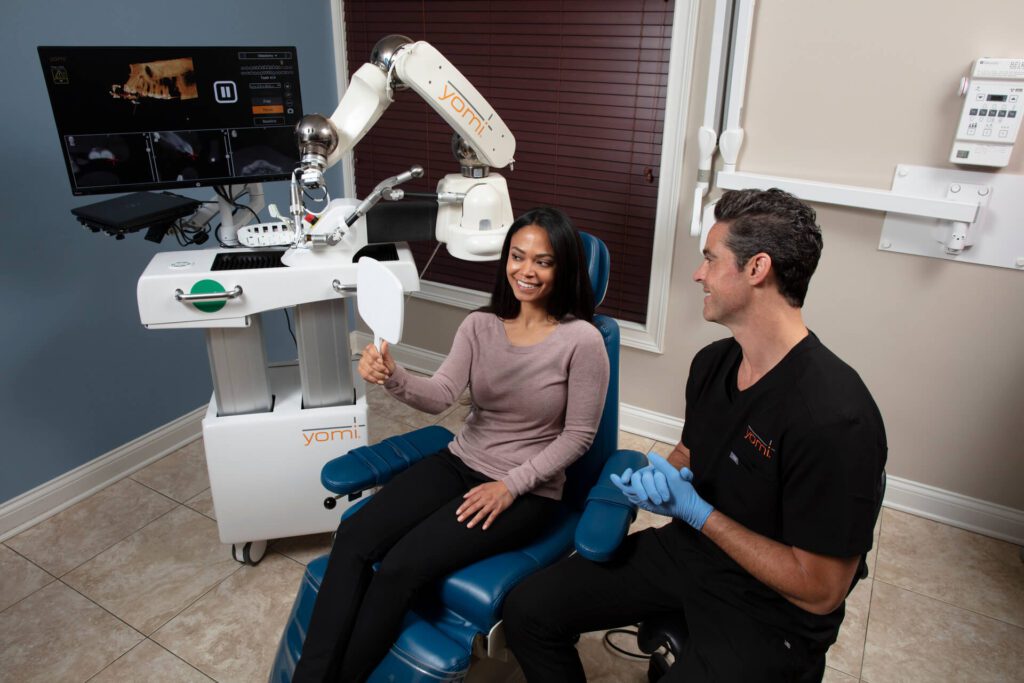
At Towne Dental, every loose tooth case starts with the same sequence: triage the urgency, diagnose the cause with probing and imaging, then build a treatment plan specific to that cause rather than a one-size-fits-all fix. Our team uses the Yomi Robot for guided implant placement when extraction and replacement are the right path, which allows for more precise, less invasive surgery once infection is controlled.
Patients typically see us for an initial exam and imaging in one visit, with a treatment sequence, and rough timeline, laid out before any procedure begins. Follow-up maintenance is built into the plan from day one, because stabilizing a tooth is only half the job. Keeping it stable is the other half.
— Towne Dental
How Towne Dental Can Help With a Loose Tooth
If you’re dealing with a loose tooth right now, the right move is a same-day evaluation, not another week of monitoring it yourself. Towne Dental offers emergency dental care for red-flag symptoms like swelling, fever, or a knocked-out tooth, alongside dedicated periodontics for gum-disease cases and oral surgery for extractions, grafting, or implant placement once infection is under control.

Our team grades mobility, checks pocket depths, and reviews imaging at the first visit, so you leave knowing exactly what caused the movement and what the plan looks like, whether that’s splinting, scaling and root planing, or a staged path toward an implant. Most insurance plans apply, and financing options are available for treatment that extends beyond a single visit. If mobility, pain, or swelling has you worried, schedule an evaluation with Towne Dental today rather than waiting to see if it gets better on its own.
Sources
FAQ
Will a loose tooth eventually tighten back up on its own?
No. A loose adult tooth doesn’t tighten on its own; it needs professional treatment such as scaling and root planing, splinting, or bite adjustment to stabilize, and delaying care usually lets the underlying cause progress.
How do you fix a loose adult tooth?
Treatment depends entirely on the cause: gum disease responds to deep cleaning and periodontal therapy, mechanical overload responds to splinting or a night guard, and advanced bone loss may require grafting or eventual extraction and replacement.
Should a loose tooth be pulled out in adults?
Not always. Extraction is usually reserved for teeth with severe bone loss or root damage that make long-term stabilization unlikely; many loose teeth caught early can be saved with periodontal or restorative treatment instead.
Why is my adult tooth suddenly loose?
Sudden mobility is most often caused by trauma, an abscess, or a failing crown or filling putting uneven force on the tooth, though undiagnosed gum disease can also surface abruptly once bone loss reaches a tipping point.