A loose implant crown is usually not a medical emergency, but it is not something to wait out either. The single most important step is to stop chewing on that tooth right away and call your dentist for same-day guidance. Signs such as severe swelling, fever, uncontrollable pain, or movement of the implant itself may indicate a need for prompt dental evaluation.
TL;DR:
- Screw loosening is the most common technical issue and often resolves with a simple re-torque during a quick dental visit.
- Biological problems like peri-implantitis are less common but require immediate attention to prevent bone loss and implant failure.
- Avoid attempting DIY fixes with household adhesives, and contact your dentist promptly if you experience severe pain, swelling, or crown dislodgement.
- Using CBCT imaging and guided procedures improves screw localization and reduces risk during repairs, especially when implant records are unclear.
- Regular follow-up care, including professional cleanings and occlusion adjustments, can significantly reduce the chances of crown loosening or future complications.
Table of Contents
- Symptoms that mean your crown has come loose
- Mechanical vs biological causes of a loose implant crown
- Immediate steps to take while you wait for your appointment
- What your dentist will actually do to diagnose and fix it
- How much repair costs and how long it takes
- Preventing a loose crown from happening again
- How we diagnose and repair a loose implant crown at Towne Dental
- Why we treat a loose crown as urgent, not emergency
- Get your loose crown checked at Towne Dental
- FAQ
- Sources
Symptoms that mean your crown has come loose
The easiest way to check is gentle: run your tongue over the tooth or press lightly with a clean finger. Never pry at it with a fork, pencil, or anything else, since that can snap a screw or chip the crown further.
Watch for these signs:
- A rocking or wiggling feeling when you bite down or touch the tooth.
- Pain specifically when chewing on that side.
- Food packing between the crown and the gum more than usual.
- A persistent bad taste or odor coming from that spot.
- Bleeding, redness, or puffiness in the gum tissue around the implant.
If the gum around the implant looks swollen and the swelling seems to be spreading, or if you feel the implant post itself shifting rather than just the crown, that points toward implant-level instability rather than a simple loose restoration, and it needs a dentist’s eyes sooner rather than later.
Mechanical vs biological causes of a loose implant crown
Loose crowns generally result from mechanical hardware issues or biological problems affecting the implant’s supporting tissues and bone.
Mechanical causes include:
- A loosened abutment or prosthetic screw, which is a common technical complication with implant crowns.
- A fractured or worn retention screw that can no longer hold torque.
- Cement failure or a cracked crown, especially on cement-retained restorations.
- Uneven biting forces (occlusal overload) putting repeated stress on one spot.
Biological causes are less common but more serious: peri-implantitis (infection around the implant), bone loss, or a failed bond between the implant and bone. A systematic review of single-implant restorations found that screw loosening is rare when proper anti-rotational design and torque are used, yet it remains the most frequently cited technical complication in the literature. Retention type matters too: a meta-analysis comparing screw-retained and cement-retained crowns found screw-retained restorations tend to have fewer biological complications, including less early marginal bone loss, while cement-retained crowns carry a higher risk when excess cement is left behind under the gum.
Immediate steps to take while you wait for your appointment
What you do in the first hour or two makes a real difference in whether this stays a simple fix.
- Stop chewing on the affected side and switch to soft foods until you’re seen.
- Rinse gently with warm salt water to reduce irritation and clear debris.
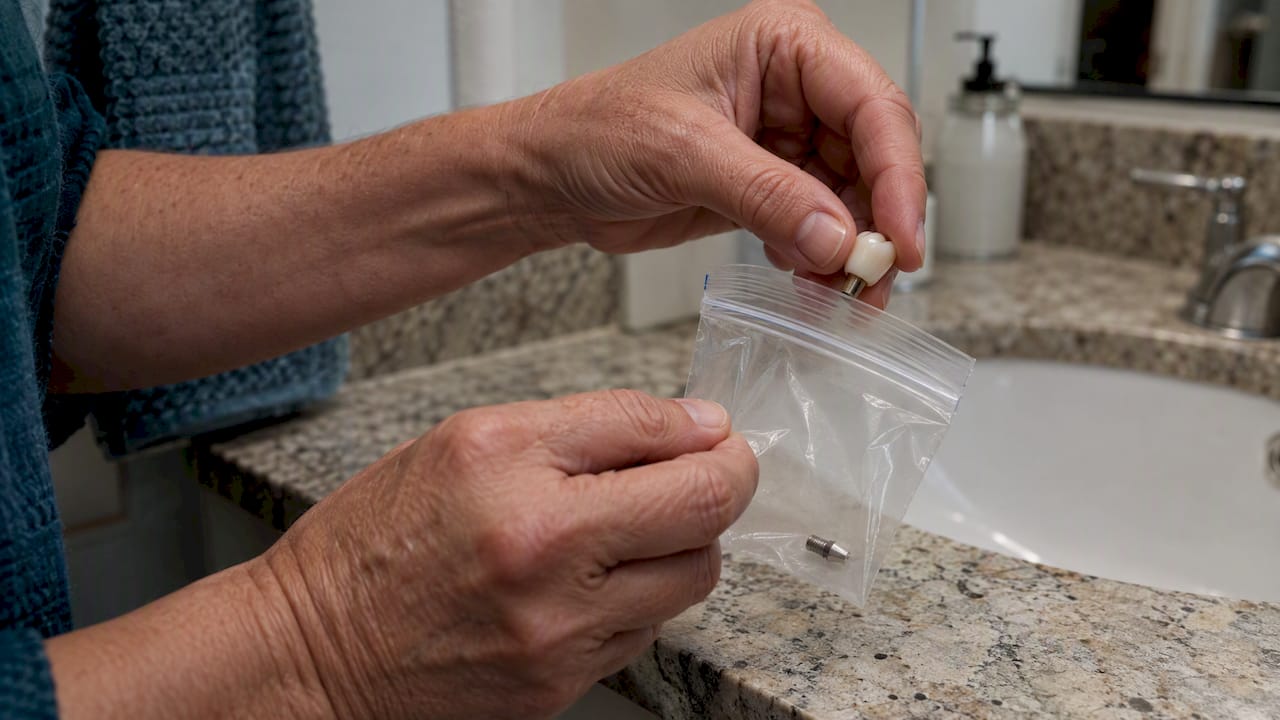
- Save any pieces that break off (crown fragments, screws) in a small container and bring them to your appointment.
- Call your dental office the same day to describe what you’re feeling and ask whether you need to be seen immediately.
- Avoid touching or wiggling the tooth more than necessary, since repeated movement can worsen a loose screw or crack a weakened crown.
Never try to re-glue a crown yourself with household adhesives or denture cement. Patient guidance from dental organizations warns that DIY fixes often make the restoration harder to retrieve later, sometimes turning a simple screw re-torque into a full crown remake. Seek same-day or emergency care if you have severe pain, swelling that’s spreading into your cheek or jaw, fever, or if the crown feels at risk of coming loose entirely and being swallowed or inhaled.
Pro Tip: Keep any loose piece in a small zip bag rather than your pocket. It helps your dentist see exactly what broke and often speeds up the repair.
What your dentist will actually do to diagnose and fix it
Your dentist starts with a clinical exam, checking for movement, biting patterns, and gum health. An x-ray, often a periapical image or a CBCT scan, helps locate the screw position and check the bone around the implant. If you have records from your original implant placement, bringing them along speeds things up considerably.
From there, treatment depends on what’s actually wrong:
- If a screw has simply backed out, re-torquing it to the correct specification often solves the problem in one visit.
- A fractured screw usually needs to be removed and replaced with a new one.
- A cemented crown that’s come loose may be removed and re-cemented, or remade if it’s cracked or worn.
- If infection or bone loss is present, your dentist will need to clean the area (debridement) and treat the peri-implantitis before addressing the restoration itself.
An in vitro study on screw localization found that CBCT imaging combined with guided drilling improved the ability to find and access screws through cemented crowns without unnecessary damage, which matters when implant records are missing or unclear. In rarer cases involving significant bone loss or failed osseointegration, a specialist may need to consider grafting or, occasionally, implant removal. Acting quickly lowers the odds you’ll ever reach that point.
How much repair costs and how long it takes
A simple screw re-torque or re-cementing a crown that’s still in good shape can often be handled the same day, usually at the lower end of the cost spectrum since no lab work is involved.
Costs climb when more is needed:
- CBCT imaging adds a diagnostic fee beyond a standard x-ray.
- A remade crown requires lab fabrication time, typically adding days to weeks.
- Replacing an implant component (abutment or screw) adds parts and labor.
- Treating peri-implantitis or performing bone grafting involves additional visits and a longer healing timeline.
A literature review on abutment screw loosening lists occlusion, implant connection type, and torqueing technique among the main contributing factors, which is part of why no two repairs cost or take exactly the same amount of time. Ask your dental office for a written estimate before treatment, and ask whether your implant components carry any manufacturer warranty that could offset replacement costs.
Preventing a loose crown from happening again
Most future problems are preventable with routine follow-up rather than anything dramatic.
- Keep regular recall visits where your dentist checks implant stability and screw torque.
- Get professional cleanings designed for implants, since plaque around the gumline contributes to peri-implantitis.
- Use interdental brushes or soft picks daily, along with an antimicrobial rinse if your dentist recommends one.
- Wear a nightguard if you grind your teeth, since repeated clenching overloads the screw and crown over time.
Discuss with your dentist which retention method—screw or cement—is best suited for your bite and whether occlusion adjustments could help distribute chewing forces more evenly.
Pro Tip: If you grind your teeth at night, mention it at every checkup. A properly fitted nightguard is one of the cheapest ways to protect an implant crown long term.
How we diagnose and repair a loose implant crown at Towne Dental
When a loose crown comes into our office, we start the same way every time: a clinical exam followed by imaging, including CBCT when we need to see screw position or bone levels clearly. Correctly identifying the implant and abutment components matters, since using the wrong part during a repair can damage the connection rather than fix it.
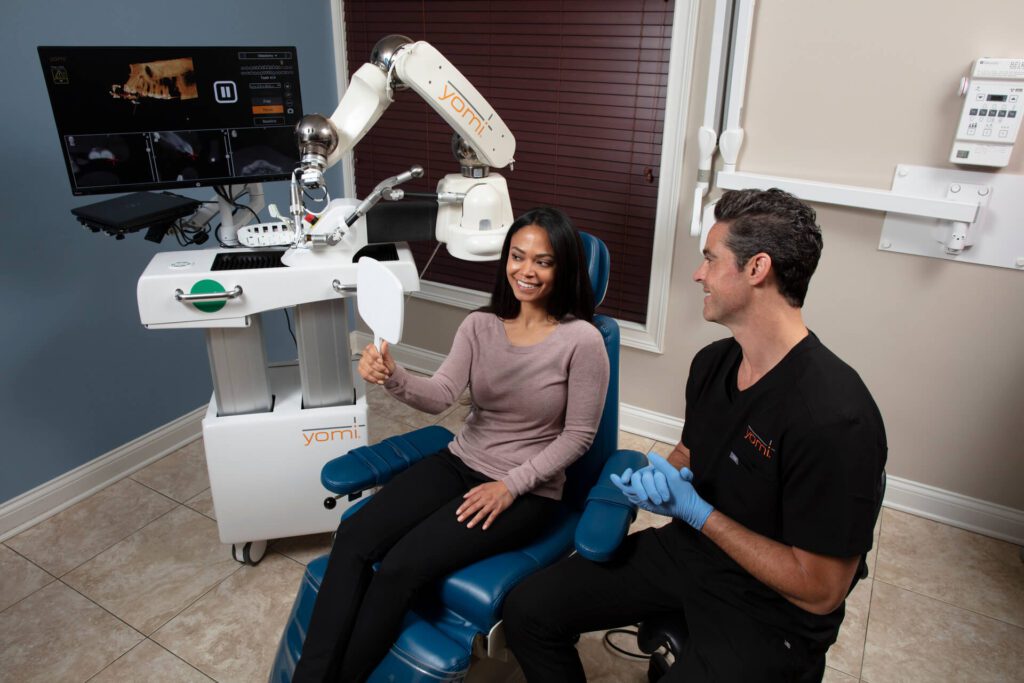
For implant placement itself, we use advanced robot-assisted technology, which is designed to support precise, less invasive procedures. Once we’ve confirmed what’s happening with your crown, we walk you through whether a repair or remake makes more sense before any work begins.
Why we treat a loose crown as urgent, not emergency
Most loose implant crowns can be repaired without losing the implant when patients call promptly instead of waiting. Delaying care raises the odds of a screw fracturing under continued use, or of untreated irritation turning into infection and bone loss. If something feels off, reach out to your dental office the same day.
— Towne Dental
Get your loose crown checked at Towne Dental
If your crown feels loose, we offer same-day triage so you’re not left guessing about what’s wrong or how serious it is. Our emergency dentistry services are built for exactly this kind of situation, and for implant cases, we use advanced robot-assisted technology to support a precise, less invasive approach to diagnosis and repair.

- Call or book online through our main appointment page to get seen quickly.
- Bring any loose crown pieces with you so we can assess the exact repair needed.
- Ask about our oral surgery services if your case involves implant-level concerns beyond the crown itself.
This article is general information, not a substitute for advice from a qualified doctor. Consult a qualified healthcare professional about your own circumstances before acting on anything here.
FAQ
How to fix a loose implant crown?
Treatment depends on the cause: a loosened screw is usually re-torqued, a fractured screw is replaced, and a cemented crown may be re-cemented or remade. Your dentist will take an x-ray or CBCT scan first to confirm what’s wrong before choosing a repair method.
How much does it cost to tighten an implant crown?
Costs vary by what’s needed. A same-day screw re-torque is typically the lowest-cost fix, while a remade crown or treatment for infection adds lab work, imaging, and additional visits. Ask your dental office for a written estimate and whether any implant components are still under warranty.
How long should a crown last on an implant?
With proper care, implant crowns typically last many years, although technical issues such as screw loosening are common complications over time. Regular recall visits and good hygiene around the implant help extend how long the restoration performs well.
Is it normal for an implant crown to wiggle?
A wiggling or rocking crown is not normal and usually signals a loosened screw or failed cement, not something to ignore. It is rarely a sign of outright implant failure, but it should be checked promptly to prevent the screw from fracturing or the issue from worsening.
Sources
- Abutment screw loosening in single-implant restorations: a systematic review
- Evaluating complications, success rate, and marginal bone loss in cement- versus screw-retained single implant-supported zirconia crowns: a systematic review and meta-analysis