Dental sealants typically last several years under normal wear, though many hold up well beyond that and some studies track protection lasting close to a decade. The CDC reports sealants cut cavities in back teeth by a high percentage in the first two years, with some reduction in protection after four years. That’s not a countdown to failure. It’s a reason to get sealants checked at every regular dental visit, since a dentist can spot early wear and reseal a tooth before decay ever gets a foothold.
Key Takeaways
Sealants typically protect teeth for several years and sometimes much longer, but their real value depends on regular dental checks that catch wear before decay sets in.
| Point | Details |
|---|---|
| Typical lifespan | Most sealants last several years, with some studies showing protection lasting up to nearly a decade. |
| Effectiveness declines gradually | Sealants prevent about 80% of cavities at 2 years and 50% at 4 years, per CDC data. |
| Material and technique both matter | Resin-based sealants generally retain better than glass ionomer when moisture control is solid during placement. |
| Watch for chips, stains, and gaps | Visible wear or trapped food near a sealant means it’s time for a dentist to check the margins. |
| Towne Dental checks sealants at every recall | Towne Dental inspects and reseals sealants as part of routine visits, catching wear before it becomes decay. |
This article is general information, not a substitute for advice from a qualified doctor. Consult a qualified healthcare professional about your own circumstances before acting on anything here.
Table of Contents
- What Are Dental Sealants and How Do They Work?
- How Long Do Sealants Last, According to the Research?
- What Factors Affect How Long a Sealant Lasts?
- What Are the Signs a Sealant Needs Repair?
- How Do You Make a Sealant Last Longer?
- Who Benefits Most From Sealants, and When?
- How Towne Dental Monitors and Repairs Sealants
- Does Chlorine or Acidic Food Wear Down Sealants Faster?
- Do Sealants Last Longer on Some Teeth Than Others?
- What Does Sealant Application and Reapplication Typically Cost?
- Editorial Take: What Parents Get Wrong About Sealant Timelines
- Get Your Sealants Checked at Towne Dental
- Sources
- FAQ
What Are Dental Sealants and How Do They Work?
A sealant is a thin plastic or resin coating painted onto the chewing surfaces of molars and premolars, the teeth with deep grooves where food and bacteria love to hide. Once it is applied and hardened with a curing light, it acts as a physical shield, blocking the pits and fissures that a toothbrush bristle often can’t fully reach.
Some sealant materials also release fluoride over time, giving the tooth an extra layer of chemical defense on top of the physical barrier. How long that shield holds depends heavily on two things readers don’t always think about:
- Tooth anatomy: deeper, narrower grooves make it harder to get a sealant to bond evenly across the whole surface.
- Eruption status: a molar that’s only partially emerged is harder to isolate and dry completely, which affects how well the sealant sticks from day one.
That second point matters more than most people realize, and it explains why two kids getting sealants in the same week can end up with very different outcomes.
How Long Do Sealants Last, According to the Research?
The honest answer is: longer than most patients expect, but with real variation across studies. The CDC’s data shows sealants preventing about 80% of cavities at the two year mark and roughly 50% at four years, and some longitudinal research tracks meaningful protection running as far out as nine years in select cohorts.
That’s a wide range, and the reason comes down to how the studies were designed, not because sealants are unpredictable.
Why the numbers vary so much:
- Some studies follow patients in supervised clinical settings with ideal isolation; others track school-based sealant programs where conditions are less controlled.
- Materials differ across studies, resin-based sealants generally outperform glass ionomer in laboratory bond-strength testing, according to a PLOS One study on sealant materials.
- Follow-up intervals differ. A study that only checks in at year two will report different retention numbers than one that follows patients for five years.
The MMWR Vital Signs report on school-aged children backs this up, showing sealants delivered through school programs still prevented roughly 81% of decay at two years and 50% at four years, numbers nearly identical to clinic-based data. In practice, most dental clinics plan around a 3 to 5 year review window, checking sealants at every recall visit rather than assuming a fixed expiration date. A review published in Frontiers found resin sealants can maintain a meaningful preventive fraction out to five years when retention holds, reinforcing that retention, not time alone, drives how much protection a sealant delivers.
What Factors Affect How Long a Sealant Lasts?
Material choice sets the ceiling for how long a sealant can realistically last, but technique and behavior decide whether it actually gets there.
Material matters more than most patients assume. Resin-based sealants generally show stronger bond strength and lower microleakage than glass ionomer sealants, particularly when the tooth stays dry during placement. Glass ionomer sealants release fluoride more readily and tolerate moisture better, which makes them useful for partially erupted teeth, but they tend to wear faster under chewing pressure.
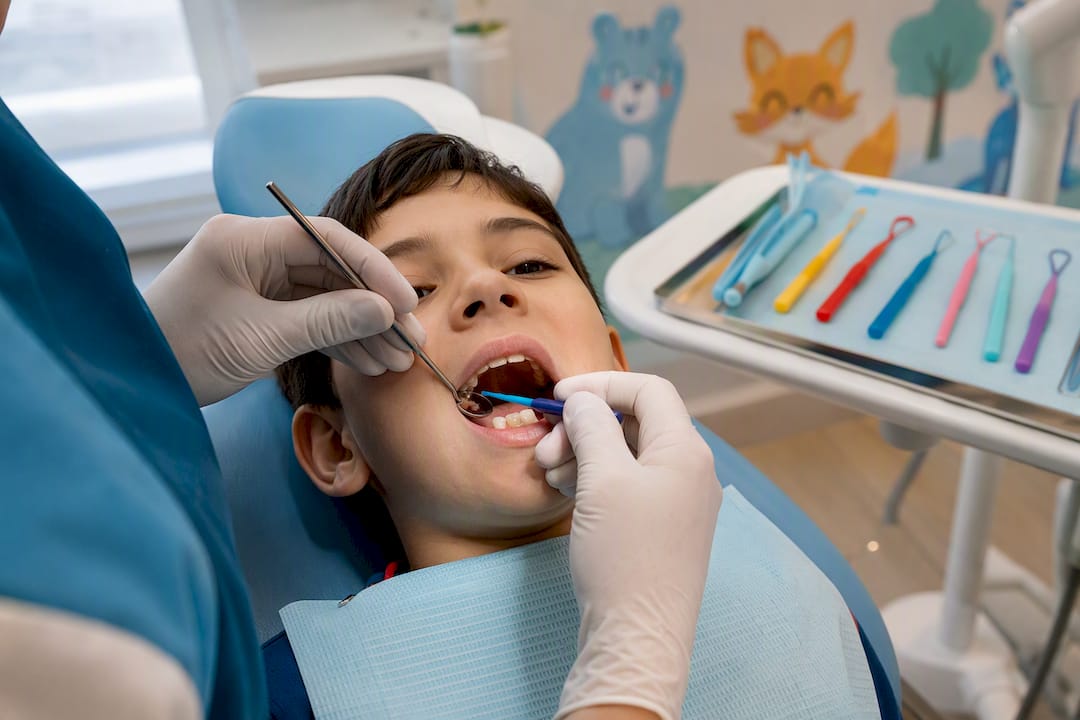
Technique can make or break retention before the patient even leaves the chair. Moisture control is the single biggest variable. Saliva contamination during etching or bonding is one of the most common causes of early sealant failure, and it’s largely avoidable with rubber dam isolation or high-volume suction. The ADA notes that etching with 37% phosphoric acid combined with careful isolation is standard practice precisely because it improves how well the material bonds.
Patient behavior plays its own role, too:
- Bruxism (teeth grinding) wears sealants down faster than normal chewing ever would.
- Chewing ice, pen caps, or fingernails puts direct mechanical stress on the sealed surface.
- A diet heavy in sticky or acidic foods can erode the margins where the sealant meets the tooth.
- Inconsistent brushing lets plaque build up at the sealant’s edges, weakening the bond over time.
Field and school-based programs also face a practical hurdle clinics don’t: less control over positioning and moisture during placement, which is part of why retention rates can look slightly lower in those settings.
Pro Tip: If your dentist mentions “isolation” during a sealant appointment, that’s not small talk. It’s the single biggest factor in whether your sealant survives its first year.
What Are the Signs a Sealant Needs Repair?
A failing sealant rarely announces itself with pain. It shows up as small, physical changes a dentist is trained to catch during a routine exam.
- Visible chips or rough spots. A sealant that once felt smooth develops a jagged edge or a visible crack in the material.
- Staining at the margins. Dark lines forming where the sealant meets the tooth can signal that the seal has broken and bacteria are getting underneath.
- Food trapping in the grooves. If floss or a toothpick keeps catching in a spot that used to feel smooth, part of the sealant has likely worn away.
- A gap the dentist can feel with a probe. Even when a sealant looks intact, a dental explorer can detect a lifted edge invisible to the naked eye.
When any of these show up, the fix is usually simple: a spot repair or a full reseal. Decay only comes into play if the gap has gone unnoticed long enough for bacteria to work underneath, which is exactly why recall visits matter more than any at-home check.
How Do You Make a Sealant Last Longer?
Sealant longevity is mostly a maintenance problem, not a materials problem. The daily habits patients control end up mattering as much as what the dentist applied.
- Brush twice daily with fluoride toothpaste. It reinforces the tooth surface around the sealant’s edges.
- Floss around sealed teeth. Trapped debris at the margins is one of the earliest places sealants start to fail.
- Avoid chewing on ice, pens, or fingernails, since sealants aren’t designed to absorb repeated hard impacts.
- Ask your dentist directly about their reseal policy at your next regular checkup, some clinics build sealant checks into every recall visit at no extra charge.
- Consider a nightguard if you grind your teeth, since bruxism is one of the fastest ways to wear down a sealant prematurely.
- Ask about professional fluoride treatments, which pair naturally with sealants for kids at higher cavity risk.
None of this requires a special routine. It’s the same oral hygiene your dentist has always recommended, just applied with a little more attention to the back teeth.
Who Benefits Most From Sealants, and When?
Timing tracks tooth eruption more than age on a birthday calendar. First molars typically come in around age 6, and second molars follow around age 12, both moments when a dentist will usually recommend sealants if the grooves are deep enough to trap food and plaque.
Certain groups see outsized benefit:
- Children with a higher cavity risk, whether from diet, genetics, or limited access to fluoridated water.
- Kids whose molars have unusually deep pits and fissures, visible on a routine exam.
- Anyone without consistent daily fluoride exposure, where the sealant’s barrier effect carries more weight.
Adults aren’t automatically excluded. Some adults with deep, cavity-prone grooves or a history of decay in similar teeth can still benefit from sealants, though the clinical decision leans more on individual risk factors than a standard age cutoff. A dentist evaluating an adult for sealants will weigh existing fillings, grinding habits, and past cavity history before recommending one.
How Towne Dental Monitors and Repairs Sealants
Every recall visit at Towne Dental includes a visual and tactile check of existing sealants, not just a glance, an actual probe of the margins to catch lifting before it turns into decay. Patients get a straightforward reseal recommendation when wear shows up, paired with a clear explanation of what insurance typically covers.
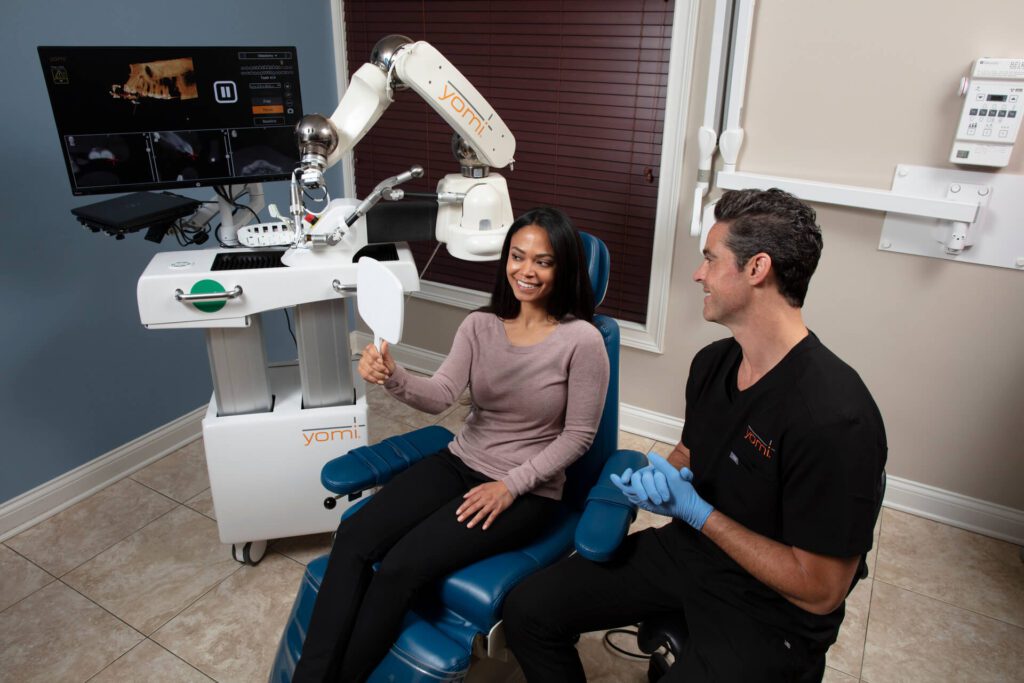
Towne Dental’s approach leans on comprehensive services and modern tools like the Yomi® Robot for advanced procedures, paired with tailored treatment plans and anxiety reduction techniques that make routine visits, including sealant checks, feel low stress rather than clinical and cold.
Reseal appointments are quick, usually comparable in length to the original sealant placement, and rarely require anesthesia unless decay has already set in underneath.
Does Chlorine or Acidic Food Wear Down Sealants Faster?
Sealants sit in an environment that’s more chemically hostile than most patients realize, and acidic exposure is one of the more overlooked threats to their lifespan. Soda, citrus juice, sports drinks, and wine all lower the pH in the mouth temporarily, and repeated acid exposure can gradually erode the margins where a sealant bonds to the tooth. This doesn’t dissolve the sealant outright, but it weakens the seal over months and years of frequent exposure, creating tiny gaps where bacteria can eventually settle in.
Chlorine exposure gets asked about less often but deserves attention too, particularly for competitive swimmers. Pool water with heavily chlorinated, low pH conditions has been associated with a phenomenon dentists call “swimmer’s calculus,” a brownish surface buildup that can affect enamel and, by extension, the surfaces sealants are bonded to. The effect is more pronounced with frequent, prolonged pool exposure, several hours a week over a competitive season, rather than occasional recreational swimming.
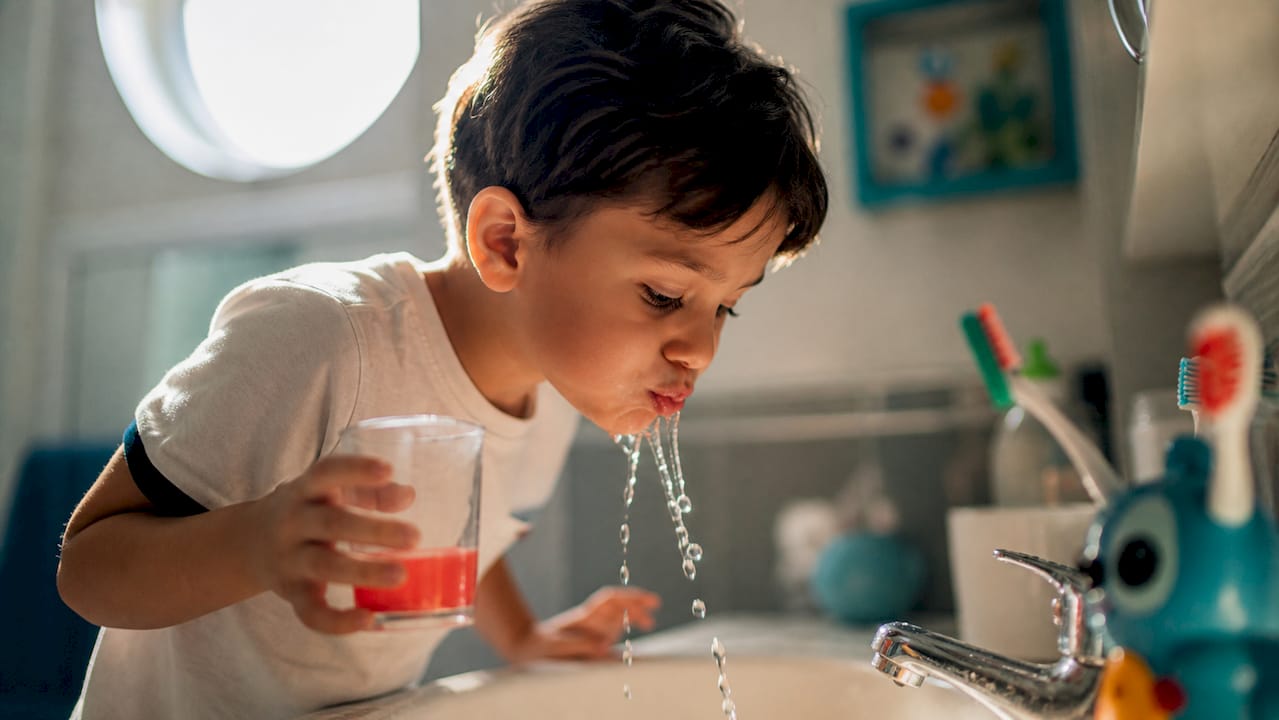
The practical takeaway isn’t to eliminate soda or swimming. It’s to rinse with water after acidic drinks when brushing isn’t immediately possible, and to bring up pool frequency with your dentist if you or your child swim competitively. That context helps a dentist decide whether to check sealants more frequently than the standard recall schedule, since chronic acid or chlorine exposure can shorten the practical lifespan of an otherwise well-placed sealant.
Do Sealants Last Longer on Some Teeth Than Others?
Molars and premolars aren’t equally vulnerable, and neither are primary and permanent teeth, which is why a one-size-fits-all lifespan estimate doesn’t hold up well in practice.
Primary (baby) molars carry sealants for a shorter functional window simply because those teeth are eventually replaced. A sealant placed on a primary molar at age 5 or 6 doesn’t need to last a decade, it needs to protect the tooth until it’s naturally shed, typically within a few years. Permanent molars, especially the first molars that erupt around age 6, carry a much longer expected service life since that tooth is meant to last a lifetime.
Tooth position matters too. First molars tend to have deeper, more irregular grooves than premolars, which can make full sealant coverage slightly harder to achieve and maintain. Second molars, erupting around age 12, often see slightly better retention rates in clinical data, partly because placement technique and patient cooperation tend to improve as kids get a few years older and more comfortable in the dental chair.
Adults getting sealants for the first time, often on premolars with unusually deep fissures, tend to see comparable retention to adolescent patients as long as isolation and technique are solid. Tooth type is one variable, but it works alongside eruption status and moisture control rather than overriding them.
What Does Sealant Application and Reapplication Typically Cost?
Sealant costs vary by provider, location, and how many teeth need coverage, but understanding the general cost structure helps set realistic expectations before a visit. Initial placement is typically billed per tooth, and many dental insurance plans cover sealants for children at little to no out-of-pocket cost, since insurers recognize sealants as a preventive measure that reduces the far higher cost of future fillings.
Reapplication or repair, when a sealant chips or partially wears away, generally costs less than the original placement since it’s a smaller, more targeted procedure. Full replacement of a sealant that’s failed completely runs closer to the original placement fee, since the tooth needs to be cleaned, re-etched, and resealed from scratch.
The financial logic favors staying on top of maintenance. A reseal costs a fraction of what a filling does, and a filling costs a fraction of what a crown or root canal runs if decay is left untreated long enough to reach the tooth’s inner layers. Patients weighing whether sealants are “worth it” financially should think less about the upfront cost and more about the downstream expense sealants are designed to prevent. Ask your provider directly about reseal pricing and whether your insurance plan treats it the same as initial placement, policies on this vary more than patients expect.
Editorial Take: What Parents Get Wrong About Sealant Timelines
The biggest misconception is treating sealant lifespan like a warranty with a hard expiration date. It isn’t. The CDC’s own data shows meaningful protection tapering gradually from 80% to 50% over four years rather than falling off a cliff, and some sealants keep working well past that window. Conventional advice often stops at “get sealants around age 6 and 12” and leaves it there, without emphasizing that ongoing monitoring matters more than the initial application.
What actually predicts a good outcome is less glamorous than the sealant material itself: whether the tooth was properly isolated during placement, and whether someone is actually checking the margins every six to twelve months afterward. A great sealant with no follow-up care will eventually fail quietly. A mediocre one caught early and resealed promptly can protect a tooth for years longer than expected.
If there’s one priority for parents and adults alike, it’s this: stop asking “how long will this last?” and start asking “who’s checking it, and how often?” That question does more for long-term protection than any specific brand or material ever will.
— Towne Dental
Get Your Sealants Checked at Towne Dental
Sealants only work as long as someone is paying attention to them, and that’s exactly what routine care at Towne Dental is built around. Rather than waiting for a chip or a cavity to force an appointment, Towne Dental checks sealant margins at every recall visit as part of its general dentistry services, catching wear early enough that a quick reseal handles it instead of a filling.
For families juggling school schedules and sports seasons, or adults who just want a clear answer about whether their sealants are still doing their job, Towne Dental’s team walks through what a reseal appointment actually involves and what your insurance is likely to cover before any work begins. If it has been more than a year since your last sealant check, or you’ve never had one done, book an evaluation with Towne Dental and get a straight answer about where your teeth stand.
Sources
- Dental Sealant Facts | Oral Health | CDC
- The effects of material type, salivary contamination and adhesive application on the performance of pit and fissure sealants | PLOS One
- A concise review of dental sealants in caries management | Frontiers
- Dental sealants | ADA
FAQ
Can Cavities Grow Under Sealants?
Yes, if a sealant develops a gap or chip and bacteria get trapped underneath, decay can form unnoticed since the sealant hides it from view. That’s why dentists probe sealant margins at recall visits rather than relying on a visual check alone.
Do Sealants Wear Off Over Time?
Yes, sealants gradually wear down from chewing, grinding, and daily acid exposure, which is why the CDC’s effectiveness data shows protection dropping from about 80% at two years to 50% at four years rather than staying constant.
What Are the Downsides of Dental Sealants?
The main downsides are the need for periodic monitoring and occasional resealing, plus the small risk of moisture contamination during placement reducing how well the material bonds initially. Sealants also only protect the chewing surfaces they cover, not the sides of teeth or areas between them.
Do Kids Really Need Sealants on Their Teeth?
Sealants are especially valuable for children with deep molar grooves or a higher cavity risk, since they add a protective barrier exactly where a toothbrush struggles to reach. Not every child needs them, but a dentist can assess fissure depth and risk factors during a routine exam at Towne Dental to make that call.