A fluoride treatment at the dentist is a high-concentration topical fluoride application, typically a varnish, gel, or foam, that a clinician applies directly to your teeth to remineralize enamel and reduce your risk of cavities. It takes under five minutes and costs far less than filling a cavity.
The people who benefit most include:
- Children under dental supervision, especially those with early signs of decay
- Adults with high cavity risk, including people with dry mouth, recent cavities, or limited access to fluoridated water
- Orthodontic patients, whose brackets and wires create hard-to-clean spots where decay starts
- Patients with exposed root surfaces from gum recession or periodontal disease
The CDC confirms that professional fluoride is safe and effective when used as directed, and the American Dental Association (ADA) recommends risk-based intervals for professional applications. Towne Dental offers fluoride treatments as part of both general and pediatric dentistry services.
Table of Contents
- What is fluoride and why do dentists use it?
- How fluoride strengthens your teeth and what the evidence shows
- What types of professional fluoride are there, and what happens at the appointment?
- Who should get professional fluoride treatments?
- What are the risks and side effects?
- How often should you get professional fluoride?
- What does professional fluoride cost, and does insurance cover it?
- Is a fluoride treatment worth it? A quick decision checklist
- What to expect at Towne Dental for a fluoride treatment
- Key Takeaways
- The case for fluoride is stronger than most patients realize
- Towne Dental’s preventive care is ready when you are
- FAQ
What is fluoride and why do dentists use it?
Fluoride is a naturally occurring mineral that strengthens tooth enamel by promoting remineralization and slowing the growth of cavity-causing bacteria. It works two ways in the body: systemically (ingested through fluoridated water, food, or supplements to strengthen developing teeth from the inside) and topically (applied directly to tooth surfaces to reinforce existing enamel).
The reason dentists use professional-grade fluoride rather than relying on your toothpaste alone comes down to concentration. Standard fluoride toothpaste contains fluoride at typical over-the-counter levels. The AAPD’s best practice statement identifies 5% sodium fluoride varnish as the preferred professional agent for children under 6, and that varnish contains a much higher concentration of fluoride than toothpaste. That is a meaningful difference.

| Product type | Fluoride concentration | Application method | Who controls it |
|---|---|---|---|
| OTC fluoride toothpaste | 1,000–1,500 ppm | Self-applied | Patient |
| Prescription fluoride toothpaste | ~5,000 ppm | Self-applied | Patient (Rx) |
| Professional fluoride varnish (5% NaF) | 22,600 ppm | Clinician-applied | Dentist/hygienist |
| Professional APF gel | 12,300 ppm | Clinician-applied | Dentist/hygienist |
Because office concentrations are so much higher, clinician control over the application limits how much fluoride is swallowed. That is the core safety argument for keeping professional fluoride in the dental chair rather than on a pharmacy shelf.
How fluoride strengthens your teeth and what the evidence shows
Fluoride works by two mechanisms that reinforce each other. First, it promotes remineralization: when acids from bacteria dissolve minerals out of enamel, fluoride draws calcium and phosphate back into the enamel surface, rebuilding it stronger than before. Second, it directly inhibits the bacteria (primarily Streptococcus mutans) that produce those acids in the first place.
The clinical benefits are well-documented:
- Reduced cavity incidence. Cochrane-style and clinical reviews consistently show that professionally applied topical fluoride reduces caries incidence in both children and adults, with the strongest effects in higher-risk populations.
- Arrest of early lesions. Fluoride can stop a white-spot lesion, the earliest stage of decay, before it becomes a cavity that needs a filling.
- Sensitivity reduction. Fluoride varnish applied to exposed dentin can reduce tooth sensitivity and is approved for this use.
- Complementary to systemic fluoride. The ADA notes that the greatest benefit occurs when both topical and systemic fluoride are available, meaning fluoridated water plus professional applications work better together than either alone.
Professional fluoride is not a substitute for brushing twice daily with fluoride toothpaste, flossing, and a healthy diet. It is one layer in a prevention strategy, and for higher-risk patients, it is the layer that often makes the biggest difference.
What types of professional fluoride are there, and what happens at the appointment?
The main professional formulations
| Formulation | Fluoride content | Best for | Ingestion risk | Notes |
|---|---|---|---|---|
| 5% sodium fluoride varnish | 22,600 ppm | All ages, especially under 6 | Low | Sets quickly on contact with saliva; preferred for children |
| APF gel | 12,300 ppm | Adults and older children | Moderate | Applied in a tray; avoid for porcelain restorations |
| APF foam | 12,300 ppm | Adults and older children | Moderate | Tray-applied; lower volume than gel |
| Fluoride rinse | 225–900 ppm | Older children and adults | Low-moderate | Requires ability to spit reliably |
| Silver diamine fluoride (SDF) | Variable (38% SDF = 44,800 ppm F) | Arresting active lesions | Low | Stains cavities black; used in high-risk or difficult-to-treat cases |
What actually happens during the appointment
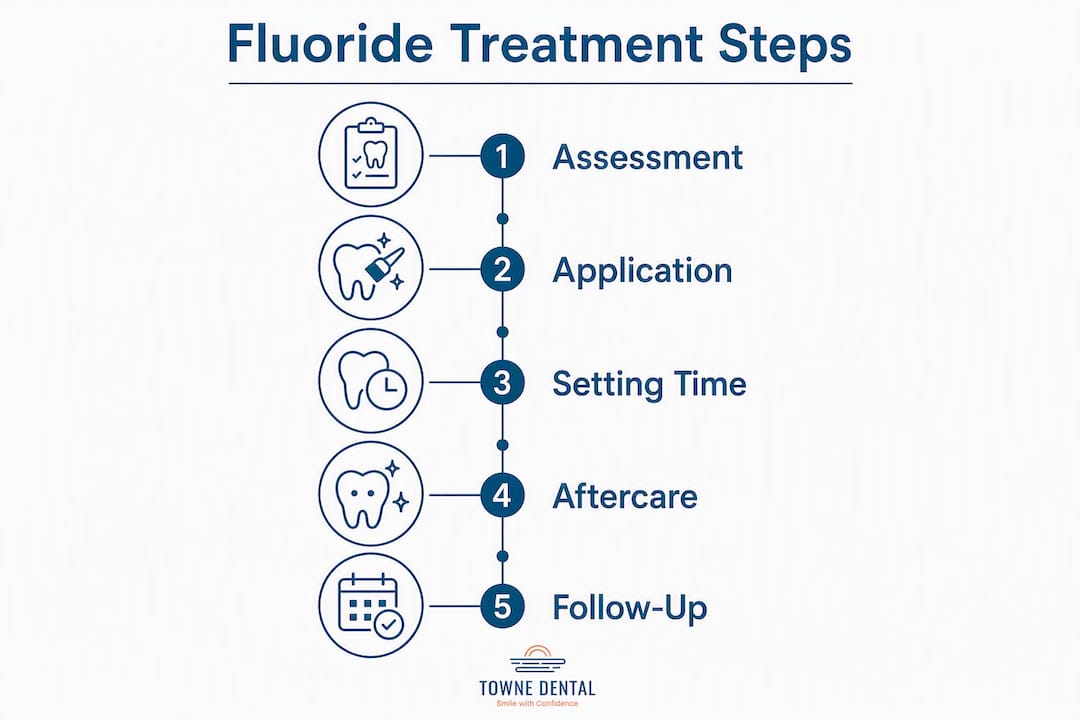
The Cleveland Clinic notes that in-office fluoride treatments typically take under five minutes. Here is the usual sequence:
- Teeth are cleaned and dried. Your hygienist or dentist removes plaque and dries the tooth surfaces so the fluoride adheres properly.
- Fluoride is applied. For varnish, a small brush paints a thin layer onto all tooth surfaces. For gel or foam, a tray loaded with the product sits over your teeth for about one to four minutes.
- You wait briefly. With varnish, the product sets almost immediately on contact with saliva. With a tray, you spit out the excess after the timed application.
- Aftercare instructions are given. Your clinician tells you when to eat, drink, and brush. The JADA guidance recommends waiting at least 30 minutes before eating or drinking to let the fluoride adhere and maximize remineralization.
Who should get professional fluoride treatments?
Not everyone needs professional fluoride at every visit. Risk level drives the recommendation.
High caries risk patients benefit most and typically need the most frequent applications. This group includes people with:
- Two or more cavities in the past three years
- Active orthodontic treatment (braces, aligners with attachments)
- Dry mouth (xerostomia) from medications, radiation therapy, or Sjögren’s syndrome
- Exposed root surfaces from gum recession
- Limited access to fluoridated drinking water
- Developmental disabilities that make oral hygiene difficult
Moderate risk patients, those with one recent cavity or a few risk factors but generally good hygiene, often benefit from professional fluoride at regular checkup intervals.
Low risk patients with no recent decay, good hygiene, and fluoridated water may not need professional applications at every visit, though their dentist may still recommend them periodically.
For children specifically, the AAPD recommends 5% sodium fluoride varnish as the only professional topical agent for children under 6, because it has a lower ingestion risk than gels or foams. Starting fluoride varnish applications at the first tooth eruption is standard practice in pediatric dentistry. Regular dental checkups for children are when these risk assessments happen.
Pro Tip: Ask your dentist to assign you a caries risk category at your next visit. Most practices use a simple low/moderate/high framework, and knowing your category tells you exactly how often professional fluoride makes sense for you.
What are the risks and side effects?
Professional fluoride is safe when applied by a trained clinician. That said, understanding the realistic side-effect profile helps you make an informed decision.
Common, minor effects:
- Temporary change in taste immediately after application
- Mild, short-lived gum irritation at the application site
- Varnish may feel slightly sticky or look yellowish on teeth for a few hours (this is normal and washes off)
Dental fluorosis is the most frequently cited concern for young children. It occurs when children ingest too much fluoride during the years when permanent teeth are forming, typically before age 8. Mild fluorosis appears as faint white streaks on enamel; severe fluorosis is rare in the U.S. Professional varnish applied in a dental office uses a small, controlled dose, which is why the AAPD specifies unit-dose varnish for children under 6 rather than gels or foams.
Acute ingestion is the other safety consideration. The AAPD notes that the probably-toxic dose for fluoride is around 5 mg/kg body weight, and over-ingestion reports are concentrated in children under 6. Clinicians minimize this risk by using small doses, keeping children upright, and having them spit. If a child accidentally swallows a significant amount of fluoride product at home, contact Poison Control at 1-800-222-1222.
For adults, acute toxicity from a single professional application is not a realistic concern given the small quantities used.
How often should you get professional fluoride?
Frequency follows risk. The ADA’s evidence-based recommendations tie application intervals directly to caries risk category:
- High risk: every 3 months
- Moderate risk: every 6 months
- Low risk: annually or as determined by your dentist
Children in active decay or with multiple risk factors may need applications at every checkup visit. The ADA and AAPD both support this risk-stratified approach rather than a one-size-fits-all schedule.
Aftercare: what to do after your appointment
- Wait at least 30 minutes before eating or drinking anything after a varnish application.
- Skip hot drinks and crunchy foods for the rest of the day if you received a varnish, to let it fully adhere.
- Do not brush your teeth for at least four to six hours after varnish (some clinicians say until the next morning) to keep the fluoride in contact with enamel as long as possible.
- Expect a slightly waxy feeling on your teeth for a few hours. That is the varnish doing its job.
How long do I leave fluoride on my teeth after the dentist? With varnish, you leave it on until you brush, ideally the following morning. With a tray gel or foam, the product is removed at the chair after the timed application, and you simply avoid eating or drinking for 30 minutes.
What does professional fluoride cost, and does insurance cover it?
For adults, an in-office fluoride treatment typically runs $10–$50 out of pocket, depending on the practice and region. Many adult dental plans do not cover fluoride treatments after a certain age, often 18 or 21, so it is worth confirming your benefits before you assume it is included.
For children, the picture is better. Most pediatric dental plans, including Medicaid and CHIP, cover fluoride varnish as a preventive benefit, usually at every six-month checkup. Coverage rules vary by state and plan, so always verify.
Practical steps before your appointment:
- Ask the front desk for the CDT procedure code (typically D1206 for topical fluoride varnish or D1208 for other topical fluoride).
- Call your insurance company with that code to confirm coverage and any age limits.
- Ask whether your plan covers it at every six-month visit or only once per year.
Pro Tip: If your adult plan does not cover fluoride and your dentist recommends it, ask whether a prescription-strength fluoride toothpaste (5,000 ppm) might be a covered alternative that you can use at home between visits.
Is a fluoride treatment worth it? A quick decision checklist
Run through this list before your next appointment. The more boxes you check, the stronger the case for professional fluoride:
- [ ] Had a cavity in the past three years
- [ ] Currently in orthodontic treatment
- [ ] Take medications that cause dry mouth
- [ ] Drink well water or live in an area without fluoridated tap water
- [ ] Child under 6 with any early decay or high sugar intake
- [ ] Exposed root surfaces or a history of gum disease
- [ ] Prior sensitivity to cold or sweet foods
- [ ] Insurance covers it (zero out-of-pocket cost = easy yes)
For higher-risk patients, professional fluoride is one of the most cost-effective preventive tools in dentistry. A single application costs a fraction of even the simplest filling, and the evidence supports its ability to prevent that filling from being necessary. For low-risk adults with excellent hygiene and fluoridated water, it is still a reasonable option at each checkup, but the benefit-to-cost calculation is less compelling. The honest answer: ask your dentist to assign you a risk category, and let that guide the frequency. Knowing where you stand makes the decision straightforward. You can read more about how preventive and restorative care compare when planning your dental health strategy.
What to expect at Towne Dental for a fluoride treatment
Towne Dental’s general dentistry and pediatric dentistry services both include professional fluoride as part of routine preventive care. Here is what a typical visit looks like:
- Before you arrive: Bring your insurance card and a list of any medications you take (some cause dry mouth, which affects fluoride recommendations). For children, note the child’s age and whether they have had any prior fluoride treatments.
- At the appointment: A hygienist or dentist performs a cleaning and oral exam, then applies fluoride, usually varnish, in under five minutes. The whole preventive visit rarely exceeds an hour.
- Billing and insurance: The front desk can pull your benefits and give you an estimate before treatment. For pediatric patients, fluoride is typically a covered preventive benefit.
- Post-visit: You leave with aftercare instructions and, if your risk level warrants it, a recommended return interval for your next fluoride application.
Towne Dental’s team can also assess whether additional preventive measures, such as dental sealants or a prescription fluoride toothpaste for home use, make sense alongside in-office treatments.
Key Takeaways
Professional fluoride treatment at the dentist is a fast, low-risk, evidence-backed preventive tool that works best when matched to your actual caries risk level.
| Point | Details |
|---|---|
| Concentration matters | Professional varnish contains 22,600 ppm fluoride, far above OTC toothpaste at 1,000–1,500 ppm. |
| Frequency follows risk | Treatment frequency is generally tailored to risk category, with shorter intervals for higher risk and longer for lower risk patients. |
| Children under 6 | Fluoride varnish is the only professionally recommended topical agent for this age group due to lower ingestion risk. |
| Aftercare is simple | Wait at least 30 minutes before eating or drinking; avoid brushing for several hours after varnish application. |
| Towne Dental | Offers fluoride treatments within general and pediatric dentistry services, with insurance verification at the front desk. |
The case for fluoride is stronger than most patients realize
Most of the pushback against professional fluoride comes from conflating two very different things: the long-running debate over water fluoridation policy and the clinical evidence for chairside fluoride application. Those are separate questions. The policy debate involves population-level exposure across a lifetime. The clinical question is narrower: does a small, controlled, professionally applied dose of topical fluoride reduce cavities in a patient who is already at elevated risk? On that question, the evidence is consistent.
What I find underappreciated is the fluorosis concern. Parents hear “fluoride” and worry about fluorosis, which is reasonable. But dental fluorosis from a professional varnish applied in a dental office is not a realistic risk when the clinician uses age-appropriate unit doses. The AAPD’s varnish-only recommendation for children under 6 exists precisely because it addresses that concern. The risk calculus is not fluoride versus no fluoride. It is a small, controlled professional dose versus untreated early decay that becomes a filling, a crown, or worse.
The other thing worth saying: professional fluoride works best as part of a broader prevention plan, not as a standalone fix. Patients who brush twice daily with fluoride toothpaste, drink fluoridated water, and see their dentist regularly get the most out of professional applications. For patients who are doing all of that and still getting cavities, the frequency of professional fluoride should go up, not down.
Towne Dental’s preventive care is ready when you are
Towne Dental offers professional fluoride treatments as part of its general dentistry and pediatric services across its Florida locations. Unlike a quick pharmacy purchase, an in-office application comes with a clinician-assessed risk level, age-appropriate product selection, and post-visit guidance tailored to your situation. The appointment itself adds only a few minutes to a routine cleaning.
To schedule a preventive visit, including fluoride treatment for yourself or your child, contact Towne Dental’s front desk or book online through our services page. Have your insurance information ready; the team will verify your fluoride benefit and confirm any age-based coverage rules before your appointment.
Authoritative sources and further reading
The following sources were used to support the clinical claims, safety guidance, and frequency recommendations in this article:
- About Fluoride | Oral Health (CDC) — safety profile and concentration comparisons
- Fluoride Therapy (AAPD policy statement) — age-based recommendations and varnish preference for children under 6
- Fluoride: topical and systemic supplements (ADA) — risk-based frequency guidance and combined systemic/topical benefit
- Professionally applied topical fluoride: evidence-based clinical recommendations (PubMed/JADA) — ADA panel decision framework for practitioners
- Fluoride varnishes for dental health: clinical effectiveness review (CDC) — efficacy evidence and ingestion safety data
- Fluoride: Uses, Benefits & Side Effects (Cleveland Clinic) — treatment forms and appointment duration
- Fluoride treatments in the dental office (JADA)62166-8/fulltext) — aftercare instructions and chairside application notes
FAQ
Is a fluoride treatment at the dentist worth it?
For patients with moderate to high cavity risk, including children, orthodontic patients, and people with dry mouth, professional fluoride is one of the most cost-effective preventive treatments available. Low-risk adults with good hygiene and fluoridated water still benefit, though the value is less pronounced.
Why would someone say no to fluoride at the dentist?
Some patients decline due to concerns about fluorosis or general fluoride exposure. For low-risk adults with no recent cavities, skipping an occasional application is unlikely to cause harm, but the decision should be based on your actual risk level, not general anxiety about fluoride.
How long do I leave fluoride on my teeth after the dentist?
With varnish, leave it on until you brush, ideally the following morning. Avoid eating, drinking, or brushing for at least 30 minutes after application, per JADA guidance62166-8/fulltext), and skip hot drinks and crunchy foods for the rest of the day.
Is fluoride varnish safe for kids?
Yes. The AAPD recommends 5% sodium fluoride varnish as the only professional topical fluoride agent for children under 6 specifically because it has a lower ingestion risk than gels or foams. Towne Dental’s pediatric team uses age-appropriate products and dosing.
How often should you get a professional fluoride treatment?
Frequency depends on your caries risk: every 3 months for high-risk patients, every 6 months for moderate risk, and annually for low risk, based on ADA evidence-based recommendations. Your dentist assigns the interval after assessing your individual risk factors.