Dental implants without bone grafting are a real, proven option for patients with insufficient jawbone density. The phrase “dental implants without bone” refers informally to graftless implant techniques. Clinicians call them graftless or bone-independent implant protocols. These methods use angled placement, alternative anatomical anchors, or custom-fabricated frameworks to secure implants where standard approaches would fail. Patients in Collier County who have been told they lack enough bone for implants often have more options than a general dentist can offer. A specialist evaluation, supported by 3D imaging, frequently reveals a viable path forward.
What bone requirements exist for standard dental implants?
Standard dental implants require at least 8–10 mm bone height and 6 mm of width for stable placement. Below those thresholds, the implant cannot achieve the mechanical grip needed for long-term success.
Bone loss happens for several reasons. Tooth extraction is the most common trigger. The jawbone begins resorbing within weeks of losing a tooth because it no longer receives stimulation from chewing. Periodontal disease, trauma, and systemic conditions like osteoporosis accelerate that process. Patients who have worn dentures for years often experience the most severe resorption.
A CBCT 3D scan is the gold standard for measuring bone volume before any implant procedure. It gives the clinician a precise three-dimensional map of bone height, width, and density. That map also reveals alternative anatomical anchors, such as dense cortical bone or the zygoma, that make graftless placement possible.
- Bone height below 8 mm signals the need for grafting or a graftless alternative.
- Bone width below 6 mm limits standard implant diameter and may require a short or narrow implant.
- Bone density classification (D1 through D4 on the Misch scale) affects how quickly osseointegration occurs.
- Extent of resorption determines which graftless technique is anatomically feasible.
Pro Tip: Ask your provider specifically for a CBCT scan rather than a standard 2D X-ray. A flat image cannot measure bone depth accurately, and that gap in data is where treatment plans go wrong.
What graftless implant options work for low bone density?
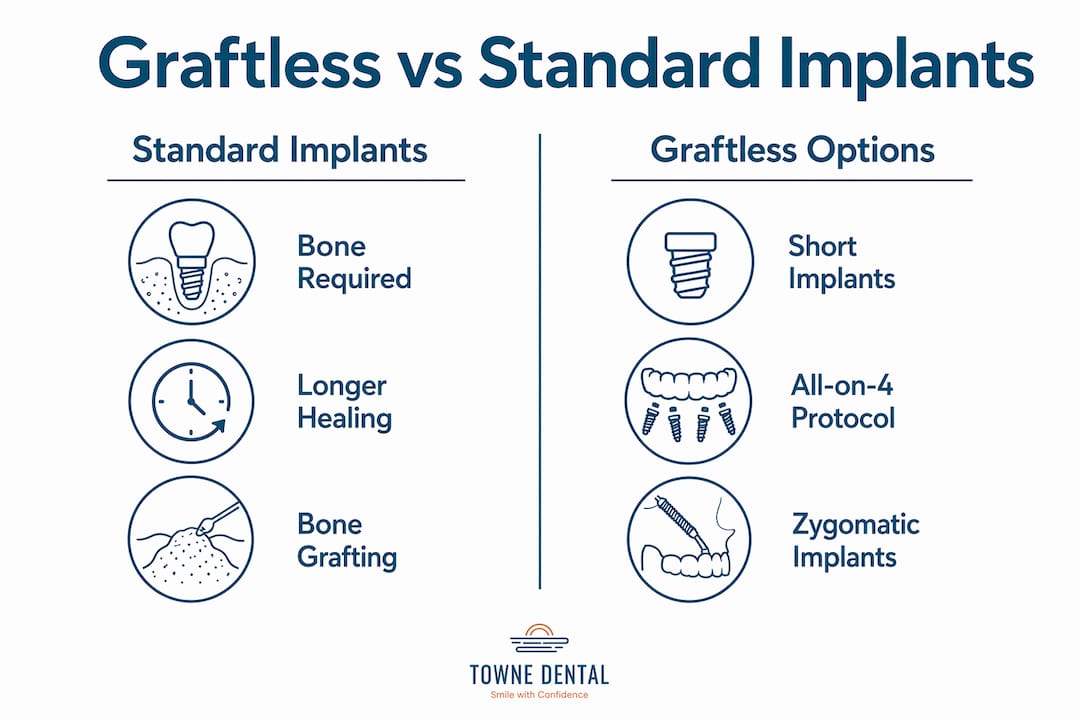
Modern dentistry now favors bypassing the need for bone grafts using 3D-planned frameworks rather than rebuilding bone in severe cases. That shift has opened four reliable graftless pathways.
1. Short implants
Short implants measure 6 mm or less in length. They work in areas where bone height is limited but width remains adequate. Advances in implant surface technology have improved their osseointegration rates significantly, making them a practical choice for mild to moderate bone loss in the posterior jaw.
2. All-on-4 protocol
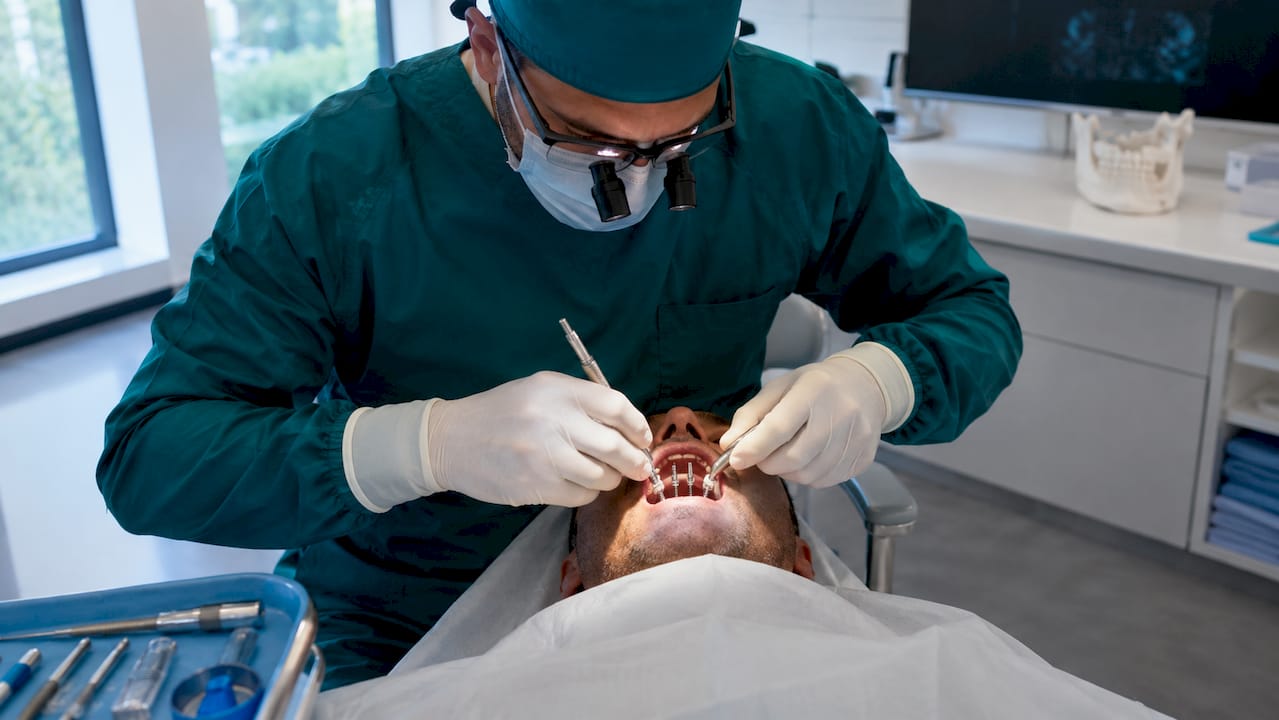
All-on-4 implants use angled placement to engage the denser anterior cortical bone, avoiding the resorbed posterior regions entirely. Two straight implants anchor at the front of the arch, and two are tilted at up to 45 degrees toward the back. This geometry distributes load across available bone without grafting. The result is a full-arch fixed prosthesis placed in a single surgical visit. Towne Dental offers a detailed breakdown of this protocol in its All-on-4 complete guide.
3. Zygomatic implants
Zygomatic implants anchor into the dense cheekbone, bypassing the upper jawbone entirely. They are 30–52 mm long and designed specifically for patients with severe maxillary bone loss. A full upper arch prosthesis can be secured on two to four zygomatic implants, often on the same day as surgery.
4. Custom subperiosteal implants
Subperiosteal implants sit on top of the jawbone rather than inside it. Custom subperiosteal implants fabricated with CAD/CAM and 3D printing show five-year survival rates above 90%. That figure reflects how far digital fabrication has raised the reliability of this once-unpredictable option. A titanium framework is designed from the patient’s CBCT scan and printed to fit the exact contour of their jaw.
Pro Tip: Zygomatic implants require a surgeon with specific training in this technique. Before committing, ask how many zygomatic cases your provider has completed and request outcome data.
| Technique | Best for | Grafting needed | Prosthesis timing |
|---|---|---|---|
| Short implants | Mild to moderate bone loss | No | Standard healing |
| All-on-4 | Full arch, moderate resorption | No | Same day possible |
| Zygomatic implants | Severe upper jaw bone loss | No | Same day possible |
| Custom subperiosteal | Extreme bone loss, no viable ridge | No | Staged |
How does the graftless implant process work, step by step?
The process begins with a consultation and a CBCT scan. 3D cone-beam CT scans enable clinicians to target anchorage in alternative anatomical sites like the zygoma or dense cortical bone. That targeting is what makes graftless placement safe and predictable.
Step 1: Imaging and diagnosis. The CBCT scan produces a full 3D model of the jaw. The clinician measures bone volume, identifies nerve positions, and maps potential implant sites.
Step 2: Digital treatment planning. Software converts the scan into a surgical plan. Implant positions, angles, and depths are set virtually before any incision is made. Precision digital planning and customized surgical guides improve success and reduce complications in graftless procedures. The surgical guide is then fabricated to transfer that plan directly to the operating field.
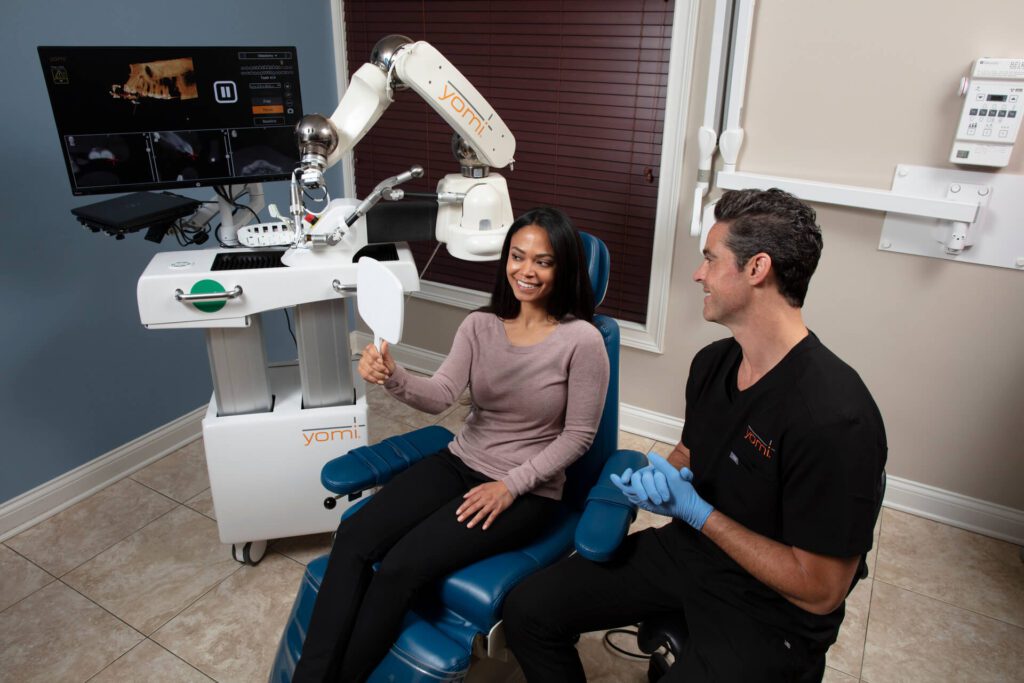
Step 3: Implant placement. For All-on-4 and zygomatic cases, placement often occurs in a single session. The surgeon follows the guide precisely. Towne Dental uses the Yomi® robot-assisted system to add a layer of real-time accuracy that manual placement cannot match, which matters most in complex graftless cases.
Step 4: Provisional restoration. In same-day protocols, a temporary prosthesis is attached on the day of surgery. Patients leave with functional teeth.
Step 5: Healing and osseointegration. Bone fuses to the implant surface over 3–6 months. Graftless techniques skip the 3–9 month bone graft healing window, which is the single biggest time advantage they offer. The final prosthesis is placed after osseointegration is confirmed.
- Avoid hard foods for the first 6–8 weeks after placement.
- Maintain strict oral hygiene around the implant sites.
- Attend all follow-up appointments so the clinician can monitor bone integration.
- Report any unusual pain, swelling, or implant movement immediately.
Pro Tip: If you still have teeth that need extraction before implant placement, ask about socket preservation grafting at the time of removal. Socket preservation at extraction is the clinical standard for minimizing bone loss and may eliminate the need for larger grafts later.
How do you choose the right graftless implant option?
The right technique depends on four factors: the extent of bone loss, the location in the jaw, your overall health, and your budget. No single method fits every patient.
Patients with mild bone loss in a single site are often good candidates for short implants or a standard implant with minor augmentation. Patients missing a full arch with moderate resorption typically benefit most from the All-on-4 protocol. Patients with severe upper jaw resorption, where even All-on-4 cannot find adequate bone, are candidates for zygomatic implants. Patients with extreme bone loss across the entire ridge, where no internal anchorage is viable, may be best served by a custom subperiosteal framework.
Health status matters as much as bone volume. Treating patients with low bone density, including those with osteoporosis, requires precise, customized planning with advanced imaging. Uncontrolled diabetes, active smoking, and certain medications that affect bone metabolism all influence healing and must be disclosed during consultation.
Bone loss is not a strict disqualifier. A specialist second opinion often reveals graftless options that a general dentist overlooked. Prosthodontists and oral surgeons who specialize in implants see complex bone loss cases regularly. Their familiarity with graftless protocols changes what is possible for patients who were previously told no.
Cost is a real consideration. Graftless techniques like All-on-4 and zygomatic implants carry higher upfront costs than standard single implants, but they eliminate the added expense and time of bone grafting procedures. Over a full treatment timeline, the total cost difference is often smaller than patients expect.
Key Takeaways
Patients with insufficient bone density have multiple proven graftless implant options, and a specialist evaluation with CBCT imaging is the essential first step.
| Point | Details |
|---|---|
| Bone thresholds matter | Standard implants need 8–10 mm height and 6 mm width; below that, graftless techniques apply. |
| CBCT imaging is non-negotiable | A 3D cone-beam scan maps bone volume and identifies alternative anchors for graftless placement. |
| Four main graftless techniques | Short implants, All-on-4, zygomatic implants, and custom subperiosteal frameworks each suit different bone loss levels. |
| Graftless saves time | Skipping bone grafting eliminates a 3–9 month healing phase and reduces total treatment duration. |
| Specialist evaluation changes outcomes | A prosthodontist or oral surgeon often finds viable graftless options that a general dentist cannot offer. |
Why I think most patients with bone loss give up too soon
Patients come to me after being told by a general dentist that they “don’t have enough bone” for implants. That sentence ends the conversation for most people. It should not.
What I have seen over years of working with complex implant cases is that the real barrier is rarely the bone itself. The barrier is access to the right imaging and the right specialist. A CBCT scan takes minutes. The information it provides can completely change what is possible for a patient. Zygomatic implants, custom subperiosteal frameworks, and All-on-4 protocols exist precisely because surgeons refused to accept bone loss as a final answer.
The shift toward digital planning has made graftless procedures far more predictable than they were a decade ago. CAD/CAM fabrication means a subperiosteal framework fits the patient’s jaw exactly, not approximately. Robot-assisted placement means the surgeon executes the digital plan with accuracy that manual technique cannot guarantee. These are not incremental improvements. They fundamentally change what is achievable for patients with severe bone loss.
My honest advice: if you have been told no, get a second opinion from a specialist who performs zygomatic or All-on-4 cases regularly. Bring your CBCT scan. Ask specifically about graftless options. The answer may surprise you.
— Krunal
Towne Dental’s approach to implants with low bone density
Patients across Collier County dealing with bone loss have access to the full range of graftless implant techniques at Towne Dental. The team combines CBCT imaging with the Yomi® robot-assisted implant system to plan and execute complex placements with a level of accuracy that difficult anatomy demands.
Towne Dental’s oral surgery and implant services cover All-on-4 protocols, zygomatic implants, and custom-planned graftless cases. Every treatment plan starts with a thorough evaluation and a conversation about what your specific bone condition allows. If you have been told you are not a candidate for implants, a consultation at Towne Dental is the right next step. The answer to “not enough bone” is often a technique, not a rejection.
FAQ
Can you get dental implants with no bone at all?
Patients with extreme bone loss may qualify for zygomatic implants or custom subperiosteal implants, both of which bypass the jawbone entirely. A CBCT scan is required to confirm which option is anatomically feasible.
How long does the graftless implant process take?
All-on-4 and zygomatic protocols can deliver a provisional prosthesis on the day of surgery, with final restoration placed after 3–6 months of osseointegration. Skipping bone grafting removes the additional 3–9 month healing phase required by traditional augmentation.
Are mini dental implants a good option for low bone density?
Mini dental implants use a narrower diameter post and require less bone width than standard implants, making them suitable for patients with limited ridge width. They are most commonly used to stabilize lower dentures rather than support full fixed restorations.
What does a graftless implant procedure cost?
Graftless techniques like All-on-4 carry higher per-case costs than single standard implants, but they eliminate the added expense of separate bone grafting procedures. Total treatment cost varies by technique, number of implants, and provider; a personalized estimate requires a clinical evaluation.
Is bone grafting ever still the better choice?
Bone grafting remains the preferred approach when a patient needs a single implant in a site with moderate bone loss and has the time to complete the grafting and healing cycle. Socket preservation at the time of tooth extraction is the clinical standard for preventing future bone loss and simplifying later implant placement.