Mild soreness and temperature sensitivity for a few days to about two weeks after crown placement is normal and expected. Watch for red flags instead: pain that worsens, spontaneous throbbing, swelling, fever, a loose or shifting crown, or pain that is sharp enough to wake you at night. If your symptoms are trending toward better, keep monitoring at home. If any red flag shows up, call your dentist promptly rather than waiting it out.
TL;DR:
- Sensitivity from crown placement should improve within two weeks; persistent or worsening pain may indicate a high bite, nerve inflammation, or decay.
- A high bite causes dull ache or jaw fatigue and is quickly fixable through in-office grinding, which can prevent nerve damage requiring root canal treatment.
- Symptoms such as spontaneous throbbing, swelling, fever, or a loose crown signal possible infection or complication needing prompt dental evaluation.
- Temporary crowns tend to cause more sensitivity due to less precise sealing, but ongoing severe pain or movement requires immediate reporting.
- Most crown-related discomfort resolves quickly with proper care, but any pain lasting beyond two weeks or recurrent pain after months indicates a new issue needing additional treatment.
Table of Contents
- Dental Crown Pain: Normal Sensitivity vs Warning Signs
- Common Causes of Dental Crown Pain and Their Symptoms
- Crown Hurts When Biting? Here’s Why and How It’s Fixed
- How Long Does Crown Pain Last?
- How Dentists Diagnose and Treat Crown Pain
- Relief for Dental Crown Discomfort at Home
- How Towne Dental Approaches Crown Pain
- What Patients Should Know About Crown Discomfort
- Get Same-Day Help for Crown Pain at Towne Dental
- Sources
- FAQ
Dental Crown Pain: Normal Sensitivity vs Warning Signs
Getting a crown means your dentist removed a layer of enamel and often some dentin to make room for it. That process temporarily irritates the nerve inside your tooth, which is why brief sensitivity to hot, cold, or pressure right after the procedure is common. The exposed dentin and stressed pulp typically calm down as the tooth adjusts, and that initial nerve irritation usually fades within one to two weeks.
Normal healing has a pattern: mild to moderate discomfort that gets a little better every few days. You might notice a twinge when you drink ice water or bite into something firm, but it shouldn’t linger long after the trigger is gone. Gums around the crown can feel a bit tender too, especially if you needed local anesthesia or gum contouring during the fitting.
Here’s how to tell the difference between healing and a problem:
- Normal: Sensitivity to hot or cold that fades within seconds, mild soreness when chewing, tenderness that improves day by day.
- Not normal: Pain that intensifies instead of easing, throbbing that starts on its own without any trigger, visible swelling in the gum or face.
- Not normal: Fever, a bad taste or odor near the crown, or a crown that feels loose, rocks, or has come off entirely.
- Not normal: Pain sharp enough to interrupt sleep, especially if it’s a deep, pulsing ache rather than a quick zing.
One useful benchmark: temporary crowns are more prone to sensitivity than permanent ones because they’re less precisely sealed and the tooth underneath is still settling. If you’re still wearing a temporary and notice new sensitivity, that’s often just the seal doing its imperfect job, not a sign of failure. Report movement or severe pain either way.
Common Causes of Dental Crown Pain and Their Symptoms
Crown pain rarely has one universal cause. The location, timing, and pattern of the discomfort usually point toward a specific culprit.
- A high bite (occlusal overload). If the crown sits even slightly taller than surrounding teeth, every bite forces extra pressure through the periodontal ligament. This produces a dull ache or tenderness that worsens with chewing and often causes jaw fatigue by the end of the day, since your mouth compensates by favoring the other side.
- Pulpitis, or nerve inflammation. This shows up as pain that lingers well after hot or cold exposure, or throbbing that starts with no trigger at all. It signals the nerve is more irritated than expected, sometimes enough to need root canal treatment.
- Secondary decay under the crown margin. Decay can sneak in at the edge of a crown and go unnoticed for months or years before it triggers pain, often paired with a lingering foul taste as bacteria break down tooth structure.
- A cracked tooth or fractured crown. This tends to cause sharp pain on biting that releases the moment you stop, or pain that comes and goes unpredictably depending on how you chew.
- Loose cement or a shifting crown. Once the seal breaks down, food gets trapped underneath, sensitivity increases, and the crown may eventually detach completely.
- Gum and periodontal problems at the margin. Inflamed or infected gum tissue around a crown produces a deeper, more persistent ache along with bleeding or visible swelling, and it needs periodontal evaluation rather than adjustment of the crown itself.
Pro Tip: Pay attention to whether pain hits the instant you bite down or lingers afterward. Immediate, releasing pain points toward a bite or crack issue; lingering, spontaneous throbbing points toward the nerve.
Crown Hurts When Biting? Here’s Why and How It’s Fixed
Pain that shows up specifically when you bite down is one of the more common and, fortunately, more fixable complaints after crown work. It almost always traces back to occlusion, meaning how your upper and lower teeth meet.
Symptoms of a high bite are fairly distinct. You feel the crowned tooth “hit first” before your other teeth come together, chewing on that side feels off or tender, and your jaw muscles may feel tired or sore by evening from unconsciously working around the discomfort.
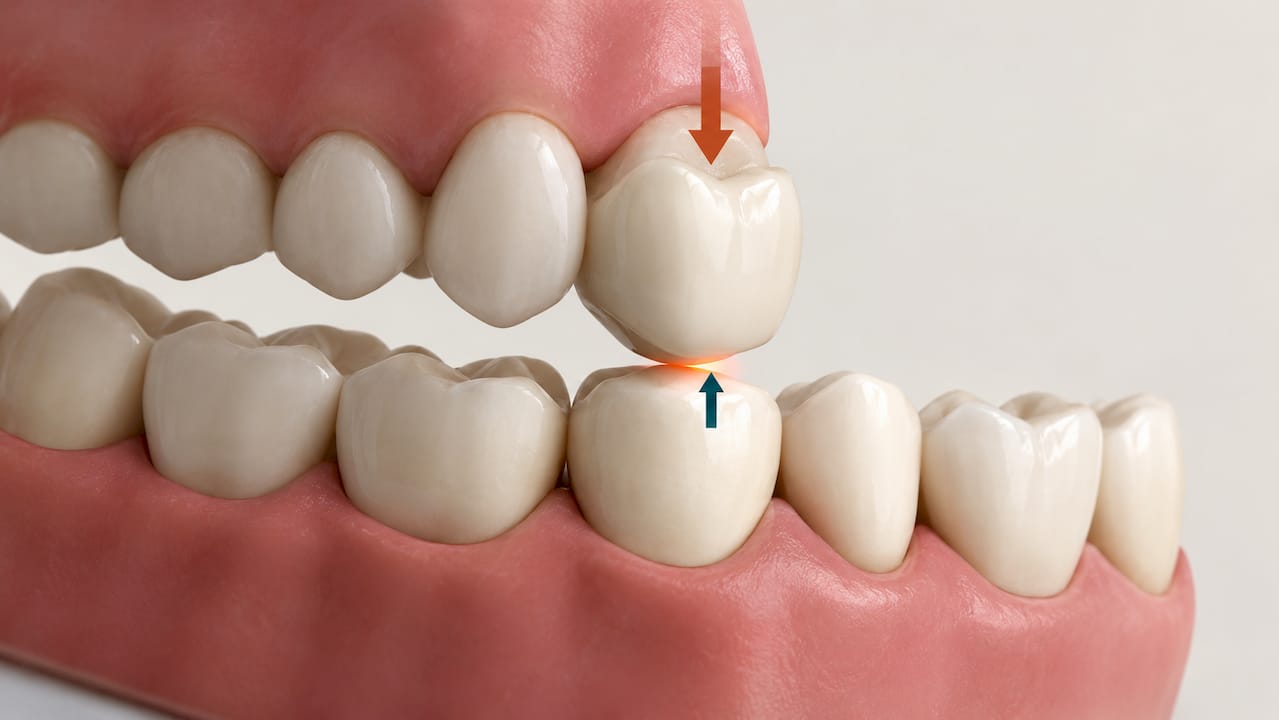
In the office, diagnosing this is quick. Your dentist has you bite on thin colored articulating paper to map exactly where your teeth are making contact, then checks those marks against the opposing teeth. Gentle percussion testing (a light tap on the tooth) helps confirm whether the discomfort is coming from pressure rather than something deeper like the nerve.
The fix is usually just as fast:
- The dentist uses a fine drill to shave a small amount off the high spots on the crown’s surface.
- You bite on the articulating paper again to confirm even contact across all your teeth.
- Most patients feel noticeably better within a day or two once the overload on the periodontal ligament is relieved.
Catching a high bite early matters. Left uncorrected for weeks, that constant overload can inflame the nerve enough to eventually require root canal treatment, so a same-day adjustment appointment is worth requesting the moment biting pain shows up.
How Long Does Crown Pain Last?
Expect improving sensitivity for a few days, tapering off completely within about two weeks in most straightforward cases. The trend matters more than the day count. Pain that’s a little less noticeable each morning is healing on schedule. Pain that’s the same or worse a week in is not.
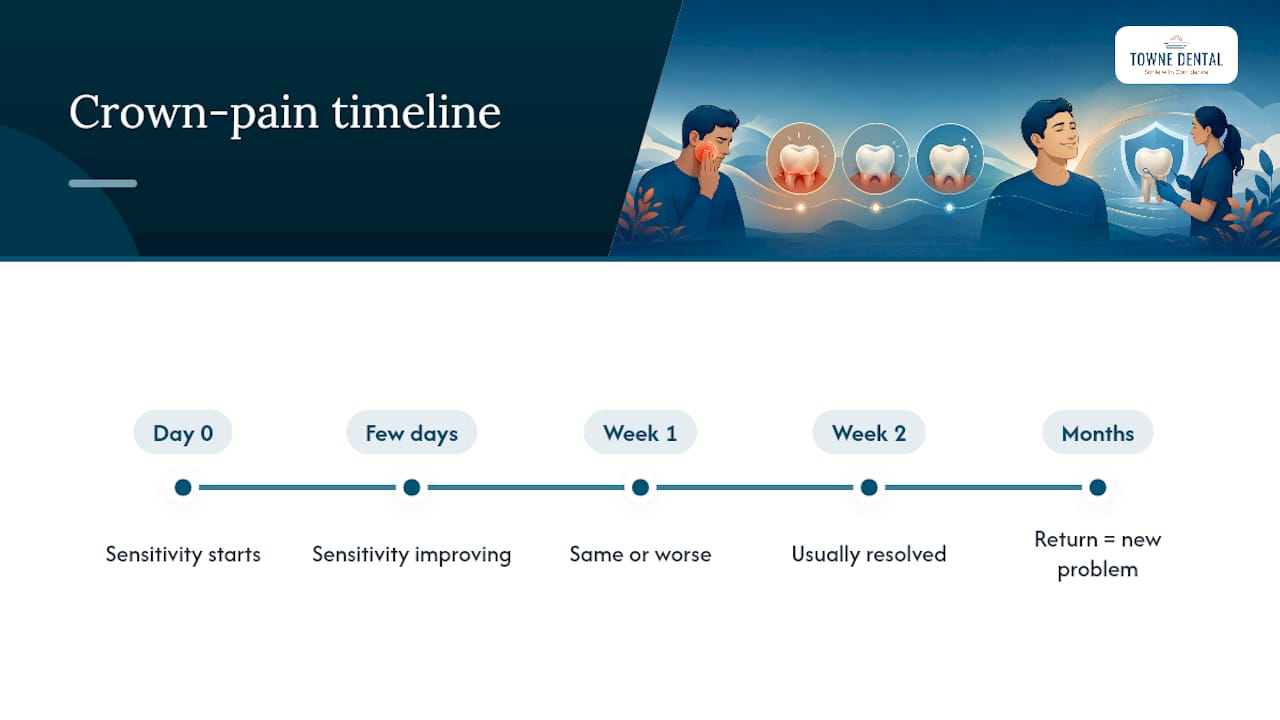
Anything that starts or returns months or even years after the crown was placed is a different story entirely. That kind of delayed pain almost never reflects the original procedure. It usually points to something new: decay working its way under the margin, cement finally giving out, a fresh crack in the tooth, or nerve inflammation that’s been building quietly.
A practical way to track it: if day 10 feels better than day 3, you’re on the normal curve. If pain that had settled down suddenly flares up again six months later, treat that as a new problem, not a leftover from the original work, and get it evaluated.
How Dentists Diagnose and Treat Crown Pain
A crown pain workup usually starts with your history: when the pain started, what triggers it, and whether it’s getting better or worse. From there, the exam gets more targeted.
Expect some combination of the following:
- A visual exam of the crown margin and surrounding gum tissue.
- Palpation and percussion testing to localize the source of pain.
- Articulating paper to check for high spots in your bite.
- Cold or electric pulp testing to gauge nerve health.
- Periapical X-rays to look for decay, bone changes, or gaps under the crown.
X-rays are useful but not perfect. Some cracks and early pulp problems simply don’t show up clearly on a standard image, which is why the clinical exam and your symptom history carry real weight in the diagnosis.
| Cause identified | Typical treatment |
|---|---|
| High bite | In-office bite adjustment |
| Loose cement, no decay | Remove and recement the crown |
| Recurrent decay | Repair or replace affected area |
| Pulpitis or nerve damage | Root canal therapy, sometimes through the existing crown |
| Cracked tooth/crown | Crown replacement, possibly extraction if severe |
| Gum or periodontal disease | Periodontal treatment |
If nerve involvement is suspected, your general dentist may refer you to an endodontist for specialized evaluation, and cases involving deep fractures or bone loss sometimes call for an oral surgeon instead.
Relief for Dental Crown Discomfort at Home
While you’re waiting for an appointment, a few simple steps keep you comfortable without making things worse.
- Take an over-the-counter pain reliever following the label instructions, or whatever dose your dentist has previously recommended.
- Rinse with warm salt water a few times a day to calm irritated gum tissue.
- Stick to a soft diet and chew on the opposite side of your mouth.
- Keep the area clean with gentle brushing, avoiding aggressive flossing right at the crown margin.
- Never use super glue or DIY adhesives to reseat a loose crown; over-the-counter dental cement or a temporary fix from your dentist is the only safe option.
Pro Tip: If a temporary crown comes loose entirely, don’t try to force it back into place. Save it and call your dentist the same day so the tooth underneath doesn’t shift or become sensitive to air.
Seek same-day or emergency care if you notice facial swelling, a fever, spreading infection, or pain so severe that OTC medication isn’t touching it. Those symptoms move past “wait and see” territory fast.
How Towne Dental Approaches Crown Pain
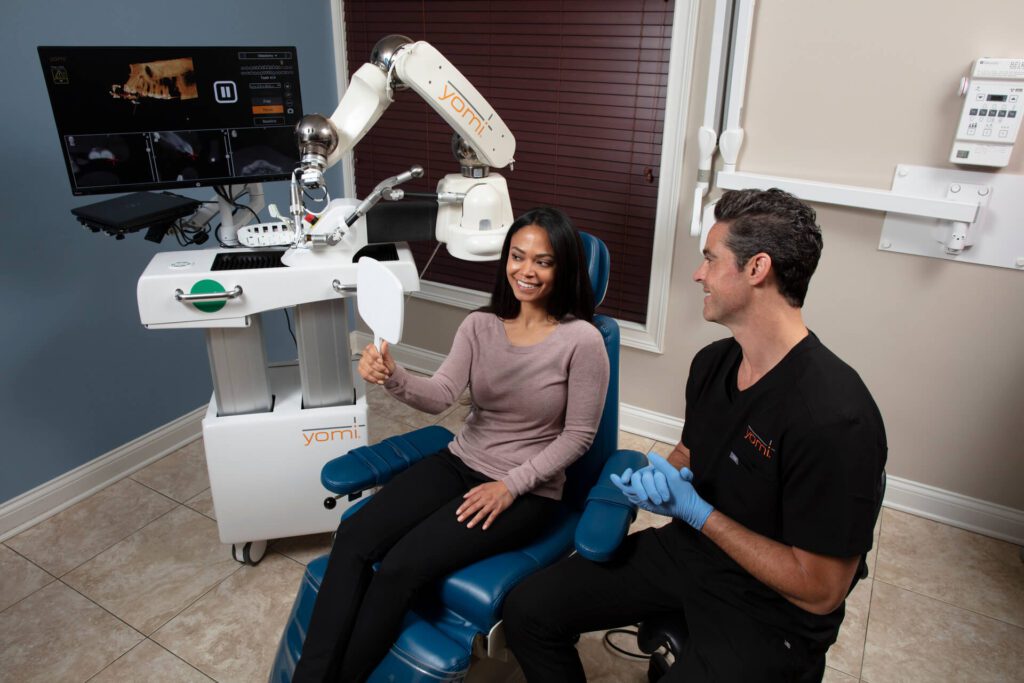
Some dental practices treat crown pain as a diagnostic puzzle rather than a one-size-fix, offering services like bite adjustments, recementing, and endodontic referrals depending on exam results. Some use advanced tools like robotic assistance for implant precision, reflecting a commitment to gentler, more exact dental care across services.
What Patients Should Know About Crown Discomfort
Most crown pain we see settles down on its own within two weeks, and that reassurance holds up for the vast majority of patients. What doesn’t hold up is waiting through swelling, fever, or pain that keeps climbing. Call us the moment something feels wrong, not weeks later. Patients consistently tell us the biggest relief isn’t the fix itself, it’s finally understanding what’s happening in their mouth.
— Towne Dental
Get Same-Day Help for Crown Pain at Towne Dental
If your crown pain fits the warning-sign list rather than the normal-healing list, waiting rarely makes it better. Towne Dental offers emergency dental care for exactly this kind of situation, whether you need a fast bite adjustment, a crown recemented, or a full exam to rule out a crack or infection.

Before you call, jot down when the pain started, what makes it better or worse, and whether it’s improving or getting worse day to day. That timeline helps the team triage you faster. If a temporary or permanent crown has come loose, bring it with you rather than throwing it out. Coverage and out-of-pocket costs vary by plan, so it’s worth asking about insurance and payment options when you schedule. You can also browse the full range of services Towne Dental offers if your visit turns up something beyond crown repair, from cosmetic touch-ups to more involved restorative work. Reach out today to get on the schedule for an evaluation.
This article is general information, not a substitute for advice from a qualified doctor. Consult a qualified healthcare professional about your own circumstances before acting on anything here.
Sources
- What causes dental crown tooth pain and how to relieve it
- Swollen gums
- Crown pain months later: causes
FAQ
Is it normal to have pain one week after getting a crown?
Yes, mild soreness or sensitivity at the one-week mark is common as long as it’s improving compared to a few days earlier. If it’s the same or worse, that’s worth a call to your dentist.
How long is a crown supposed to hurt?
Sensitivity typically fades within a few days to about two weeks. Pain that persists beyond that window or shows up months later usually points to a new problem, not leftover healing.
Why does my temporary crown hurt when I put pressure on?
Temporary crowns are less precisely sealed than permanent ones, so pressure sensitivity is common while the tooth underneath is still settling. Report sharp pain, movement, or a crown that feels loose right away.
Why does my jaw hurt and throb after getting a crown?
Throbbing jaw pain often signals a high bite forcing uneven pressure through the jaw muscles, though spontaneous throbbing without a trigger can also mean nerve inflammation. Either cause warrants an evaluation, since a bite adjustment is a quick fix while pulpitis may need root canal treatment.
Can Towne Dental see me the same day for crown pain?
Towne Dental offers emergency dental care for urgent symptoms like severe pain, swelling, or a dislodged crown, with same-day evaluation available depending on scheduling.