In Naples, a single dental crown typically costs within a moderate range before extras like a buildup or root canal, depending on material and your dentist’s lab. Insurance often covers about half of that after your deductible, if the plan treats crowns as a major restorative service. Your next move should be simple: get a written pre-treatment estimate from a local Naples dentist before you agree to anything, so the number on paper matches the number on your bill.
TL;DR:
- The typical cost for a dental crown in Naples ranges from $900 to $1,900 before insurance, depending on material and lab choices, with higher overhead affecting prices.
- Most dental plans cover around 50% of the crown cost after deductibles, but treatment timing and maximums can significantly influence your out-of-pocket expenses.
- A comprehensive estimate should be obtained in writing before treatment, including costs for preparatory work like root canals or buildups, which can double or triple the total bill.
- Crown material choice impacts cost and durability, with zirconia and E-max being pricier but more esthetic, and gold or PFM crowns offering longevity at lower prices.
- Treatment timelines vary from two visits for lab-made crowns to same-day procedures, and understanding your options helps choose the best fit for your needs and schedule.
Table of Contents
- How Much Does a Dental Crown Cost in Naples?
- What Actually Drives the Price of a Crown?
- Does Insurance Actually Cover Crowns?
- PFM, Zirconia, Gold, or Same-Day: Which Crown Fits Your Tooth?
- What Should You Ask Before Accepting a Crown Quote?
- Towne Dental: What We Offer and Why Local Patients Choose Us
- What’s the Real Total Cost, Beyond Just the Crown?
- How Long Does It Take to Get a Crown in Naples?
- Why the “Just Get a Second Opinion” Advice Misses the Point
- Ready for a Real Number Instead of a Guess?
- Where These Numbers Come From
- Sources
- FAQ
How Much Does a Dental Crown Cost in Naples?
National cost aggregates put the average U.S. crown around $1,300 to $1,400, with a full range of roughly $800 to $2,500 depending on material and process. That’s a useful starting point, but it’s not the whole story for Collier County. Southern Florida markets tend to sit mid-range nationally, though local cost-of-living factors and lab choices can still push metro-area pricing above the national midpoint, which is exactly what happens in a resort market like Naples where overhead runs higher than in most of the state.
Here’s roughly what to expect by material, before insurance:
- Porcelain-fused-to-metal (PFM): $900 to $1,400, the most budget-friendly option for back teeth
- All-ceramic or zirconia: $1,100 to $1,900, the most common choice for durability and appearance
- E-max (pressed ceramic): $1,200 to $2,000, prized for esthetics on visible teeth
- Gold or metal alloy: $1,000 to $1,800, still the longest-lasting option for molars that take heavy chewing force
- Same-day CEREC milled crowns: $1,100 to $1,900, priced for the convenience of a single visit
Add a root canal and core buildup beforehand, and the total procedure cost can rise considerably before insurance, with the crown itself remaining a fraction of that bill. If your annual maximum is already partly used up from cleanings or a filling earlier in the year, your out-of-pocket share on the crown goes up accordingly.
What Actually Drives the Price of a Crown?
The number on your invoice isn’t just profit. It’s a stack of separate costs, and understanding each one helps you tell a fair quote from a risky one.
- Lab fees: Most dental labs charge dentists $150 to $300 per crown to fabricate it, depending on material and turnaround speed.
- Material cost: Zirconia and E-max blanks cost more than PFM alloys, and that difference passes through to your price.
- Chair time: Prepping a tooth, taking scans or impressions, and seating a crown takes real clinical time, usually across one or two visits.
- Imaging and diagnostics: X-rays or 3D scans to check the tooth and surrounding bone add to the visit cost.
- Practice overhead: Rent, staff, sterilization, and equipment maintenance commonly consume 60% to 75% of a dental practice’s revenue before the dentist sees a dime of profit.
Naples’ cost of living plays into that overhead figure directly, which is one reason quotes here can run above a small-town average even for the same material.
Pro Tip: Ask your dentist which lab fabricates the crown and where it’s located. A lower price sometimes means the practice uses an offshore mill with less predictable quality control, and a crown that fails early costs you far more than you saved.
Does Insurance Actually Cover Crowns?
Most dental plans classify crowns as major restorative work, and many pay around 50% after you’ve met your deductible. That sounds straightforward until you factor in waiting periods on new policies and annual maximums that often cap out between $1,000 and $2,000 a year. Here’s how to avoid a surprise bill:
- Request a written pre-treatment estimate. Have your Naples dentist submit the proposed treatment plan to your insurer before the work starts. Delta Dental and most consumer guides recommend this step because it tells you exactly what the plan will pay and what falls to you.
- Confirm network status and contracted fees. Out-of-network care can trigger balance billing, where you owe the difference between what your dentist charges and what your insurer allows.
- Ask about splitting treatment across two benefit years. If your crown work isn’t urgent, timing part of it into a new plan year can let you use two annual maximums instead of one.
- Explore financing if insurance falls short. CareCredit and in-house payment plans are common at Naples practices and can spread the remaining balance over several months, often interest-free for a limited period.
PFM, Zirconia, Gold, or Same-Day: Which Crown Fits Your Tooth?
Not every crown material makes sense for every tooth, and the “best” one usually comes down to location, budget, and how long you want it to last.
- PFM crowns remain a solid, budget-conscious choice for back molars where esthetics matter less than strength. They’ve been the workhorse option for decades.
- All-ceramic and zirconia crowns cost more upfront but blend durability with a natural look, making them the default recommendation for most patients today.
- E-max crowns shine on front teeth and premolars where color match matters most, since the material handles light almost like real enamel.
- Gold crowns still outlast almost everything else on a heavy-chewing molar, even though most patients skip them for cosmetic reasons.
- Same-day CEREC crowns save you a second appointment, which matters if you’re juggling work or travel. For a front tooth, though, a lab-milled all-ceramic crown may still deliver a better color match than a same-day mill can produce.
Most crowns last 10 to 15 years with reasonable care, sometimes longer. If you grind your teeth at night or you’re restoring a tooth that shows every time you smile, spending more on zirconia or E-max upfront usually costs less than replacing a cracked PFM crown five years earlier. If you’re weighing a crown against a smaller repair, a crown versus onlay comparison is worth a look before you commit to the bigger procedure.
What Should You Ask Before Accepting a Crown Quote?
A few pointed questions during your consult will tell you more than any price sheet.
- Which lab fabricates the crown, and is it based in the U.S.?
- Do you use digital scans or traditional impressions?
- What warranty comes with the crown if it chips or fails early?
- What’s the expected timeline from prep to final placement?
- Do you offer financing or payment plans if insurance doesn’t cover the full cost?
- Is sedation available if I’m anxious about the procedure?
- Will you submit a pre-treatment estimate to my insurer before we start?
Watch for red flags: a quote dramatically below the local range, vague answers about the lab, or pressure to commit before you’ve seen anything in writing. A trustworthy practice will hand you a written estimate, explain shade-matching for visible teeth, and have a clear follow-up policy if the crown needs adjustment.
Pro Tip: If a dentist can’t tell you where your crown is being made, that’s your answer about whether to get a second opinion.
Towne Dental: What We Offer and Why Local Patients Choose Us
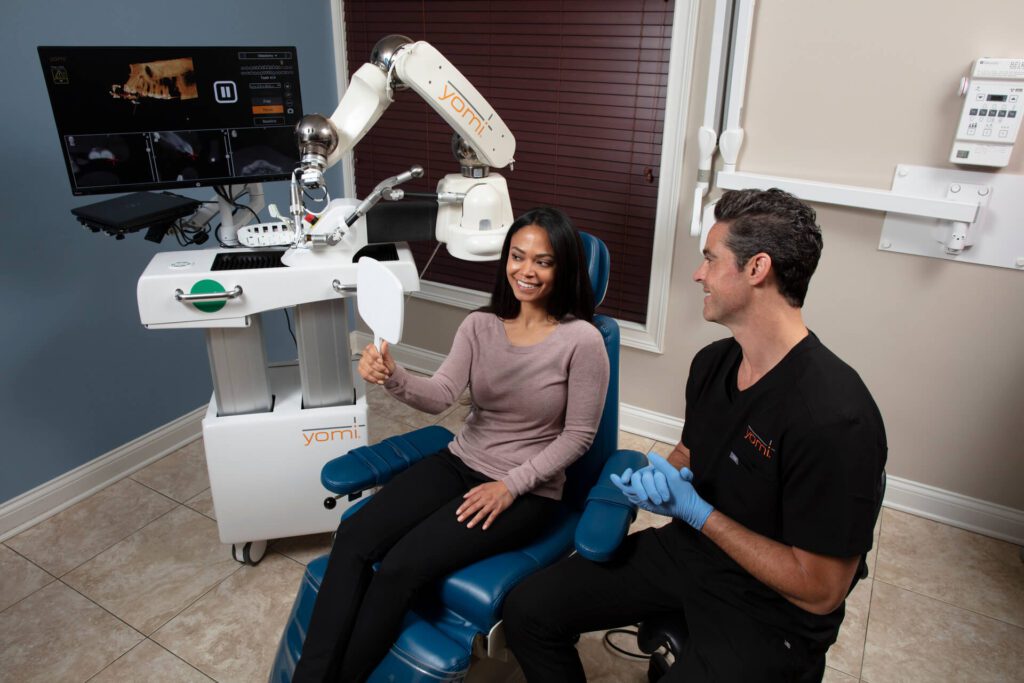
Towne Dental is a Naples clinic offering crowns, bridges, and full general dentistry services, plus sedation for anxious patients and the Yomi® Robot for implant precision when a crown isn’t the right fix. Treatment plans are built around your tooth, your budget, and your timeline. If you want a real number instead of a guess, request a written pre-treatment estimate before you decide anything.
What’s the Real Total Cost, Beyond Just the Crown?
The crown fee itself is rarely the only number you’ll see on your final bill. A typical crown procedure includes a diagnostic visit, a temporary crown while the permanent one is fabricated, at least one adjustment visit, and often a follow-up check weeks later.
Here’s what tends to add up around that headline price. The initial exam and X-rays might run separately from the crown fee, though many practices bundle them into the treatment plan. The temporary crown, worn for one to three weeks while your permanent crown is milled, is usually included in the total quote rather than billed separately, but it’s worth confirming. If your bite needs adjusting after the permanent crown is seated, that follow-up visit is typically covered under the original fee, not billed again, at most reputable practices.
Where costs quietly climb is in the preparatory work. A tooth that needs a core buildup because too much structure has broken down adds $150 to $300. A root canal beforehand, if the tooth’s nerve is compromised, adds a separate and larger fee, often $700 to $1,500 depending on the tooth. None of this is hidden if you ask upfront, which is exactly why the written estimate matters more than the crown price alone. Add it all up and a “simple” crown can become a $2,000 to $3,000 project, and insurance coverage on the crown portion doesn’t always extend to the buildup or root canal at the same percentage.
How Long Does It Take to Get a Crown in Naples?
Most crown treatments follow one of two timelines, and which one applies to you depends on whether your dentist mills crowns in-house or sends the case to an outside lab.
Traditional lab-fabricated crowns take two visits spaced one to three weeks apart. At your first visit, the dentist preps the tooth, takes a scan or impression, and fits a temporary crown. That impression goes to a dental lab, which typically needs seven to fourteen business days to fabricate the permanent crown. Your second visit is shorter: the temporary comes off, the dentist checks fit and bite, and the permanent crown gets cemented in.
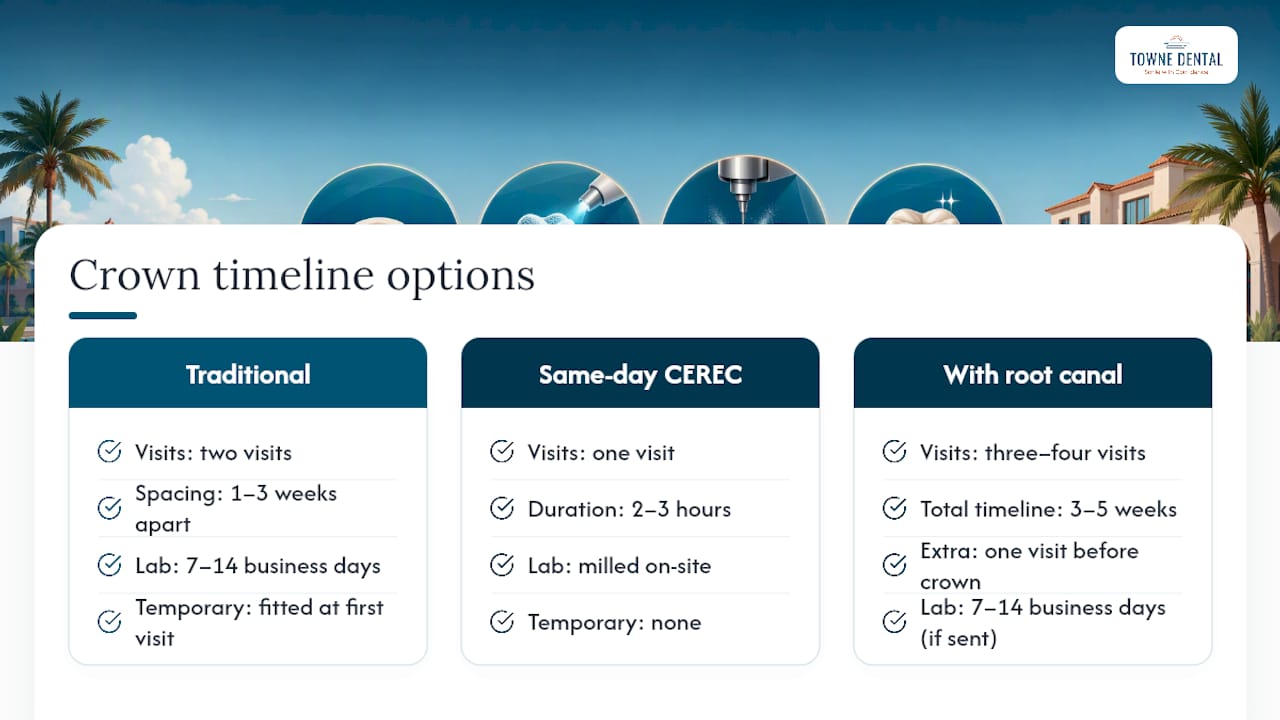
Same-day CEREC crowns compress that entire process into a single two-to-three-hour appointment. The dentist scans the tooth digitally, designs the crown on-screen, and mills it in an on-site machine while you wait. There’s no temporary crown and no second visit, which matters if you’re planning around work travel or just don’t want to think about your tooth twice.
If your tooth also needs a root canal or a buildup, add one more visit before the crown process even starts, which stretches the total timeline to three or four appointments across three to five weeks. A straightforward crown with no complications, done through a same-day system, can realistically start and finish in one Naples afternoon.
Why the “Just Get a Second Opinion” Advice Misses the Point
Most cost guides tell you to shop three quotes and pick the middle one. That advice treats a crown like a commodity, and it isn’t one. The material, the lab, and the fit all vary in ways a price alone can’t capture, which is why two “$1,400 crown” quotes can represent genuinely different quality.
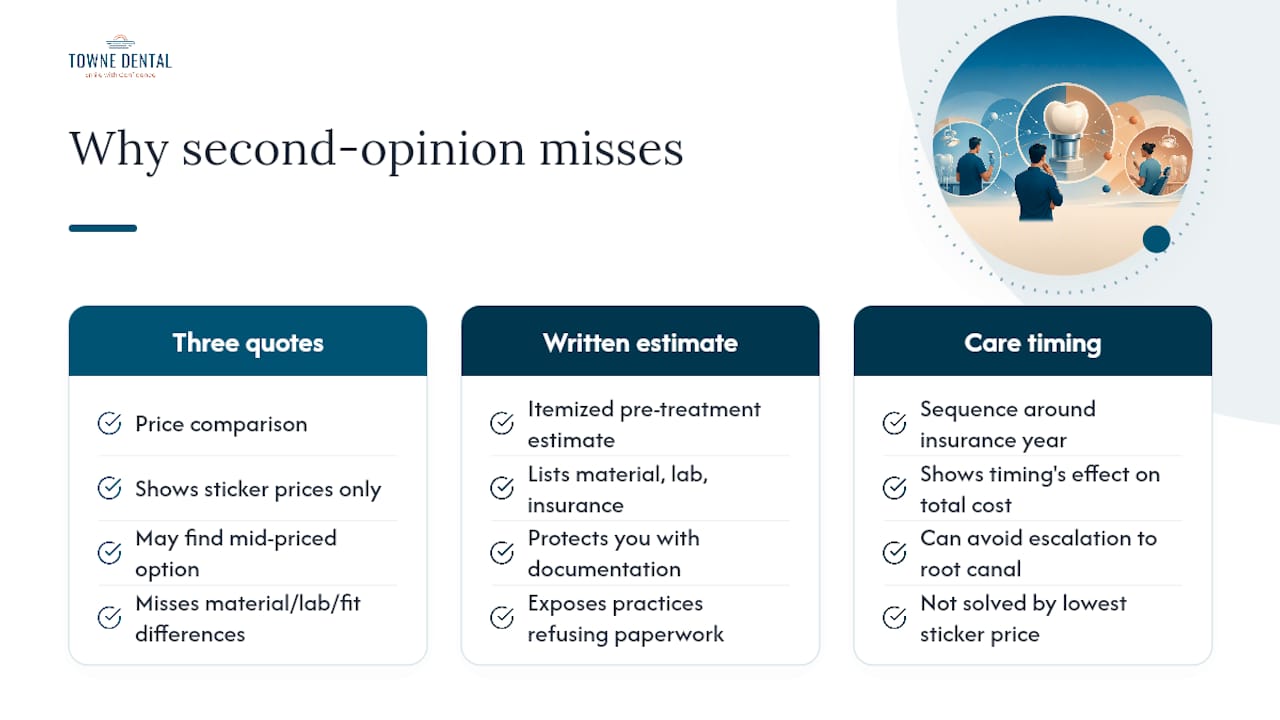
What the research actually supports is a narrower priority: get the pre-treatment estimate in writing before comparing anything. That single document forces a dentist to itemize material, lab, and expected insurance payment, which does more to protect you than three phone-quoted numbers ever will. It also exposes the practices unwilling to put their pricing on paper, which tells you something on its own.
The other overlooked point is timing. Patients fixate on the crown price and forget that splitting treatment across two benefit years, or catching a buildup before it becomes a root canal, changes the total far more than negotiating $100 off a lab fee. Naples patients researching “cheap dental crowns” are usually optimizing the wrong variable. The bigger lever is sequencing your care around your insurance year, not chasing the lowest sticker price in town.
— Towne Dental
Ready for a Real Number Instead of a Guess?
Guessing at crown costs from a national average only gets you so far. This dental practice provides patients with a written pre-treatment estimate before any work starts, so individuals know their material, lab timeline, and expected out-of-pocket cost before committing to treatment.

Sedation options are available for patients who experience anxiety during dental procedures, and financing plans may be offered to help manage costs if insurance coverage is insufficient. If you’re ready to see what a crown actually costs for your specific tooth, schedule a consultation or look through the crowns and bridges page to see what’s involved before your visit. Either way, the next step is the same: get the estimate in writing, then decide.
Where These Numbers Come From
- Delta Dental’s crown treatment and cost guide for insurance coverage patterns
- RealDentalCosts’ 2026 crown cost guide for national material-based price ranges
- ToothCostGuide’s breakdown of lab and overhead fees for what drives the final price
- Dental Area’s material-specific 2026 pricing for crown type comparisons
- Cigna’s benefit summary for coinsurance and balance billing explanations
This article is general information, not a substitute for advice from a qualified doctor. Consult a qualified healthcare professional about your own circumstances before acting on anything here.
Sources
- Dental crowns: treatment & cost | Delta Dental
- Why does a dental crown cost so much? | ToothCostGuide
- Dental crown cost guide (2026) | RealDentalCosts
- Summary of benefits (Cigna) — consumer explanation of coinsurance and balance billing
FAQ
What Is a Fair Price for a Dental Crown?
A fair price in Naples generally falls between $900 and $1,900 depending on material, with zirconia and E-max at the higher end and PFM at the lower end. Anything dramatically below that range is worth questioning, especially if the practice can’t tell you where the crown is fabricated.
What’s the Average Cost of a Dental Crown in Florida?
Florida crown prices generally track close to the national average of $1,300 to $1,400, though resort markets like Naples can run above that midpoint due to higher local overhead.
Is $2,000 a Lot for a Dental Crown?
Not necessarily. A $2,000 crown often sits at the higher end for premium materials like E-max or zirconia, or it reflects added work like a core buildup. If it includes a root canal, $2,000 can actually be reasonable rather than expensive.
Why Do Dentists Push for Crowns?
Dentists recommend crowns when a tooth has lost enough structure that a filling won’t hold up to normal biting force, or when a cracked or root-canaled tooth needs full coverage to prevent fracture. A crown versus onlay comparison can help you understand when a smaller repair is a legitimate alternative.
How Do I Get an Accurate Crown Estimate in Naples?
Ask your dentist to submit a written pre-treatment estimate to your insurer before starting any work, which shows the exact material cost, expected insurance payment, and your out-of-pocket share. Towne Dental provides this estimate for patients considering crowns and bridges as part of the consultation process.