A comprehensive dental exam, billed under code D0150, is a full baseline evaluation of your teeth, gums, soft tissues, and jaw joints. It’s the exam a dentist uses to catch problems early and build a treatment plan around your actual mouth, not just your last cleaning. Under ADA guidance, the physical clinical exam remains the gold standard for oral cancer screening, and no scanner or rinse test replaces it.
Here’s what that means for you at your next visit:
- You get a full head, neck, and mouth inspection, not just a look at your teeth
- Any gum disease shows up on a chart, not just a passing comment
- X-rays fill in what the naked eye can’t see
- You leave with a documented plan, not a vague “see you in six months”
Key Takeaways
A comprehensive dental exam (D0150) establishes a full diagnostic baseline through periodontal charting, oral cancer screening, and risk-based imaging that a routine checkup does not replicate.
| Point | Details |
|---|---|
| Know the code difference | D0150 (comprehensive) involves full charting and imaging; D0120 (periodic) is a quicker recall check. |
| Periodontal charting needs multiple measures | Pocket depth alone can’t confirm gum disease; bleeding, recession, and mobility all factor in. |
| Reassess every 2 to 3 years | Treat the comprehensive exam as periodic, not a one-time baseline, especially with new risk factors. |
| Ask about D0180 separately | A comprehensive periodontal evaluation may be billed apart from the general exam when gum disease signs are present. |
| Towne Dental integrates findings into treatment | Exam results at Towne Dental connect directly to services like periodontics, oral surgery, and Yomi robotic implants without outside referrals. |
Table of Contents
- What Is a Comprehensive Dental Exam Made Of?
- Comprehensive Exam vs. Routine Checkup: What’s the Difference?
- Dental X-Rays: How Often Do You Actually Need Them?
- Getting Ready: A Simple Checklist Before Your Visit
- What Happens After the Exam: Reading Your Results
- How Towne Dental Approaches the Comprehensive Exam
- Common Findings: What Dentists Actually Discover
- Addressing Discomfort and Anxiety During the Exam
- Insurance Coverage and What a Comprehensive Exam Costs
- Editorial Take: What Patients Get Wrong About This Exam
- Book a Comprehensive Exam With Towne Dental
- Sources
- FAQ
What Is a Comprehensive Dental Exam Made Of?
The exam starts before your dentist even opens your mouth, highlighting why dental visits are important for your health. They review your medical history, current medications, allergies, and habits like tobacco or alcohol use, because oral health ties directly to conditions elsewhere in your body. The CDC notes that oral findings can flag systemic disease early, which is one reason this history review isn’t a formality.
From there, the visit moves through several distinct stages:
- Extraoral exam. Your dentist checks your face, neck, and jaw joint (TMJ), feeling for swelling, asymmetry, or clicking that could point to joint dysfunction or something more serious.
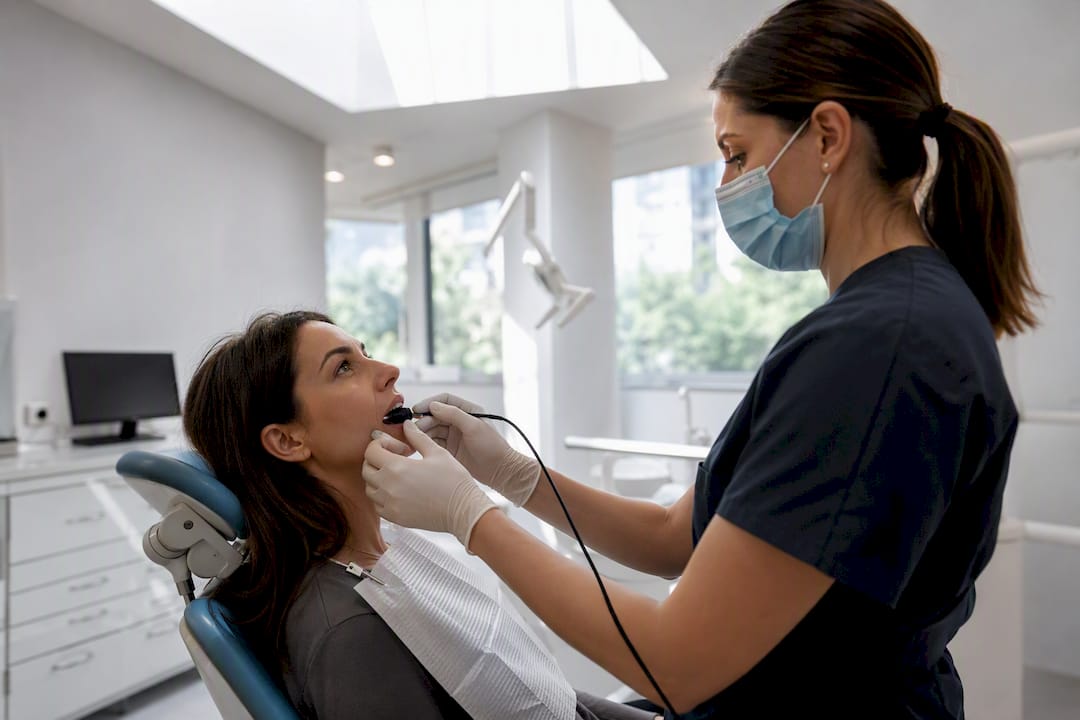
- Intraoral soft tissue exam. This is the oral cancer screening. Your dentist visually inspects and manually palpates your cheeks, tongue, floor of mouth, and throat. Good lighting and touch matter here because early lesions like leukoplakia can be subtle.
- Tooth-by-tooth examination. Each tooth gets checked for decay, cracks, wear, and existing restorations. Your dentist may tap teeth (percussion testing) or check for looseness (mobility) to flag issues that don’t show up visually.
- Periodontal assessment. A probe measures pocket depths around each tooth, and your dentist notes bleeding, gum recession, mobility, and furcation involvement (bone loss between roots on multi-rooted teeth). Research from Registered Dental Hygienists stresses that pocket depth alone isn’t enough. Missing any of these measures risks under diagnosing or overstating gum disease.
- Radiographs. Depending on your history, you might get bite wing x-rays, a panoramic image, or a full series.
- Documentation and planning. Findings get charted and translated into a prioritized plan.
Pro Tip: Ask your dentist to walk you through your periodontal chart numbers in real time. Seeing pocket depths next to your own teeth makes gum disease tangible instead of abstract.
For new patients or anyone needing extensive treatment, a full-mouth radiographic series is standard, while bite-wings alone are typically enough for lower-risk recall visits.
Comprehensive Exam vs. Routine Checkup: What’s the Difference?
The gap between a comprehensive exam and a routine checkup comes down to depth and coding. A periodic checkup uses code D0120 and covers a quick scan for new problems since your last visit. A comprehensive exam uses D0150 and involves full charting, a complete soft tissue screening, and usually new imaging.
At a typical recall visit, you’ll get:
- A visual check of teeth and existing restorations
- A quick gum check, often spot probing rather than full charting
- Cleaning and polishing
- A brief soft tissue glance
A comprehensive exam adds:
- Full periodontal charting across every tooth
- Complete oral cancer screening with palpation
- New or updated radiographs, sometimes a full series
- A written treatment plan with prioritized findings
Certain situations almost always trigger a comprehensive exam instead of a routine one: becoming a new patient at a practice, returning after a long gap (typically three or more years), or reporting a major health change like a new diabetes diagnosis. Insurers usually pay for D0150 at periodic intervals per provider, so switching dentists often means you’re due for another one regardless of recent prior exams.
Dental X-Rays: How Often Do You Actually Need Them?
Timing depends heavily on individual risk, not a one-size-fits-all calendar. New patients or those with extensive needs typically get a full-mouth series, while bite-wings run every 6 to 12 months for high-caries-risk patients and every 2 to 3 years for everyone else.
Several factors push that interval shorter:
- Diabetes, which slows healing and raises gum disease risk
- A heavy cavity history or active decay
- Dry mouth (xerostomia) from medications or medical conditions
- Tobacco use, a major risk factor for oral cancer and gum disease
Insurance plans commonly cap how often they’ll pay for D0150, often once every 3 to 5 years per provider. A practical approach: ask your insurer directly what your plan covers before scheduling, so you’re not surprised by an out-of-pocket bill. If signs of gum disease are present, your dentist may recommend a comprehensive periodontal evaluation (D0180), which is a more detailed exam billed separately when applicable.
Getting Ready: A Simple Checklist Before Your Visit
A little prep makes the appointment faster and the findings more accurate. Bring photo ID, your insurance card, a list of current medications, and any prior x-rays if you’re switching practices.
- Fill out new-patient forms honestly and completely, especially medical history and medications. Gaps here can hide risk factors your dentist needs to know about.
- Arrive a few minutes early. A full comprehensive exam with imaging typically takes longer than a standard cleaning visit.
- Flag dental anxiety upfront. Many practices offer nitrous oxide or oral sedation options, but that conversation needs to happen before the chair, not during it.
- Expect the possibility of additional imaging if your dentist spots something during the visual exam that a bite-wing wouldn’t capture.
Pro Tip: If you’re anxious about the exam itself, ask specifically what each step will feel like before it happens. Most dental anxiety comes from uncertainty, not the actual sensations.
What Happens After the Exam: Reading Your Results
Findings don’t all carry the same urgency, and a good dentist walks you through what needs attention now versus later. Cavities usually get grouped by severity, with active decay near a nerve prioritized over small surface spots that can wait a cycle.
Periodontal findings follow a similar logic. Mild gum inflammation might just mean a deeper cleaning and better home care, while advanced pocket depths and bone loss often lead to a referral for periodontal therapy or surgery.
- Suspicious soft-tissue lesions get one of three paths: watchful observation with a follow-up visit, referral to a specialist, or biopsy, based on ADA screening guidance
- Radiographic findings like deep decay near a nerve or bone loss around an implant often move a patient into urgent care rather than routine scheduling
- Cracked teeth or failing old restorations typically get flagged for restorative work, sometimes referenced against the difference between preventive and restorative care
Ask your dentist which findings are urgent, which can wait, and why. Pro Tip: Request a copy of your treatment plan with priorities ranked. It turns a wall of dental jargon into a clear decision list you can actually act on.
How Towne Dental Approaches the Comprehensive Exam
Towne Dental treats the comprehensive exam as the foundation for everything that follows, whether that’s a filling, a crown, or a full implant plan. The practice covers general, cosmetic, pediatric, and specialized care under one roof, including endodontics, periodontics, oral surgery, and orthodontics, so findings from your exam can move directly into treatment without bouncing between offices.
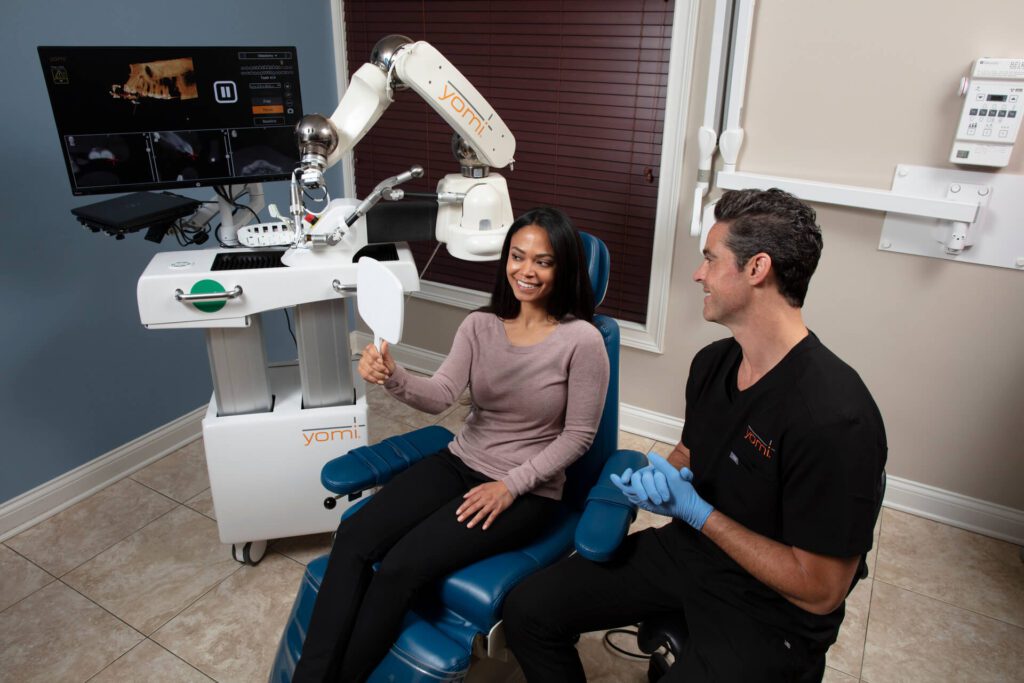
For implant cases, Towne Dental uses Yomi® robotic-assisted technology, which allows for more precise placement and a less invasive procedure than freehand techniques.
- Advanced imaging supports more accurate diagnosis during the initial exam itself
- Sedation options are available for patients who feel anxious about dental visits
- Treatment plans are built around each patient’s actual findings, not a generic template
A comprehensive exam only matters if what it finds actually gets acted on with the right level of care and comfort for the patient in the chair. That’s the standard a modern exam should be measured against.
Common Findings: What Dentists Actually Discover
Cavities remain the most frequent finding, ranging from small enamel spots to decay reaching the nerve. Gum disease runs a close second, showing up as gingivitis (reversible inflammation) or periodontitis (bone and tissue loss that isn’t reversible, only manageable).
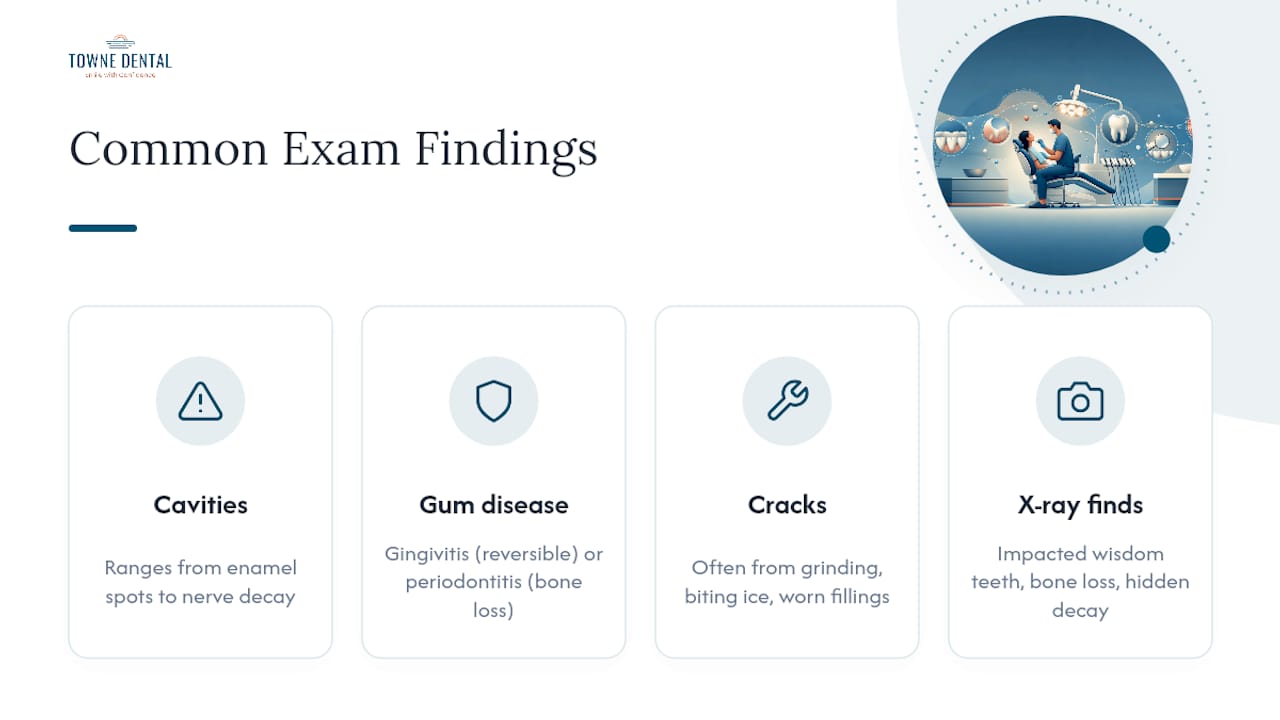
Cracked or fractured teeth turn up more often than most patients expect, frequently from grinding at night, biting on ice, or old fillings that have worn thin. Worn enamel from acid erosion or aggressive brushing is another common flag, sometimes prompting a conversation about diet or brushing technique rather than immediate treatment.
Oral cancer screening occasionally identifies suspicious white or red patches, ulcers that haven’t healed, or unusual lumps. Most of these turn out benign, but the exam exists precisely to catch the ones that aren’t. TMJ dysfunction, evident through jaw clicking, popping, or limited opening, also gets noted during the extraoral portion, even though it’s easy for patients to dismiss as unrelated to dental health.
X-rays reveal what’s invisible to the eye: impacted wisdom teeth, bone loss around roots, cysts, or decay between teeth that a visual check would miss entirely. Failing old restorations, like a crown with a gap or a filling that’s cracked, also show up regularly, especially in patients who haven’t had imaging in several years. Each finding gets weighed against your overall risk profile before your dentist decides what needs immediate attention.
Addressing Discomfort and Anxiety During the Exam
Dental anxiety is common, and most of it traces back to a handful of specific moments: the probe during periodontal charting, the gag reflex during x-rays, or simply the sound of instruments. None of these are minor concerns to dismiss.
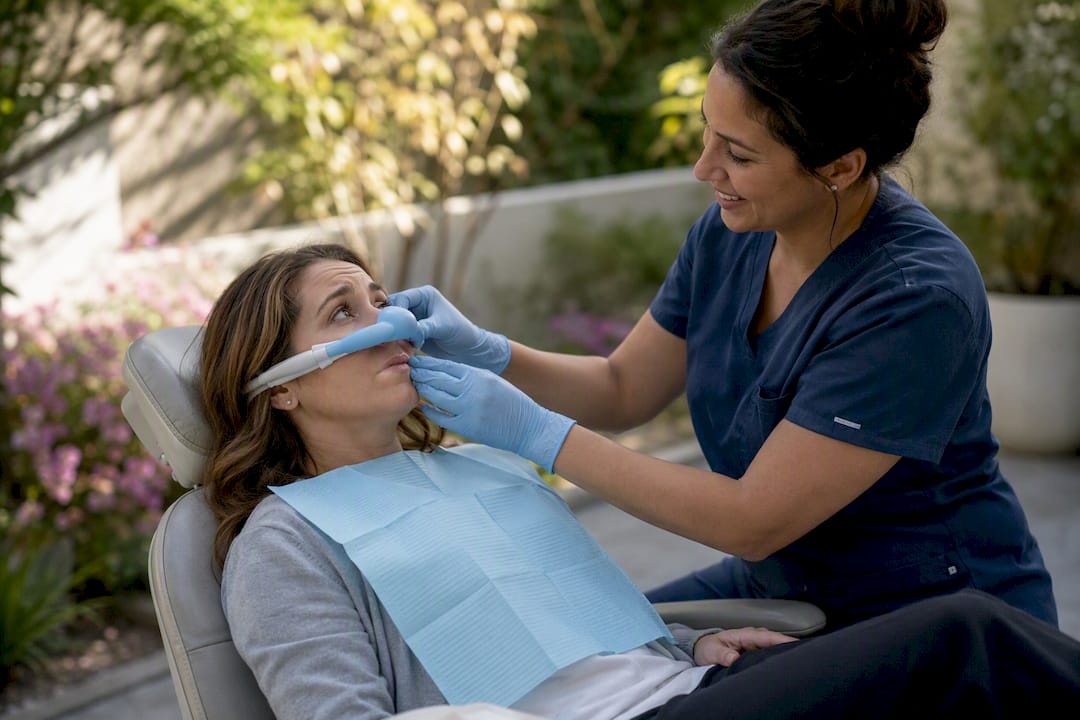
Periodontal probing can feel sharp or uncomfortable, especially around inflamed gums, but it typically lasts only a few seconds per tooth. Dentists can adjust pressure or use topical numbing gel if a patient reports sensitivity. Gagging during x-rays is common and usually solved with digital sensors, which are smaller than older film, or by adjusting positioning and breathing technique.
For patients with genuine dental phobia, most practices offer nitrous oxide (laughing gas) for mild relaxation or oral sedation for deeper anxiety cases. These options work best when discussed before the appointment, not mid-exam, since some sedation methods require you to arrange a ride home.
Jaw fatigue from holding your mouth open is another overlooked discomfort, particularly during longer imaging sessions. Simple bite blocks and scheduled breaks address this for most patients. The larger point: nearly every physical discomfort in a comprehensive exam has a known workaround, and voicing the concern out loud is what triggers the fix.
Insurance Coverage and What a Comprehensive Exam Costs
Most dental insurance plans cover a comprehensive exam (D0150) at least partially, though coverage terms vary significantly by plan and provider network. Many plans limit how often they’ll pay for D0150, commonly once every 3 to 5 years per provider, which is why switching dentists sometimes triggers an out-of-pocket exam even if you had one recently elsewhere.
Without insurance, a comprehensive exam alone, before x-rays or cleaning, typically runs higher than a routine periodic checkup because it includes more clinical time and often includes imaging. The exact price varies by practice, region, and what imaging is needed. Bundling the exam with a cleaning and any indicated x-rays is standard practice, and many offices provide a cost estimate before treatment begins based on what your specific plan covers.
Comprehensive periodontal evaluations (D0180) may be billed separately from a general comprehensive exam when a patient shows clear signs of gum disease, since it requires additional full periodontal charting. Ask your insurance provider directly which codes your plan covers and at what frequency, rather than assuming coverage matches what a friend or family member has experienced on a different plan. A quick call before your appointment prevents billing surprises after the fact.
Editorial Take: What Patients Get Wrong About This Exam
The biggest misconception about a comprehensive dental exam is treating it as a one-time event, something you get once as a new patient and never need again. Practitioner guidance actually points the other direction: periodic re-evaluation every 2 to 3 years makes more clinical sense than a single baseline you coast on indefinitely, especially as risk factors like diabetes, medication changes, or new habits shift over time.
The second gap is how patients treat periodontal probing as a formality instead of real diagnostic data. A single pocket depth measurement means little on its own. It’s the pattern across bleeding, recession, mobility, and furcation involvement that actually tells the story of gum disease progression.
What patients should prioritize first isn’t finding the cheapest exam or the fastest appointment. It’s asking direct questions about coding, frequency, and what specifically triggered the recommendation for a comprehensive exam over a routine one. That single conversation clears up more confusion than any amount of online research.
— Towne Dental
Book a Comprehensive Exam With Towne Dental
If you’re overdue for a comprehensive exam, or you’ve never had one done with full periodontal charting and updated imaging, Towne Dental handles that groundwork alongside everything that might come after it. Unlike a practice that only does exams and cleanings and refers you elsewhere for anything more complex, Towne Dental keeps general, cosmetic, periodontal, and surgical care under one roof, including Yomi® robotic-assisted implant placement when that becomes part of your plan.

That matters practically: findings from your exam, whether it’s a periodontal issue, a cracked tooth, or an impacted wisdom tooth on x-ray, move straight into treatment planning without a separate referral process eating up weeks. Explore the full range of dental services offered, or go directly to general dentistry to schedule your comprehensive exam and get a clear picture of where your mouth actually stands.
Sources
- ADA reaffirms importance of clinical exams in early oral cancer detection
- Evaluation of the dental patient – MSD Manuals Professional Edition
- The Comprehensive Exam | Registered Dental Hygienists
- Oral Health — CDC
This article is general information, not a substitute for advice from a qualified doctor. Consult a qualified healthcare professional about your own circumstances before acting on anything here.
FAQ
What Is a Comprehensive Exam in Dentistry?
It’s a full baseline evaluation, coded D0150, covering your teeth, gums, soft tissues, and jaw joints, typically given to new patients or those returning after a long gap.
What Is Included in a Comprehensive Exam?
It includes a medical history review, extraoral and intraoral inspection, oral cancer screening, full periodontal charting, and usually new radiographs, ending in a documented treatment plan.
What Is Included in a Full Dental Exam?
A full dental exam covers the same components as a comprehensive exam: tooth-by-tooth inspection, gum measurements, soft tissue screening, and imaging like bite-wings or a full-mouth series depending on risk.
What Is the Difference Between a Comprehensive and a Periodic Dental Exam?
A comprehensive exam (D0150) involves full charting, screening, and imaging, while a periodic exam (D0120) is a shorter recall check for changes since your last visit.