The most common cause of bleeding gums is plaque-induced gingivitis, inflammation triggered by bacterial buildup at the gum line. Systemic factors like diabetes, hormonal shifts, certain medications, and vitamin deficiencies can make bleeding worse or harder to resolve.
- Right now: Rinse gently with warm salt water and press clean gauze on any actively bleeding spot.
- This week: Keep brushing and flossing gently. Skipping hygiene because gums bleed almost always makes things worse.
- If it doesn’t stop: Book a dental exam. Bleeding that persists after better home care is your body telling you something more is going on.
Fast fact: Healthy gums don’t bleed during normal brushing or flossing. Any bleeding is a sign of active inflammation, even when it doesn’t hurt.
Key Takeaways
Plaque-induced gingivitis causes most bleeding gums, and bleeding that persists after two weeks of improved home care and professional cleaning signals a cause beyond simple hygiene.
| Point | Details |
|---|---|
| Plaque is the primary trigger | Bacterial buildup at the gum line causes most bleeding, and it hardens into tartar if not removed regularly. |
| Bleeding signals inflammation, not normalcy | Healthy gums don’t bleed during brushing or flossing, even without pain present. |
| Systemic factors complicate cases | Diabetes, hormonal changes, blood thinners, and rare nutritional deficiencies can worsen or explain persistent bleeding. |
| Keep cleaning, don’t stop | Gentle, consistent brushing and flossing resolve most bleeding faster than avoiding the area. |
| Persistent bleeding needs evaluation | Towne Dental combines periodontal exams, scaling, and medical coordination for cases that don’t resolve with home care alone. |
Get a Periodontal Evaluation at Towne Dental
If your gums have been bleeding for more than two weeks despite better brushing and flossing, a home routine can’t fix what a dental exam needs to diagnose. Towne Dental offers periodontal evaluations that check pocket depth, bleeding on probing, and bone level, not just a quick look and a cleaning.

Bring a current medication list and a rough timeline of when the bleeding started or worsened. If your history suggests diabetes, a blood-clotting issue, or a medication side effect, the clinic coordinates directly with your physician rather than treating your mouth in isolation. Start with a periodontal evaluation if you’ve noticed gum changes, or book a standard hygiene visit if it’s simply been a while since your last cleaning. Either way, the next step is the same: get it looked at before it becomes something bigger.
A Note From Towne Dental on Bleeding Gums
Bleeding gums get dismissed constantly, by patients who assume it’s normal and, honestly, sometimes by clinicians moving too fast to ask why. Our priority is figuring out which category a patient falls into: simple technique fix, tartar that needs scaling, or a systemic issue that needs a referral, before we ever reach for a treatment plan. Reach out with your symptoms and timeline. We’ll tell you plainly what we think is going on.
Table of Contents
- Why Gum Bleeding Happens: Gingivitis vs. Periodontitis
- The Full List of Bleeding Gums Causes
- How to Stop Bleeding Gums and What Treatment Looks Like
- When to See a Dentist or Doctor About Bleeding Gums
- Practical Steps to Prevent Bleeding Gums
- Infections That Cause Bleeding Gums Beyond Plaque
- Why Bleeding Gums Matter for Your Whole-Body Health
- Sources
Why Gum Bleeding Happens: Gingivitis vs. Periodontitis
Gingivitis is inflammation confined to the soft tissue around your teeth. It’s reversible. Periodontitis is what happens when that inflammation goes unchecked long enough to destroy the tissue and bone anchoring your teeth in place, and reversing that damage is much harder.
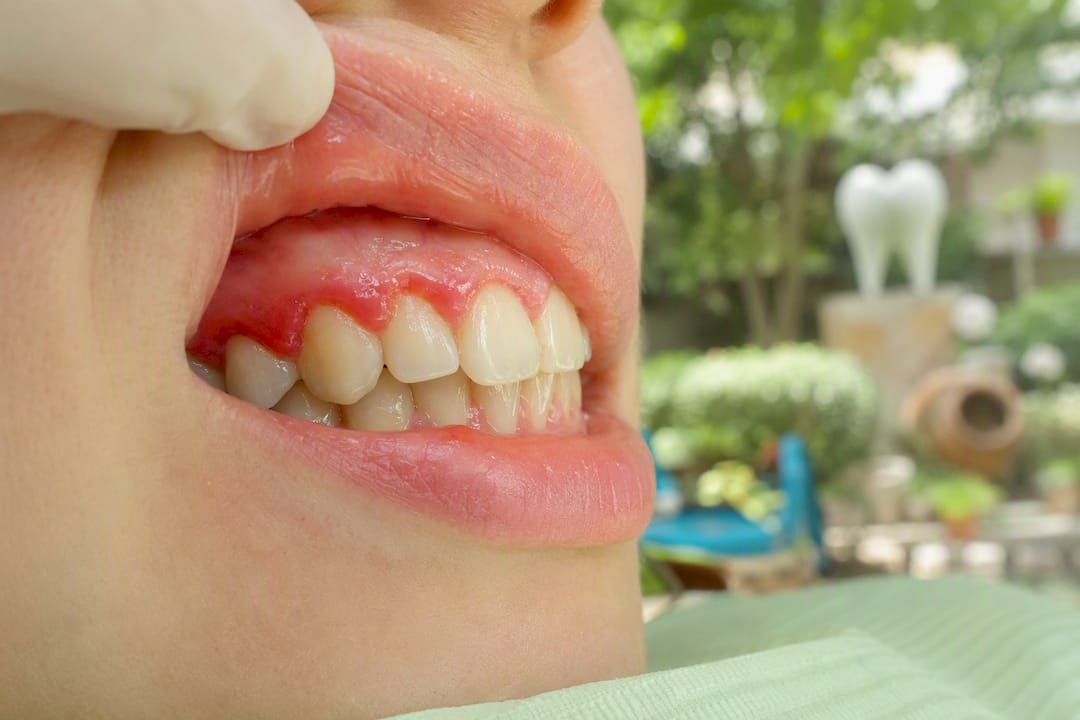
Bleeding is the clinical calling card of inflamed gum tissue, and it often shows up long before anything hurts. That’s the trap: early gingivitis is usually painless, so people dismiss the bleeding as normal, sometimes for years, while the disease quietly progresses underneath.
Dentists look past the bleeding itself to a few specific clinical signals:
- Bleeding on probing. Gentle probing that triggers bleeding indicates active inflammation, a standard diagnostic checkpoint.
- Pocket depth. Deeper gaps between gum and tooth suggest attachment loss, not just surface irritation.
- Radiographic bone loss. X-rays reveal whether the disease has reached the bone supporting your teeth, the marker that separates gingivitis from periodontitis.
The Full List of Bleeding Gums Causes
Plaque is where nearly every case starts. Bacterial biofilm collects at the gum line, and if you don’t disrupt it daily, it triggers an inflammatory response in the gum tissue. Leave it long enough and it mineralizes into tartar, a hardened deposit that ordinary brushing can’t remove and that keeps irritating the gums until a dentist scales it off. This single mechanism, plaque buildup progressing to tartar, accounts for the majority of bleeding gums cases seen in dental offices.
Beyond plaque, the causes fall into a few distinct categories.
- Mechanical and local irritation. A toothbrush with hard bristles, an aggressive brushing technique, newly started flossing, ill-fitting dentures, orthodontic hardware, or a tooth pushing through the gum can all cause localized bleeding that has nothing to do with disease progression.
- Anatomic traps for plaque. Crowded teeth, poorly contoured fillings, and mouth breathing create spots where plaque hides from your toothbrush. These local factors intensify plaque retention, which is why some patients keep bleeding in the same one or two spots no matter how carefully they brush everywhere else.
- Systemic and hormonal contributors. Uncontrolled diabetes impairs healing and worsens gum inflammation. Pregnancy, puberty, and menopause shift hormone levels in ways that make gum tissue more reactive to the same amount of plaque. Blood disorders and anticoagulant medications reduce your ability to clot, so bleeding that would otherwise be minor becomes noticeable.
- Nutritional deficiencies. Vitamin C deficiency, historically known as scurvy, causes gingival hemorrhage directly. Vitamin K deficiency affects clotting and can produce similar bleeding. Both are uncommon in people eating a normal varied diet, but they matter diagnostically when bleeding doesn’t respond to hygiene improvements.
- Medication-induced gum changes. Drugs like phenytoin, cyclosporine, and some calcium channel blockers can trigger gingival overgrowth, tissue that’s thicker, more inflamed, and more prone to bleeding even with good brushing habits.
Pro Tip: If bleeding is confined to one specific tooth or area every time, that’s often a local mechanical cause, a bad filling edge, a food trap, or an orthodontic wire. Generalized bleeding across most of your mouth points more toward plaque load or a systemic factor.
How to Stop Bleeding Gums and What Treatment Looks Like
For active bleeding, sit upright rather than lying down, wash your hands, and rinse gently with warm salt water. Fold clean gauze and apply light, steady pressure directly on the bleeding spot for a minute or two. Avoid aggressive brushing right in that area while it’s actively bleeding, but don’t stop oral hygiene altogether. Resume gentle brushing and flossing within the same day.
For the days and weeks after, three habits matter most:
- Switch to a soft-bristle brush and use a gentle, angled technique instead of scrubbing.
- Floss correctly and daily, curving the floss against the tooth rather than snapping it against the gum.
- Use an antiseptic rinse if your dentist recommends one for your specific situation.
Professional care typically starts with an exam, then moves to scaling and root planing, sometimes called subgingival debridement, to remove tartar below the gum line that a toothbrush can never reach. Some cases call for antimicrobial treatment, and advanced periodontitis with significant bone loss may eventually require surgical intervention.
What to expect: Bleeding typically improves within one to two weeks after professional cleaning combined with consistent home care. If it doesn’t, that timeline itself becomes a diagnostic clue pointing toward something beyond simple plaque buildup.
When to See a Dentist or Doctor About Bleeding Gums
Most bleeding gums resolve with better hygiene and a cleaning. A few signs mean you shouldn’t wait for that to happen naturally.
- Bleeding that continues despite genuinely improved brushing and flossing, or that persists after a professional cleaning.
- Loose teeth, visibly receding gums, pus at the gum line, persistent bad breath, or pain when chewing.
- Unexplained bruising, ongoing fatigue, fever, or unusual paleness alongside the gum bleeding, symptoms that can point toward a blood disorder rather than gum disease alone.
- Any dental procedure planned while you’re on blood thinners. Talk to the prescribing clinician before cleanings or extractions, not after.
If you notice signs of advanced disease like visible tooth structure through receding gums, don’t wait for your next scheduled visit.
Practical Steps to Prevent Bleeding Gums
Prevention is mostly a matter of consistency, not intensity. A soft-bristle brush used twice daily with correct technique, combined with daily interdental cleaning (floss, picks, or a water flossed), removes the plaque that causes almost all bleeding before it has a chance to harden into tartar.
- Schedule professional cleanings on the interval your dentist recommends. Tartar below the gum line can only be removed by scaling, never by a toothbrush.
- Address anatomic risk factors directly. Ask about adjusting an ill-fitting denture or a rough filling edge instead of just brushing harder around it.
- Manage systemic risk. Well-controlled diabetes and quitting smoking both measurably reduce gum inflammation over time.
- Don’t self-prescribe vitamin C or K supplements for bleeding gums. Ask your dentist or doctor to test for deficiency first; supplementing blindly treats a guess, not a diagnosis.
Pro Tip: Mark your calendar the same day you leave a cleaning appointment, not weeks later. People who book the next visit immediately are far more likely to actually keep the recall schedule that prevents tartar buildup.
What Happens at a Dental Visit for Bleeding Gums
Towne Dental starts every evaluation the same way: a review of your medical history and medications, then periodontal probing to measure pocket depth and check for bleeding on probing, followed by x-rays when there’s a reason to look below the gum line.
- Expect a hygiene visit with scaling if tartar is present, plus a treatment plan tailored to what’s actually causing your bleeding.
- If tooth loss has already occurred from advanced disease, the clinic’s Yomi® Robot assists with implant placement for precise, less invasive replacement.
- Bring a current medication list and a rough timeline of your symptoms. If a systemic condition looks likely, the clinic coordinates with your physician directly.
Infections That Cause Bleeding Gums Beyond Plaque
Plaque explains most bleeding gums, but not all of it. A handful of infections outside the usual gingivitis pathway can trigger gum bleeding, and they’re worth knowing about because they don’t respond to brushing harder.
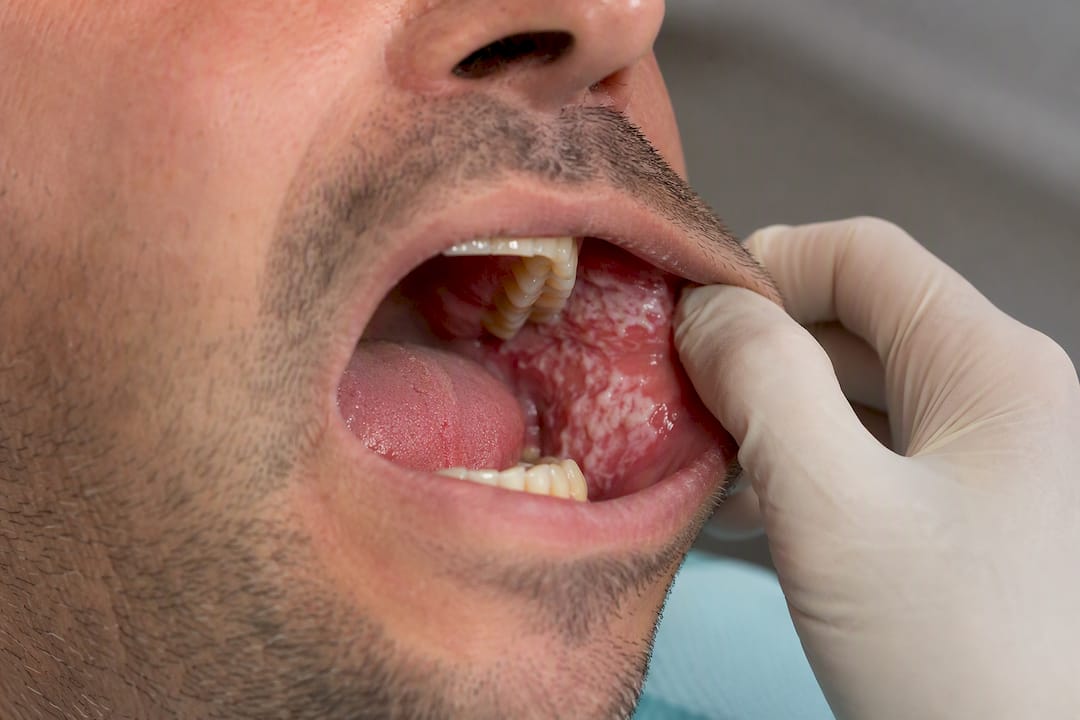
Oral candidiasis, a fungal overgrowth more commonly known as thrush, can inflame and thin oral tissue enough that gums bleed with minimal contact. It shows up more often in people using inhaled steroids, wearing dentures for long stretches, taking antibiotics, or living with a weakened immune system. The tissue often looks different too, sometimes with white patches or raw red areas rather than the uniform puffiness typical of plaque-driven gingivitis.
Viral infections matter here as well. Primary herpetic gingivostomatitis, caused by the herpes simplex virus, can produce painful, fragile gum tissue that bleeds easily, most often in children or during a first outbreak in adults. Necrotizing ulcerative gingivitis, though far less common today than in past decades, causes rapid tissue breakdown with pain, bleeding, and a distinct odor, and it tends to progress faster than typical gingivitis.
None of these are something to diagnose at home. If your gums look different from ordinary inflammation, patchy, ulcerated, or unusually painful rather than just puffy and red, that’s a reason to get examined rather than wait out the usual two-week hygiene improvement window.
Why Bleeding Gums Matter for Your Whole-Body Health
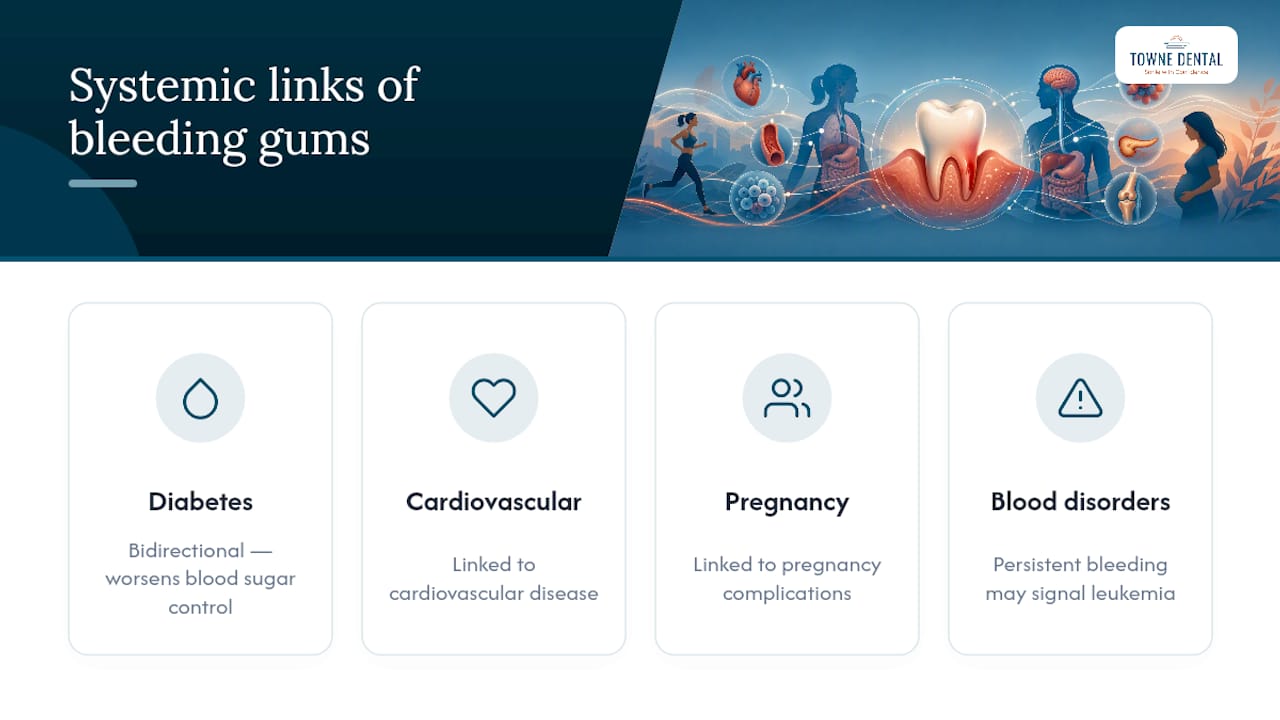
Bleeding gums aren’t just a mouth problem. The same bacteria driving gum inflammation can enter the bloodstream through inflamed tissue, and researchers have linked chronic gum disease to diabetes, cardiovascular disease, and complications in pregnancy. The relationship often runs both directions: uncontrolled diabetes worsens gum inflammation, and that same gum inflammation can make blood sugar harder to control.
Left untreated, gingivitis doesn’t stay contained to soft tissue forever. It can progress to periodontitis, where the infection starts breaking down the ligament and bone holding your teeth in place. That process is largely irreversible once bone loss sets in, which is why catching bleeding early, while it’s still reversible gingivitis, changes the entire trajectory of your dental health rather than just treating a symptom.
There’s a second, quieter risk. Persistent bleeding gums that don’t respond to good hygiene and professional cleaning can be the first visible sign of an underlying blood disorder, including conditions as serious as leukemia in rare cases. That’s an uncommon cause, but it’s exactly why bleeding that doesn’t improve deserves a real evaluation instead of a shrug.
Sources
For readers who want to verify the clinical details directly, these are the primary references behind this guide:
- Bleeding gums: MedlinePlus Medical Encyclopedia
- Bleeding Gums: Causes & Treatment — Cleveland Clinic
Always have a dentist or primary care clinician evaluate bleeding gums that persist, since only an in-person exam can rule out the causes described here.
FAQ
When Should I Worry About Bleeding Gums?
Worry when bleeding persists more than two weeks despite improved brushing and flossing, or if it comes with loose teeth, pus, receding gums, or unexplained bruising and fatigue elsewhere in the body.
How Do I Get My Gums to Stop Bleeding?
Rinse with warm salt water, apply gentle gauze pressure to active bleeding, and keep up gentle brushing and flossing rather than avoiding the area. Most bleeding improves within one to two weeks once plaque is under control and any tartar has been professionally removed.
What Is the Main Cause of Bleeding Gums?
Plaque buildup at the gum line, which triggers gingivitis, is the leading cause of bleeding gums by a wide margin, though systemic factors can worsen or prolong it.
What Is a Stage 4 Gum Infection?
Advanced periodontitis, sometimes described informally as a late stage of gum disease, involves significant bone and attachment loss, deep pockets, loose teeth, and often visible gum recession. It typically requires a periodontal evaluation and may need scaling, surgical treatment, or tooth replacement rather than home care alone.
This article is general information, not a substitute for advice from a qualified doctor. Consult a qualified healthcare professional about your own circumstances before acting on anything here.