Does antiseptic mouthwash actually help with a tooth infection?

The short answer: yes, but only up to a point. Antiseptic mouthwash reduces the bacteria in your mouth, which can slow infection progression and ease symptoms like swollen gums and pain. What it cannot do is reach the infection inside your tooth or surrounding tissue. That requires a dentist.
Here is what the evidence actually supports:
- Antiseptic rinses containing essential oils or cetylpyridinium chloride (CPC) reduce surface bacterial load, which helps limit how fast an infection spreads.
- Antimicrobial mouthrinses used alongside mechanical oral hygiene significantly improve plaque and gingivitis control compared to either approach alone.
- Mouthwash cannot penetrate an abscess or infected pulp. The bacteria driving a true tooth infection live deep inside tissue that rinsing simply cannot reach.
- Chlorhexidine gluconate is the most clinically effective antiseptic rinse for plaque and gingivitis, but it is prescription-only in the US at the standard 0.12% concentration.
- Over-the-counter (OTC) options like Listerine provide real antibacterial benefit but are adjuncts, not cures.
- Mouthwash buys you time. It does not buy you a resolution.
Pro Tip: When choosing an OTC antiseptic rinse, look for active ingredients on the label: thymol, eucalyptol, menthol, and methyl salicylate (Listerine’s essential oil formula) or cetylpyridinium chloride. Avoid products that list only fluoride or whitening agents as their active components.
Table of Contents
- Comparing the best antiseptic mouthwashes for tooth infection management
- Why mouthwash alone cannot cure a tooth infection
- How to use antiseptic mouthwash safely while managing a tooth infection
- Top dental providers in Lee County for treating tooth infections
- What you should take away from all of this
- Towne Dental Naples: when you need more than a rinse
- FAQ
- Key Takeaways
Comparing the best antiseptic mouthwashes for tooth infection management
Not all rinses work the same way. The table below covers the options most relevant to managing a tooth infection while you wait for professional care.
| Product | Best For | Infection Coverage | Availability | Price range | Side Effects / Precautions |
|---|---|---|---|---|---|
| Listerine (essential oils) | Broad daily antiseptic use | Surface bacteria, plaque, gingivitis | OTC — Walmart, CVS, Walgreens in Lee County | — | Taste alteration, mild burning; alcohol version may irritate sensitive tissue |
| Chlorhexidine 0.12% | High-efficacy plaque and gingivitis control | Broad-spectrum, superior to OTC | Prescription only in the US | Varies by pharmacy | Tooth and restoration staining with extended use; bitter taste |
| CPC-based rinses (e.g., Crest Pro-Health) | Moderate daily antiseptic use | Surface bacteria, mild gingivitis | OTC — widely available | — | Fewer side effects than chlorhexidine; mild taste change |
| Alcohol-free OTC rinses | Sensitivity or dry mouth | Surface bacteria | OTC — widely available | — | Gentler on tissue; less burning |
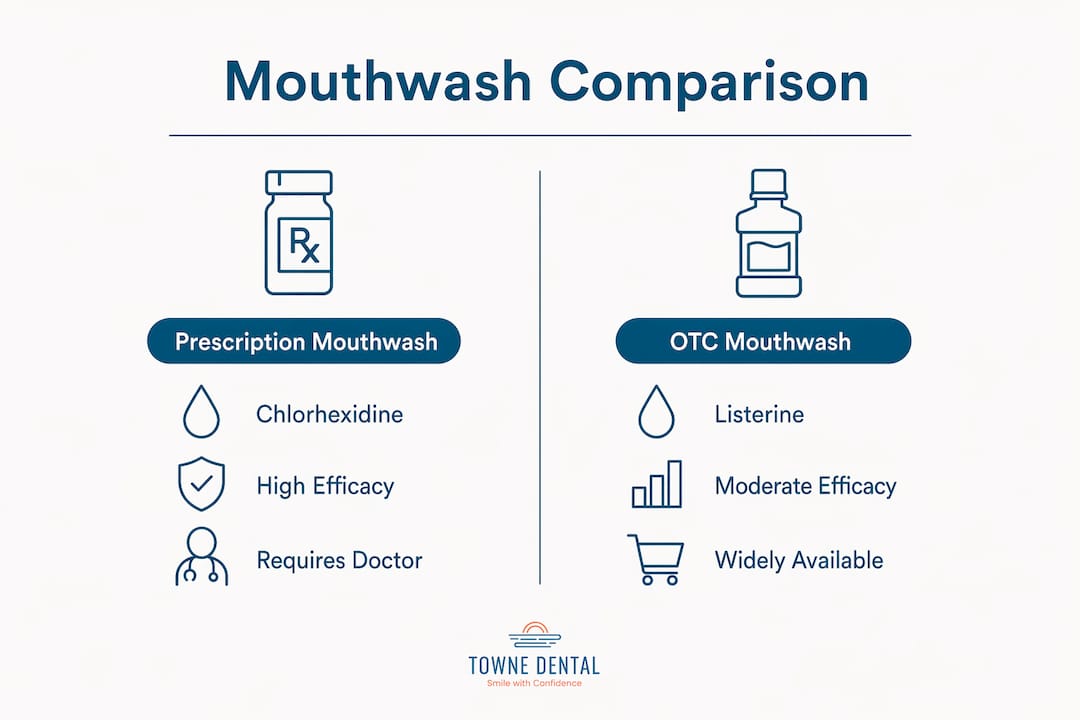
Listerine is the most accessible starting point for most people in Lee County. Walmart Fort Myers, CVS, and Walgreens all carry it. Chlorhexidine is the stronger clinical tool, but you need a prescription. If your dentist prescribes it, use it exactly as directed and expect some staining on teeth and restorations with prolonged use.
Why mouthwash alone cannot cure a tooth infection
A tooth infection, or dental abscess, originates inside the tooth’s pulp or in the surrounding bone and tissue. Mouthwash works on surfaces. Those two facts are the core of the problem.
- Rinsing reduces bacteria in your saliva and on your gums, but it cannot penetrate enamel, dentin, or an abscess pocket.
- Without treating the source, whether through a root canal, extraction, or incision and drainage, the infection persists and can worsen.
- The American Dental Association is explicit: definitive dental procedures, not antibiotics or rinses, are the primary treatment for pulpal and periapical infections.
- Untreated abscesses can spread to the jaw, neck, or airway. Fever, swelling that affects swallowing or breathing, or a feeling of general illness are emergency symptoms that require immediate care, not a rinse.
Seek urgent dental care if you notice any of the following:
- Fever above 101°F alongside tooth pain
- Swelling spreading to your jaw, cheek, or neck
- Difficulty swallowing or opening your mouth
- Pus draining from around a tooth
- Pain that is worsening despite OTC pain relievers
Mouthwash can reduce discomfort and slow bacterial spread. It cannot stop an abscess from progressing.
How to use antiseptic mouthwash safely while managing a tooth infection
Correct use matters. Overusing a strong antiseptic rinse can irritate tissue; underusing it reduces any benefit.

Pro Tip: Pair your antiseptic rinse with a warm saltwater rinse. Salt draws fluid from swollen tissue and creates a temporarily hostile environment for bacteria. Alternate the two: saltwater in the morning, antiseptic rinse after meals. This combination supports gum infection management better than either alone.
Follow these steps:
- Rinse twice daily with your chosen antiseptic mouthwash, typically after brushing.
- Use the full recommended volume (usually 20 ml) and swish for 30–60 seconds.
- Do not eat or drink for 30 minutes after rinsing to let the active ingredients work.
- Never swallow mouthwash. This applies especially to chlorhexidine and alcohol-based formulas.
- If you experience burning or irritation, switch to an alcohol-free OTC option.
- Chlorhexidine stains teeth over time. Rinse with water after use and maintain regular dental cleanings.
- Saltwater rinses and OTC pain relievers like ibuprofen or acetaminophen complement antiseptic rinses for symptom control but do not replace dental treatment.
Top dental providers in Lee County for treating tooth infections
Antiseptic mouthwash is a bridge, not a destination. These five Lee County providers offer the professional care that actually resolves a tooth infection.
| Provider | Best For | Infection Coverage | Google Reviews | Price |
|---|---|---|---|---|
| Towne Dental Naples | Emergency and definitive infection treatment | Full-spectrum: abscess, root canal, oral surgery, implants | 4.9★ (1015 reviews) | $$ |
| Lee Dental Care | General and restorative infection treatment | General, restorative, preventive | 4.8★ (4039 reviews) | $ |
| Advanced Technology and Laser Dentistry | Personalized infection management | Preventive, restorative, comprehensive | 4.8★ (954 reviews) | $$ |
| Dental Care of North Fort Myers | Comfort-focused infection treatment | Restorative, cosmetic | 4.6★ (947 reviews) | $$ |
| PureSmile Hub | Comprehensive care with advanced technology | Emergency, periodontal, restorative | 5★ (174 reviews) | $$ |
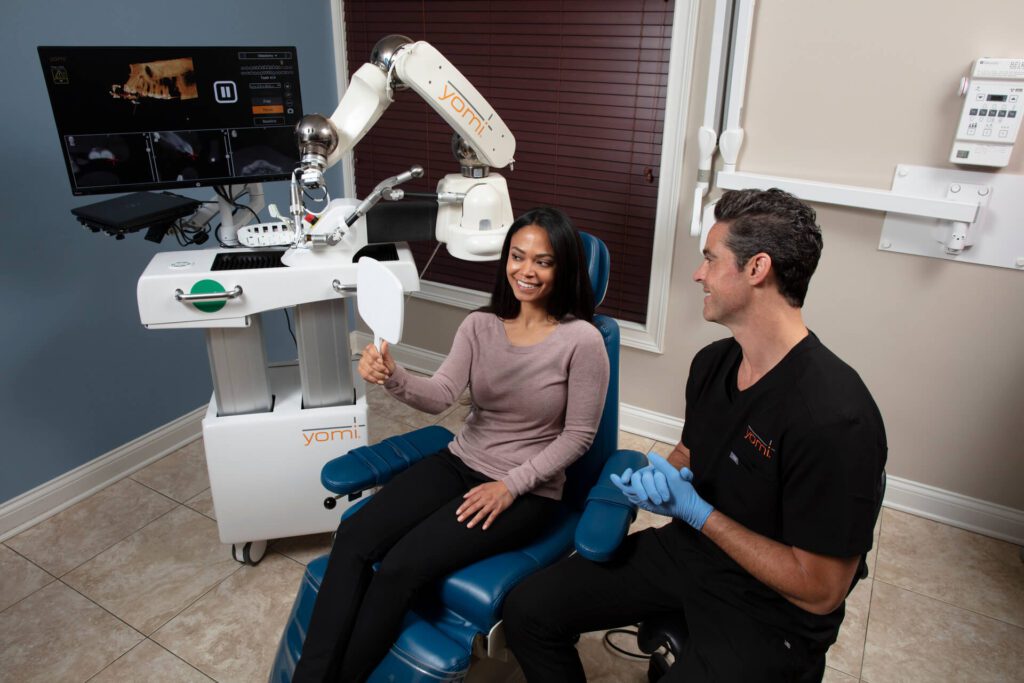
Towne Dental Naples is the strongest fit for anyone dealing with an active or worsening tooth infection in Lee County. The clinic offers emergency dental services alongside specialist-level care including endodontics and oral surgery, all under one roof. The Yomi robot-assisted implant technology signals a broader investment in precision care that extends to how the whole practice approaches treatment planning.
Lee Dental Care has served the community since 1983, building a track record in preventive and restorative dentistry that few local practices can match in depth. For patients whose infection is caught early and does not require emergency intervention, it is a solid, well-established option.
Advanced Technology and Laser Dentistry emphasizes the patient experience alongside clinical outcomes, which matters when infection-related anxiety is already running high. Their Fort Myers location makes them accessible to much of Lee County.
Dental Care of North Fort Myers focuses on creating a calming environment, particularly useful for patients who have been avoiding the dentist. Their advanced training in comfort-focused care makes them worth considering for restorative infection treatment.
PureSmile Hub covers the full range from emergency to periodontal care and brings a patient-first philosophy to each case. A good option when you need breadth of specialist services in one place.
What you should take away from all of this
Antiseptic mouthwash for tooth infection is a legitimate short-term tool. It reduces surface bacteria, eases gum inflammation, and can slow an infection’s spread while you arrange dental care. It does not cure abscesses, does not replace root canals or extractions, and does not substitute for antibiotics when systemic symptoms are present. The CDC and ADA both emphasize that definitive dental treatment is the correct first response to a tooth infection, not antibiotics and certainly not rinsing alone. Use mouthwash as a bridge. Get to a dentist.
Towne Dental Naples: when you need more than a rinse
When the mouthwash has done its job and you need the actual fix, Towne Dental Naples is built for exactly that moment. The clinic handles emergency dental care through to full restorative and specialist treatment, including endodontics, oral surgery, and periodontics, all in one location in Lee County. The Yomi robot-assisted implant system reflects a practice that invests in precision over convenience, which shows in how treatment plans are built around each patient’s specific situation rather than a one-size approach.
If you are managing a tooth infection right now and need professional care, Towne Dental Naples offers the full range of dental services to take you from pain management through to complete resolution. Call or book online to get an appointment scheduled before the infection progresses further.
FAQ
What kills a tooth infection naturally?
Nothing kills a tooth infection naturally. Saltwater rinses, antiseptic mouthwash, and clove oil can reduce bacteria and ease pain temporarily, but only professional dental treatment, such as a root canal, extraction, or drainage, eliminates the infection source.
Does antiseptic mouthwash help with gum infection?
Yes, for surface-level gum infections and gingivitis, antiseptic rinses containing essential oils or CPC reduce bacterial load and inflammation. For deeper periodontal infections, mouthwash is supportive only; a dentist needs to clean below the gumline.
Can I get chlorhexidine mouthwash over the counter?
No. Chlorhexidine 0.12% is prescription-only in the United States. You need a dentist or physician to prescribe it; it is not available at Walmart, CVS, or Walgreens without a prescription.
Can I get antibiotics for a tooth infection without seeing a dentist?
The ADA recommends against prescribing antibiotics for most localized dental infections because definitive dental treatment is more effective and safer. Antibiotics are appropriate only when systemic symptoms like fever or spreading swelling are present, and even then, dental treatment remains the priority.
Key Takeaways
Antiseptic mouthwash reduces surface bacteria and eases tooth infection symptoms, but only professional dental treatment resolves the infection itself.
| Point | Details |
|---|---|
| Mouthwash is an adjunct, not a cure | Antiseptic rinses reduce bacteria and manage symptoms but cannot penetrate an abscess or infected pulp. |
| Chlorhexidine requires a prescription | The most effective antiseptic rinse (0.12% chlorhexidine) is not available OTC in the US; Listerine and CPC-based rinses are the accessible alternatives. |
| Untreated infections escalate | Fever, spreading swelling, or difficulty swallowing are emergency signals that require immediate dental or medical care. |
| ADA prioritizes dental procedures | The American Dental Association recommends definitive dental treatment over antibiotics or rinses for most tooth infections. |
| Towne Dental Naples covers the full range | For Lee County residents, Towne Dental Naples offers emergency care through specialist treatment, including endodontics and oral surgery, to resolve infections completely. |