A funny taste in the mouth after a root canal is defined as a temporary sensory change caused by dental materials, disinfecting solutions, or the body’s natural healing response. Most patients in Bonita Springs and beyond experience this within the first 24–48 hours after treatment. The sensation ranges from metallic and bitter to medicinal or chemical. Knowing the difference between a normal healing taste and a warning sign can save you from unnecessary worry, or help you catch a real problem early. This guide covers every cause, every red flag, and every practical step to manage the taste and protect your tooth.
What causes a funny taste in your mouth after a root canal?
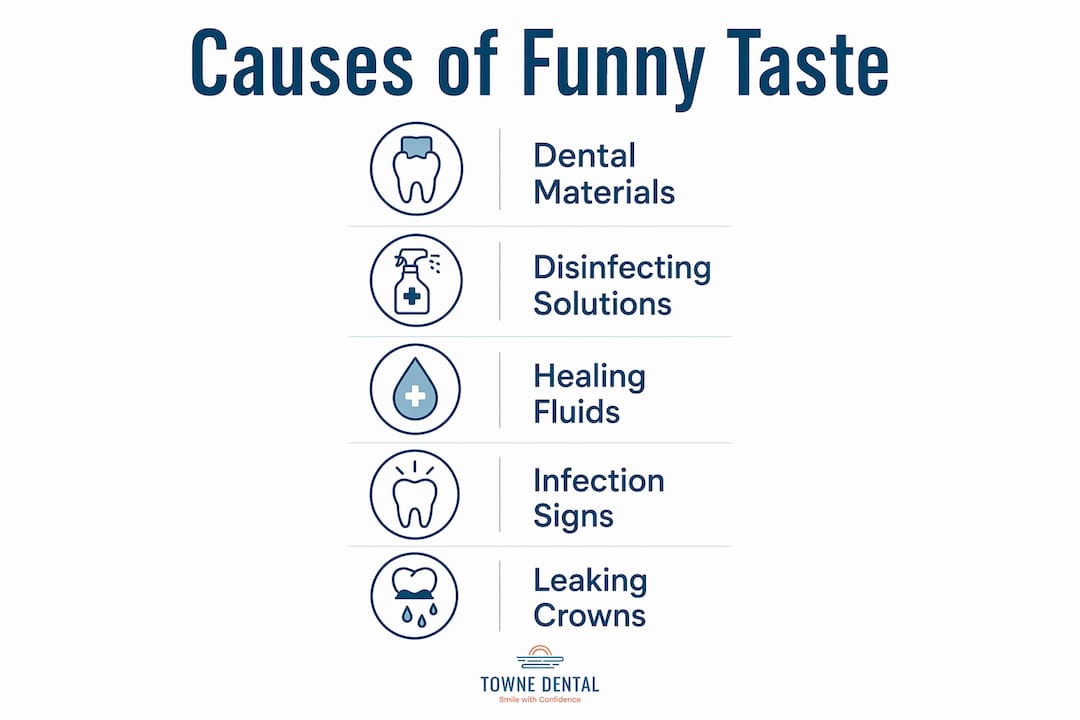
The weird taste in your mouth after a root canal almost always traces back to one of three sources: dental materials, disinfecting agents, or the early stages of tissue healing.
Dental materials and disinfecting solutions
During a root canal, your dentist cleans and shapes the inner canals of the tooth using irrigation solutions such as sodium hypochlorite. These solutions are strong disinfectants, and small amounts can linger in the mouth after treatment. Temporary dental materials such as filling compounds, medicated dressings, and temporary crowns also release a bitter, metallic, or chemical taste. That taste is not a sign of damage. It is a direct byproduct of the materials doing their job.
Healing tissue and fluid drainage
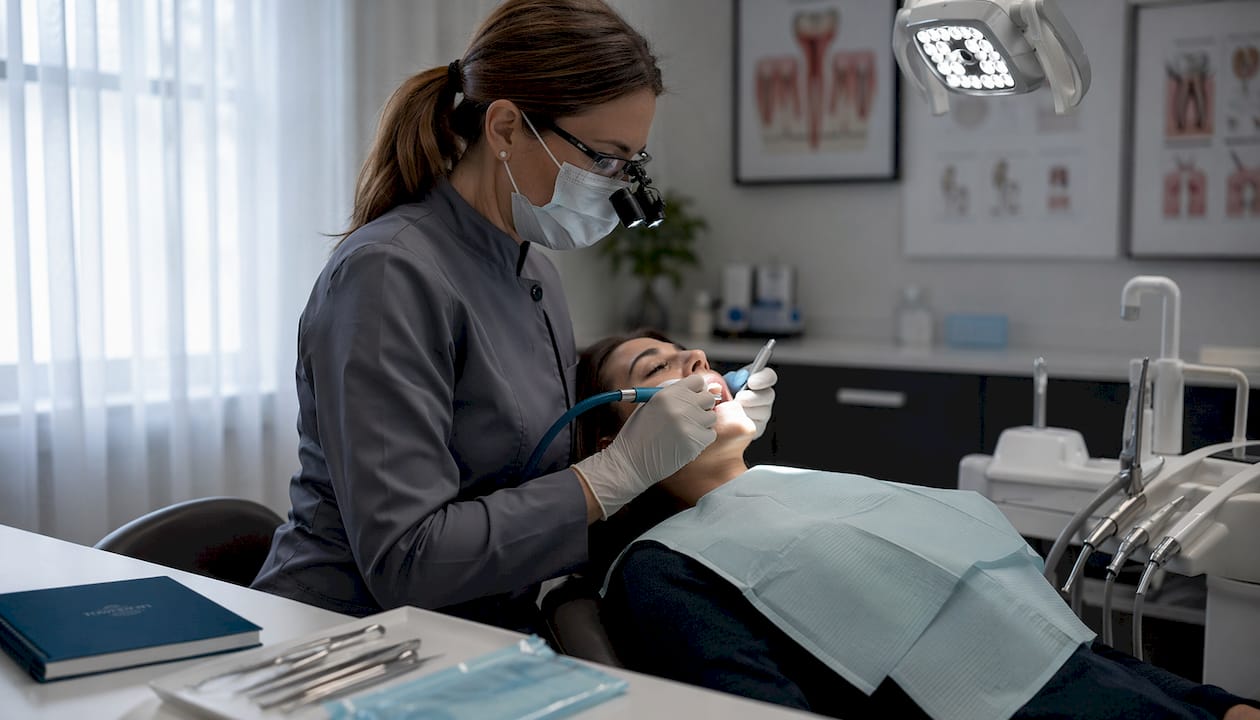
As the treated tooth begins to heal, the surrounding tissue may release small amounts of fluid. This is a normal inflammatory response. The fluid can carry a mild salty or slightly bitter taste. Patients sometimes describe this as a “weird taste after dental work” that they cannot quite name. The sensation typically fades as swelling decreases and the tissue closes.
The 24–48 hour window
Medicinal tastes typically subside within 24–48 hours after treatment. That timeline is the key benchmark. If the taste clears up within two days and you have no pain or swelling, the cause was almost certainly the procedure itself, not a complication.
Pro Tip: Rinse gently with warm salt water in the first 24 hours. This helps flush residual materials from around the treatment site without disturbing the temporary filling.
- Metallic taste: usually from filling compounds or anesthetic residue
- Bitter or chemical taste: typically from irrigation solutions like sodium hypochlorite
- Salty taste: often from minor fluid drainage during early healing
- Medicinal taste: from medicated dressings placed inside the canal
When does a funny taste indicate a problem after root canal treatment?
Not every unpleasant taste after a root canal is harmless. Certain taste changes signal infection, leakage, or treatment failure, and they require professional attention fast.
Tastes that last beyond 48 hours
Bad tastes lasting beyond 48 hours with swelling, pain, or gum bumps require urgent dental follow-up. A foul or rotten taste that does not improve with brushing and rinsing is not a residual material effect. It is a sign that bacteria are active around or inside the tooth.
Signs of infection you should not ignore
- Persistent foul or rotten taste that does not clear with good oral hygiene
- Swelling in the gum or jaw near the treated tooth
- A pimple-like bump on the gum (called a fistula) that may ooze fluid
- Fever or general feeling of illness alongside the taste change
- Throbbing pain that worsens rather than improves after the first day or two
A fistula is one of the clearest warning signs. A pimple-like bump on the gums is the body’s drainage point for pus from an ongoing infection. Its presence means the infection is active and needs treatment now, not at your next scheduled checkup.
Leaking crowns and trapped food
A bad taste post root canal can also come from a mechanical problem rather than an active infection. Microleakage from a poorly fitted crown allows bacteria and food debris to accumulate between the crown and the tooth. This creates a foul taste and gum irritation that mimics infection. A cracked temporary crown has the same effect. If the taste is localized to one spot and worsens after eating, a leaking restoration is the likely cause.
A persistent, toxic-smelling taste that does not improve with brushing or rinsing is a direct indicator of active bacterial decay around the tooth site. This symptom requires professional evaluation, not more time or more mouthwash.
Patients sometimes wait too long because they assume the taste will resolve on its own. The signs you need an endodontist include exactly this pattern: a taste that lingers, worsens, or comes with any of the five symptoms listed above. Waiting beyond 48–72 hours with those symptoms risks spreading the infection.
How to manage and reduce the funny taste in your mouth after a root canal
Managing the unpleasant taste after a dental procedure starts with good oral hygiene and smart habits in the first few days of healing.
Daily habits that make a real difference
Consistent brushing and flossing after a root canal promote healing and decrease the bacterial sources of bad taste. Brush gently twice a day, paying attention to the area around the treated tooth without pressing directly on the temporary filling. Floss carefully to remove food particles that can get trapped near the treatment site and ferment, creating a foul smell and taste.
- Rinse with warm salt water two to three times daily for the first week
- Avoid sticky, hard, or crunchy foods that can dislodge the temporary filling
- Stay hydrated, since a dry mouth concentrates any existing taste
- Skip alcohol-based mouthwashes in the first 48 hours, as they can irritate healing tissue
- Use a soft-bristled toothbrush to avoid aggravating the gum around the treated tooth
When home care is not enough
If the taste changes after dental work persist past two days despite good hygiene, the problem is not a hygiene issue. A crown that sits too high or seals poorly will keep producing a bad taste no matter how well you brush. In that case, a professional crown adjustment or replacement is the fix, not more rinsing.
Pro Tip: If the taste is strongest right after you eat and fades between meals, food trapping around the crown or temporary filling is the likely cause. Mention this pattern to your dentist. It points directly to a sealing problem rather than an infection.
Taste changes after root canal treatment that come with any gum tenderness or visible swelling near the tooth also warrant a call to your dental office. Do not wait for a scheduled appointment if those symptoms appear together.
What to expect during follow-up and when to seek professional care
Healing after a root canal follows a predictable timeline. Knowing what is normal at each stage helps you decide when to call your dentist and when to give your body more time.
Typical healing timeline
| Timeframe | Expected experience | Action needed |
|---|---|---|
| 0–24 hours | Mild metallic or medicinal taste, some numbness | Normal; rinse gently with salt water |
| 24–48 hours | Taste fading, mild soreness possible | Normal; monitor for worsening symptoms |
| 48–72 hours | Taste should be mostly resolved | Call dentist if taste persists or worsens |
| Beyond 72 hours | Any foul or rotten taste, swelling, or pain | Seek professional evaluation promptly |
| Any time | Fistula (gum bump), fever, or spreading pain | Urgent dental visit required |
The role of advanced imaging
Some cases of persistent bad taste post root canal have a hidden cause. Advanced imaging can identify accessory canals that harbor bacteria invisible to standard treatment. These are small branches off the main canal that standard X-rays can miss. If your taste does not resolve and your dentist finds no obvious mechanical cause, imaging is the next step.
Treatment options for persistent taste issues
When the cause is confirmed, treatment options include root canal retreatment to address missed canals, crown replacement to eliminate microleakage, or periodontal treatment if gum disease is contributing to the problem. The goal in every case is to preserve the natural tooth. Retreatment success rates are high when the problem is caught before the infection spreads to surrounding bone.
Persistent unpleasant tastes not resolved by normal hygiene are early red flags requiring professional assessment. Acting on that signal early protects both the tooth and the surrounding tissue.
Key takeaways
A funny taste in the mouth after a root canal is normal within the first 48 hours, but any taste that persists beyond that window with swelling, pain, or a gum bump requires professional evaluation without delay.
| Point | Details |
|---|---|
| Normal taste window | Metallic or medicinal tastes from dental materials resolve within 24–48 hours. |
| Red flag timeline | Foul or rotten taste lasting beyond 48 hours signals possible infection or leakage. |
| Fistula is urgent | A pimple-like gum bump means active pus drainage and requires immediate dental care. |
| Home care limits | Brushing and rinsing help during normal healing but cannot fix a leaking crown or missed canal. |
| Advanced imaging matters | Hidden accessory canals causing persistent taste require imaging to diagnose and treat. |
What I have learned from patients dealing with post-root canal taste changes
Patients almost always come in worried that the funny taste means the root canal failed. In my experience, that fear is understandable but usually wrong in the first 48 hours. The materials used during treatment are strong, and the mouth is sensitive. A bitter or metallic taste right after the procedure is the tooth doing exactly what it should.
The cases that concern me are the ones where patients wait. They assume the taste will pass, they rinse more, they brush harder, and they give it another week. By the time they come in, what started as a manageable localized infection has sometimes spread. The fistula they noticed two weeks ago has been draining the whole time. That is the scenario good follow-up prevents.
The other misconception I see regularly is that a bad taste always means the root canal needs to be redone. That is not true. A poorly fitted crown is a far more common cause of persistent taste issues after treatment, and it is a straightforward fix. Patients who come in early get a simple crown adjustment. Patients who wait sometimes need retreatment or more involved care.
My honest advice: trust the 48-hour rule. If the taste is gone or clearly fading by then, you are healing normally. If it is not, call your dentist that day. The natural tooth is worth protecting, and catching problems early is always the better path.
— Krunal
Post-root canal concerns? Towne Dental is here to help
If the taste in your mouth after a root canal is not improving, or if you are noticing swelling, pain, or a gum bump alongside it, a professional evaluation is the right next step.

Towne Dental serves patients throughout Bonita Springs and the surrounding area with specialized endodontic care and thorough follow-up for exactly these situations. The team uses advanced imaging to identify hidden causes of persistent symptoms, and treatment plans are built around preserving your natural tooth whenever possible. Whether you need a crown adjustment, retreatment, or simply a professional assessment to rule out complications, Towne Dental’s complete dental services cover every step of post-root canal care.
FAQ
How long does a funny taste last after a root canal?
A metallic or medicinal taste from dental materials typically resolves within 24–48 hours after treatment. Any taste lasting beyond that window, especially if foul or rotten, warrants a call to your dentist.
Is a metallic taste after a root canal normal?
Yes. A metallic taste after fillings and root canal procedures is a direct result of the filling compounds and disinfecting solutions used during treatment. It is temporary and should fade within two days.
What does a bad taste after a root canal mean?
A bad taste post root canal within the first 48 hours is usually caused by dental materials or minor fluid drainage during healing. A foul or rotten taste that persists or worsens indicates possible infection, a leaking crown, or a missed canal requiring professional attention.
What is a fistula and should I be worried?
A fistula is a small pimple-like bump on the gum that forms when the body drains pus from an infection. Its presence signals active infection and requires an urgent dental visit, not a wait-and-see approach.
How do I get rid of a bad taste after a root canal at home?
Rinse with warm salt water two to three times daily and maintain gentle brushing and flossing around the treated tooth. If the taste does not improve within 48 hours or comes with swelling or pain, home care is not sufficient and professional evaluation is needed.