If your back molar area is throbbing, swollen, and tastes bad, you likely have pericoronitis, the medical term for an infected wisdom tooth. Start with warm saltwater rinses and a swallowed dose of acetaminophen or ibuprofen (never crush a pill against the gum). Call a dentist today rather than waiting it out.
Act immediately if you notice any of these:
- Swelling spreading toward your eye, neck, or throat
- Trouble swallowing or breathing
- A fever above 101°F alongside facial swelling
- Your jaw won’t open more than a finger’s width
Otherwise, these steps buy you time until you’re seen:
- Rinse with warm salt water every two to three hours
- Take an over-the-counter pain reliever exactly as labeled
- Skip chewing on that side and avoid trapping food in the area
Key Takeaways
Chronic or worsening wisdom tooth infections respond best to early extraction, while mild acute cases often clear up with oral hygiene, antiseptic rinses, and pain control within a few days.
| Point | Details |
|---|---|
| Know the red flags | Rapid swelling, fever, trouble swallowing, or a locked jaw mean urgent care, not home treatment. |
| Try home care first | Warm salt water, chlorhexidine rinse, and swallowed analgesics often help mild cases within 3 to 4 days. |
| Watch the timeline | Symptoms that don’t improve after 3 to 4 days usually call for a dental visit and possible extraction. |
| Don’t rely on repeat antibiotics | Chronic pericoronitis responds better to extraction than to another round of medication. |
| Towne Dental offers same-day care | Emergency evaluation, oral surgery, and sedation options are available for infected wisdom teeth. |
This article is general information, not a substitute for advice from a qualified doctor. Consult a qualified healthcare professional about your own circumstances before acting on anything here.
Table of Contents
- What Is a Wisdom Tooth Infection (Pericoronitis)?
- Why Wisdom Teeth Get Infected
- Wisdom Tooth Pain vs. Infection: What’s the Difference?
- When a Wisdom Tooth Infection Becomes an Emergency
- How Dentists Diagnose an Infected Wisdom Tooth
- Treating a Wisdom Tooth Infection Step by Step
- Why Extraction Often Beats Repeated Antibiotics
- Sources
- FAQ
What Is a Wisdom Tooth Infection (Pericoronitis)?
Pericoronitis is an infection of the soft tissue flap, called the operculum, that covers a wisdom tooth stuck halfway through the gum. Bacteria that normally live in your mouth get trapped underneath that flap, multiply, and inflame the surrounding tissue. It’s remarkably common: one clinical review found pericoronitis affects 81% of people ages 20 to 29 in some study populations, which makes it one of the most frequent reasons young adults end up in an oral surgeon’s chair.
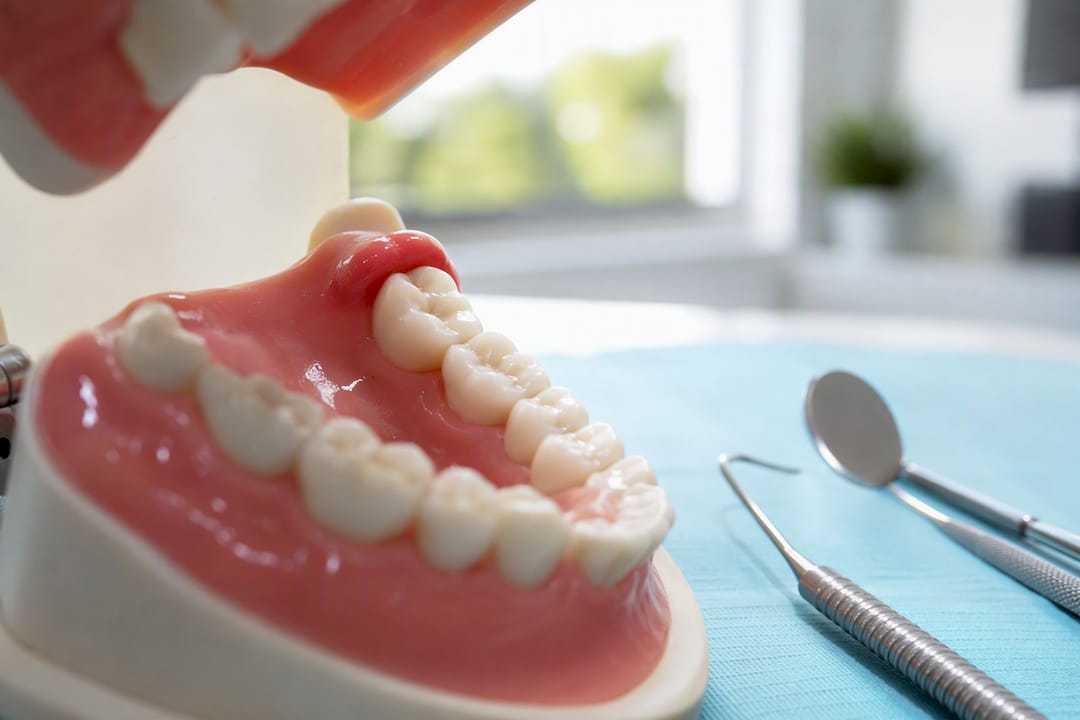
Third molars typically try to erupt between ages 17 and 25, right when jaws are often too crowded to give them room. When a tooth only partially breaks through, that gum flap creates a pocket that’s nearly impossible to brush or floss effectively. Food debris and plaque settle in, mixed bacterial populations take hold, and what starts as mild tenderness can turn into a genuine infection within days.
Why Wisdom Teeth Get Infected
The core problem is mechanical, not hygiene failure on your part. An impacted or partially erupted tooth creates a flap of gum tissue that traps food and bacteria in a spot your toothbrush can’t reach, no matter how diligent you are.
A few factors make infection more likely:
- Being in your late teens to mid-20s, when third molars are actively trying to erupt
- A recent cold or upper respiratory infection, which precedes roughly 43% of pericoronitis cases
- A crowded jaw that leaves no clear path for the tooth to erupt
- Opposing upper teeth biting down on the gum flap, causing repeated trauma
- Inconsistent brushing and flossing around the very back molars
None of these factors are fully within your control, which is exactly why so many otherwise careful people still end up with an infected wisdom tooth.
Wisdom Tooth Pain vs. Infection: What’s the Difference?
Normal eruption discomfort and true infection can feel similar at first, but they diverge fast. Watch for this full symptom checklist, which points toward pericoronitis rather than routine teething-style soreness:
- Pain that keeps building instead of coming and going
- Red, puffy gum tissue around the back molar
- Pus or a foul discharge when you press near the tooth
- A persistent bad taste or breath that mouthwash doesn’t fix
- Swelling along your jawline or cheek
- A fever, even a low-grade one
- Tender, swollen lymph nodes under your jaw
- Trismus, meaning your jaw feels tight or won’t open all the way
Compare that against ordinary eruption pain: an intermittent ache that flares when you chew, mild tenderness you can manage with basic pain relief, and no swelling, pus, or fever. If your symptoms stop at “annoying” and don’t escalate, it may be normal eruption pain. If they’re stacking up, especially pus plus swelling plus a tight jaw, treat it as an infection needing evaluation.
Pro Tip: Never place an aspirin or any analgesic tablet directly against the sore gum. It’s a common mistake people make thinking it will numb the spot locally, but it can chemically burn the tissue and does nothing to treat the underlying infection. Swallow pain relievers as directed on the label instead.
When a Wisdom Tooth Infection Becomes an Emergency
Most cases of pericoronitis stay localized and respond to treatment, but the tissue spaces at the back of your mouth connect directly to your neck and throat. That’s the reason dentists take rapid swelling seriously.
Treat these as true emergencies:
- Swelling that spreads quickly toward your eye, neck, or under your jaw
- Difficulty breathing or swallowing
- A high fever with chills
- Severe trismus that keeps you from opening your mouth at all
- Any sense that you’re getting sicker by the hour, not better
Left unchecked, a localized infection can progress into a deep space infection that threatens the airway, including a rare but dangerous condition called Ludwig’s angina, where infection spreads across the floor of the mouth. If you notice any red flag above, go to an emergency dental clinic immediately rather than waiting for a regular appointment. Milder but worsening symptoms, like facial swelling without breathing trouble, still warrant a same-day call to your dentist.
How Dentists Diagnose an Infected Wisdom Tooth
Diagnosis usually takes just one visit. A dentist examines the area for the telltale gum flap, checks for pus or drainage, feels for swollen lymph nodes, and tests how far you can open your jaw.
Expect these steps:
- A visual and physical exam of the gum tissue and surrounding area
- A dental X-ray, or sometimes a full panoramic image, to see the tooth’s angle, root position, and whether it’s damaging the neighboring molar
- Immediate chairside care when needed, such as irrigating the pocket, clearing debris, and controlling pain before deciding on antibiotics or a same-day extraction referral
Treating a Wisdom Tooth Infection Step by Step
Treatment escalates in stages, and most people never need every step below.
- Home care first. Rinse with warm salt water several times a day, add an antiseptic mouthwash like chlorhexidine, take acetaminophen or ibuprofen as directed, and avoid chewing on that side.
- In-office irrigation and debridement. A dentist flushes out trapped debris and bacteria from under the gum flap, which alone resolves many mild cases.
- Operculectomy. If the tooth is angled well and likely to erupt cleanly, removing the gum flap itself can eliminate the pocket where bacteria collect.
- Extraction. When the tooth’s position won’t allow proper cleaning long term, pulling it is the definitive fix and prevents the same infection from returning.
- Antibiotics when indicated. Amoxicillin or metronidazole come into play when there’s spreading infection, fever, or trismus severe enough to suggest the infection has moved beyond the local tissue.
Most acute cases improve within 3 to 4 days of starting oral hygiene measures and antiseptic rinses. If symptoms haven’t eased by then, or they’ve gotten worse, that’s the signal to move toward extraction rather than cycling through another round of antibiotics. Recovery after extraction typically runs about a week for the surgical site to close over, though full healing of the bone takes longer.
Pro Tip: If your dentist recommends extraction, don’t put it off waiting for symptoms to fully calm down first. Scheduling it while the infection is still low-grade is usually faster and simpler than waiting for another flare-up.
Why Extraction Often Beats Repeated Antibiotics
Clinical guidance is fairly blunt about this. When pericoronitis becomes chronic or keeps coming back, treating it with antibiotics over and over doesn’t fix the underlying mechanical problem, the tooth position that made it prone to infection in the first place.
Chronic recurrent pericoronitis is preferably managed by early extraction rather than repeated courses of antibiotics, which only control symptoms temporarily without addressing why the infection keeps returning.
That guidance, drawn from a British Journal of General Practice review of erupting wisdom teeth, reflects something dentists see constantly: patients want a prescription because it feels less invasive, but antibiotics don’t change the anatomy trapping bacteria under that gum flap. If your dentist brings up extraction after a second or third flare-up, that’s not an overreaction. It’s usually the more effective long-term move than a periodontal support plan built around another course of pills.
A Dentist’s View on Getting This Right
When you come in with a swollen, painful wisdom tooth, the plan is usually simple: control the infection first, manage your pain, then decide if the tooth needs to come out for good. Modern sedation options and precise surgical technique mean complication rates are low and recovery is more comfortable than most people expect. If you’re dealing with severe swelling or a fever, please call a clinic rather than trying to wait it out at home.
If You Need Urgent Care, Towne Dental Is Ready Today
Towne Dental offers same-day emergency evaluation for exactly this kind of infection, along with oral surgery for extractions and sedation options for patients who feel anxious about the procedure. 
Getting seen quickly matters more than any home remedy once swelling, fever, or jaw stiffness sets in. A call to our office starts with a brief screening of your symptoms so our team can decide whether you need to come in immediately or can be scheduled within the day. From there, treatment typically moves straight from diagnosis to pain relief to a same-visit plan, whether that means irrigation, a minor gum procedure, or scheduling extraction with sedation. If you’re weighing your options, our oral surgery page outlines what to expect, or you can look at our full emergency dental services to see how quickly we can get you in.
Sources
- Problems with erupting wisdom teeth: signs, symptoms, and management | British Journal of General Practice
- Pericoronitis – StatPearls – NCBI Bookshelf
- Problems with erupting wisdom teeth: signs, symptoms, and management | PMC
- Pericoronitis: Symptoms, Causes & Treatment
- Wisdom teeth
FAQ
How do you know if a wisdom tooth is infected?
Look for swelling, pus, a bad taste, jaw stiffness, or fever alongside pain that keeps building instead of coming and going. Mild, intermittent soreness with no swelling usually points to normal eruption rather than infection.

How long can you leave an infected wisdom tooth untreated?
Acute pericoronitis that hasn’t improved after 3 to 4 days of home care needs a dentist visit, since waiting longer raises the risk of the infection spreading into deeper tissue.
What is the 3-3-3 rule for tooth infection?
There’s no established clinical framework called the “3-3-3 rule” in dental guidance; if you’ve seen it referenced elsewhere, it likely oversimplifies the real benchmark, which is that symptoms unresolved after 3 to 4 days of home care warrant professional treatment.
Is a wisdom tooth infection a dental emergency?
It becomes one when swelling spreads toward your neck or eye, you have trouble breathing or swallowing, or you develop a high fever. Towne Dental treats these cases as same-day emergencies rather than routine appointments.