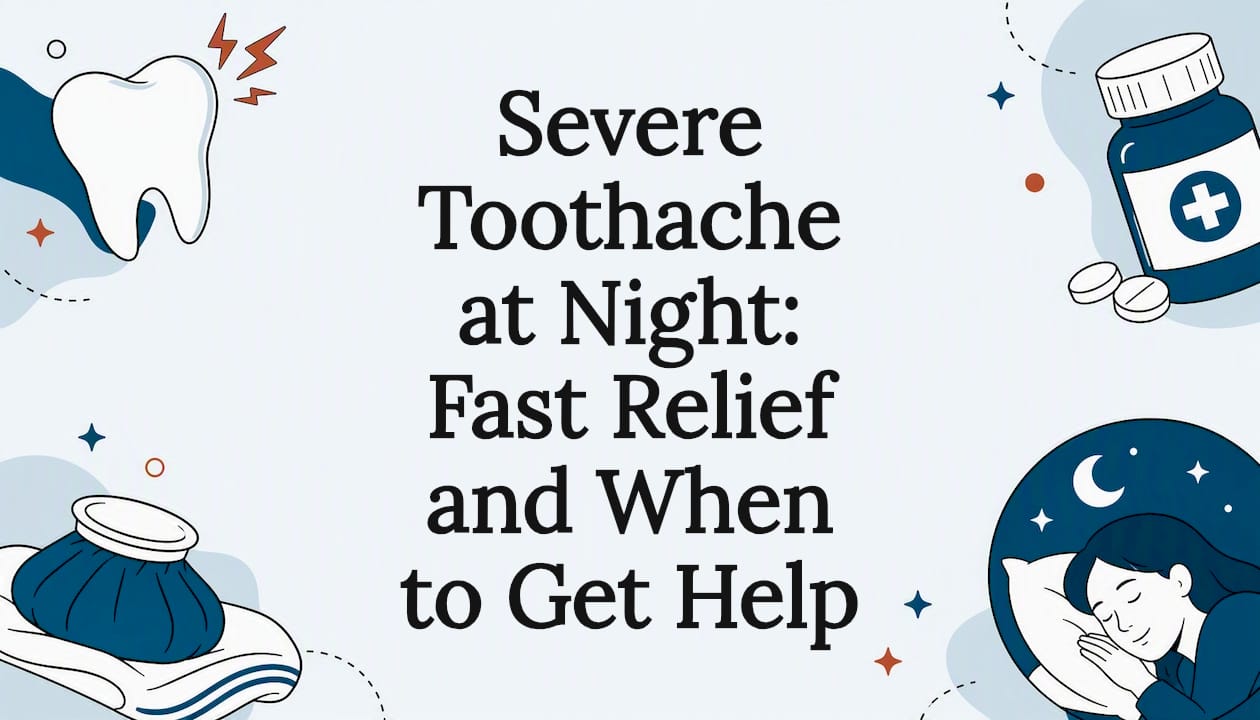
If a severe toothache is keeping you up right now, take an appropriate dose of ibuprofen or acetaminophen, rinse with warm salt water, hold a cold compress against your cheek, and sleep with your head propped up. Get to an emergency room now if you have a fever over 101°F, swelling spreading toward your eye or jaw, trouble breathing or swallowing, or bleeding that won’t stop.
Here’s the order that tends to work best:
- Take ibuprofen (200 to 400 mg) if you have no stomach, kidney, or blood-thinner issues, or acetaminophen (500 to 1,000 mg) if NSAIDs aren’t safe for you. Follow the label’s maximum daily dose.
- Rinse with warm salt water (½ teaspoon salt in 8 ounces of water) for 30 seconds.
- Apply a cold compress to the outside of your cheek for 15 to 20 minutes.
- Prop yourself up with two or three pillows before you try to sleep.
Never give aspirin to children with a toothache, and skip topical benzocaine gels for kids under two.
Call 911 or go to the ER immediately if you notice:
- Fever above 101°F
- Facial swelling spreading toward the eye, neck, or under the jaw
- Difficulty breathing or swallowing
- Bleeding you cannot control
A severe toothache lasting more than 48 hours needs professional evaluation even without those red flags.
Key Takeaways
Severe nighttime toothache responds best to a same-night combination of NSAID or acetaminophen dosing, saltwater rinsing, cold compress, and head elevation, but pain lasting beyond 48 hours or paired with fever, swelling, or breathing trouble needs immediate professional care.
| Point | Details |
|---|---|
| Start with the right analgesic | Use ibuprofen (200 to 400 mg) or acetaminophen (500 to 1,000 mg) per label limits before trying other remedies. |
| Rinse and cool, don’t burn | Warm salt water and a wrapped cold compress help; never place aspirin or clove oil directly on bare gum tissue. |
| Watch the 48-hour mark | Pain lasting more than two days needs dental evaluation even without fever or swelling. |
| Know your red flags | Fever over 101°F, spreading facial swelling, breathing or swallowing trouble, or uncontrolled bleeding mean the ER, not home care. |
| Definitive care comes from a dentist | Towne Dental’s emergency dentistry team offers same-day evaluation, drainage, and root canal or extraction when home relief has run its course. |
Table of Contents
- Step-by-Step Home Relief Ranked by Effectiveness and Safety
- Do Home Remedies Like Clove Oil Actually Work?
- What’s Actually Causing Your Toothache?
- Why Does Tooth Pain Feel Worse at Night?
- How to Sleep With Tooth Pain Without Missing a Warning Sign
- When Should You Call a Dentist Instead of Going to the ER?
- What the ER Can and Can’t Fix
- What Happens at a Dental Emergency Visit
- A Note From Towne Dental on Getting Through Tonight
- Get Same-Day Relief From Towne Dental’s Emergency Team
- Sources
- FAQ
Step-by-Step Home Relief Ranked by Effectiveness and Safety
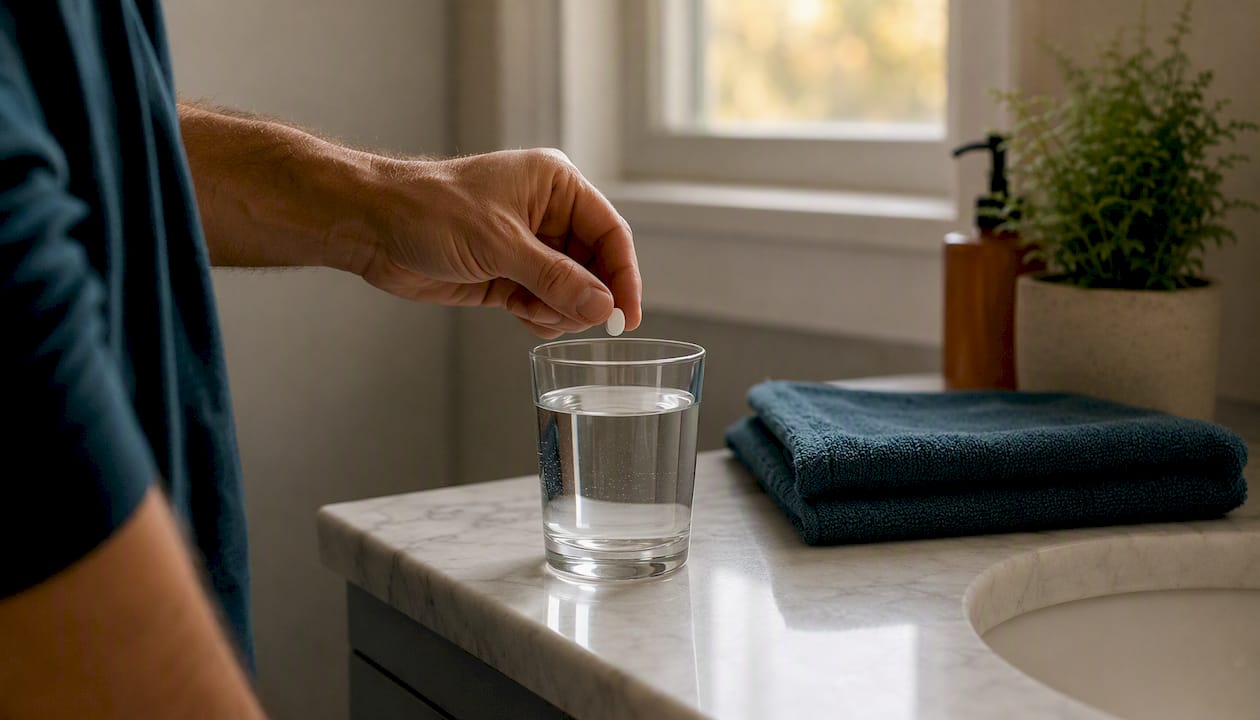
Start with an oral analgesic before you do anything else. Ibuprofen (Advil) at 200 to 400 mg every six to eight hours is generally the most effective first-line option for dental pain, because it targets the inflammation driving the throb, not just the sensation of it. If you can’t take NSAIDs due to a stomach ulcer, kidney disease, or blood-thinning medication, acetaminophen (Tylenol) at typical OTC doses every four to six hours is your alternative. Some dentists suggest alternating the two, spaced so you’re never taking more than the daily maximum of either drug within 24 hours. Check the label or DailyMed’s drug information if you’re unsure about interactions with a medication you already take.
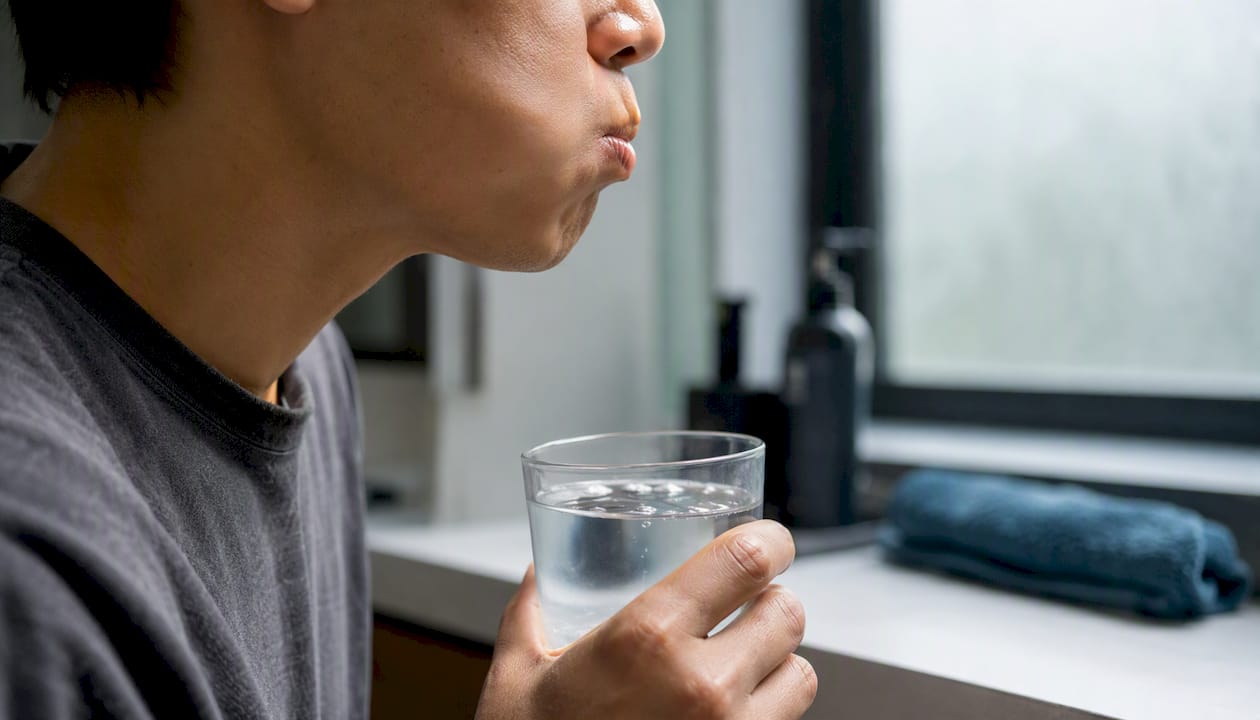
Next, rinse. Mix half a teaspoon of salt into eight ounces of warm water and swish for 30 seconds, then spit. This pulls fluid out of inflamed gum tissue and can flush out food debris irritating an exposed nerve. A diluted hydrogen peroxide rinse (3% peroxide mixed 1:1 with water) can help if there’s visible pus or a bad taste, but never swallow it and never use it undiluted.
A cold compress wrapped in a thin towel, applied to the outside of your cheek for 15 to 20 minutes at a time, numbs the area and reduces swelling. Give your skin at least 20 minutes of rest between applications to avoid frostbite.

Topical benzocaine gels like Orajel numb the gum surface for short stretches, but the FDA has warned against using them in children under two due to a rare blood disorder risk, and adults shouldn’t use them for more than a few days without dental follow-up.
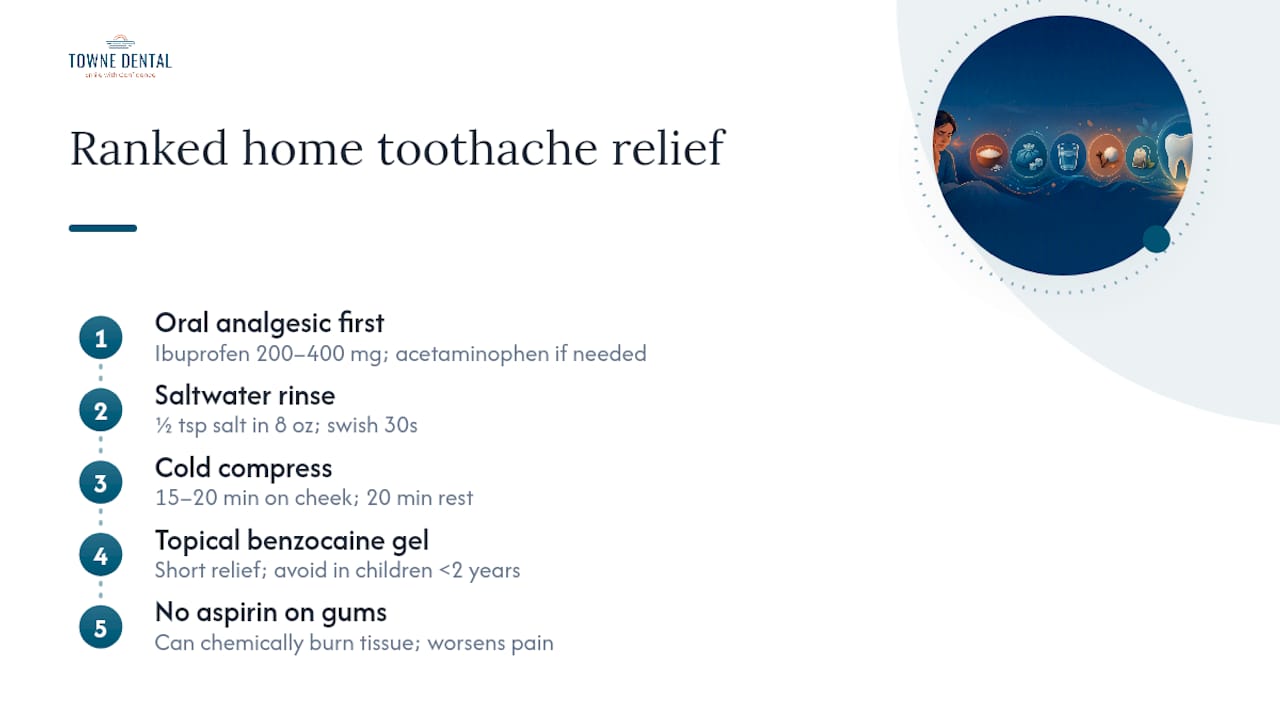
Never place aspirin directly on a tooth or gum. It doesn’t work like a topical anesthetic; instead it can chemically burn the soft tissue and make things worse.
Pro Tip: Take your NSAID or acetaminophen about 30 to 45 minutes before bed, not the moment pain wakes you. Getting ahead of the pain curve works better than chasing it once it spikes.
Do Home Remedies Like Clove Oil Actually Work?
Clove oil contains eugenol, a compound with genuine numbing properties, and dabbing a small amount on a cotton ball against the sore tooth (never directly on bare gum tissue) can provide short-term relief. Garlic and peppermint show up constantly in home-remedy lists, but the evidence behind them is thin. Cold milk or a chilled tea bag might feel soothing simply from the temperature, not from any active ingredient.
Be careful here: applying clove oil, garlic, or aspirin directly against gum tissue for extended periods can cause chemical burns rather than relief. If a remedy causes burning, swelling, or blistering, stop immediately.
Pro Tip: Treat every home remedy as a bridge to your next dental visit, not a substitute for one. If pain returns full force once the clove oil wears off, that’s your nerve telling you it needs a professional look.
None of this replaces care if you’re already seeing red flags. Watch for the same signs of a spreading abscess covered above.
What’s Actually Causing Your Toothache?
- Cavity or tooth decay eating through enamel toward the nerve
- Irreversible pulpitis — inflamed nerve tissue that often needs a root canal
- Dental abscess — a pocket of infection, usually urgent
- Cracked tooth or lost filling exposing sensitive inner layers
- Impacted wisdom tooth pushing against nerves and bone
- Bruxism (nighttime teeth grinding) straining the jaw and teeth
- Referred sinus pain mimicking a toothache in upper back teeth
Abscess, pulpitis, and spreading infection are the ones that won’t wait. If your pain lines up with the red flags mentioned earlier, that’s your cue to move fast.
Why Does Tooth Pain Feel Worse at Night?
Lying down increases blood flow to your head, which raises pressure inside an already inflamed tooth. That extra pulpal pressure is one reason throbbing pain intensifies once you’re horizontal. Daytime distractions also disappear, so your brain has nothing to compete with the pain signal. Add in fading painkillers from earlier in the day, and the discomfort that felt manageable at noon can feel unbearable at midnight. Persistent nocturnal throbbing often signals that pulp inflammation is actively progressing, not just flaring temporarily.
How to Sleep With Tooth Pain Without Missing a Warning Sign
- Stack two or three pillows, or use a wedge, to keep your head elevated above your heart.
- Apply a cloth-wrapped ice pack for 15 to 20 minutes before bed, never bare skin for long stretches.
- Skip very hot or cold foods, alcohol, and heavy caffeine in the hours before sleep. All three can aggravate nerve sensitivity or worsen grinding.
- Set a phone alarm for a few hours in if pain is severe, so you can recheck for new swelling or fever rather than sleeping through a worsening infection.
Pro Tip: Sleep on your back if you can manage it. Side-sleeping on the painful side adds pressure exactly where you don’t want it.
When Should You Call a Dentist Instead of Going to the ER?
Run through this checklist:
- Pain lasting longer than 48 hours, regardless of severity
- Fever above 101°F
- Facial swelling spreading toward your eye, jaw, or neck
- Difficulty breathing or swallowing
- Bleeding that won’t stop with pressure
- Severe pain that OTC medication isn’t touching at all
If you’re seeing airway involvement, spreading swelling, or systemic signs like fever and chills, that’s an ER situation. An emergency department can stabilize you with IV antibiotics and manage bleeding or airway risk. What it usually can’t do is fix the tooth itself. That’s a dentist’s job, through drainage, a root canal, or extraction. On a weekend or holiday, call your dentist’s after-hours line first; most practices, including Towne Dental’s emergency dentistry line, have a way to triage urgent cases even when the office is closed.
What the ER Can and Can’t Fix
Emergency rooms are built for stabilization, not tooth repair. They can manage a compromised airway, control bleeding, start IV or oral antibiotics, and give you strong pain control to get through the night. What they generally cannot do is perform a root canal or extraction. Most ERs will treat the acute crisis, then refer you back to a dentist for the actual fix. If you’re not in immediate danger, an urgent dental clinic gets you to that fix faster.
What Happens at a Dental Emergency Visit
A dentist facing a severe toothache typically starts with an exam and an X-ray to pinpoint the source, whether that’s a fractured root, an abscess pocket, or advancing decay. From there:
- Incision and drainage relieves pressure from a localized abscess almost immediately.
- Root canal treatment removes infected pulp tissue and saves a tooth that would otherwise need extraction. Signs pointing toward this option include lingering sensitivity to heat and spontaneous night pain.
- Extraction becomes necessary when a tooth is too damaged to restore.
- Crowns or bonded restorations address fractures once infection is under control.
Expect local anesthesia during treatment, a prescription for antibiotics or stronger analgesics if needed, and a follow-up scheduled for whatever definitive work the exam revealed. Dentists warn that infections in the mouth don’t resolve on their own; once pulpitis or an abscess sets in, drainage or a root canal is what actually ends it, not another night of ibuprofen. Towne Dental’s full range of services covers exactly this kind of same-visit imaging, drainage, and endodontic care, so a 2 a.m. emergency doesn’t turn into a multi-week runaround.
A Note From Towne Dental on Getting Through Tonight
These home steps buy you time, not a cure. If your pain matches any red flag above, don’t wait until morning. Emergency dental care exists precisely for nights like this, and getting seen early almost always means a simpler fix.
Get Same-Day Relief From Towne Dental’s Emergency Team
Ibuprofen and a cold compress will get you through the next few hours, but they won’t touch an abscess or a cracked root, and that’s where a same-day dental visit changes the outcome. Towne Dental keeps emergency slots open specifically for patients dealing with exactly this kind of overnight pain, so you’re not stuck choosing between an ER waiting room and another sleepless night.

Call the office or use the emergency dentistry line and describe your symptoms; the team will triage you over the phone and, in most cases, offer a same-day appointment rather than a callback days later. If your pain points to a deeper issue like a cracked tooth (a common culprit behind pain when biting down), the visit typically includes imaging and a same-visit plan rather than a referral elsewhere. Book your evaluation through Towne Dental’s general dentistry page and get the tooth actually treated instead of just quieted for another night.
Sources
- Toothache: Symptoms, Causes & Remedies
- Is that dental pain an emergency? | Harvard Health
- DailyMed — drug information
FAQ
What Can I Do to Relieve Excruciating Tooth Pain?
Take an appropriate dose of ibuprofen or acetaminophen, rinse with warm salt water, apply a cold compress, and keep your head elevated while lying down. If pain remains unbearable despite this, it likely signals an abscess or pulpitis that needs same-day dental care.
What Can the ER Do for Tooth Pain?
An emergency room can control bleeding, manage airway risk, prescribe antibiotics, and provide strong pain relief, but it generally can’t perform a root canal or extraction. You’ll still need dental follow-up for the actual fix.
Why Isn’t Ibuprofen Helping My Toothache?
If ibuprofen isn’t working, the underlying cause, often an abscess or advanced pulpitis, may have progressed beyond what an anti-inflammatory can manage. Pain that doesn’t respond to NSAIDs at the correct dose is a sign to seek dental evaluation soon, not to increase the dose further.
How Do I Stop Severe Tooth Pain at Night?
Combine an OTC pain reliever taken 30 to 45 minutes before bed with a saltwater rinse, a cold compress, and sleeping with your head propped up on extra pillows. These steps reduce pain enough to sleep but don’t replace treating the underlying cause, so book a dental visit if pain persists past 48 hours.