Sedation dentistry is generally safe when a trained clinical team follows ADA and ASA guidelines, screens patients properly, and monitors vital signs throughout the procedure. The main caveats are medical: uncontrolled heart or lung disease, severe sleep apnea, and certain medications raise the risk profile. Before any appointment, confirm your provider does a real pre-op health review and has continuous monitoring equipment in the room.
TL;DR:
- Most sedation procedures are safe when performed by trained professionals following official guidelines and with proper patient screening.
- Risks increase significantly for individuals with unmanaged severe heart or lung conditions, sleep apnea, high BMI, or on complex medications, requiring extra pre-op evaluation.
- Common side effects include grogginess, dry mouth, and memory gaps, which usually resolve within 24 hours, but serious events like airway obstruction are rare.
- Continuous monitoring using pulse oximetry and capnography, along with trained staff and emergency protocols, are critical to maintaining safety during sedation.
- Patients should disclose all medications, follow fasting instructions, arrange transportation home, and understand recovery timelines before undergoing sedation.
Table of Contents
- What Are the Levels of Sedation Dentistry?
- Who Should Consider Sedation, and Who Needs Extra Screening?
- What Are the Real Risks and Side Effects of Sedation?
- How Do Clinics Keep Sedation Safe?
- How Should You Prepare for a Sedation Appointment?
- What Should You Expect During Recovery?
- What Should a Safe Sedation Clinic Look Like?
- Ask the Right Questions Before You Say Yes
- Ready for a Calmer Visit? Here’s the Next Step
- Where to Verify These Standards Yourself
- Sources
- FAQ
What Are the Levels of Sedation Dentistry?
Sedation dentistry runs on a scale, not a switch. The ADA’s guidelines for sedation and general anesthesia define four depths, and each carries a different safety and monitoring burden.
- Minimal sedation (often nitrous oxide, inhaled): you stay awake and responsive, breathing on your own.
- Moderate sedation (oral pills or lighter IV dosing): drowsy, may slur words, still responds to voice or touch.
- Deep sedation (higher-dose IV): you likely won’t respond to normal talking, but you can still be roused.
- General anesthesia: fully unconscious, no response to stimulation, breathing may need assistance.
Nitrous oxide wears off within 15 to 30 minutes, so most patients drive themselves home. Oral and IV sedation linger for hours, which is why an escort is non-negotiable. Here’s the part patients miss: the route a drug takes into your body doesn’t lock in the depth. Oral conscious sedation can drift into deep sedation depending on dose and how your body processes it, which is exactly why continuous clinical judgment matters more than the label on the sedation type.
Who Should Consider Sedation, and Who Needs Extra Screening?
Sedation makes sense for patients with genuine dental anxiety, kids or adults with special needs who can’t stay still for treatment, people with an overactive gag reflex, and anyone facing a long procedure like multiple extractions or wisdom teeth removal in one visit.
Certain health factors change the calculation. If any of these apply to you, expect (and ask for) extra evaluation before your appointment:
- A classification of ASA III or higher (meaning a severe systemic disease that limits daily activity).
- Uncontrolled heart disease, lung disease, or sleep apnea.
- A high BMI, which changes both dosing and airway risk.
- Pregnancy, active substance use, or a long medication list with possible interactions.
Pro Tip: If you check any of these boxes, don’t wait for the clinic to bring it up. Ask directly whether your case needs anesthesiologist involvement or written medical clearance before sedation is scheduled.
What Are the Real Risks and Side Effects of Sedation?
Most people walk away from sedation with nothing worse than a groggy afternoon. Drowsiness, dry mouth, nausea, dizziness, and short memory gaps are the most common effects, and they typically clear up within 24 hours for adults. Kids sometimes take a bit longer, up to 48 hours in some cases.
The rare but serious end of the spectrum: respiratory depression, airway obstruction, dangerously low blood pressure, irregular heart rhythm, aspiration, and allergic reaction. These are uncommon, but they’re the reason monitoring exists at all.
Office-based sedation carries a strong safety record when providers stick to accepted standards, but adverse events still cluster around lapses in staffing, monitoring, or who got selected for sedation in the first place. Medication interactions, obesity, undiagnosed sleep apnea, and advanced age all raise the odds something goes sideways. If you notice trouble breathing, chest pain, or you can’t wake someone up as expected, that’s an emergency, not a “wait and see.”
- Drowsiness, dry mouth, nausea, dizziness (common, short-lived)
- Memory gaps around the procedure (common, short-lived)
- Respiratory depression, airway obstruction, arrhythmia (rare, serious)
How Do Clinics Keep Sedation Safe?
Safety in sedation dentistry isn’t a feeling. It’s a checklist backed by standards bodies, and you’re allowed to ask a clinic to walk you through it before you sit in the chair.

The ASA’s basic monitoring standards require both oxygenation and ventilation checks. Pulse oximetry alone doesn’t cut it. A patient can have a fine oxygen reading on the monitor while barely moving air in and out, which is exactly why clinical observation, not just the beeping machine, has to stay in the loop. Capnography, which tracks exhaled carbon dioxide, gets recommended for deeper sedation for this reason.
That’s the ASA’s stated model, and it matters because a dentist focused on a procedure cannot simultaneously watch a monitor with full attention.
- Continuous pulse oximetry, blood pressure, and heart rate tracking
- A dedicated monitor separate from the treating dentist for deep sedation
- Staff trained in BLS, ACLS, or PALS depending on the patient
- Rehearsed emergency protocols and resuscitative equipment on hand
- Weight-based dosing with BMI factored into baseline vitals, per the ADA’s updated 2025 guidelines
How Should You Prepare for a Sedation Appointment?
Preparation isn’t paperwork for its own sake. It directly reduces risk, which is why the ADA recommends a full pre-op review before any moderate to deep sedation.
- Disclose every medication and supplement you take, including anything recreational; some interact badly with sedatives.
- Follow fasting instructions exactly (NPO status), since aspiration risk climbs when a stomach isn’t empty as directed.
- Arrange a ride home in advance. Oral and IV sedation rule out driving for the rest of the day.
- Skip alcohol and any other sedating substance for at least 24 hours before your appointment.
Pro Tip: Bring a written list of your medications and medical history to the visit, even if you’ve been a patient there for years. Verbal recall under nerves is unreliable, and the clinic’s dosing decisions depend on accuracy. Review what to expect at your pre-op visit so nothing catches you off guard.
What Should You Expect During Recovery?
Recovery timelines track directly with how deep the sedation went. Nitrous oxide clears in about 15 to 30 minutes, and most adults resume normal activity the same day. Oral and IV sedation can take a full 24 hours to fully wear off, and children sometimes need more time.
- Rest for the remainder of the day; skip driving and major decisions.
- Avoid alcohol or any additional sedating medication.
- Follow your written discharge instructions for eating and pain management.
- Call your dentist or seek emergency care for breathing trouble, chest pain, severe vomiting, prolonged unresponsiveness, or signs of an allergic reaction.
For procedure-specific recovery steps, see this guide on what to do after oral surgery.
What Should a Safe Sedation Clinic Look Like?
A clinic doing this right has more going on behind the scenes than a comfortable chair and calming music. Look for a written pre-op assessment, staff trained to a level matched to the sedation depth, monitoring equipment actually in use (not just present in a drawer), and documented dosing and fasting instructions handed to you before you leave.
- Trained staff with emergency protocols they’ve actually rehearsed
- Continuous monitoring equipment used on every sedated patient
- A documented pre-op health screening and dosing plan
- Clear discharge paperwork covering fasting, medications, and red flags
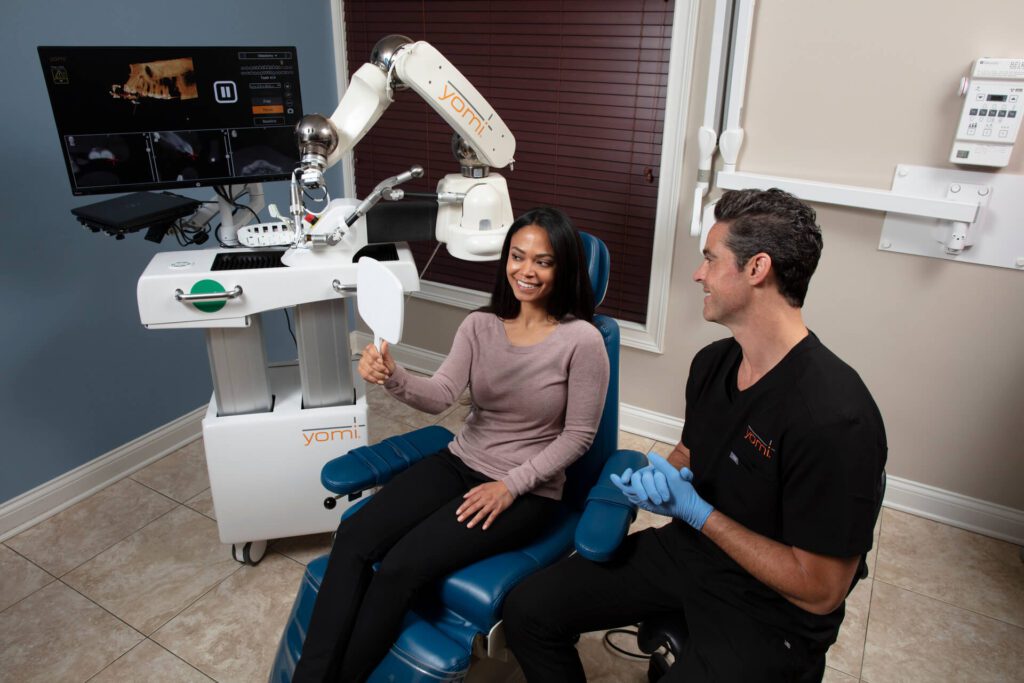
Towne Dental’s sedation dentistry services are built around this framework, with tailored treatment plans and technology like the Yomi® Robot supporting more precise, less invasive procedures for patients who need extra comfort during dental work.
Ask the Right Questions Before You Say Yes
Good sedation care is a two-way conversation, not something that happens to you. Ask who monitors you during the procedure, what training they have, and what the emergency plan looks like if something goes wrong. Most patients who get properly screened and monitored do fine with sedation. Bring your medication list and medical history to the pre-op visit. It’s the single easiest thing you can do to protect yourself.
— Towne Dental
Ready for a Calmer Visit? Here’s the Next Step
Anxiety about the dentist’s chair is common, and it’s exactly why sedation dentistry exists in the first place. Sedation is treated as a full clinical process, not an add-on: pre-op health review, trained staff, and monitoring equipment matched to the depth of sedation you actually need. It is paired with technology for more precise, less invasive implant procedures when that’s part of the treatment plan.
Whether you’re facing wisdom teeth removal, a lengthy restorative visit, or just years of dental avoidance, the right move is a pre-sedation evaluation, not guesswork. At that visit, ask directly about staff training, what monitors will track during your procedure, and what the emergency protocol looks like. Schedule a consultation through Towne Dental to get a treatment plan that matches your health history and comfort needs.
Where to Verify These Standards Yourself
You don’t have to take any clinic’s word for it. These are the primary sources behind everything above.
- ADA sedation and anesthesia guidelines: the policy dentists are expected to follow for pre-op screening and dosing.
- ASA standards on office-based sedation: staffing and monitoring expectations for dental settings.
- Cleveland Clinic’s sedation dentistry overview: plain-language side effect and recovery timelines.
This article is general information, not a substitute for advice from a qualified doctor. Consult a qualified healthcare professional about your own circumstances before acting on anything here.
Sources
- Sedation Dentistry: What Is Sedation Dentistry? | Cleveland Clinic
- Statement on sedation & anesthesia administration in dental office-based settings | ASA
- ADA releases updated sedation and anesthesia guidelines | ADA News
FAQ
Is Sedation Dentistry Actually Safe?
Yes, sedation dentistry is safe for most patients when a trained team follows ADA and ASA guidelines, screens medical history beforehand, and monitors vital signs throughout. Risk rises mainly with unmanaged health conditions like severe sleep apnea or heart disease, which is why pre-op screening matters so much.
What Are the Most Common Side Effects?
Drowsiness, dry mouth, nausea, dizziness, and short memory gaps are the most common effects, and they typically resolve within 24 hours for adults. Children sometimes take up to 48 hours to fully clear the effects.
How Long Does It Take to Recover From Sedation?
Nitrous oxide wears off in about 15 to 30 minutes, letting most adults drive themselves home. Oral and IV sedation take longer, up to 24 hours, so you’ll need someone to drive you and stay with you.
Who Should Not Get Sedation Without Extra Evaluation?
Patients with severe heart or lung disease, uncontrolled sleep apnea, a high BMI, or complex medication lists should get additional pre-op clearance before sedation. Pregnancy and active substance use also warrant a direct conversation with your dentist before scheduling.
Does Towne Dental Offer Sedation Dentistry?
Yes, Towne Dental offers sedation dentistry as part of its comprehensive services, paired with a pre-op health review to match sedation depth to each patient’s needs. Pricing depends on the procedure and sedation type, and current details are available on the Towne Dental site.