Nitrous oxide dentistry uses an inhaled gas mixture, commonly called laughing gas, to calm nerves and dull discomfort during dental work in minutes, and it wears off almost as fast as it kicks in. When titrated correctly and paired with a few minutes of pure oxygen at the end, it’s considered a safe option for the large majority of patients, according to both the American Dental Association and the American Academy of Pediatric Dentistry.
Here’s what that actually looks like in the chair. Your dentist starts you on 100% oxygen through a small nasal hood, then slowly blends in nitrous oxide, watching how you respond the whole time. Most patients feel the calming effect settle in around a specific range of concentration, never pushed higher than necessary. According to Cleveland Clinic, the gas takes hold in three to five minutes and clears from your system in five to ten minutes once the flow stops, which is why you can typically drive yourself home afterward.
A few things worth knowing before your appointment:
- Nitrous oxide reduces anxiety and provides mild pain relief, but it’s an adjunct to local anesthetic, not a replacement for it.
- Dentists titrate the gas gradually rather than jumping straight to a fixed dose.
- A short period of 100% oxygen at the end prevents lingering lightheadedness.
- Guidelines from the ADA and AAPD both classify appropriately administered nitrous oxide as safe for the majority of patients, with specific exceptions covered below.
Key Takeaways
Nitrous oxide works because it delivers fast, titratable anxiety relief with a short recovery window, provided the equipment is maintained and the dose is monitored throughout.
| Point | Details |
|---|---|
| Onset and recovery are quick | Effects begin in 3 to 5 minutes and clear in about 5 to 10 minutes after the gas stops. |
| Titration beats fixed dosing | Starting at 100% oxygen and adding nitrous oxide in small steps keeps concentration in the safe, effective 30% to 50% range. |
| Screening catches real risks | Vitamin B12 deficiency, severe COPD, and pregnancy all call for a direct conversation before treatment. |
| Equipment matters as much as the gas | Scavenging systems, flow meters, and alarms are what separate a well-run office from a risky one. |
| Towne Dental screens and monitors every case | Sedation decisions are built around each patient’s medical history, with equipment and staff training aligned to ADA guidance. |
This article is general information, not a substitute for advice from a qualified doctor. Consult a qualified healthcare professional about your own circumstances before acting on anything here.
Table of Contents
- What Is Nitrous Oxide Dentistry and How Does It Work?
- Who Is a Good Candidate for Laughing Gas at the Dentist?
- What Happens During a Nitrous Oxide Dental Appointment?
- What Safety Standards Should a Dental Office Follow With Nitrous Oxide?
- What Are the Risks and Side Effects of Nitrous Oxide?
- How Should Nitrous Oxide Be Used for Children, Pregnant Patients, and Older Adults?
- How Towne Dental Approaches Nitrous Oxide Sedation
- The Overlooked Safety Question Most Patients Never Ask
- Ready for a Calmer Dental Visit?
- Sources
- FAQ
What Is Nitrous Oxide Dentistry and How Does It Work?
Nitrous oxide works by mildly depressing your central nervous system, producing what clinicians call anxiolysis: a genuine drop in anxiety without full unconsciousness. Some patients also notice reduced pain perception, though the effect is modest compared to local anesthetic. You stay awake, responsive, and able to answer questions the entire time, which is part of why it’s such a common choice for routine dental procedures with nitrous oxide.
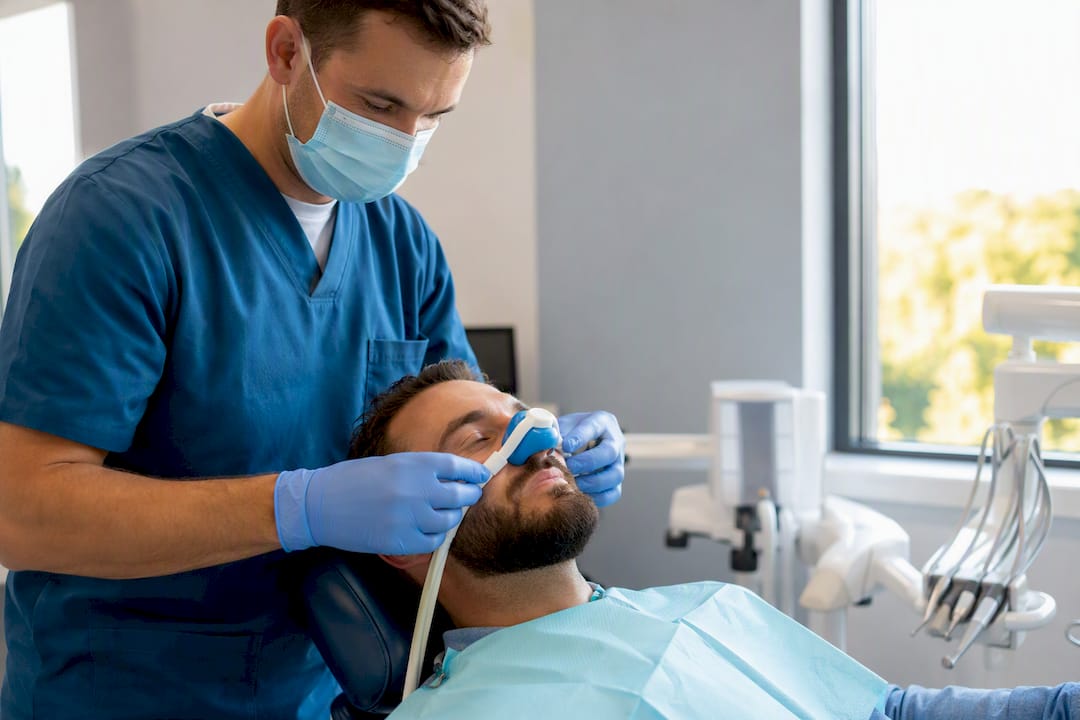
The administration follows a fairly consistent pattern across offices. A clinical review published in PMC outlines the standard titration technique: the dentist starts with 100% oxygen through the nasal hood for a minute or two, letting you get comfortable with the mask before any gas flows. Then nitrous oxide gets introduced in small steps, typically around 10% increments, while the clinician watches your reservoir bag and checks in on how you’re feeling.
Statistic Callout: Most patients reach an effective anxiolytic state at moderate nitrous oxide concentrations. Pushing routinely beyond a moderate level adds little benefit and raises the odds of nausea or dizziness, which is why responsible practices treat that moderate level as a practical ceiling rather than a starting point.
That titration process matters more than it might seem. Two patients can have wildly different responses to the same concentration, so a dentist watching your reservoir bag pulsate and asking simple questions (“Do you feel a tingling in your fingers yet?”) is doing real clinical work, not just going through motions. The bag should rise and fall gently with your breathing. If it overinflates or stays flat, that’s a signal something needs adjusting.
Here’s the part patients appreciate most once they understand it:
- Onset happens in three to five minutes, so there’s no long wait before treatment can start.
- Recovery takes another five to ten minutes once the gas is turned off and oxygen flows freely.
- You’re not sedated in the sense of losing consciousness. You remain aware and can respond to the dentist throughout.
- The effect ends when the gas stops, unlike oral sedatives that can linger for hours.
That fast clearance is one of the biggest practical differences when people weigh nitrous vs oral sedation. A sedative pill might keep you groggy for the rest of the day and require someone to drive you home. Nitrous oxide, used correctly, lets most patients walk out and resume a normal afternoon. For anyone comparing dental sedation options, that turnaround time alone explains why nitrous oxide remains the most frequently used sedative gas in general dental practice.
Who Is a Good Candidate for Laughing Gas at the Dentist?
Not everyone needs nitrous oxide, and not everyone should use it. Figuring out where you land starts with an honest look at your medical history and what your dentist observes during a screening conversation.
Typical candidates include:
- Adults with mild to moderate dental anxiety who want to stay conscious but calmer during a procedure.
- Cooperative children undergoing fillings, extractions, or cleanings, where a gentler experience reduces fear for future visits.
- Patients with a strong gag reflex, since the relaxed state can make impressions or deeper procedures more tolerable.
- Some patients with mild intellectual or developmental differences who benefit from a calmer, more predictable appointment, evaluated case by case with input from caregivers.
Contraindications are just as important to flag early, and this is where an honest conversation with your dentist really pays off:
- Untreated vitamin B12 deficiency, since nitrous oxide can worsen the neurologic effects tied to that deficiency, according to a clinical review on nitrous oxide complications.
- Severe chronic obstructive pulmonary disease, where breathing a gas mixture through a nasal hood can complicate an already compromised respiratory system.
- Certain metabolic disorders that affect how the body processes gases or maintains stable oxygen levels.
- Recent middle-ear surgery, because nitrous oxide can affect pressure in closed body spaces.
- Pregnancy, which calls for a cautious, individualized conversation between the dentist and the patient’s prenatal care provider rather than a blanket rule.
A thorough screening usually includes a full medical history review and an ASA physical status classification, the standard scale anesthesia providers use to gauge how healthy a patient is going into a procedure. If your history includes red flags like unexplained neurologic symptoms or significant respiratory disease, a good dentist will loop in your physician before moving forward rather than guessing.
What Happens During a Nitrous Oxide Dental Appointment?
Knowing the sequence ahead of time takes a lot of the mystery out of the experience. Most offices follow a version of this process, adjusted slightly based on the procedure and your comfort level.
Before the appointment:
- You’ll sign a consent form specific to sedation, and your dentist will review your medical history one more time, checking for anything new since your last visit.
- Light eating is usually fine, and in fact recommended over showing up on an empty stomach, since nausea is one of the more common side effects and an empty stomach can make it worse.
- Bring a list of current medications and mention any recent changes, including new supplements, since some interactions matter more than patients expect.
During the appointment:
- The dentist or hygienist fits a small nasal hood over your nose. It should feel snug but not tight. Speak up if it feels claustrophobic. Some patients genuinely struggle with the mask itself, according to AAPD commentary on patient suitability, and alternatives exist if that’s you.
- You’ll breathe 100% oxygen for a minute or two before any nitrous oxide is introduced, which gets your baseline oxygen saturation up and lets you settle into the mask.
- The clinician titrates nitrous oxide in small increments, watching your responses and the reservoir bag as they go, until you reach a calm, comfortable state, generally somewhere in that 30% to 50% window discussed earlier.
- Local anesthetic still gets used for anything genuinely painful, like a filling or extraction. Nitrous oxide raises your pain threshold and eases anxiety, but it doesn’t reliably numb tissue on its own.
- Throughout the procedure, the dental team keeps an eye on your breathing pattern, color, and responsiveness. This isn’t a “set it and forget it” sedative.
After the procedure:
- Once treatment wraps up, you’ll breathe 100% oxygen again for several minutes, an ADA-recommended step that flushes out residual nitrous oxide and prevents a rebound effect called diffusion hypoxia, where oxygen levels dip briefly as nitrous leaves your bloodstream.
- The team checks that you’re alert, steady, and free of lingering dizziness before letting you leave the chair.
- You can typically drive yourself and resume normal activities shortly after, since nitrous oxide doesn’t carry the same hangover effect as oral sedatives.
On appointment length, guidelines matter more than most patients realize. Some procedural sedation protocols recommend capping nitrous oxide use at two 30-minute exposures within 24 hours, and no more than four total hours across a week, for procedural sedation settings outside the operating room. Routine dental visits rarely approach those limits, but the guidance exists precisely because cumulative exposure is a real consideration, not a theoretical one.
If you’re weighing dental sedation options and wondering how nitrous stacks up against oral sedatives for a longer procedure, the known shorter working window is worth discussing directly with your dentist. It’s not a limitation so much as a feature for anyone who wants to be back to normal the same day.
Pro Tip: If a nasal hood makes you feel claustrophobic, tell your dentist before the appointment, not during it. Some offices have differently shaped hoods, and knowing ahead of time lets the team set up the right equipment instead of troubleshooting mid procedure.
What Safety Standards Should a Dental Office Follow With Nitrous Oxide?
A well-run office makes its safety practices visible, and a patient who knows what to look for can ask smart questions before ever sitting in the chair. Real equipment and monitoring standards separate a careful practice from a sloppy one.
Equipment and monitoring features worth confirming include:
- A visible flow meter that shows exact gas percentages rather than a vague dial.
- A reservoir bag that the clinician watches continuously, since its rise and fall pattern signals whether you’re breathing normally.
- Audible and visual alarms that trigger if oxygen delivery drops below a safe threshold.
- A functioning scavenging system that captures and vents excess gas rather than letting it accumulate in the room.
- Routine equipment checks, including leak testing and confirmation that the vacuum scavenging system has adequate capacity.
Statistic Callout: The National Institute for Occupational Safety and Health recommends limiting chronic occupational exposure to nitrous oxide to approximately low parts per million levels during administration, a benchmark that shapes how dental offices design ventilation and scavenging systems, for the safety of both patients and staff.
That occupational exposure limit is easy to overlook as a patient, but it says something important about the office you’re sitting in. A practice that takes scavenging seriously for its own staff is a practice that’s almost certainly handling patient-facing safety with the same rigor. According to ADA guidance, well maintained equipment and consistent work practices are core to safe nitrous oxide use, and offices that follow those standards for OSHA compliance tend to build systems around proper ventilation and monitoring protocols that protect everyone in the building, not just the person in the chair.
Monitoring doesn’t stop once the gas is flowing. Staff should be watching your breathing rate, skin color, and level of responsiveness continuously, not glancing over occasionally. The AAPD guideline notes that saturation monitoring and formal documentation become especially important when nitrous oxide is combined with other sedatives, since the combined effect on breathing is harder to predict than either drug alone. If your dentist plans to use nitrous oxide alongside an oral sedative, ask directly what additional monitoring that combination triggers.
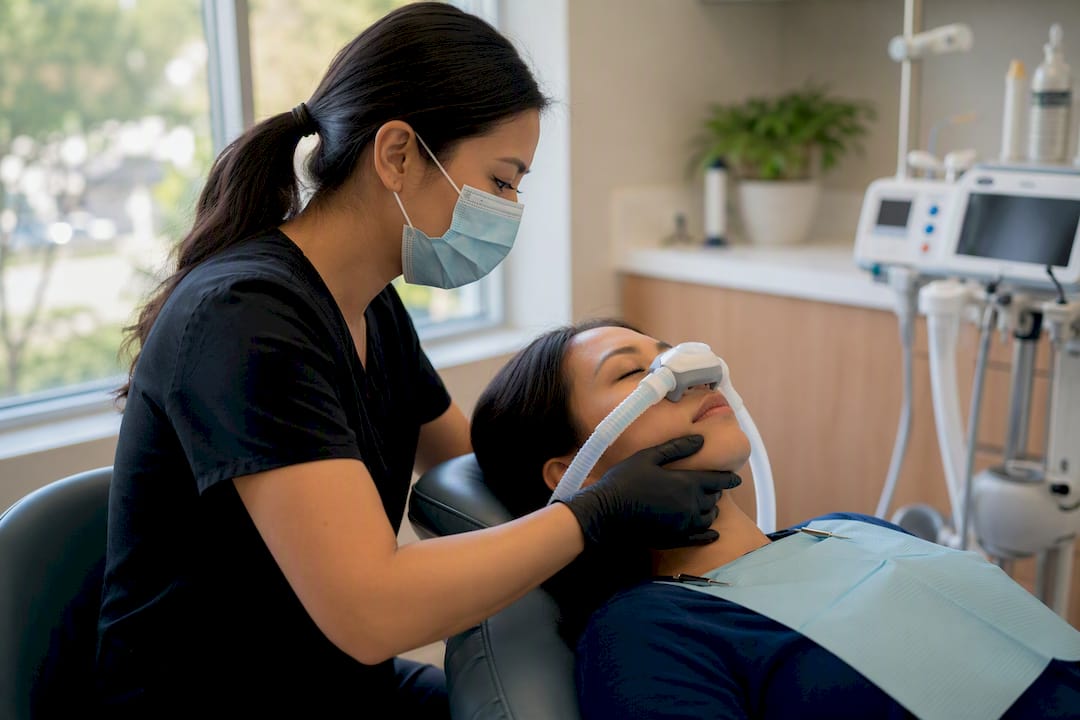
Staff training is the piece patients can’t see but should still ask about. Someone on the team should be trained specifically in recognizing early signs of oversedation, not just in operating the gas delivery equipment. It’s a fair question to ask directly: “Who on your team is trained to manage sedation complications, and how often do you test your scavenging system?” A confident, specific answer tells you a lot.
What Are the Risks and Side Effects of Nitrous Oxide?
Most side effects from nitrous oxide are mild and short-lived, often related to concentration being too high or titrated too quickly. Common issues include nausea, vomiting, headache, and dizziness, which usually resolve within minutes of reducing the gas or switching back to pure oxygen.
Rare but more serious complications exist too, and it’s worth being clear-eyed about them rather than glossing over them. Laryngospasm, a sudden closure of the vocal cords, and significant hypoxia are documented in the clinical literature, though reviews of nitrous oxide sedation note these events are uncommon and tend to cluster around cases involving very high concentrations or combinations with other sedative drugs rather than nitrous oxide used alone at standard levels.
The interaction with vitamin B12 deserves its own attention, because it’s the one risk that’s easy to miss during a routine screening.
Nitrous oxide irreversibly inactivates vitamin B12 in the body. For most healthy patients with normal B12 levels, occasional dental exposure poses no meaningful risk. But for someone with an undiagnosed deficiency, that inactivation can trigger or worsen neurologic symptoms, including numbness, weakness, or cognitive changes that can be difficult to trace back to a dental visit.
That’s precisely why B12 status matters during screening, particularly for patients who are vegan, have absorption disorders like pernicious anemia, or have other risk factors for deficiency. It’s not a reason to avoid nitrous oxide outright. It’s a reason to mention it if it applies to you.
How offices reduce these risks in practice:
- Careful titration in small increments rather than large, fast jumps in concentration.
- Continuous monitoring of breathing, color, and responsiveness throughout the procedure.
- A mandatory oxygen purge at the end of every session to prevent diffusion hypoxia.
- Screening questions aimed specifically at B12 deficiency risk factors, with referral to a physician when something looks off.
None of this makes nitrous oxide risk-free, and no responsible dentist will tell you it is. It makes it a well-understood sedative with a long track record and a short, predictable list of things to watch for.
How Should Nitrous Oxide Be Used for Children, Pregnant Patients, and Older Adults?
Different life stages and health situations call for different levels of caution, even though the core gas and technique stay the same.
- Children. The AAPD’s clinical guidance recognizes nitrous oxide as a safe, effective option for pediatric patients when dosed and monitored appropriately. Dosing tends to be more conservative than for adults, consent involves a parent or guardian directly, and continuous observation is non-negotiable given how quickly a child’s response can shift.
- Pregnancy. This is a conversation for the patient’s prenatal care provider, not a decision made solely in the dental chair. Some practices avoid elective use of nitrous oxide during pregnancy as a precaution, while urgent dental needs get evaluated case by case in coordination with the patient’s obstetric team.
- Older adults. Age itself isn’t a contraindication, but pulmonary and cardiac conditions common in older patients call for a closer look before starting. A patient with significant COPD or unstable heart disease needs a more cautious risk conversation than a healthy adult of any age.
- Repeated exposure. Anyone facing multiple dental appointments requiring nitrous oxide within a short window should ask about cumulative exposure limits, since occupational and procedural guidelines both treat repeated short-term exposure as worth tracking rather than ignoring.
Recreational misuse of nitrous oxide outside a clinical setting carries real risk, including the same B12 depletion concerns discussed earlier, but at far less controlled doses and without medical oxygen or monitoring. That’s a different situation entirely from a titrated, monitored dose in a dental office, and it’s worth understanding the distinction if you’ve encountered nitrous oxide outside a clinical context.
How Towne Dental Approaches Nitrous Oxide Sedation
Every patient who might benefit from nitrous oxide at Towne Dental starts with the same step: a real conversation about medical history, not a checkbox form. That screening catches the contraindications that matter, from B12 deficiency risk factors to respiratory conditions, before anyone sits down for treatment.
What that looks like day to day:
- Equipment that includes visible flow meters, functioning scavenging systems, and regular leak checks, consistent with ADA-recommended practices.
- A team trained to titrate gradually and watch for early signs that a patient needs less gas, not more.
- Nitrous oxide offered for anxious adults, cooperative kids who need a calmer visit, patients with a strong gag reflex, and shorter procedures where quick recovery matters.
- Local anesthetic used alongside nitrous oxide whenever a procedure involves real discomfort, since the gas eases anxiety but doesn’t replace numbing medication.
- Treatment plans built around each patient’s actual medical picture, not a one-size-fits-all sedation default.
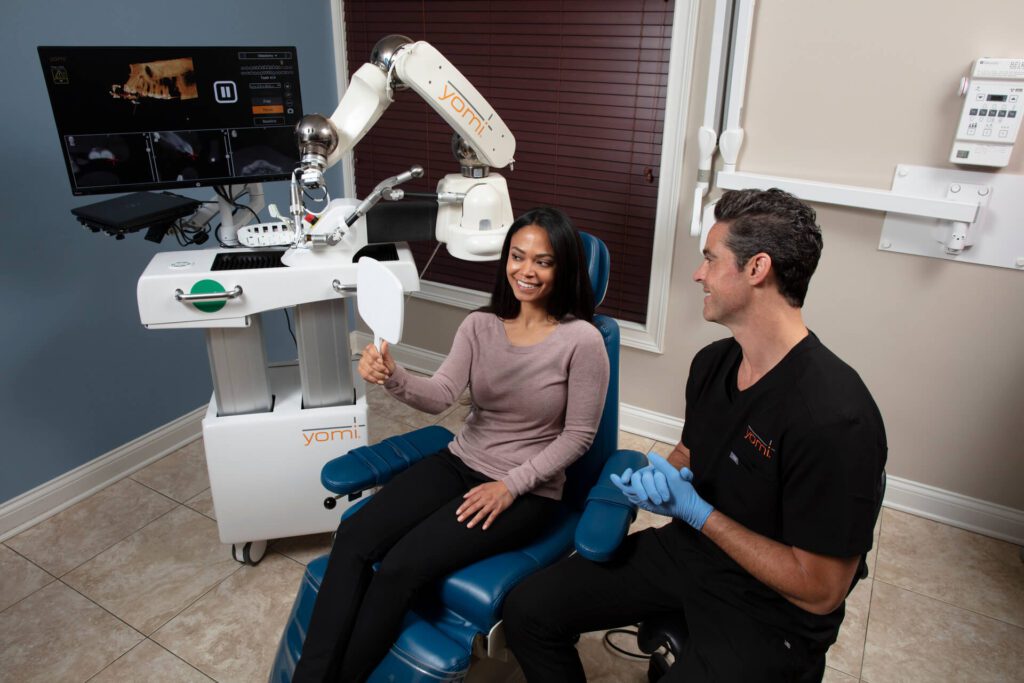
Patients who need more than nitrous oxide, including those considering advanced procedures like implants placed with Yomi robotic assistance, get the same careful screening process applied to whatever level of sedation fits the case.
The Overlooked Safety Question Most Patients Never Ask
Most articles on nitrous oxide focus on whether it’s safe in the abstract. That’s the wrong question. The gas itself, at guideline-appropriate concentrations, has a strong track record. The real variable is the office administering it, and that’s where patients have more power than they realize.
Ask about the scavenging system. Ask who’s trained to spot oversedation. Ask how they screen for B12 risk. A practice that answers those questions specifically, rather than vaguely reassuring you, is telling you something true about how it operates across the board, not just with nitrous oxide.
The conventional advice, “just ask if they offer laughing gas,” undersells what actually separates a good sedation experience from a mediocre one. Concentration matters less than technique. A dentist who titrates slowly and watches your responses will get you to a comfortable state more reliably than one who jumps straight to a fixed percentage. That’s the detail worth prioritizing over anything else in this piece.
Ready for a Calmer Dental Visit?
If dental anxiety has kept you from scheduling care you actually need, nitrous oxide is one of several dental sedation options worth discussing directly with your dentist rather than working around indefinitely. Towne Dental screens every sedation candidate individually, maintains equipment to the standards outlined above, and pairs sedation with tailored treatment plans built around your actual health history.

That approach extends past anxiety relief. Patients who come in for a routine cleaning and mention they’ve also been putting off whitening or straightening often find those conversations happen naturally once the anxiety barrier is gone. Towne Dental’s cosmetic dentistry services are there when you’re ready for that next step, and the same sedation options that make a filling tolerable make a cosmetic consultation a lot easier too.
If you’ve been avoiding the dentist because of nerves, gag reflex issues, or a bad past experience, the fix starts with one appointment where sedation is part of the plan from the beginning. Reach out to Towne Dental to schedule a visit and ask directly about nitrous oxide options for your specific situation.
Sources
- Nitrous Oxide — American Dental Association
- Use of Nitrous Oxide for Pediatric Dental Patients — AAPD guideline
- Nitrous Oxide (Laughing Gas): Uses, Side Effects & Safety — Cleveland Clinic
FAQ
Is Nitrous Oxide Bad for You at the Dentist?
No, not when it’s titrated correctly and paired with an oxygen purge at the end. Serious complications are rare and mostly linked to very high concentrations or undiagnosed vitamin B12 deficiency, not to standard, monitored use.
Why Do Some Dentists Not Use Nitrous Oxide?
Some patients find the nasal hood claustrophobic or intolerable due to nasal congestion, and some offices simply prefer other dental sedation options like oral sedatives for longer or more complex procedures. It’s a practice and patient preference issue more than a safety one.
Do You Still Feel Pain Under Laughing Gas?
Yes, nitrous oxide raises your pain threshold and eases anxiety, but it doesn’t reliably eliminate pain on its own. Dentists still use local anesthetic for anything genuinely painful, like fillings or extractions.
How Long Can a Dental Patient Be on Nitrous Oxide?
Most routine dental appointments stay well within safe limits, but procedural sedation guidelines commonly cap use at two 30-minute exposures within 24 hours. Your dentist will factor in the length of your specific procedure when planning sedation.