Face collapse is defined as the progressive loss of jawbone volume and facial skeletal structure that follows tooth loss, causing the face to shrink inward and age prematurely. The clinical term is alveolar ridge atrophy, but “facial collapse” describes the full syndrome: bone resorption, soft tissue descent, and bite changes working together. This condition affects far more than appearance. It alters how you chew, speak, and carry yourself. Patients in Naples and across Southwest Florida increasingly seek answers as they notice their faces changing in ways that skin care alone cannot explain. Towne Dental sees this pattern regularly, and the underlying cause is almost always structural, not superficial.
What causes face collapse and how does it develop?
Face collapse begins the moment a tooth is lost and its root no longer stimulates the surrounding bone. Every time you chew, the tooth root transmits force through the periodontal ligament into the jawbone. That mechanical signal tells the bone to maintain itself. Loss of chewing forces via the periodontal ligament triggers alveolar ridge atrophy immediately after extraction. Without that signal, the body treats the bone as unnecessary and begins reabsorbing it.
The timeline is faster than most people expect. Jawbone loses 1.0–2.0 mm of vertical height and 30%–50% of its width within 12 months after extraction, particularly in the front jaw. That means the most damaging phase of bone loss happens before most patients even consider a replacement tooth.
Several factors accelerate the process beyond normal tooth loss:
- Osteoporosis and low bone density. Women with osteoporosis show more pronounced facial bone loss than those with normal density. Postmenopausal estrogen decline disrupts the balance between bone formation and resorption.
- Multiple missing teeth. Each additional gap compounds the resorption in adjacent areas.
- Poorly fitting dentures. Pressure from a denture base on soft tissue can accelerate bone loss rather than prevent it.
- Gum disease. Periodontal infection destroys the bone supporting teeth before they are even lost.
- Smoking. Nicotine reduces blood flow to bone tissue, slowing repair and accelerating loss.
Pro Tip: Ask your dentist about bone preservation at the time of extraction, not weeks later. The window for the most effective intervention is narrow.
Natural aging does cause some facial bone change, but tooth loss accelerates it by decades. The difference between a 60-year-old with a full set of teeth and one who lost several teeth in their 40s is visible in facial height, cheek fullness, and jaw position.
How does facial collapse affect appearance and oral function?
The visible signs of a collapsing jaw follow a predictable pattern. Facial collapse presents externally as a shortened face, deep wrinkles around the mouth, lip thinning, hollow cheeks, and a forward-rotated jaw that creates an underbite appearance. These changes happen because the bone that once supported the overlying soft tissue is simply no longer there.
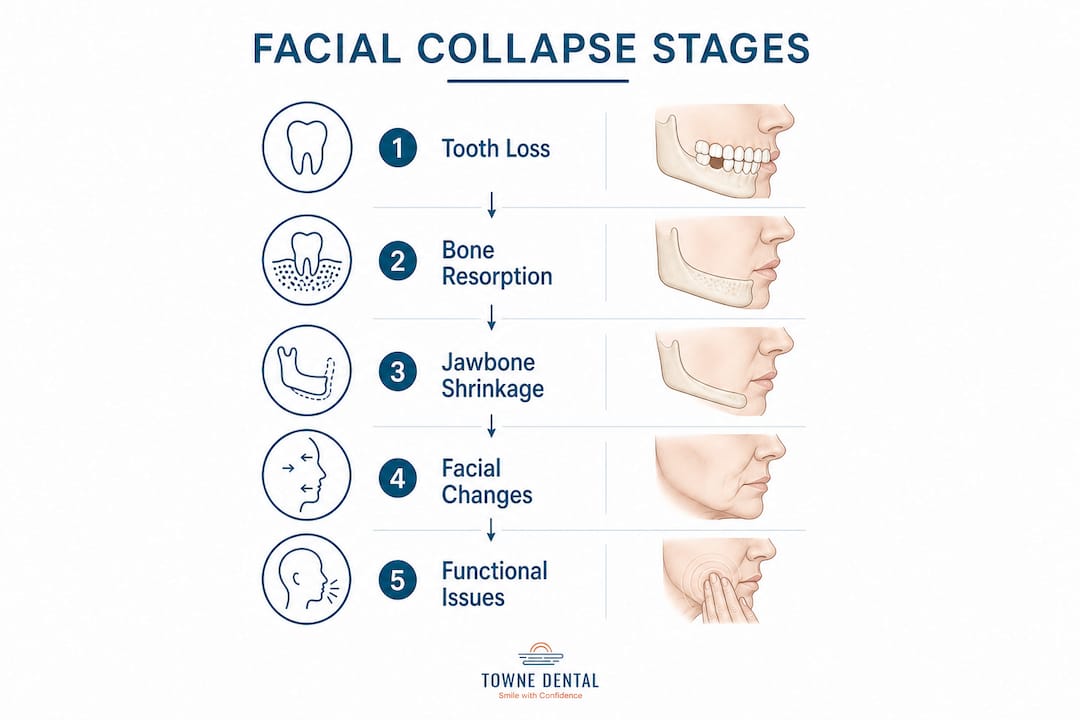
Facial bone aging causes sagging cheeks, a flattened midface, and hollowed eyes by reducing skeletal support beneath soft tissue. The skin does not fall on its own. It follows the skeleton underneath it. When the skeleton shrinks, everything above it descends.
The functional consequences are just as serious:
- Bite misalignment. As the ridge shrinks, the upper and lower jaws no longer meet correctly. This shifts chewing forces onto the wrong teeth and strains the jaw joints.
- TMJ dysfunction. Jawbone resorption causes bite misalignment and temporomandibular joint dysfunction, producing headaches and chronic jaw pain.
- Denture instability. A shrinking ridge means dentures lose their fit over time, requiring more adhesive and eventually becoming unwearable.
- Speech changes. Missing teeth and ridge loss alter the way air moves through the mouth, affecting pronunciation.
- Nutritional impact. Patients with severe bone loss often avoid hard or chewy foods, narrowing their diet and affecting overall health.
The psychological toll is real and documented. Patients frequently report reduced confidence, social withdrawal, and reluctance to smile or speak in public. Addressing facial collapse is not vanity. It is a health decision with wide-ranging consequences.
What are effective prevention and early intervention methods for facial collapse?
Prevention is the most cost-effective strategy for managing facial collapse. The two most proven clinical approaches are socket preservation grafting and dental implant placement.
-
Socket preservation grafting. Performed at the time of tooth extraction, this technique fills the empty socket with a bone graft material and covers it with a barrier membrane. Alveolar ridge preservation reduces bone loss by 40%–60% compared to conventional extractions. That is a dramatic difference in long-term facial structure.
-
Endosteal dental implants. A titanium implant placed into the jawbone mimics the mechanical stimulation of a natural tooth root. Socket preservation grafting and endosteal dental implants are the most clinically proven methods to arrest jawbone resorption after tooth loss. Implants do not just replace the tooth. They preserve the bone beneath it.
-
Timely consultation. The first 6–12 months after tooth loss are the most critical. Waiting years before seeking treatment means working with significantly less bone, which complicates implant placement and increases cost.
-
Systemic bone health. Calcium, vitamin D, and weight-bearing activity all support bone density throughout the body, including the jaw. Patients with osteoporosis should coordinate care between their dentist and physician.
-
Avoiding removable dentures as a long-term solution. Removable dentures do not prevent bone loss and may accelerate it through soft tissue pressure. Dentures restore chewing function but fail to arrest jawbone deterioration. This is the most common misunderstanding patients bring to their first consultation.
Pro Tip: If you are considering dentures as a budget-friendly option, ask your dentist about implant-supported overdentures. They provide the stability of implants while reducing the total number of implants needed.
The comparison between dentures and implants is not just about comfort. It is about whether your jawbone will still be there in 10 years.
What treatments are available to restore facial structure after collapse?
Patients who already have significant bone loss have more options than they often realize. Treatment depends on how much bone remains, the patient’s overall health, and their goals.
Bone grafting to rebuild the ridge
Bone grafting rebuilds the height and width of the alveolar ridge before implants can be placed. Grafts use material from the patient’s own body, a donor source, or synthetic substitutes. The graft integrates with existing bone over several months, creating a stable foundation. Patients exploring oral surgery options in Naples can discuss which graft type suits their anatomy and timeline.
Dental implants as the structural foundation
Implants placed after grafting restore the mechanical stimulation that prevents further bone loss. For patients missing most or all of their teeth, All-on-Four dental implants use four strategically angled implants to support a full arch of teeth. This approach works even in patients with moderate bone loss because the posterior implants angle to reach denser bone.
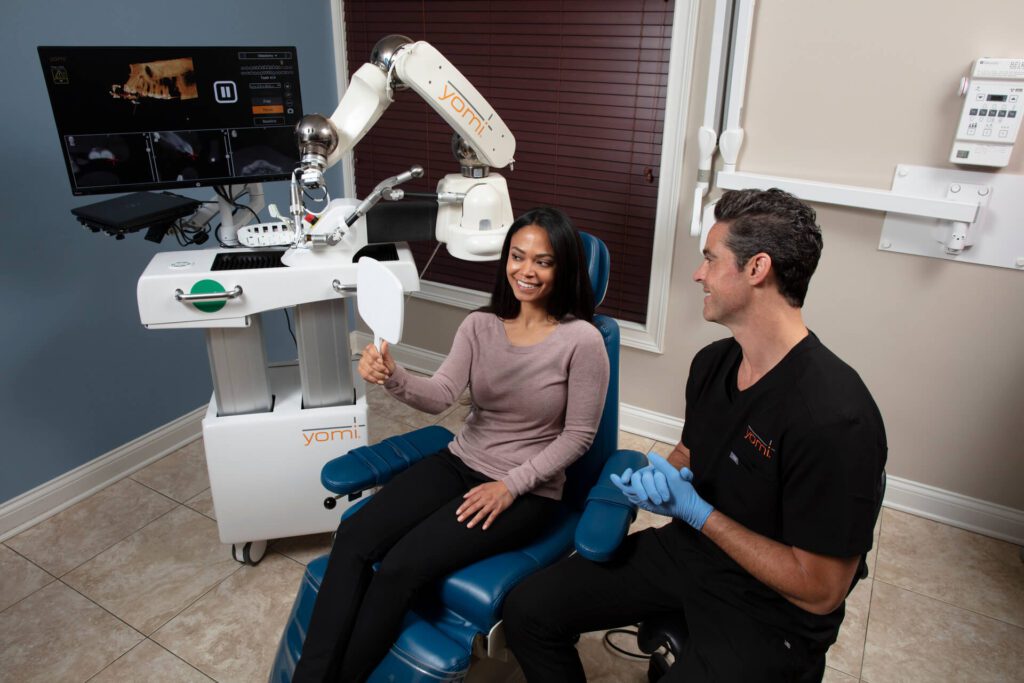
Towne Dental uses the Yomi® Robot for assisted implant placement, which improves surgical accuracy and reduces recovery time compared to freehand techniques.
Cosmetic and soft tissue interventions
Once skeletal support is restored, soft tissue changes may still require attention. Facial plastic surgery, volume restoration with fillers, and skin tightening procedures address the descended tissue above the bone. Deep placement of synthetic fillers can temporarily mimic lost skeletal projection but does not reposition descended tissues or restore true skeletal support. Fillers work best as a complement to structural restoration, not a replacement for it.
Ignoring underlying bone resorption in facial rejuvenation produces unnatural outcomes. Addressing the skeleton first gives soft tissue treatments something real to work with.
| Treatment | Primary goal | Addresses bone loss? |
|---|---|---|
| Socket preservation graft | Prevent post-extraction bone loss | Yes |
| Endosteal dental implant | Restore stimulation and replace tooth | Yes |
| Full-arch implant system | Replace all teeth, preserve ridge | Yes |
| Removable denture | Restore chewing function | No |
| Facial filler | Restore soft tissue volume | No |
| Facial plastic surgery | Reposition descended soft tissue | No |
Pro Tip: Treat bone loss first, then address skin and soft tissue. Reversing that order leads to results that look good for a year and then deteriorate as the underlying structure continues to shrink.
When should you seek professional evaluation for facial collapse?
Early evaluation prevents irreversible loss. Several warning signs indicate that bone resorption is already underway and that a clinical assessment is overdue.
- Dentures that loosen or shift despite regular adhesive use signal that the ridge has shrunk beneath them.
- Increased need for denture adhesive over months or years is a direct measure of ridge atrophy.
- Adjacent teeth shifting into the gap left by a missing tooth, changing your bite.
- Deepening wrinkles around the mouth and a chin that appears to protrude more than before.
- Jaw pain or clicking that was not present before tooth loss.
- A face that looks shorter when viewed in profile, with the lower third appearing compressed.
A clinical evaluation at Towne Dental includes imaging to measure remaining bone volume and a functional assessment of bite alignment. Early diagnosis means more treatment options and better outcomes. Patients who wait until bone loss is severe often require more extensive grafting, longer treatment timelines, and higher costs. The best time to act is before the changes become obvious to others.
Key Takeaways
Facial collapse is a structural condition driven by jawbone loss, and the most effective response combines early intervention with bone-preserving treatments like implants and grafting.
| Point | Details |
|---|---|
| Bone loss starts immediately | Jawbone loses up to 50% of its width within 12 months of tooth extraction. |
| Implants outperform dentures | Only implants restore the mechanical stimulation that prevents ongoing bone loss. |
| Socket grafting cuts bone loss | Ridge preservation at extraction reduces bone loss by 40%–60% versus no treatment. |
| Soft tissue follows the skeleton | Sagging cheeks and hollow eyes are symptoms of bone loss, not just skin aging. |
| Early evaluation matters | Seeking assessment within the first year after tooth loss preserves the most options. |
Why facial collapse is the structural issue most patients overlook
Patients often misunderstand facial aging as only skin-related. That framing leads them toward skin care products and surface-level treatments while the real problem, bone loss, continues unchecked underneath. I have seen patients spend years on cosmetic treatments that delivered diminishing returns, not because the treatments were poor, but because they were addressing the wrong layer.
The most common pitfall I see is treating facial collapse as a cosmetic problem rather than a structural one. A filler placed over a shrinking ridge looks good briefly. Then the bone continues to resorb, the filler migrates, and the result looks unnatural. The patients who get the best long-term outcomes are those who address the skeleton first and the skin second.
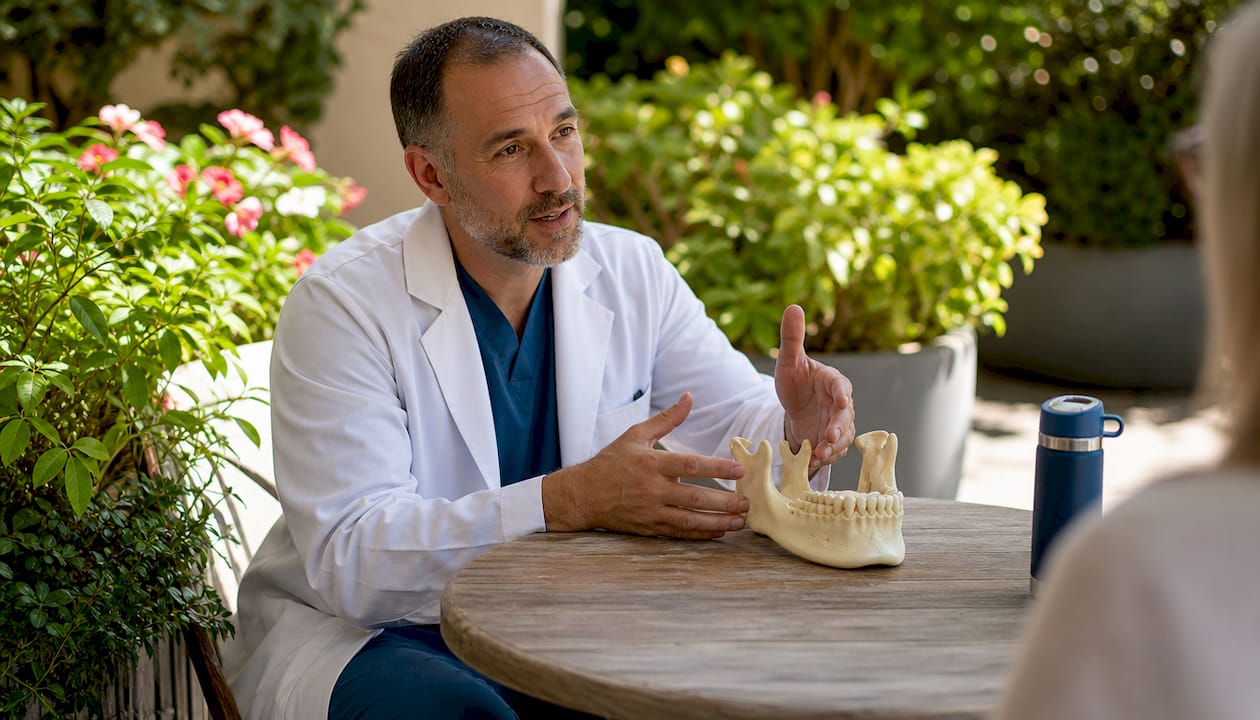
Interdisciplinary care matters here more than in almost any other area of dentistry. A good outcome for severe facial collapse often requires a dentist, an oral surgeon, and sometimes a facial plastic surgeon working from a shared plan. No single specialty owns this problem. The patients who do best are those who find a team willing to coordinate rather than work in isolation.
Proactive bone health is also underrated. Calcium, vitamin D, and regular dental monitoring are not glamorous recommendations, but they genuinely slow the rate of age-related bone loss. For patients in Naples who are postmenopausal or have a family history of osteoporosis, this is not optional maintenance. It is the foundation of long-term facial health.
— Krunal
Towne Dental’s approach to facial structure and bone health
Patients in Naples dealing with bone loss or visible facial changes have access to a full range of structural and restorative options at Towne Dental. The clinic’s team addresses facial collapse from the root cause, combining bone preservation and implant dentistry with advanced surgical techniques. Towne Dental’s use of the Yomi® Robot for implant placement means greater accuracy and less invasive procedures for patients who need grafting or full-arch restoration.

Whether you have recently lost a tooth or have been managing dentures for years, a clinical evaluation at Towne Dental gives you a clear picture of your bone health and your options. The clinic also offers cosmetic dentistry services to address soft tissue changes once structural restoration is complete. Scheduling a consultation is the first concrete step toward stopping bone loss before it becomes irreversible.
FAQ
What is face collapse and how is it different from normal aging?
Face collapse is the accelerated loss of jawbone volume caused by tooth loss, producing visible shrinkage of the lower face. Normal aging causes gradual bone changes, but tooth loss triggers bone resorption that is far faster and more severe.
Can dentures stop facial collapse?
Removable dentures do not stop bone loss and may accelerate it through pressure on the gum tissue. Only dental implants restore the mechanical stimulation that signals the bone to maintain itself.
How quickly does jawbone loss occur after a tooth extraction?
The jawbone can lose 30%–50% of its width within the first 12 months after extraction. The most rapid bone loss occurs in the first six months, making early intervention the most effective approach.
What is socket preservation and does it work?
Socket preservation is a grafting procedure performed at the time of tooth extraction to fill the empty socket and slow bone resorption. Clinical evidence shows it reduces bone loss by 40%–60% compared to extraction without grafting.
When should I see a dentist about facial collapse?
See a dentist as soon as you notice denture loosening, shifting teeth, jaw pain, or visible changes in facial height and profile. Earlier evaluation preserves more bone and more treatment options.