Most uninsured patients pay several hundred dollars to get out of pain in a single visit, covering the exam, X-ray, and basic treatment like drainage or a temporary filling. Root canals, surgical extractions, or after-hours care can substantially increase costs, sometimes reaching several thousand dollars. The single biggest factor is the diagnosis, not the “emergency” label. A dental office solves the problem for a few hundred dollars; the emergency room often charges $1,000 or more for antibiotics alone. Call a dentist first, and if a tooth gets knocked out, keep it moist and get seen within the hour.
TL;DR:
- Most emergency dental visits cost between $100 and $250 for the initial exam and X-ray, with additional treatment costs that can range from hundreds to thousands of dollars depending on the problem.
- Costs vary significantly based on the diagnosis, tooth type, and timing, with root canals, extractions, and after-hours fees often increasing the bill substantially.
- Dental insurance typically covers emergency exams and some treatments, but emergency room bills can easily exceed $1,000, and insurance coverage for major procedures depends on plan details.
- Opting for a dental office rather than urgent care or emergency room reduces costs and provides definitive treatment, although serious conditions involving breathing or swelling require immediate ER attention.
- Asking for a clear, itemized estimate, considering financing options, and calling ahead to verify benefits can significantly lower out-of-pocket expenses.
Table of Contents
- What Does an Emergency Dentist Cost by Problem?
- Why Does the Same Emergency Cost Different Amounts?
- Will Insurance Cover My Emergency Dental Visit?
- Dentist, Urgent Care, or ER: Where Should You Go?
- How Can You Lower the Bill Before You Sit Down?
- How Do Local Clinics Handle Emergency Triage and Payment?
- Where Conventional Cost Advice Falls Short
- How to Reach Towne Dental for Emergency Care
- Sources
- FAQ
What Does an Emergency Dentist Cost by Problem?
Every emergency visit starts with the same base charge: a limited problem exam plus one X-ray, usually billed under dental codes D0140 and D0220. That combination typically runs $100 to $250 before any treatment happens, and it’s the price of admission no matter what’s wrong with your tooth, according to cost data from RealDentalCosts. What happens after that exam is where the real spread shows up.
- Toothache or abscess: Palliative relief (drainage, medication, temporary sealing) often costs $100 to $500 on top of the exam. A root canal to actually resolve an infected tooth runs closer to $700 to $1,500 for a front tooth and more for a molar, before the crown that usually follows.
- Broken or chipped tooth: Simple bonding can cost $150 to $400. A cracked tooth requiring a crown, or a fracture that exposes the nerve, can result in costs ranging from one to several thousand dollars when including root canal therapy and a crown.
- Knocked-out tooth: Reimplantation and splinting for a knocked-out tooth typically cost a few hundred dollars, with success heavily dependent on prompt treatment, but success depends heavily on speed. Reimplantation has the best odds within 30 to 60 minutes of the injury, according to ToothCostGuide, and a follow-up root canal is common a few weeks later.
- Lost filling or crown: A temporary filling or simple re-cementing is usually $75 to $250, one of the cheapest emergency fixes available.
- Extraction: A simple extraction of a visible, erupted tooth generally costs $150 to $400. A surgical extraction, needed for impacted or broken-below-the-gumline teeth, runs $300 to $800. If you later want to replace that tooth, an implant adds thousands more, so ask about extraction now and replacement later as a separate financial decision.
- After-hours or weekend visits: After-hours or weekend visits often include an additional surcharge that can add significant fees on top of standard treatment costs.
If your symptom doesn’t fit neatly into one category, describe it clearly on the phone: swelling, bleeding, broken piece still in your mouth, whether you can bite down. That detail lets the front desk quote you closer to a real number before you ever sit in the chair. A broken tooth with a sharp edge is a good example of something that seems urgent but usually just needs same-day smoothing, not a full crown that day.
Why Does the Same Emergency Cost Different Amounts?
The word “emergency” doesn’t set the price. The diagnosis does. Two patients can walk in with the same complaint, a throbbing molar, and leave with wildly different bills: one gets palliative drainage and antibiotics for under $300, the other needs a root canal and crown because the infection reached the nerve. Toothache and diagnosis-driven pricing explain more of the cost variation than the emergency itself ever does.
Tooth type matters too. A root canal on a front tooth, which has one root canal, costs less than one on a molar, which can have three or four canals and takes longer to treat. Timing adds its own line item: after-hours and weekend surcharges commonly add $100 to $300, and skipping that fee by waiting for the next business day is often the single easiest way to trim a bill.
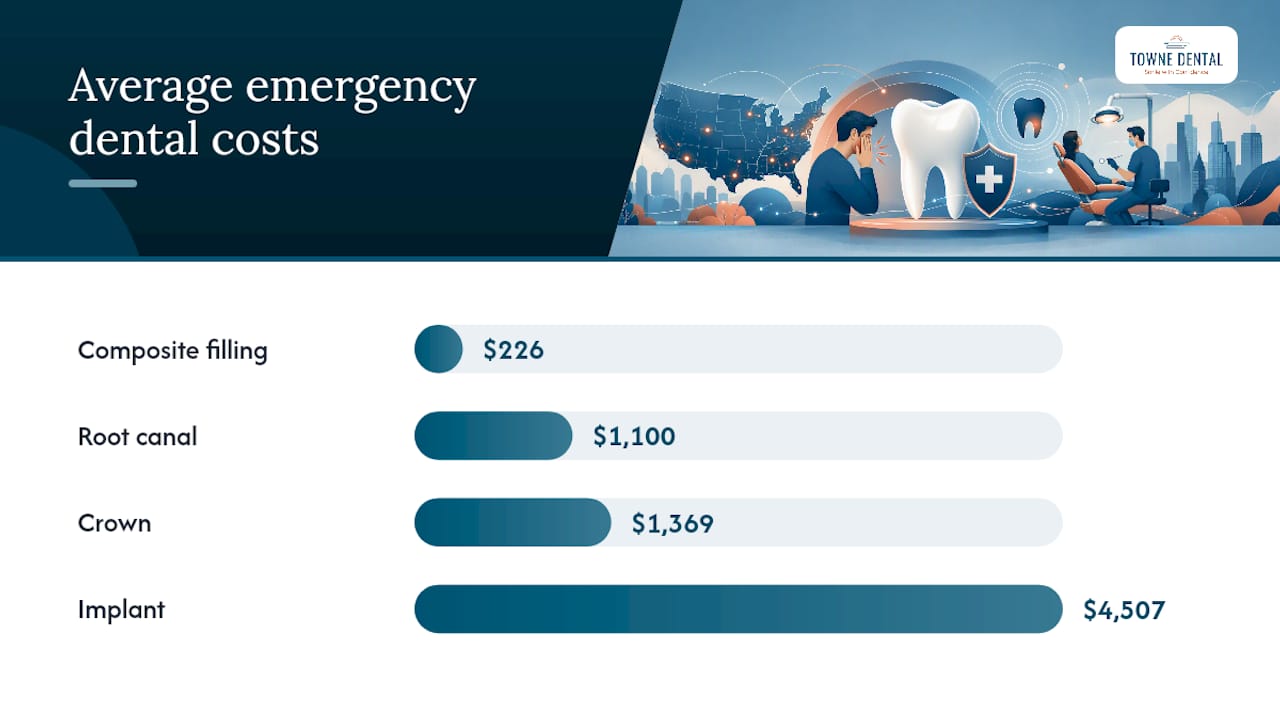
Geography closes the loop. States with a higher cost of living generally charge more across the board, and that pattern often overlaps with weaker Medicaid access for adults. A 2026 state-level cost report lists national averages of $226 for a composite filling, $1,100 for a root canal, $1,369 for a crown, and $4,507 for an implant, with states like Nevada, Arizona, and Florida showing above-median prices alongside limited Medicaid dental coverage for adults.
Will Insurance Cover My Emergency Dental Visit?
Dental insurance is the first thing to check, and most plans cover emergency exams, X-rays, and a share of treatment costs according to your plan’s fee schedule and annual maximum. Medical insurance is a different story entirely: it generally does not pay for routine emergency dental work, only for procedures a physician documents as medically necessary, such as trauma from an accident, according to MoneyGeek’s coverage breakdown.
If you bought coverage through the ACA Marketplace, dental plans are often sold as an add-on with their own separate premium, and they come in low and high coverage tiers that change what you pay out of pocket, per Healthcare. Many of these plans also carry waiting periods before major services like root canals or crowns are covered.
Medicaid adds another layer of complexity because adult dental benefits vary enormously by state. Some states only cover emergency extractions and pain relief for adults; others offer comprehensive coverage including root canals and crowns. Before your appointment:
- Call your insurer or check your plan portal to confirm whether the visit needs pre-authorization.
- Ask the dental office to verify your benefits before treatment starts, not after.
- Request an itemized claim form if you’re filing yourself, especially for out-of-network visits.
Dentist, Urgent Care, or ER: Where Should You Go?
A dental office provides definitive treatment: fillings, extractions, root canals, all in one visit, typically for a few hundred dollars. Urgent care can stabilize pain or infection but usually can’t do the actual dental procedure. The emergency room is the most expensive and least useful option for a tooth problem alone, often billing $1,100 to $3,200 while sending you home with antibiotics and a referral back to a dentist, according to ToothCostGuide’s ER cost analysis. The American Dental Association notes that ERs simply aren’t equipped to perform root canals or extractions.
That said, some situations genuinely need the ER: difficulty breathing or swallowing, swelling that’s spreading toward your eye or throat, uncontrolled bleeding, or a jaw that might be broken. Those are 911 calls, not dentist calls. For everything else, a dental office is faster, cheaper, and actually fixes the problem.
How Can You Lower the Bill Before You Sit Down?
Ask for an extraction-only quote if a root canal and crown feel financially out of reach right now. It’s a common, practical request, and it can cut your immediate cost by hundreds of dollars, according to RealDentalCosts’ pricing breakdown, even though you may need to plan for a replacement tooth later.
- Ask whether the office offers CareCredit, Sunbit, Cherry, or an in-house payment plan, all common financing routes at dental practices nationwide.
- Look into a dental savings plan if you’re uninsured and expect repeat visits; these aren’t insurance, but they discount fees at participating offices.
- Check for a nearby Federally Qualified Health Center or dental school clinic, both of which use sliding-scale fees based on income.
- Get a written estimate before treatment starts, including the after-hours fee if it applies and what any follow-up visit will cost.
Pro Tip: Ask the front desk to write down the exam fee, the treatment fee, and any surcharge separately before you agree to anything. A verbal “it’ll be a few hundred dollars” estimate has a way of growing once the drill starts.
How Do Local Clinics Handle Emergency Triage and Payment?
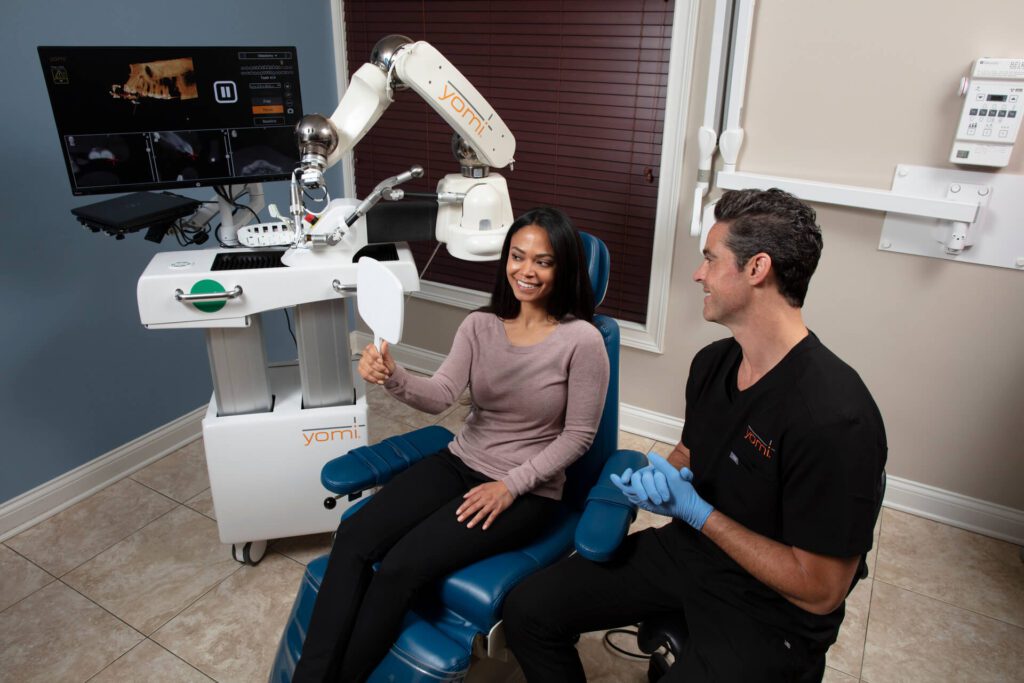
An experienced clinic triages emergencies the same way every time: assess the pain and swelling, take an X-ray, and offer palliative relief immediately even if definitive treatment waits a day. Emergency dentistry can include general, cosmetic, and specialized care, including implant work assisted by robotic technology for precision and reduced discomfort. Local coverage typically extends across multiple nearby areas, offering patients same-day options instead of defaulting to the ER. If you notice airway trouble, spreading facial swelling, uncontrolled bleeding, or a jaw injury, that’s still a 911 situation, not a dental one.
Where Conventional Cost Advice Falls Short
Most cost guides treat “emergency dentist cost” as a single number, and that’s the wrong frame. The honest answer is a range that depends almost entirely on what’s actually wrong with the tooth, which is a diagnosis question, not a scheduling question. The advice to “just go to the ER if it’s after hours” is often the most expensive mistake a patient can make, since ERs routinely hand out antibiotics and a referral for $1,000 or more while the tooth problem sits untouched.
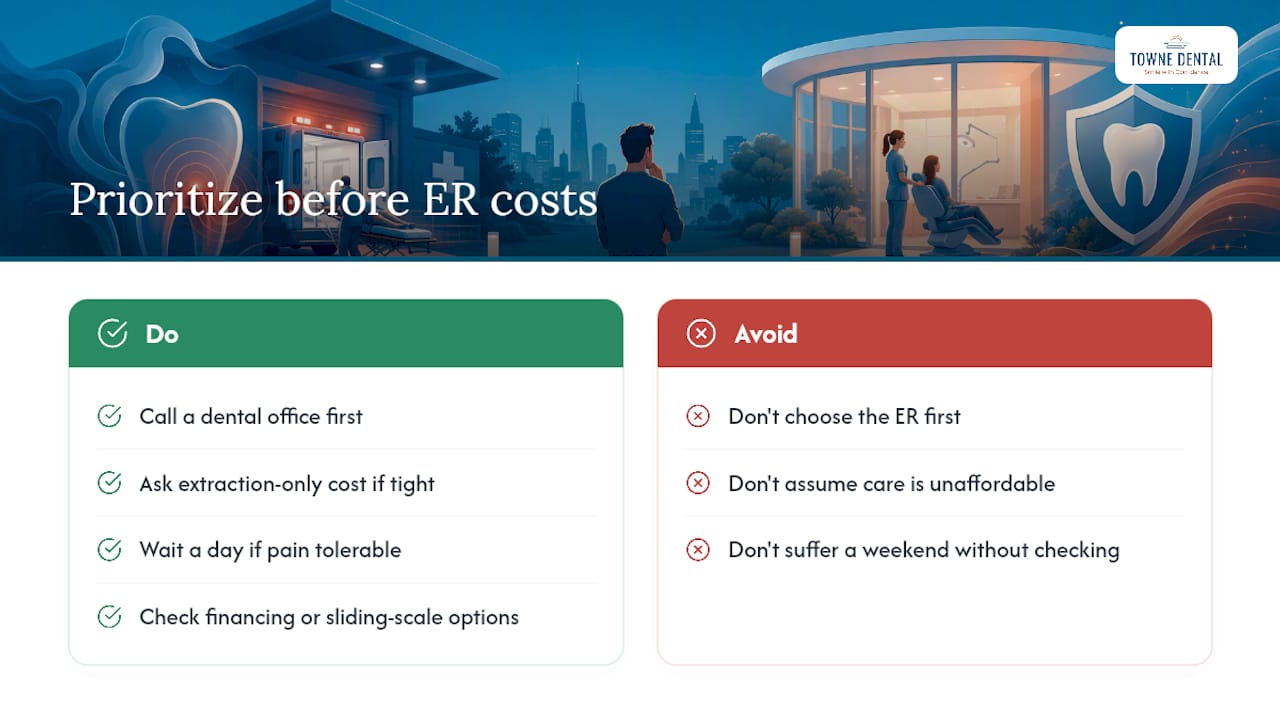
What we’d tell readers to prioritize first: call a dental office before assuming you need urgent care or the ER, and ask directly what an extraction-only visit would cost if money is tight. That single question reframes the decision from “can I afford treatment” to “which treatment can I afford today, with a plan for later.” Waiting a day to avoid an after-hours surcharge is smart when the pain allows it. Suffering through a weekend because you assume dental care is unaffordable is not, especially with financing and sliding-scale options as common as they are now.
— Towne Dental
How to Reach Towne Dental for Emergency Care
When you call, ask directly: is there a same-day slot open, what would an extraction-only visit cost if that’s the route you need, and what financing options are available if the bill is more than you expected. Getting those three answers before you walk in saves you from surprises in the chair.

Towne Dental’s emergency dental services page lists what a visit typically involves, current contact information, and the local offices serving Estero, Golden Gate, and Naples. If your tooth problem turns out to need follow-up work like a crown, implant, or root canal, the full services page covers what comes next and roughly what to expect. Ask for a written estimate before agreeing to treatment. It’s a reasonable request, and a transparent office will hand one over without hesitation. Call ahead, describe your symptoms clearly, and get a same-day appointment on the books.
Sources
Verify coverage rules at Healthcare.gov or find local low-cost clinics through HRSA’s health center finder.
This article is general information, not a substitute for advice from a qualified doctor. Consult a qualified healthcare professional about your own circumstances before acting on anything here.
- Emergency Dentist Cost 2026: No-Insurance Prices by Issue
- Dental emergency cost guide
- Get dental coverage
- Does health insurance cover dental?
FAQ
Is Emergency Dental Care in the U.S. Expensive?
It depends on the diagnosis. Getting out of pain typically costs $300 to $600 without insurance, but a root canal, surgical extraction, or after-hours visit can push the bill into the thousands.
What If I Have a Dental Emergency but No Money?
Ask the dental office about an extraction-only quote, CareCredit or in-house payment plans, and check for a nearby Federally Qualified Health Center or dental school clinic that uses sliding-scale pricing.
Why Is My Root Canal $3,000?
Molar root canals have multiple canals and take longer to treat than front teeth, and the total often includes the exam, the root canal itself, and a crown afterward, three separate charges that add up fast.
How Much Is an ER Visit for Tooth Pain Without Insurance?
Hospital ER visits for dental pain commonly run $1,100 to $3,200, and most end with antibiotics or pain medication plus a referral back to a dentist rather than an actual fix for the tooth.