A dental implant warranty is a written coverage promise that protects specific implant components against defects or failures for a defined period. Most patients assume one warranty covers everything. The reality is more layered, and understanding the difference between manufacturer and provider warranties can save you thousands of dollars and prevent serious misunderstandings down the road.
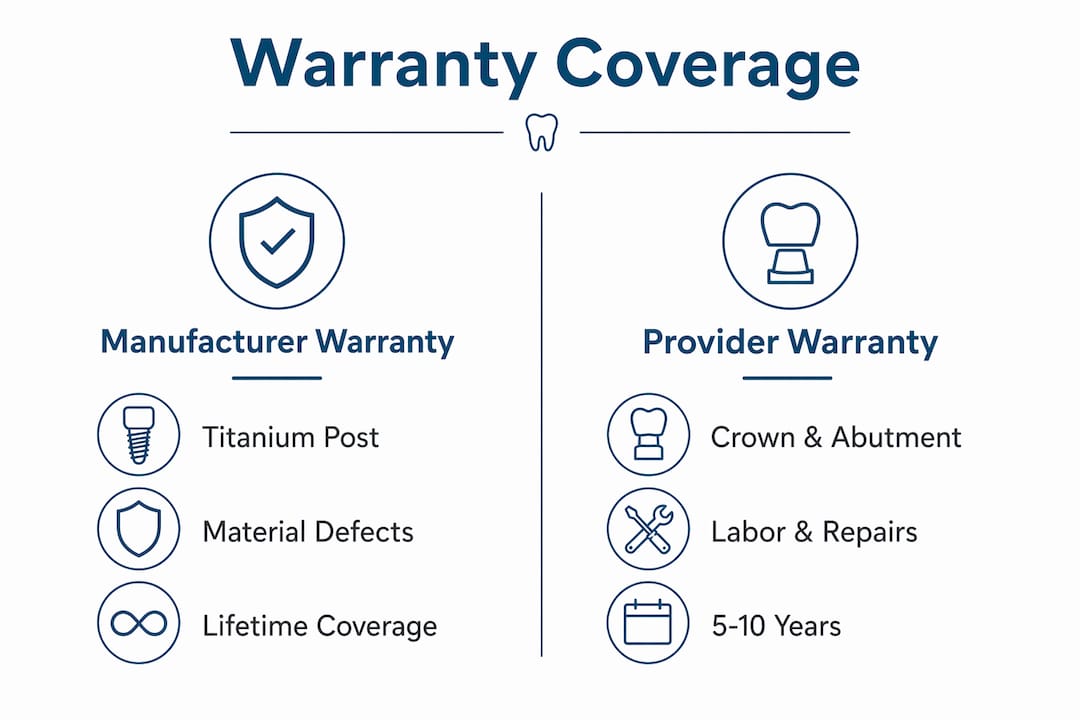
Two distinct warranty types apply to dental implants. The manufacturer warranty covers the titanium implant post itself, protecting against material or fabrication defects. The provider warranty, issued by your dental clinic, covers the prosthetic crown, abutment, and surgical labor. Knowing which warranty applies to which component is the first step in evaluating your dental implant coverage before you commit to treatment.
What does a dental implant warranty cover?
A dental implant has three main parts: the titanium post (the artificial root), the abutment (the connector), and the crown (the visible tooth). Each part carries different warranty terms, and coverage varies by component.
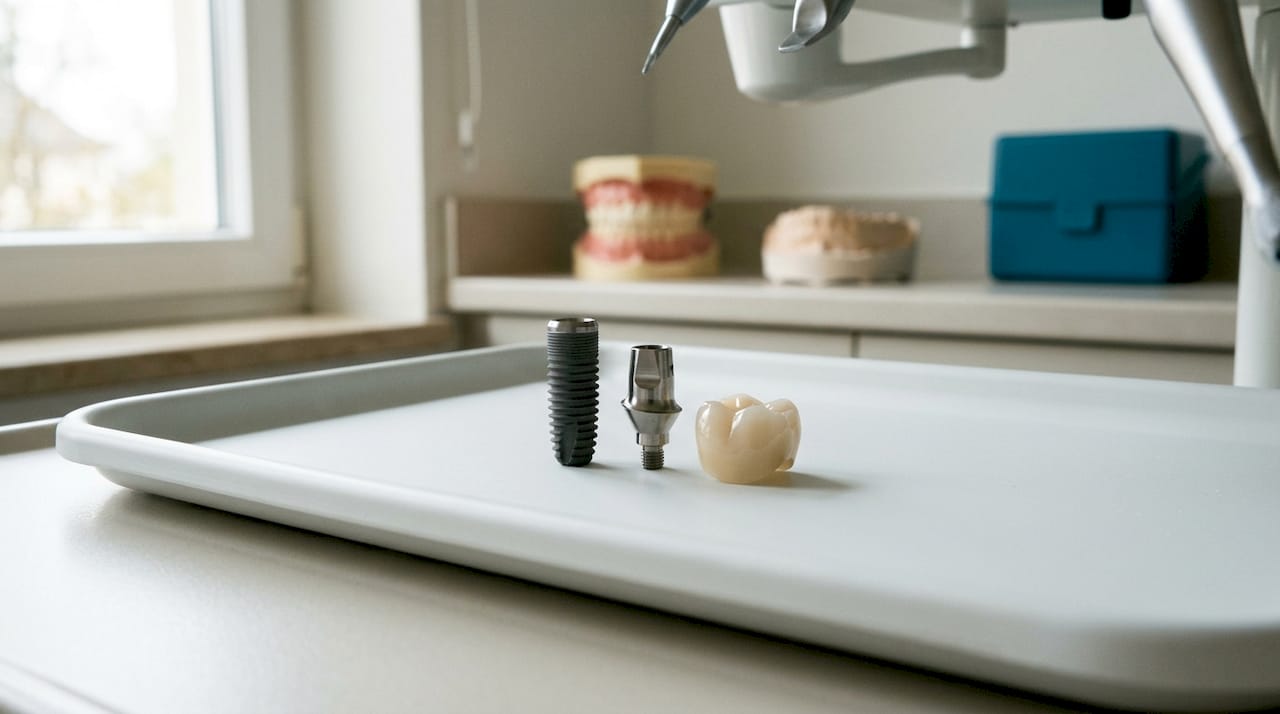
The manufacturer warranty focuses entirely on the implant post. It covers physical defects in the titanium, such as fractures caused by manufacturing flaws. It does not cover surgical labor, crown replacement, or any costs tied to placing or removing the implant. This distinction matters because many patients expect the manufacturer to pay for a redo procedure, only to learn the warranty reimburses the post hardware alone.
Provider warranties work differently. Your dental clinic issues these directly and typically covers the crown, abutment, and the labor involved in placing them. Provider warranties cover labor and crown with terms that vary widely from one practice to another. Always request the full written terms before treatment begins.
Typical coverage by component
| Component | Warranty Type | What Is Covered |
|---|---|---|
| Titanium implant post | Manufacturer | Material and fabrication defects only |
| Abutment | Manufacturer or provider | Varies; confirm in writing |
| Prosthetic crown | Provider | Replacement due to failure, not normal wear |
| Surgical labor | Provider | Revision procedures within the warranty period |
Pro Tip: Ask your provider to give you two separate documents: the manufacturer warranty card for the implant post and the clinic’s written warranty for the crown and labor. Keeping both on file protects you if a dispute arises years later.
What voids a dental implant warranty?
Exclusions are where most warranty disputes happen. Smoking and poor oral hygiene are the two most common reasons providers void coverage. Both impair healing and increase the risk of implant failure, and most warranty documents name them explicitly as disqualifying factors.
Biological complications also fall outside standard coverage. Peri-implantitis, an infection of the tissue around the implant, is typically excluded unless the provider can prove it resulted from a material defect. The same applies to bone loss caused by gum disease. Warranties exclude normal wear and most biological complications unless a manufacturing fault caused them.
Medical changes after treatment can also void coverage. Developing uncontrolled diabetes or starting medications that affect bone metabolism post-treatment frequently removes warranty protection. These conditions alter how bone integrates with the implant, and providers treat them as patient-side risk factors outside their control.
Common exclusions to watch for include:
- Skipping scheduled maintenance appointments
- Seeking follow-up care from a provider other than the original clinic
- Trauma from accidents or teeth grinding without a prescribed night guard
- Cosmetic changes to the crown not related to structural failure
- Implant failure linked to pre-existing conditions not disclosed before treatment
Pro Tip: Keep a record of every dental appointment, including routine cleanings. If a warranty claim arises, documented maintenance visits are your strongest evidence that you met your obligations.
How long do dental implant warranties last?
Warranty duration depends on the component and the provider. Manufacturer warranties on implant posts are often lifetime for material defects. That sounds reassuring, but “lifetime” applies only to the physical post, not to any associated costs.
Provider warranties for crowns and labor are shorter. Reputable providers offer 5–10 year warranties on crowns and labor. Crowns face daily wear from chewing, which is why their coverage period is shorter than the post’s. Complex treatments like All-on-4 implant bridges may carry different terms, so confirm the specific duration for each component in your treatment plan.
Transfer policies vary significantly. If you relocate from Naples to another city, some providers will transfer your warranty to an affiliated clinic. Others will not. Patients in the Ft. Myers-Naples area who plan to travel seasonally or relocate should ask about transfer terms before signing.
| Component | Typical Duration | Key Limitation |
|---|---|---|
| Titanium implant post | Lifetime (manufacturer) | Material defects only; no labor costs |
| Prosthetic crown | 5–10 years (provider) | Excludes normal wear and cosmetic changes |
| Surgical labor | 1–5 years (provider) | Varies widely; confirm in writing |
| All-on-4 bridge | Varies by clinic | Often shorter due to complexity |
How do patient factors and surgical technique affect warranty validity?
Patient health directly affects both implant success and warranty applicability. Diabetes increases implant failure hazard by 1.41, and age increases it by 1.01 per year. These are not disqualifying factors on their own, but they signal that patients with these risk profiles need to be especially diligent about maintenance and disclosure.
Surgical technique matters just as much. Simultaneous bone augmentation raises failure risk by more than twofold compared to staged surgical protocols. When bone grafting and implant placement happen at the same time, the biological demands on healing tissue increase significantly. Staged approaches, where grafting heals before the implant is placed, produce more predictable outcomes and are less likely to trigger warranty disputes.
Clinicians emphasize that warranty coverage cannot compensate for poor initial surgical planning or biologic conditions. These foundational factors dictate implant longevity far more than any written guarantee.
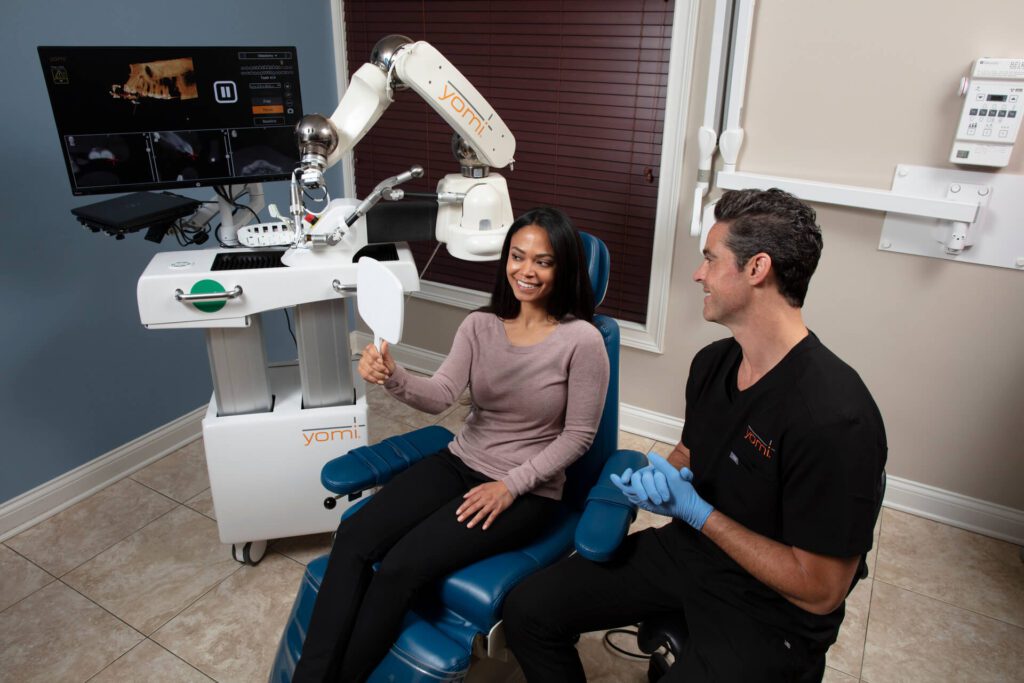
Six core determinants drive long-term implant success: patient comorbidities, gingival thickness, bone volume, implant position, restoration design, and treatment compliance. A warranty is only as reliable as the clinical foundation beneath it. Choosing a provider who follows evidence-based surgical standards, like the Yomi® Robot-Assisted Implants approach used at Townedentalfl, reduces the likelihood of complications that fall outside warranty coverage.
Good periodontal health before and after implant placement also plays a direct role in keeping your warranty valid. Gum disease around an implant is one of the most common reasons providers deny claims. Treating existing gum disease before surgery and maintaining it afterward is not optional; it is a warranty requirement at most clinics.
Key Takeaways
A dental implant warranty protects specific components for defined periods, and patients who understand the distinction between manufacturer and provider coverage are far less likely to face denied claims.
| Point | Details |
|---|---|
| Two warranty types exist | Manufacturer covers the implant post; provider covers the crown, abutment, and labor. |
| Exclusions are specific | Smoking, poor hygiene, missed appointments, and post-treatment medical changes commonly void coverage. |
| Duration varies by component | Implant posts often carry lifetime manufacturer warranties; crowns typically last 5–10 years under provider terms. |
| Surgical technique affects outcomes | Staged bone augmentation reduces failure risk compared to simultaneous procedures, keeping warranty claims less likely. |
| Documentation protects you | Keep all warranty documents, appointment records, and maintenance logs to support any future claim. |
What I’ve learned about dental implant warranties after years in this field
Most patients walk into an implant consultation thinking the warranty works like a car warranty: one document, one coverage period, one phone call if something goes wrong. The reality is that manufacturer and provider warranties operate independently, and the gap between them is where most disputes live.
The single biggest mistake I see is patients assuming the manufacturer warranty covers a failed implant procedure. It does not. If the titanium post fractures due to a manufacturing defect, the manufacturer may replace the post hardware. They will not pay for the surgery to remove it, the bone grafting to repair the site, or the new crown. That cost falls on the provider warranty, and if the provider’s terms have expired or the patient voided coverage, it falls on the patient.
The second mistake is neglecting maintenance. Strict adherence to aftercare is not just good advice; it is a contractual requirement in most warranty documents. Skipping a cleaning appointment seems minor. To a warranty administrator reviewing a claim, it is grounds for denial.
My advice is direct: get everything in writing before treatment starts, ask specifically what voids coverage, and treat your maintenance schedule like a legal obligation. The patients who get the most value from their dental implant guarantee are the ones who read the fine print and follow through.
— Krunal
Townedentalfl’s approach to implant care and warranty support
Patients in the Ft. Myers-Naples area have access to Townedentalfl’s full range of dental implant services, including treatments backed by clear, written warranty terms and thorough patient education before any procedure begins.

Townedentalfl uses the Yomi® Robot-Assisted Implant system to improve surgical accuracy and reduce the risk of placement errors that can lead to warranty complications. The team walks every patient through both manufacturer and provider warranty details at the consultation stage, so there are no surprises later. If you are considering implants in Naples or Ft. Myers, scheduling a consultation with Townedentalfl means starting with a provider who treats warranty transparency as part of the care standard, not an afterthought. Reach out to discuss your treatment plan and get your questions answered in writing.
FAQ
What is a dental implant warranty?
A dental implant warranty is a written guarantee covering specific implant components against defects or failures for a set period. It typically includes a manufacturer warranty on the titanium post and a provider warranty on the crown and surgical labor.
Does a dental implant warranty cover the whole procedure?
No. Manufacturer warranties cover the implant post only, not surgical labor or crown replacement costs. Provider warranties cover labor and the crown, but terms and durations vary by clinic.
What can void my dental implant warranty?
Smoking, poor oral hygiene, missed maintenance appointments, and developing uncontrolled medical conditions like diabetes after treatment are the most common reasons warranties are voided.
How long does a dental implant guarantee last?
Manufacturer warranties on titanium posts are often lifetime for material defects. Provider warranties on crowns and labor typically last 5–10 years, depending on the clinic and the complexity of the treatment.
Does dental implants insurance cover what warranties do not?
Dental insurance and implant warranties serve different purposes. Insurance may cover a portion of the procedure cost upfront, while the warranty addresses post-placement defects and failures. Reviewing both your insurance policy and warranty terms together gives you the clearest picture of your total protection.