Mild to moderate dental implant pain is normal for the first 48 to 72 hours after surgery and should get steadily better from there, not worse. Most discomfort responds to ibuprofen and ice, and clears up within a week to ten days. Pain that worsens after the initial few days, returns after settling down, or shows up alongside fever, pus, or a loose-feeling implant is not part of routine healing and needs a dentist’s attention promptly.
TL;DR:
- Pain that worsens after day three, persists beyond ten days, or is accompanied by fever, pus, or a loose implant requires immediate dental evaluation.
- Most discomfort peaks within the first two to three days due to swelling and inflammatory response, then steadily improves, but prolonged or worsening pain signals complications.
- Sharp pain, clicking, or a feeling of looseness in the prosthetic components often indicates mechanical issues, while nerve symptoms suggest nerve involvement needing specialist assessment.
- Recovery may take longer if a bone graft or sinus lift was performed, or if the patient smokes or has medical conditions that slow healing.
- Management at home includes ibuprofen, ice, a soft diet, gentle oral hygiene, and avoiding smoking or stressing the surgical site until pain subsides.
Table of Contents
- What Normal Healing After Implant Surgery Feels Like
- Common Causes of Implant Pain, From Surgical to Structural
- Red Flags: When to Call Your Dentist Right Away
- Managing Implant Pain at Home While You Wait for Care
- How Your Dentist Diagnoses the Problem
- Towne Dental’s View on Modern Implant Care and Comfort
- Why the Direction of Your Pain Matters More Than the Intensity
- Getting Urgent Care for Implant Pain at Towne Dental
- Sources
- FAQ
What Normal Healing After Implant Surgery Feels Like
A dull ache, some swelling along the jaw, mild stiffness when you open your mouth, and light oozing at the surgical site are all standard parts of recovery. None of that should alarm you in the first few days.
The pain curve follows a fairly predictable arc. Discomfort often gets a little worse before it gets better, largely because local anesthesia wears off right as inflammatory swelling peaks around day two or three. From there, most patients notice real improvement.
- Days 1 to 3: Peak swelling and soreness. This is the toughest stretch.
- Days 7 to 10: Most patients report they feel comfortable enough to forget about the surgical site during normal activity.
- Weeks to months: The implant fuses with the jawbone (a process called osseointegration), which continues quietly in the background with no pain at all.
Most implant pain and swelling peak within the first two to three days and should steadily improve; pain that persists past day three or lingers beyond ten days is the signal to call your dentist rather than wait it out. Recovery can run longer if you also had a bone graft or sinus lift, if you smoke, or if you manage diabetes or another condition that slows healing. The implant timeline breakdown walks through what to expect at each stage, and if a graft was part of your procedure, the bone graft healing guide explains why that adds time to the process.
Common Causes of Implant Pain, From Surgical to Structural
Not all implant pain comes from the same place, and the cause usually tracks with when the pain starts and how it behaves.
Surgical trauma shows up right after the procedure and fades on its own. Peri-implantitis, an infection around the implant, tends to arrive later, often weeks or months after placement, and comes with gum redness, bleeding, and sometimes a bad taste or odor. Timing is the key differentiator between the two.
Occlusal overload happens when the bite doesn’t distribute force evenly across the new crown. Pain that starts only after the crown gets attached and loaded, rather than during initial healing, often points here rather than to a failed surgery.
Prosthetic problems are mechanical, not biological: a loose abutment, a loose crown, or a fractured screw. These usually cause a sharp, localized pain when you bite down, sometimes with a clicking sensation.
Nerve involvement is different from all of the above. Burning sensations, electric shock feelings, numbness, or pain that radiates beyond the implant site suggest possible nerve irritation or injury. Neuropathic symptoms after implant placement or loading often respond poorly to standard painkillers, which is itself a diagnostic clue.
Sinus proximity (for upper implants) and temporomandibular joint issues can also mimic implant pain, muddying the picture further.
- Surgical inflammation: present from day one, improves steadily
- Peri-implantitis: delayed onset, gum changes, odor
- Occlusal overload: pain tied to biting or chewing after the crown is placed
- Loose prosthetic components: sharp pain, mobility, clicking
- Nerve injury: burning, shocks, numbness, poor response to analgesics
Pro Tip: If pain from occlusal overload starts weeks after your crown was placed, mention the exact timing to your dentist. A simple bite adjustment often resolves it in a single visit, so there’s no need to assume the implant itself has failed.
Red Flags: When to Call Your Dentist Right Away
Most of the time, patience and home care get you through the first week. Certain patterns mean you should not wait.
- Pain that worsens after day three, or returns after it had started improving. This breaks the normal healing curve and deserves a call.
- Fever, spreading facial swelling, pus, or a persistent bad taste or odor. These point to infection that needs professional evaluation, not more time.
- Any looseness or movement in the implant, abutment, or crown. A loose-feeling implant is never a normal part of healing at any stage, and it’s worth resisting the urge to keep checking it with your tongue or fingers, since repeated pressure can interfere with the bone actually fusing to the implant.
- New numbness, electric-shock sensations, or trouble breathing or swallowing. Numbness and shock-like pain suggest nerve involvement, and breathing or swallowing difficulty is an emergency regardless of the cause.
Worsening pain after day three, fever, pus, or a loose implant fall well outside the routine healing pattern, and dentists would rather see you a day early than a week too late.
Managing Implant Pain at Home While You Wait for Care
For garden-variety post-surgical soreness, a few simple steps handle most of it.
On medication: ibuprofen is generally more effective than acetaminophen for the inflammatory component of implant pain, though if your dentist prescribed a specific combination or a stronger medication, follow that regimen instead of substituting your own. Never take antibiotics you weren’t prescribed for this specific issue. Skipping doses of a prescribed antibiotic to “save” them for later is one of the more common mistakes patients make, and it can let an infection get a foothold.
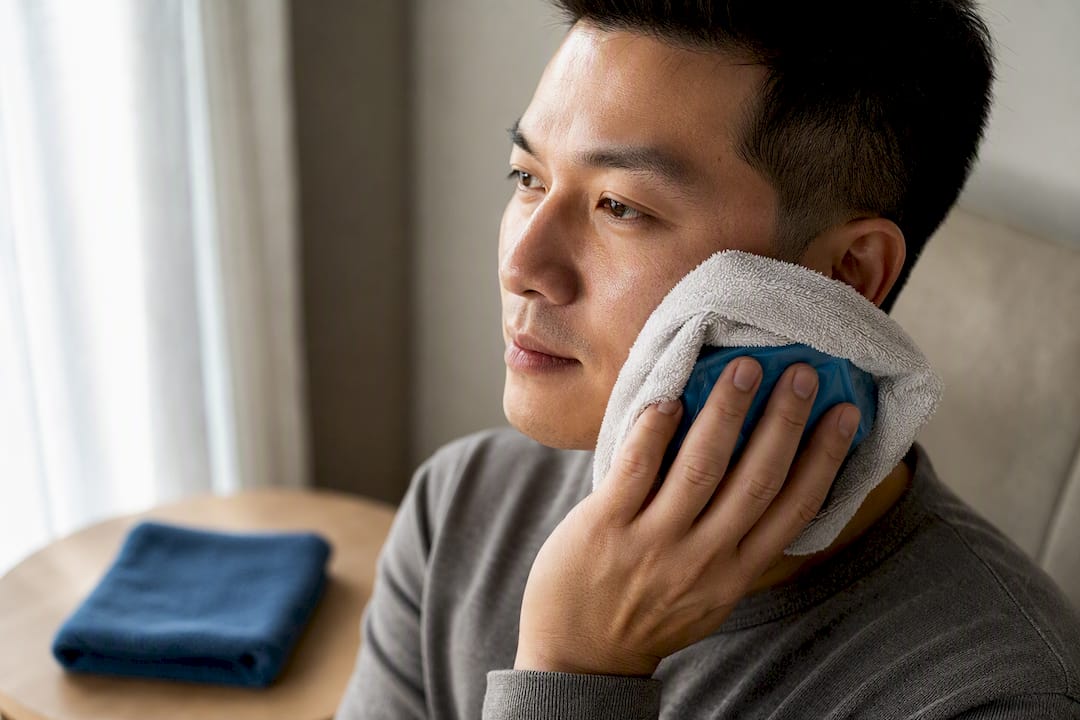
- Apply ice packs in 15 to 20 minute intervals during the first 48 hours to control swelling.
- Stick to a soft diet: yogurt, soup, mashed vegetables, scrambled eggs.
- Brush gently around the site and rinse with salt water, or chlorhexidine if your dentist recommended it.
- Sleep with your head slightly elevated and skip strenuous exercise for a few days.
Avoid poking or wiggling the implant to “test” it, skip smoking entirely during healing, and stay off hard, crunchy, or sticky foods that could stress the site. A cold-therapy wrap can make the first two days noticeably more bearable if you want something more targeted than a bag of ice; structured cold-compress guidance covers proper timing and placement, and the same principles apply to implant surgery, not just wisdom teeth. For a broader post-op checklist, the oral surgery recovery guide covers additional details.
Pro Tip: Set a phone reminder to ice on a schedule for the first two days instead of relying on memory. Consistent 20-minute intervals control swelling far better than occasional icing whenever you happen to think of it.
If pain responds to these measures and keeps trending downward, you’re in normal territory. If it plateaus or gets worse despite following this routine, that’s your cue to call.
How Your Dentist Diagnoses the Problem
A dental team investigating implant pain works through a fairly standard sequence, and understanding it in advance makes the appointment less stressful.
They’ll start with a focused exam: checking for mobility, tapping the implant (percussion), pressing around the site (palpation), and reviewing your medical and dental history, including any medications or conditions that affect healing.
Imaging comes next when needed. A periapical film gives a quick look at the immediate area; a panoramic X-ray shows the broader jaw; and CBCT (cone-beam CT) gets ordered when the dentist suspects nerve proximity issues or bone loss that flat imaging can’t capture clearly.
- Infection gets treated with antibiotics and debridement (cleaning out infected tissue).
- Bite problems get corrected with occlusal adjustment, often in one visit.
- Loose or fractured prosthetic components get tightened or replaced.
- Suspected nerve involvement or TMD gets referred to a specialist.
Implant removal is sometimes discussed for persistent pain, but it’s rarely the clean fix people expect. Idiopathic facial pain after implant placement often does not resolve with removal, and multidisciplinary management, including medication, is frequently the more realistic path to relief.
Towne Dental’s View on Modern Implant Care and Comfort
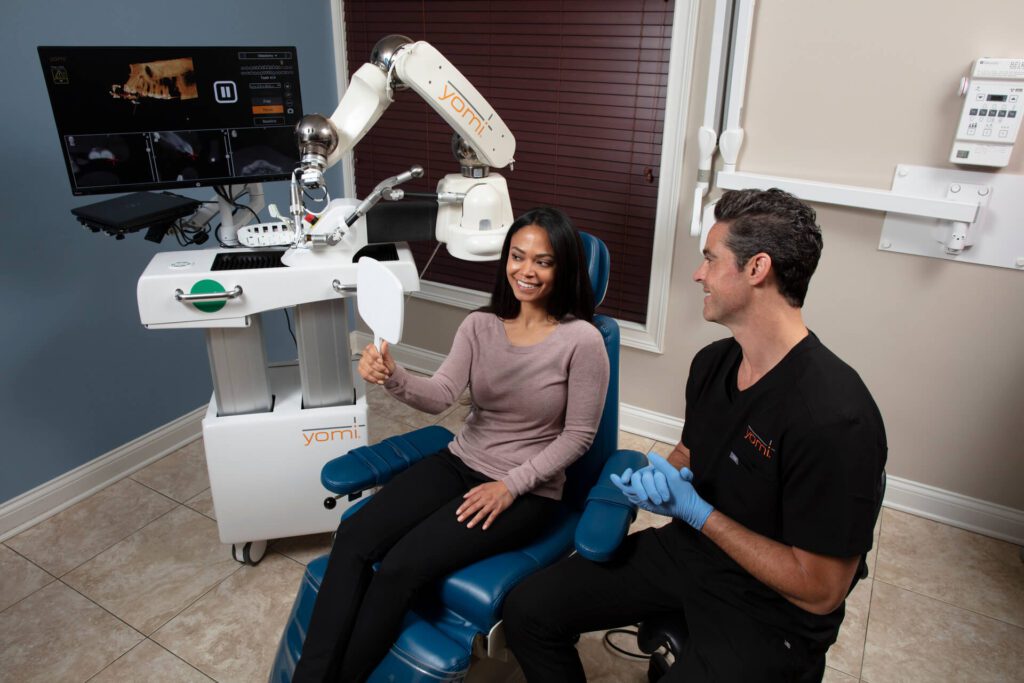
Precision at the surgical stage prevents a lot of pain problems before they start. Robotic-assisted placement systems can guide implant positioning with more control than freehand techniques allow, which can mean a less invasive procedure and fewer surprises during healing.
Anxiety shapes how pain gets experienced, not just how it feels emotionally. Preoperative anxiety can affect postoperative pain perception and anesthetic response, which is why some dental practices build sedation options and individualized pain plans into treatment rather than treating every patient the same way.
If you need an urgent visit, bring your operative records, a rough timeline of when symptoms started or changed, and photos of any swelling if it’s fluctuated day to day. That context helps the dental team narrow down the cause faster.
Why the Direction of Your Pain Matters More Than the Intensity
Patients tend to fixate on how much something hurts. The more useful question is whether it’s trending better or worse.
That single distinction separates almost every normal recovery from every problem case in the research behind this article. A 7-out-of-10 ache on day one that’s a 4 by day four is unremarkable. A 3-out-of-10 ache on day one that climbs to a 6 by day five is not, even though the second patient reports less pain overall at the start.
Conventional advice leans hard on “some pain is normal” and stops there, which leaves people either dismissing real warning signs or panicking over ordinary soreness. The trend line is the actual diagnostic tool patients have access to before they ever sit in a dental chair.
One more thing worth saying plainly: the word “rejection” gets thrown around loosely by patients searching their symptoms online. True immune rejection of titanium or ceramic implants is uncommon; most cases labeled that way are actually infection, failed integration, or inflammation, and that distinction changes how a dentist approaches treatment entirely.
— Towne Dental
Getting Urgent Care for Implant Pain at Towne Dental
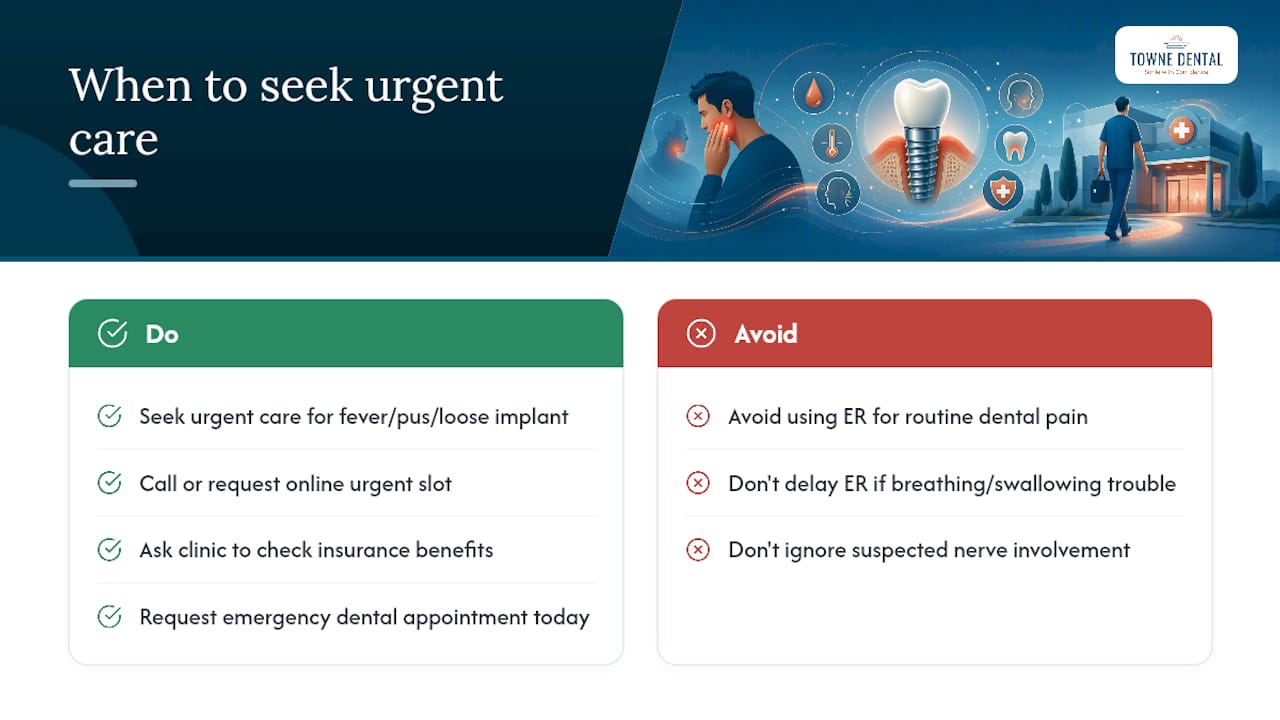
If your pain is worsening, accompanied by fever or pus, or your implant feels loose, that’s a same-week or same-day dental problem, not an ER problem, unless you’re also having trouble breathing or swallowing, in which case go to the ER first. Certain dental clinics keep urgent slots open for this kind of situation, and requesting one often takes a phone call or a quick online request rather than a long wait for a routine opening.

Some implant providers use robotic-guided placement to plan implants precisely, and their teams can access surgical records quickly when issues arise. For infection or prosthetic issues, the periodontics team and general restorative staff handle most fixes in a single visit. For anything surgical, including suspected nerve involvement, the oral surgery department takes the next step.
Most dental insurance plans cover urgent evaluation visits at least partially, and Some dental offices can check patients’ insurance benefits before appointments. Your first urgent visit typically covers the exam, any needed imaging, and a same-visit treatment plan. If you’re dealing with pain that’s outside the normal healing window, request an emergency dental appointment today rather than waiting to see if it resolves on its own.
This article is general information, not a substitute for advice from a qualified doctor. Consult a qualified healthcare professional about your own circumstances before acting on anything here.
Sources
- Dental Implant Pain: What’s Typical & When to Get Help — Healthline
- Persistent, neuropathic-like trigeminal pain after dental implant loading — PMC
- Prevention and management of persistent idiopathic facial pain after dental implant placement — JADA
- Pain after a dental implant: What is normal and when to worry — Acibadem International
FAQ
What are the early signs of dental implant rejection?
True immune rejection is uncommon. What patients usually notice is persistent gum redness, bleeding, a loose feeling, or pain that keeps getting worse, and these almost always trace back to infection or failed integration rather than rejection itself.
Why does my dental implant throb at night?
Lying flat increases blood flow to the head and jaw, which can make normal inflammation feel more intense at night during the first few days. If throbbing is worsening rather than settling, or comes with swelling, treat it as a red flag rather than a positional nuisance.
What is the most painful part of getting a dental implant?
The surgery itself is done under anesthesia, so most patients feel little during placement. The toughest stretch for pain is typically 48 to 72 hours afterward, once anesthesia wears off and inflammatory swelling peaks.
What are some home remedies for dental implant pain?
Ice packs in 15 to 20 minute intervals, a soft diet, gentle brushing, and salt water rinses handle most normal post-surgical discomfort. Ibuprofen (unless your dentist advised otherwise) manages the inflammatory component better than acetaminophen alone for most patients.
Is dental implant pain normal after the first week?
Mild lingering sensitivity can persist a bit past a week, but real pain, especially pain that’s stable or worsening rather than fading, is not typical after that point and warrants a call to your dentist.