Dental abrasion treatment is the process of stopping mechanical enamel wear and restoring damaged tooth structure to preserve both function and appearance. Unlike decay, abrasion is caused by physical friction, most often from aggressive brushing, abrasive toothpaste, or repetitive oral habits. Tooth wear affects between 45% and 85% of adults, making abrasion one of the most widespread and underdiagnosed threats to long-term oral health. The good news is that both conservative home care and professional restorative options can stop progression and rebuild what has been lost, especially when caught early.
What causes dental abrasion and how do you recognize it?
Dental abrasion is defined as mechanical enamel loss caused by external friction rather than chemical attack or tooth-to-tooth contact. That distinction matters because the right treatment depends entirely on identifying the correct cause. Misdiagnosis of wear type leads to treatment failure, so understanding what you are looking at is the first clinical step.
What abrasion looks like
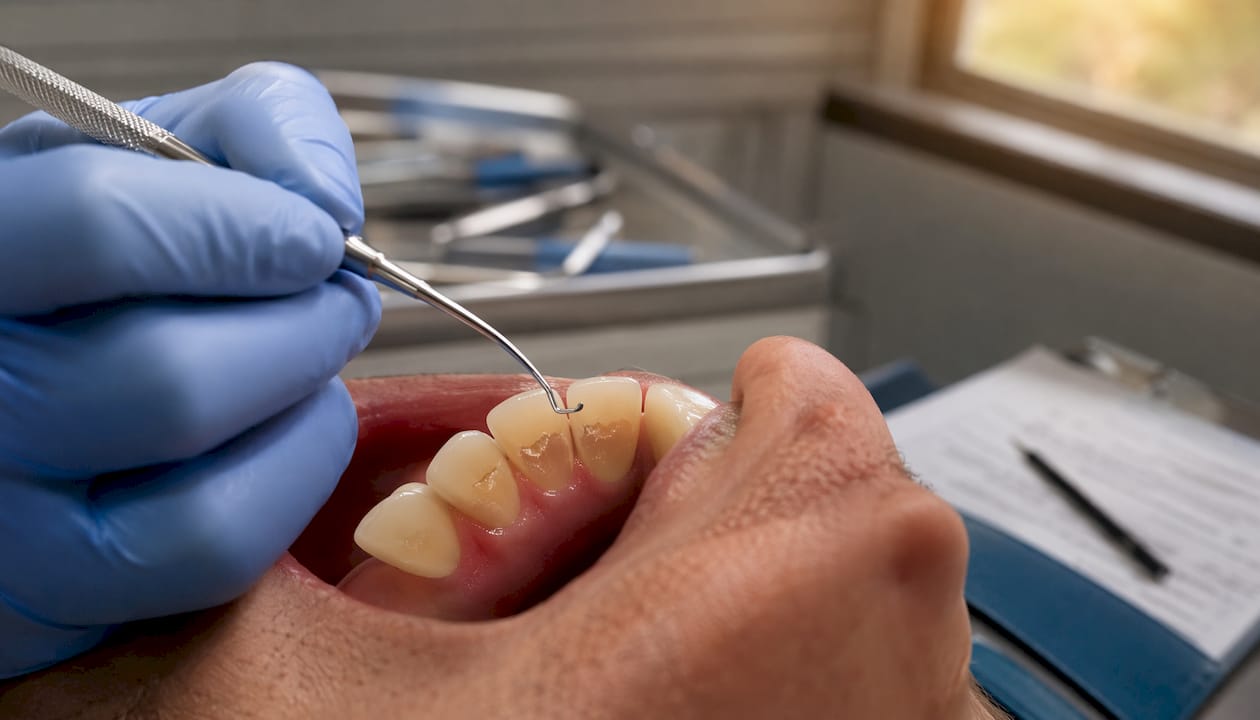
Abrasion lesions appear as V-shaped notches near the gum line, most often on the buccal (outer-facing) surfaces of canines and premolars. These wedge-shaped defects are the direct result of mechanical overbrushing. Erosion, by contrast, creates broad, shallow, scooped surfaces across multiple teeth. Attrition flattens the biting edges. Knowing the difference helps your dentist choose the right path forward.
Common causes of abrasion
Several everyday habits drive abrasion faster than most patients expect:
- Aggressive brushing technique. Scrubbing side to side with heavy pressure is the leading cause of cervical notching.
- Hard-bristle toothbrushes. Stiff bristles concentrate force on the gum line where enamel is thinnest.
- Highly abrasive toothpastes. Whitening and tartar-control formulas often carry a high Relative Dentin Abrasivity (RDA) score.
- Oral habits. Nail biting, chewing on pens, or holding objects between teeth all create localized friction.
- Occupational exposure. Workers in dusty or particulate environments face elevated abrasion risk from airborne particles.
Hard bristles, abrasive toothpaste, and acid exposure create a compounding effect that accelerates wear far beyond what any single factor would cause alone. Acid from food or drink softens enamel temporarily, and brushing immediately after multiplies the damage.
Pro Tip: Wait at least 30 minutes after consuming acidic foods or drinks, such as citrus, soda, or coffee, before brushing. Acid-softened enamel is far more vulnerable to mechanical wear.
How can you prevent dental abrasion at home?
Prevention is the most cost-effective form of dental wear management. The goal is to remove the mechanical forces driving abrasion without sacrificing effective oral hygiene.
- Switch to a soft-bristle brush. Soft bristles clean teeth just as effectively as medium or hard bristles while applying a fraction of the force at the gum line.
- Use the 45-degree angle technique. Position the brush head at a 45-degree angle to the gum line and use short, circular strokes rather than horizontal scrubbing. This is the standard recommended by the American Dental Association.
- Apply light pressure only. If your brush head splays outward within a few weeks, you are pressing too hard. The bristles should bend only slightly during use.
- Choose a low-abrasivity toothpaste. Look for desensitizing formulas containing stannous fluoride or arginine. Twice-daily use of stannous or arginine-based desensitizing toothpastes is the first-line recommendation for patients with active abrasion.
- Time your brushing correctly. Brush before breakfast or wait 30 minutes after eating. Brushing immediately after acidic meals compounds enamel loss significantly.
- Address oral habits directly. If you chew on pens, ice, or fingernails, replacing those habits with sugar-free gum or a stress ball removes a meaningful friction source.
Consistent application of these six steps controls wear progression in mild to moderate cases without any clinical intervention. The Tooth Wear Evaluation System 2.0 actively discourages overtreatment, favoring behavioral change and monitoring for mild abrasion before any restorative work begins. That means your daily habits carry more clinical weight than most patients realize.
Pro Tip: Consider an electric toothbrush with a built-in pressure sensor. These devices alert you when you are pressing too hard, removing the guesswork from brushing force entirely.
What professional treatment options exist for dental abrasion?
When abrasion has progressed beyond what home care can manage, clinical intervention becomes necessary. The right treatment depends on lesion depth, remaining tooth structure, sensitivity levels, and aesthetic goals.
Fluoride and desensitizing applications
For early to moderate abrasion, professional treatment often starts with fluoride varnishes and desensitizing agents applied in-office. These treatments strengthen remaining enamel, seal exposed dentin tubules, and reduce sensitivity. They do not rebuild lost structure, but they stabilize the tooth and buy time for behavioral changes to take effect.
Composite resin bonding
Direct composite bonding is the most common restorative option for moderate abrasion lesions. A tooth-colored resin is applied directly to the notched area, restoring the tooth’s shape and protecting exposed dentin. The procedure is minimally invasive, preserves natural tooth structure, and can be completed in a single visit. Modern dentistry favors additive composite restorations over more aggressive options wherever tooth structure allows.
Veneers and crowns
Severe abrasion with significant structural loss may require direct composite bonding, veneers, or crowns depending on how much tooth remains. Porcelain veneers cover the front surface of the tooth and work well when multiple adjacent teeth are affected. Crowns become necessary when the tooth has lost so much structure that a veneer cannot bond securely. Both options restore aesthetics and function, but they require more preparation and a longer treatment timeline.
The table below outlines how treatment options align with abrasion severity:
| Severity level | Typical treatment approach |
|---|---|
| Mild (surface enamel only) | Behavioral change, desensitizing toothpaste, monitoring |
| Moderate (dentin exposed, sensitivity present) | Professional fluoride application, composite bonding |
| Severe (significant structural loss) | Porcelain veneers or full crowns |
| Complex (multiple wear types coexisting) | Individualized plan addressing all active factors |
One critical point: abrasion, erosion, and attrition often coexist, and treating only the abrasion component while ignoring acid erosion or bruxism will produce poor long-term results. A thorough clinical exam that identifies all active wear factors is not optional. It is the foundation of any treatment plan that will actually hold.
If abrasion has exposed dentin deeply enough to cause pulp sensitivity, specialized endodontic evaluation may be needed before restorative work begins.
How do you maintain results after dental abrasion treatment?
Restorations do not last without behavior change. Without modifying the mechanical source of abrasion, composite bonding and veneers wear at the same rate as natural enamel. Maintenance is not optional. It is what separates a successful outcome from a cycle of repeated repairs.
Key habits that protect restorations long term include:
- Continuing gentle brushing technique. The same soft-bristle, low-pressure approach that prevents abrasion also protects bonded restorations from premature wear.
- Attending regular dental check-ups. Regular dental visits are essential for monitoring wear progression and catching new lesions before they require major intervention.
- Managing acid exposure. Patients who also have acid reflux or consume high volumes of acidic beverages need to address those factors directly. Acid softens restorations just as it softens enamel.
- Treating bruxism if present. Night grinding accelerates wear on both natural teeth and restorations. A custom occlusal guard worn during sleep distributes force evenly and protects restored surfaces.
- Recognizing new symptoms early. Increased sensitivity, visible notching, or rough edges on restored teeth are signals to schedule an evaluation before damage compounds.
Pro Tip: Ask your dentist to photograph your teeth at each check-up. Side-by-side photos taken six months apart reveal wear progression that is invisible to the naked eye during a single exam.
Patients who commit to these habits see composite restorations last significantly longer than those who return to the same brushing behaviors that caused the original damage. The restoration is only as durable as the care surrounding it.
Key Takeaways
Effective dental abrasion treatment requires stopping the mechanical cause first, then restoring damaged structure with the least invasive option that achieves lasting results.
| Point | Details |
|---|---|
| Identify abrasion correctly | V-shaped gum-line notches on canines and premolars are the defining sign of mechanical abrasion. |
| Change behavior before restoring | Behavioral modification is first-line treatment; restorations fail without it. |
| Match treatment to severity | Options range from desensitizing toothpaste for mild cases to veneers or crowns for severe structural loss. |
| Address all wear factors | Abrasion, erosion, and bruxism often coexist; treating only one factor produces poor outcomes. |
| Commit to maintenance | Regular check-ups and gentle oral hygiene protect restorations and prevent recurrence. |
What I have learned treating dental abrasion over the years
The most common mistake I see is patients who arrive after years of aggressive brushing, receive a composite restoration, and then return 18 months later with the same notch. The restoration wore through because the brushing technique never changed. No material science can outperform daily mechanical force applied in the wrong direction.
What actually works is spending as much time on patient education as on the clinical procedure itself. When patients understand why the V-shaped notch formed, they are far more motivated to change their technique. Showing someone a photo of their own gum-line notch next to a diagram of brush angle is more persuasive than any pamphlet.
The shift toward minimally invasive additive restorations has been genuinely positive. Composite bonding preserves far more natural tooth structure than the crown-first approach that was common a decade ago. Patients benefit from that directly. A tooth that keeps most of its natural structure is a healthier tooth over a 20-year horizon.
My honest advice: do not wait until sensitivity becomes pain. Mild abrasion caught at the monitoring stage costs almost nothing to manage. Severe abrasion requiring crowns on multiple teeth is expensive, time-consuming, and entirely avoidable with early intervention and a soft-bristle brush.
— Krunal
Dental abrasion care at Towne Dental in Estero
Towne Dental offers comprehensive dental services for patients at every stage of enamel wear, from early monitoring and desensitizing care to full restorative treatment. Every patient receives a personalized treatment plan built around their specific abrasion severity, contributing habits, and aesthetic goals.

The team at Towne Dental uses advanced diagnostic tools to distinguish abrasion from erosion and attrition accurately, so your treatment addresses the actual cause rather than just the symptom. For patients concerned about smile aesthetics, cosmetic restoration options including composite bonding, veneers, and crowns are available in a comfortable, patient-focused environment. Schedule an evaluation today and get a clear picture of where your enamel stands.
FAQ
What is the first step in treating dental abrasion?
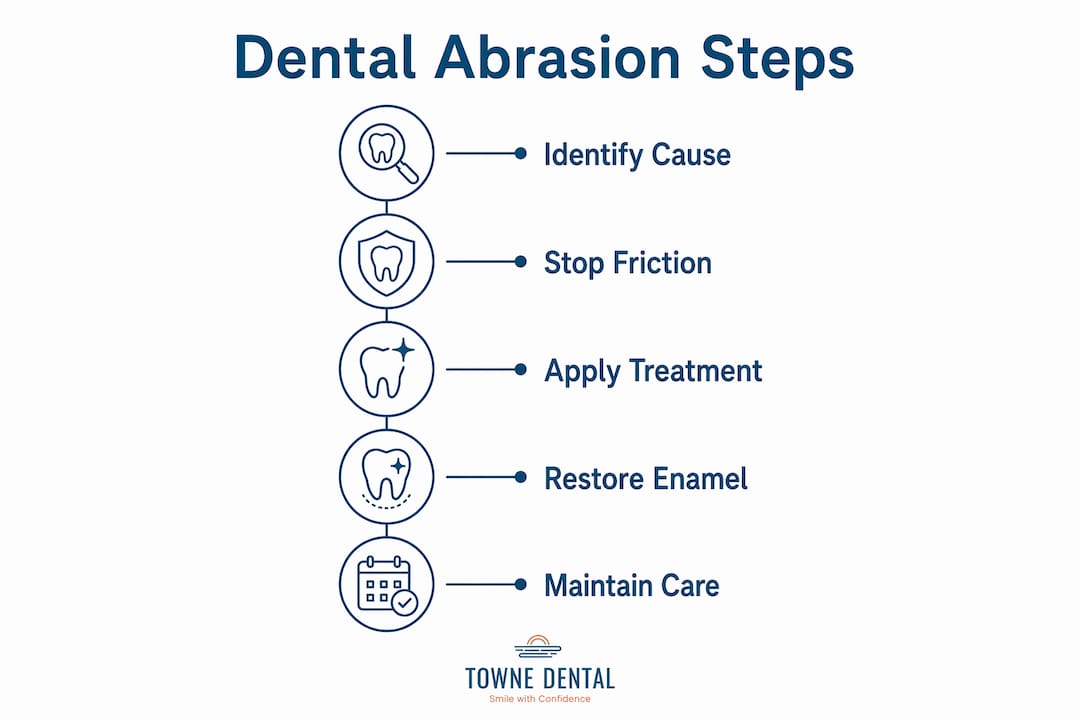
The first step is identifying and stopping the mechanical cause, most often aggressive brushing or a hard-bristle toothbrush. Without removing the source of friction, no restoration will hold long term.
Can dental abrasion be reversed at home?
Lost enamel cannot regenerate, but desensitizing toothpastes containing stannous fluoride or arginine can strengthen remaining enamel and reduce sensitivity. Professional composite bonding is required to restore tooth structure that has already been lost.
How do I know if I have abrasion or erosion?
Abrasion produces V-shaped notches at the gum line on canines and premolars. Erosion creates broad, shallow, scooped surfaces across multiple teeth. A dentist can confirm the diagnosis with a clinical exam.
How long do composite bonding restorations last for abrasion?
Composite restorations last significantly longer when patients maintain gentle brushing technique and attend regular check-ups. Without behavior change, the same mechanical forces that caused the original abrasion will wear through the restoration.
When does dental abrasion require a crown?
A crown becomes necessary when abrasion has removed enough tooth structure that a veneer or composite cannot bond securely. Severe structural loss, deep dentin exposure, or significant sensitivity that does not respond to conservative care are the main indicators.