Cover the jagged edge immediately with orthodontic wax or a piece of sugar-free gum, then call your dentist. If you have uncontrolled bleeding, a loose tooth, severe pain, or visible swelling spreading toward your jaw or throat, that is a dental emergency — call your dentist’s after-hours line or head to an emergency dental clinic now.
First-aid steps to take right now:
- Rinse gently with warm water to clear blood and debris
- Apply gauze with light pressure for about 10 minutes if the area is bleeding
- Press a cold pack against your cheek (not directly on the tooth) to reduce swelling
- Cover the broken tooth sharp edge with orthodontic wax, sugar-free gum, or temporary dental cement to protect your tongue and cheek
- Save any tooth fragment you find — store it in milk or saliva and bring it to your appointment
- Take ibuprofen or acetaminophen for pain, following the package directions
Call emergency dental services immediately if the tooth is visibly loose or moving, if you see blood coming from inside the fracture (pulp exposure), if pain is severe and not responding to OTC pain relievers, or if swelling is affecting your ability to swallow or breathe.
Key Takeaways
A broken tooth with a sharp edge needs immediate soft-tissue protection and professional evaluation within a timeframe matched to your symptoms — same day for bleeding or mobility, within 72 hours for cold sensitivity.
| Point | Details |
|---|---|
| Cover the edge now | Use orthodontic wax, sugar-free gum, or a temporary cement kit to protect your tongue and cheek. |
| Cold sensitivity signals dentin exposure | Sensitivity to air or water means the fracture is deeper than enamel — call your dentist within 24–72 hours. |
| Knocked-out tooth: act within 30–60 minutes | Store the tooth in milk or saliva and get to a dentist immediately for the best reimplantation outcome. |
| Avoid home filing except as a last resort | Use only a fine emery board on enamel-only rough spots; stop if you feel any pain or sensitivity. |
| Towne Dental offers same-day emergency care | Bring your fragment in milk or saliva, insurance card, and medication list for immediate stabilization and a treatment plan. |
Table of Contents
- What can you do at home to protect a broken tooth sharp edge?
- Can you file a sharp tooth edge yourself at home?
- When does a broken tooth require emergency care?
- How do dentists actually fix a broken tooth with a sharp edge?
- How long can you wait, and what does treatment cost?
- What Towne Dental does when you come in with a broken tooth
- Why acting fast on a broken tooth matters more than most people realize
- Towne Dental is ready for same-day broken tooth care
- Sources
- FAQ
What can you do at home to protect a broken tooth sharp edge?
Orthodontic wax is the go-to short-term fix, and it works better than most people expect. You can find it at any US pharmacy — CVS, Walgreens, Walmart — usually in the dental aisle near the braces supplies. Dry the tooth and the surrounding area with a tissue or gauze first, then roll a small pea-sized piece of wax between your fingers to warm it, press it firmly over the jagged edge, and hold it in place for 20–30 seconds. A dry surface is the key detail most people skip; wax applied to a wet tooth slides off within minutes.
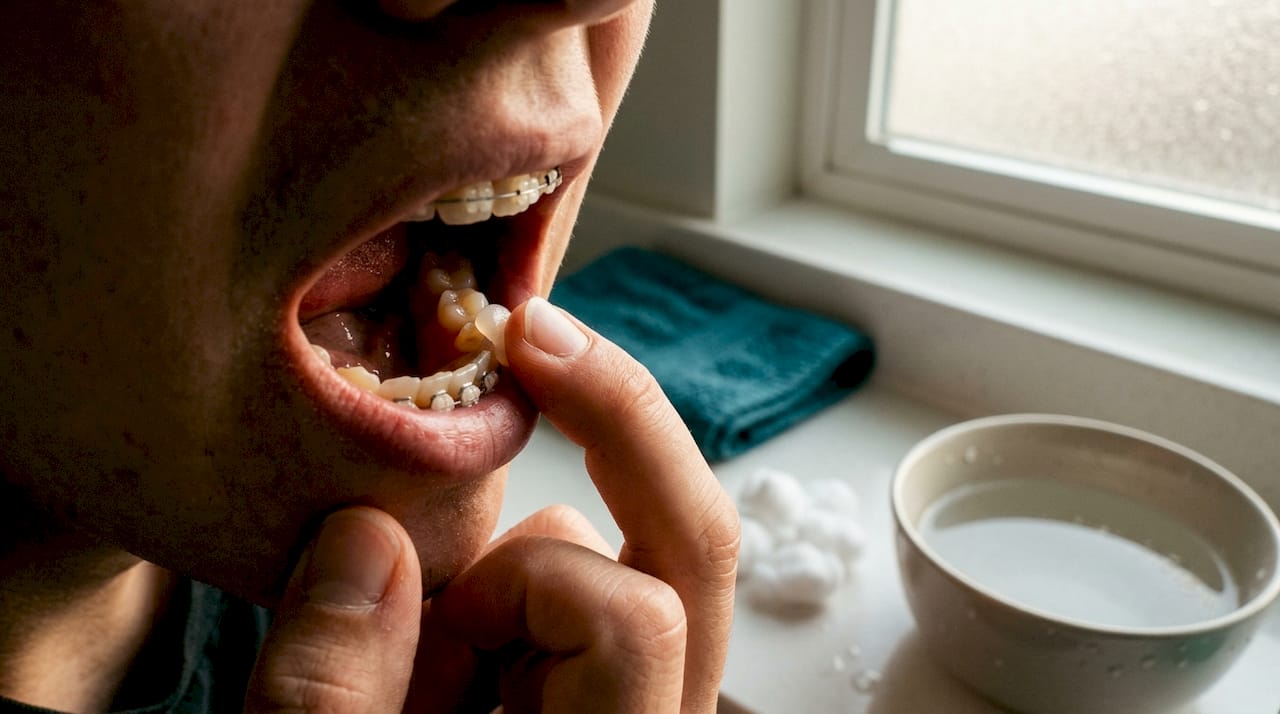
If you have no wax on hand, a small piece of sugar-free chewing gum works as a short-term substitute. Chew it briefly to soften it, then press it over the sharp spot. It will not last as long as wax, but it buys time.
For a larger chip or a missing filling, an over-the-counter temporary dental cement kit — Dentemp is one widely available option — can fill the gap and protect exposed dentin. Read the package carefully: most kits require you to dry the tooth, press the material in, and bite down gently to shape it. These kits are not permanent restorations. Temporary dental cements protect soft tissue short-term, but they can trap bacteria if left in place too long without professional follow-up.
While you wait for your appointment, rinse with warm saltwater two or three times a day (half a teaspoon of salt in 8 ounces of warm water). Chew only on the opposite side. Avoid anything sticky, hard, or crunchy near the damaged tooth.

What to avoid: household glue, super glue, metal nail files, and anything that requires force against the tooth. These can crack the tooth further, damage the pulp, or cut your gum badly enough to need separate treatment.
Pro Tip: Shape the wax into a thin oval pad before pressing it on. A flat pad covers more surface area than a ball and stays put longer, especially on a molar.
Can you file a sharp tooth edge yourself at home?
The short answer is: only as a last resort, only on enamel, and only with a fine emery board.
- Confirm it is enamel only. If the rough spot is sensitive to cold air or water, dentin is likely exposed. Stop and use wax instead — filing a dentin-exposed tooth causes pain and risks pulp damage.
- Use a fine-grit emery board, not a metal nail file. Metal files generate heat and remove too much material too fast. A fine emery board is gentler, though still imprecise.
- File with the lightest possible touch. One or two passes across the sharpest point only. You are removing a rough edge, not reshaping the tooth.
- Stop immediately if you feel any pain, sensitivity, or if the area starts to bleed. Pain means you have reached dentin or beyond.
- See a dentist regardless. Home smoothing is a temporary measure, not a fix. A dentist uses water-cooled rotary burs that remove minimal structure without generating heat — something a nail file cannot replicate.
Professional smoothing avoids heat damage to the pulp that home filing risks. Removing too much enamel also means a larger repair later. If you cannot protect the sharp edge with wax or gum, one careful pass with a fine emery board is acceptable. Beyond that, leave it to your dentist.
When does a broken tooth require emergency care?
The ADA classifies a broken tooth that causes pain, soft tissue trauma, or tooth mobility as an urgent dental concern requiring prompt evaluation to prevent infection or further damage.
Go to emergency dental care the same day if you have any of these:
- Uncontrolled bleeding that does not stop after 10 minutes of gauze pressure
- A tooth that is loose, shifted, or visibly out of position
- Blood coming from inside the fracture itself (pulp exposure)
- Severe pain that OTC pain relievers are not controlling
- Swelling in your jaw, cheek, or neck
A routine appointment within 24–72 hours is appropriate when:
- The tooth is stable and not mobile
- Pain is mild and manageable
- You have sensitivity to cold air or water, which signals dentin exposure and a need for prompt but not emergency care
- The chip is small and the edge is covered with wax
Enamel-only chips with no sensitivity can usually wait for a scheduled appointment. The self-test is simple: blow cool air gently across the tooth. Sharp sensitivity means dentin is exposed and you should call your dentist today, not next week.
For a knocked-out permanent tooth, the window for successful reimplantation is 30–60 minutes. Store the tooth in milk or saliva and get to a dentist immediately.
How do dentists actually fix a broken tooth with a sharp edge?
Most small chips are resolved in a single visit. The procedure depends entirely on how deep the fracture goes.
- Smoothing and contouring: For minor enamel chips, the dentist uses a fine bur to round the sharp edge. No anesthesia is usually needed. Takes minutes.
- Composite bonding: A tooth-colored resin is shaped over the damaged area and hardened with a curing light. Single visit, no lab required. Works well for chips that are too large to smooth but too small for a crown.
- Filling or crown: When dentin is exposed, a composite filling or crown is typically needed. A crown requires two visits in most cases — one to prepare the tooth and place a temporary, one to cement the permanent crown — though same-day crowns are possible with in-office milling technology.
- Root canal therapy: If the pulp is exposed or infected, root canal treatment is required before any crown can be placed. This is a multi-visit process.
- Fragment reattachment: If you saved the broken piece in milk or saliva, your dentist will check whether it can be bonded back. A clean, intact fragment that fits well is often the most conservative and cosmetically matched repair available.
What to expect at the visit: the dentist will take X-rays to assess fracture depth, administer local anesthesia if needed, stabilize the tooth, and walk you through a treatment plan. For deeper fractures, a temporary restoration may be placed the same day while a permanent solution is planned.
How long can you wait, and what does treatment cost?
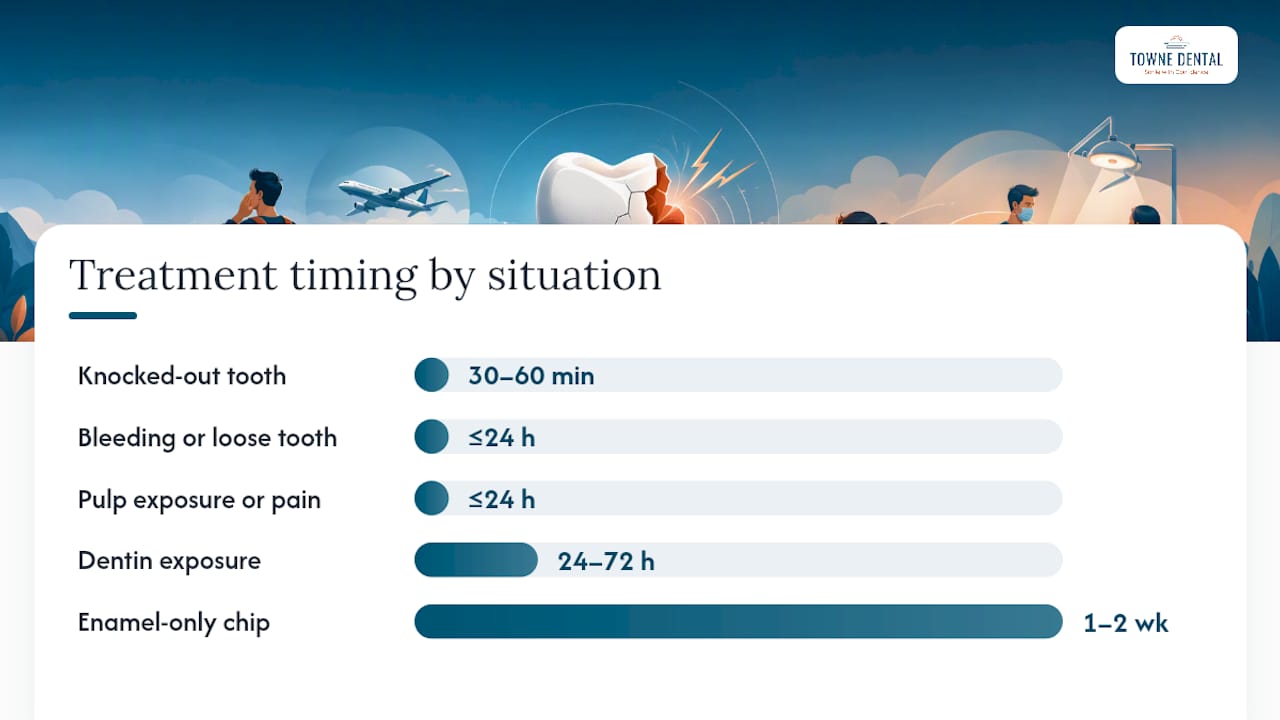
| Situation | Recommended timing |
|---|---|
| Uncontrolled bleeding or loose tooth | Same day — emergency visit |
| Pulp exposure or severe pain | Same day |
| Dentin exposure, cold sensitivity | Within 24–72 hours |
| Knocked-out permanent tooth | Within 30–60 minutes for best reimplantation outcome |
| Enamel-only chip, no sensitivity | Routine appointment within 1–2 weeks |
On cost: a simple smoothing or minor bonding repair is among the least expensive dental procedures. A composite filling costs more, a crown significantly more, and root canal therapy followed by a crown represents the highest end of fracture repair costs. Lab-fabricated crowns add a lab fee that same-day milled crowns avoid. Sedation, if needed, adds to the total.
Most dental insurance plans cover emergency stabilization and a portion of restorative work. Check whether your dentist is in-network before your visit, and ask specifically about coverage for crowns and endodontic treatment, since those are the procedures most likely to carry a significant out-of-pocket portion.
What Towne Dental does when you come in with a broken tooth
Towne Dental provides same-day emergency stabilization, smoothing, and temporary restorations when clinically appropriate, plus full restorative care including composite bonding, crowns, and root canal therapy for pulp involvement.
What happens at your visit:
- Check-in, medical history review, and description of the injury
- Clinical exam and digital X-rays to assess fracture depth
- Pain control and stabilization as the first priority
- A clear treatment plan with options and scheduling for definitive care
What to bring:
- Any broken tooth fragment, kept moist in milk or saliva
- Your insurance card and a photo ID
- A list of current medications and any known allergies
- A brief description of how and when the injury happened
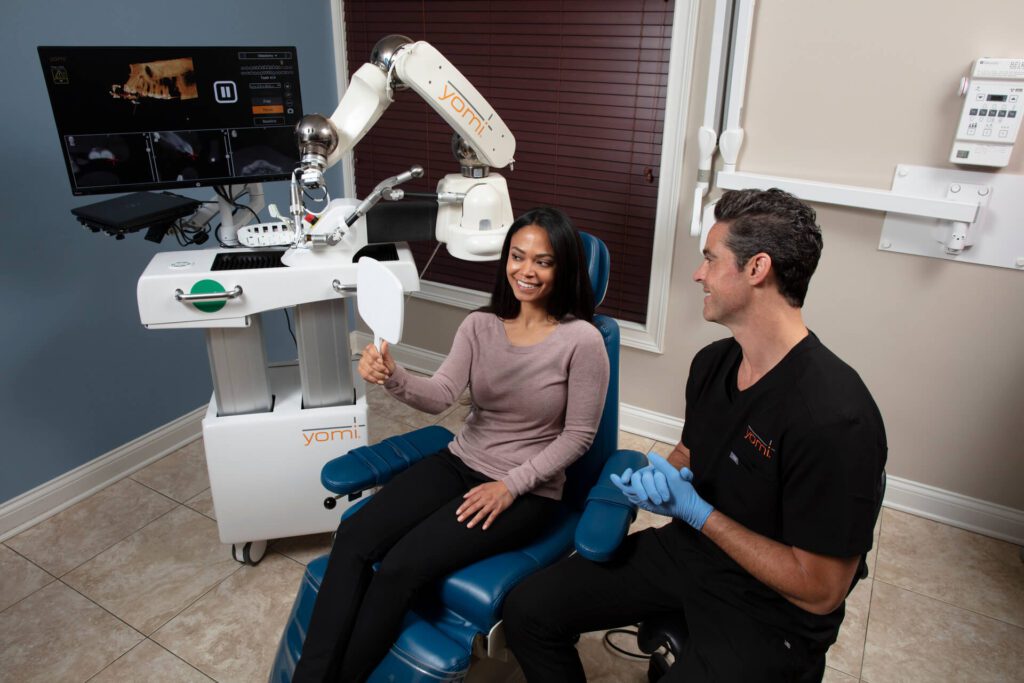
Towne Dental’s team uses advanced technology, including the Yomi® robotic system for implant cases, and offers emergency dental services alongside the full range of restorative and surgical options — so whatever the fracture reveals, the next step can be handled in the same practice.
Why acting fast on a broken tooth matters more than most people realize
The instinct to wait and see is understandable. A small chip does not look alarming. But a jagged edge is not just a comfort problem. Untreated cracks can progress to irreversible pulpitis or pulp necrosis when not managed promptly — meaning a chip that could have been bonded in one visit becomes a root canal and crown situation months later.
The reassuring part: most broken teeth, caught early, have straightforward fixes. Wax and a same-week appointment is genuinely enough for a minor enamel chip. The patients who end up with the most complex repairs are usually the ones who waited through worsening sensitivity, assuming it would settle on its own.
Avoid the risky DIY moves — glue, metal files, aggressive grinding — and get professional eyes on the tooth within the timeframe that matches your symptoms. That is the whole strategy.
Towne Dental is ready for same-day broken tooth care
A sharp, broken tooth does not have to wait until next week. Towne Dental accepts same-day emergency appointments for broken and damaged teeth, with on-site X-rays, pain control, and stabilization at the first visit.

Call the office directly to request a same-day slot, or book online through Towne Dental’s services page. Bring any tooth fragment you saved (in milk or saliva), your insurance card, and your medication list. The team will assess the fracture, control your pain, and give you a clear plan — whether that means a quick smoothing, a filling, or a referral for endodontic care. Most insurance plans cover emergency stabilization; the front desk can verify your benefits before treatment begins.
Sources
- Ada
- What Is a Dental Emergency and Where To Go for Care — Cleveland Clinic
- Fractured and avulsed teeth — Merck Manual Professional Edition
- Fractured, loosened, or knocked-out teeth — MSD Manuals
- Traumatic dental injuries and complications — NCBI Bookshelf
- Sensitive teeth — MouthHealthy (American Dental Association patient resource)
This article is general information, not a substitute for advice from a qualified doctor. Consult a qualified healthcare professional about your own circumstances before acting on anything here.
FAQ
How do you get rid of a sharp edge on a broken tooth?
Cover it with orthodontic wax or a temporary dental cement kit (such as Dentemp) until you can see a dentist. A dentist can smooth a minor chip in minutes using a fine bur, or restore larger fractures with bonding or a crown.
Can you file a sharp broken tooth edge yourself?
Only as a last resort, and only on a visibly enamel-only rough spot using a fine emery board with minimal pressure. Stop immediately if you feel any pain or sensitivity, and see a dentist as soon as possible — home filing risks enamel loss and heat damage to the pulp.
Why does a broken tooth feel so sharp?
Enamel fractures at an angle, leaving a thin, blade-like edge rather than a blunt surface. The sharper the fracture line, the more it cuts soft tissue; this is why even a small chip can feel surprisingly aggressive against your tongue or cheek.
How long can you safely leave a broken tooth untreated?
An enamel-only chip with no sensitivity can wait one to two weeks for a routine appointment. Any cold sensitivity, pain, or mobility means you should call your dentist within 24–72 hours. A knocked-out tooth needs reimplantation within 30–60 minutes for the best outcome.
Can a broken tooth get infected if left alone?
Yes. Untreated fractures that expose dentin or pulp can allow bacteria to reach the inner tooth, leading to irreversible pulpitis or pulp necrosis. Covering the tooth temporarily and getting professional care promptly significantly reduces that risk.