Avoid anything hard, sticky, crunchy, or chewy while you have braces on, since those textures snap brackets and bend wires. Almost everything else is fair game once you cut it small or cook it soft. The American Association of Orthodontists backs this simple rule, and following it is really the whole game for keeping treatment on schedule.
TL;DR:
- Hard foods like nuts, ice, and hard candy pose a high risk of snapping brackets or bending wires, requiring strict avoidance during treatment.
- Sticky and chewy items, including caramel, gum, and gummy candies, loosen hardware over repeated bites and should be eliminated from the diet.
- Soft, well-cooked foods such as pasta, rice, scrambled eggs, and smoothies are safe and can be varied to keep meals interesting without risking damage.
- Sensitivity peaks within the first 2 to 4 days after placement or adjustments, so sticking to soft foods and cold or warm temperatures helps manage discomfort.
- Regularly carrying a care kit and following proper chewing techniques reduce the risk of hardware breakage and minimize emergency visits.
Table of Contents
- The Braces Eating List: Foods to Avoid and Why
- Braces-Friendly Foods by Category
- Eating During the First Week and After Adjustments
- How to Eat With Braces Without Damaging Them
- Sample Meals That Work Every Day
- Nutrition Tips for Staying Healthy With Braces
- Managing Sore Spots and Ulcers From Braces
- Drinks to Watch Out for With Braces
- Towne Dental’s Take on Braces and Food Rules
- Sources
- FAQ
The Braces Eating List: Foods to Avoid and Why
Some foods are risky enough that they belong on a permanent no list, not a “maybe if I’m careful” list. Brackets are bonded to your teeth with a strong adhesive, but they still detach under enough force, and wires bend the second something fights back against them.
- Hard items: Nuts, hard candy, ice, hard pretzels, and hard pizza crust all apply sharp, concentrated pressure that snaps brackets clean off or bends the archwire out of shape.
- Sticky and chewy items: Taffy, caramels, gummy candy, and chewing gum grab onto brackets and wires and pull on them every time you chew, which loosens hardware over repeated bites.
- Crunchy and corn items: Popcorn, corn on the cob, and hard chips shatter into small fragments that wedge between wires and gums. Popcorn husks in particular get stuck under brackets, and orthodontists specifically warn patients off it for that reason.
- Biting hazards: Whole apples, raw carrots, and bagels aren’t dangerous because of texture alone. They’re dangerous because biting straight into them with your front teeth puts direct force on brackets that were never designed to take a bite like that. Slice the apple, cook the carrot until it gives a little, or tear the bagel into pieces instead of biting in.
The MouthHealthy nutrition guide from the American Dental Association lists ice and hard candy among the most common causes of emergency orthodontic visits, and both are avoidable with zero effort. If a food cracks loudly when you bite it or sticks to your teeth after swallowing, treat that as your warning sign.
Braces-Friendly Foods by Category
Soft doesn’t mean boring. Once you group foods by category, you’ll notice the braces eating list has more room than the “avoid” list suggests.
Soft fruits: Bananas, melon, canned peaches or pears, and applesauce are safe straight out of the container. Skip strawberries and raspberries whole, since their tiny seeds slip under wires the same way popcorn husks do.
Grains and carbs: Well-cooked pasta, soft rice, pancakes, and tortillas that have been warmed or softened all chew easily without resistance. A crusty baguette does not belong here, but a soft dinner roll does.
Proteins: Scrambled eggs, flaky baked fish, shredded chicken, tofu, and well-cooked beans give you protein without asking your molars to work against resistant fibers or bone fragments.
Dairy and treats: Yogurt, pudding, soft cheese, and ice cream without nut toppings are genuinely safe snacks for braces, not just consolation prizes.
Convenience swaps: Smoothies (strained or made with seedless fruit like banana and mango), protein shakes, and hummus with soft pita cover you when you’re eating on the go.
- Bananas, melon, applesauce, canned fruit
- Soft pasta, rice, pancakes, softened tortillas
- Scrambled eggs, flaky fish, shredded chicken, tofu, beans
- Yogurt, pudding, soft cheese, nut-free ice cream
- Seed-free smoothies, protein shakes, hummus with soft pita
Pro Tip: Blending a smoothie doesn’t automatically make it safe. Strawberry seeds and chia seeds survive a blender fully intact, then lodge themselves right under your wire. Stick to banana, mango, and cooked fruit for smoothie bases until your braces come off.
Eating During the First Week and After Adjustments
Sensitivity after a new bracket placement or a wire adjustment typically runs about 2 to 4 days, and that short window is when your food choices matter most. Plan around soft, low-effort meals rather than testing your limits.
- Smoothies (seed-free), yogurt, mashed potatoes
- Warm soups, oatmeal, scrambled eggs
- Soft-cooked pasta with sauce
Temperature does real work here even though it’s not a substitute for pain relief. Cold foods, like chilled applesauce or a smoothie, numb sore gums the same way an ice pack calms a bruise. Warm foods, like broth-based soup, relax tissue that feels tight and irritated. Neither one is medicine, but both make the first few days more bearable. Cut everything into small pieces during this window and delay biting into anything firm until the soreness fades. If pain lingers past four or five days, that’s no longer routine sensitivity, and it’s worth a call to your orthodontist rather than waiting it out.
For more ways to manage the ache beyond diet alone, see our guide to fast, safe braces pain relief.
How to Eat With Braces Without Damaging Them
- Cut food into bite-sized pieces before eating, especially fruit, vegetables, and meat off the bone, rather than biting directly into a whole piece.
- Chew with your back molars, not your front teeth. Your back teeth are built for grinding force; your front brackets are not.
- Keep orthodontic wax on hand for any bracket that rubs against your cheek, and skip crunchy toppings like nuts on ice cream even when the base food is soft.
- Carry a compact oral care kit, including a travel toothbrush, an interdental brush, a floss threader, or a water flosser, so you can clear food out of your hardware right after eating.
- Rinse with water after meals, and hold off brushing right after acidic drinks like soda or orange juice, since brushing too soon can spread softened enamel around before saliva has a chance to neutralize the acid.
- Call your orthodontist if a bracket detaches or a wire pokes out. Don’t try to trim a wire yourself with household scissors or pliers.
Following AAO guidance on chewing technique consistently, rather than only when you remember to, is what actually prevents the mid-treatment emergency visits that push your finish date back.
Pro Tip: Keep a spare travel brush in your bag or car. The single biggest reason people skip cleaning their braces after lunch is that the toothbrush is sitting at home.
Sample Meals That Work Every Day
Turning a list of safe ingredients into an actual meal plan is where most people get stuck. Here’s what a full day looks like on the braces-friendly side of the menu.
Breakfast: Oatmeal with mashed banana stirred in, a seed-free smoothie, or scrambled eggs with soft avocado on the side.
Lunch: A creamy soup with soft bread for dipping, tuna or chicken salad on soft bread, or macaroni and cheese with well-cooked vegetables mixed in.
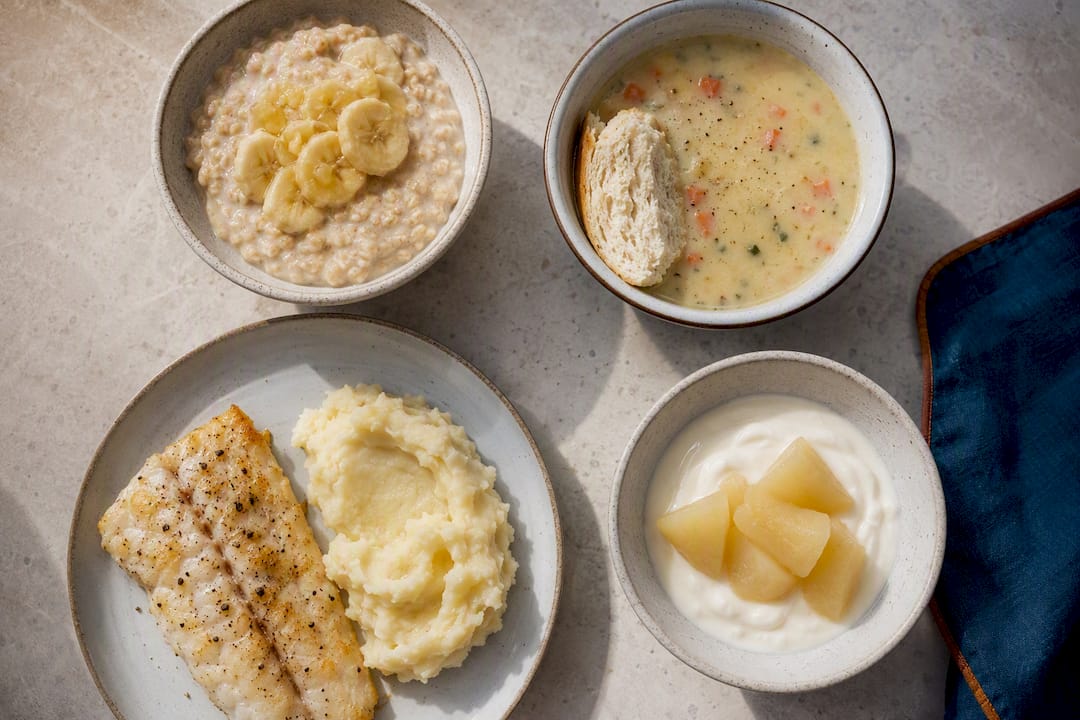
Dinner: Baked flaky fish with mashed potatoes, slow-cooked shredded chicken in a taco or bowl, or soft pasta tossed in sauce.
Snacks: Yogurt, pudding, soft cheese paired with canned fruit, or hummus scooped with soft pita.
None of these require special ingredients or a trip to a specialty store. They’re the same meals most kitchens already make, just built around textures that won’t fight your hardware. Penn Dental Medicine’s guidance on early-treatment eating points to nearly this exact pattern for the first few days after getting braces on, and it holds up just as well months later when you’re simply tired and don’t want to think hard about dinner.
Nutrition Tips for Staying Healthy With Braces
A soft-food diet can quietly become an unbalanced one if you lean too hard on carbs like pasta and bread because they’re the easiest thing to chew. Pair every soft carb with a protein source, whether that’s eggs, shredded chicken, beans, or tofu, so you’re not running low on the nutrients that actually support healing gum tissue and strong enamel.
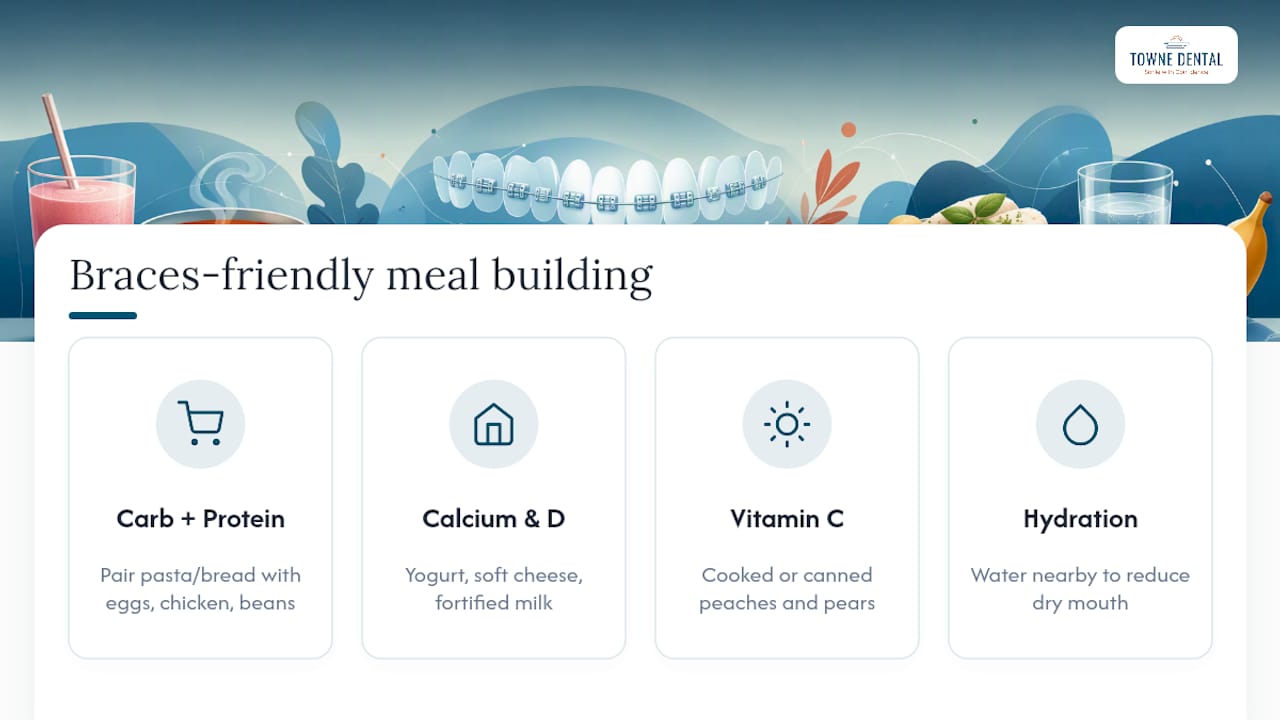
Calcium and vitamin D matter more during orthodontic treatment than most people realize, since your teeth are under constant, gentle pressure as they shift position. Yogurt, soft cheese, and fortified milk cover both. Vitamin C, found in cooked or canned fruit like peaches and pears, supports healthy gum tissue that has to tolerate brackets rubbing against it every day.
One upside worth mentioning: dietary limits during braces often push people toward genuinely healthier eating patterns, since so many of the safe choices are whole foods prepared simply rather than processed and packaged. Fewer chips, more real food, almost by accident.
Hydration deserves a mention too. Dry mouth makes brackets rub more and increases plaque buildup around wires, so keep water nearby, especially if you’re eating something with any texture at all.
Managing Sore Spots and Ulcers From Braces
Sore spots show up where a bracket or wire end rubs against your cheek or lip, usually within the first few days of a new appliance or adjustment. The fix that works fastest is orthodontic wax, pressed directly over the offending bracket or wire tip to create a smooth barrier between metal and soft tissue.
Skip acidic and heavily spiced foods while a sore spot is active. Citrus, tomato sauce, and hot sauce all sting on contact with broken skin the same way they would on any small cut. Salt water rinses, a few times a day, help calm irritated tissue and reduce the chance of the sore spot turning into something worse.
If a wire is poking rather than just rubbing, wax buys you time, but it’s not a permanent fix. A poking wire that isn’t addressed can dig into tissue over days and cause a deeper sore. That’s a call-your-orthodontist situation, not a wait-it-out situation. Chronic sore spots that keep recurring in the same location, even with wax, usually mean a bracket or wire needs adjustment, not just management.
Drinks to Watch Out for With Braces
Sugary sodas and sports drinks do double damage: sugar feeds the bacteria that cause plaque, and the acid in most sodas softens enamel around brackets where a toothbrush already has a hard time reaching. That combination is worse with braces than without them, since food and residue collect around brackets in ways they never would on smooth enamel.
Dark drinks like coffee, tea, and red wine can stain the areas around brackets unevenly, which sometimes leaves faint outlines once the braces come off. Carbonated drinks in general are worth limiting, sparkling water included, since the acidity works on enamel the same way flat soda does, just more slowly.
Water is the one drink that carries zero downside. When you do have juice, soda, or a sports drink, rinsing with water afterward and waiting before you brush gives your saliva time to neutralize the acid instead of brushing softened enamel around while it’s vulnerable.
Towne Dental’s Take on Braces and Food Rules
Brackets fail for one boring reason: repeated force in the wrong direction. A single hard bite doesn’t always break a bracket, but ice chewed daily for a week almost always does, and plaque trapped around a bracket for weeks turns into decay that no amount of good brushing after the fact undoes.
Bring these five questions to your next orthodontic visit: Which foods on my personal treatment plan carry extra risk? How long should I expect sensitivity after this specific adjustment? Is my wire or bracket type more fragile than average? What’s the fastest way to reach you if something breaks on a weekend? And should I adjust my diet differently as treatment nears its final stage?
For soreness relief between visits, see our guide to fast braces pain relief, and our orthodontics page covers what treatment with Towne Dental actually involves.
— Towne Dental
Sources
- AAO life during treatment — practical tips
- MouthHealthy — Nutrition concerns
- What to eat after getting braces — Penn Dental Medicine blog
If a broken bracket or poking wire turns into a real emergency, Towne Dental’s emergency dental services are there to get you seen quickly rather than waiting out the discomfort at home.
FAQ
What Should I Eat the First Week of Braces?
Stick to soft foods like smoothies, yogurt, mashed potatoes, oatmeal, scrambled eggs, and soups, since sensitivity typically lasts 2 to 4 days after placement.
What Foods Are Good for Braces Long Term?
Soft fruits, well-cooked grains, tender proteins like eggs and shredded chicken, dairy, and seed-free smoothies all work well throughout treatment, not just the first week.
What Foods Are Completely Off-Limits With Braces?
Hard items like ice, nuts, and hard candy, sticky items like caramel and gum, and crunchy items like popcorn all carry a high risk of breaking brackets or bending wires.
Can I Eat Popcorn With Braces?
No. Popcorn kernels and husks readily get trapped under brackets and wires, which is why orthodontic guidance specifically calls it out as a food to avoid entirely.
What Should I Do if a Bracket Breaks From Eating the Wrong Food?
Apply orthodontic wax over any sharp edge for comfort and contact your orthodontist promptly rather than waiting for your next scheduled visit.